


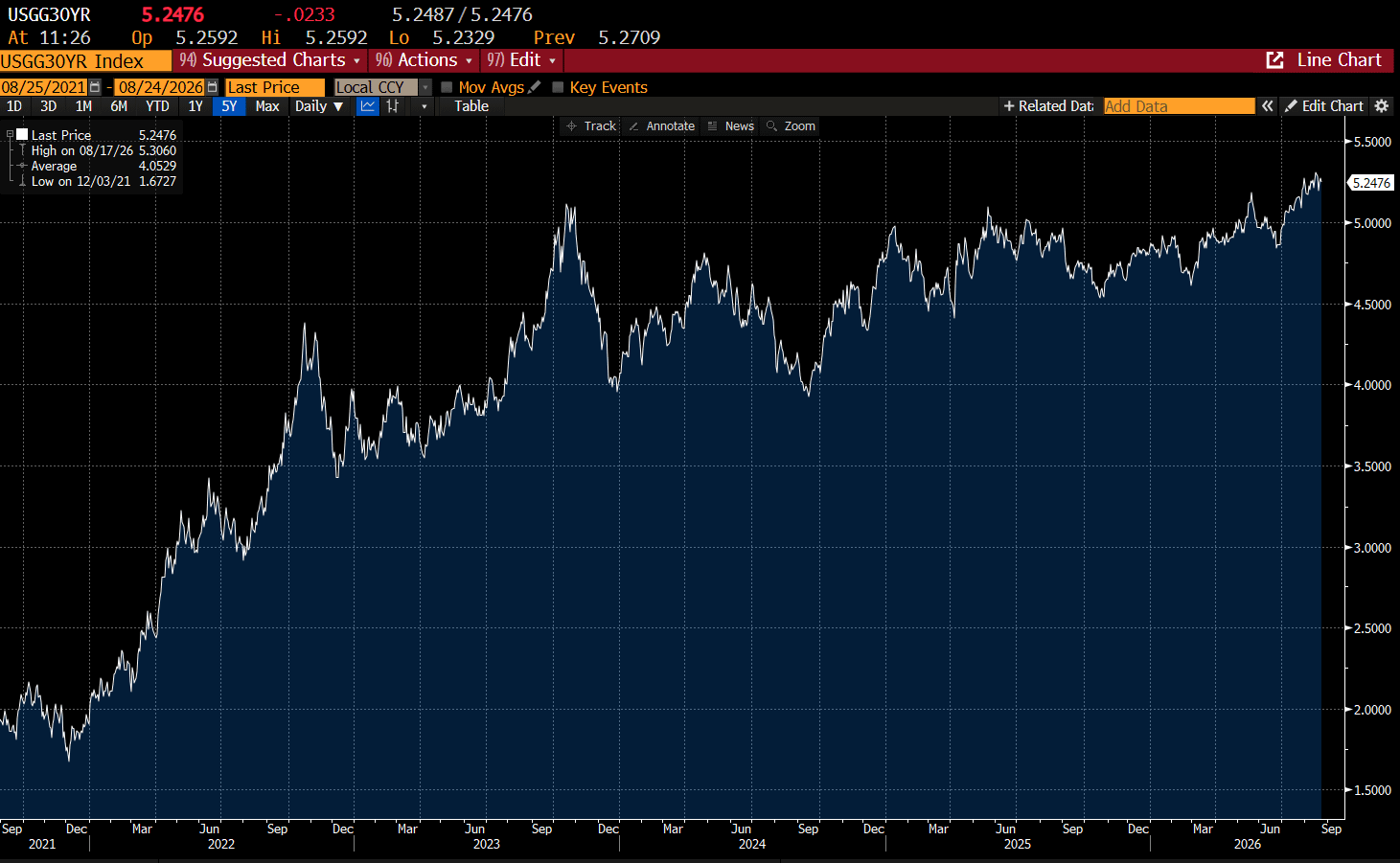
In the last month or so, the US has announced two separate interventions. One in long dated Treasury market, where buy backs have been increased, and another one, where it intervened in the currency markets to strengthen Yen. The intervention in the long dated bond market is pretty easy to understand, and has some precedence. So far though, no change on bond yields.
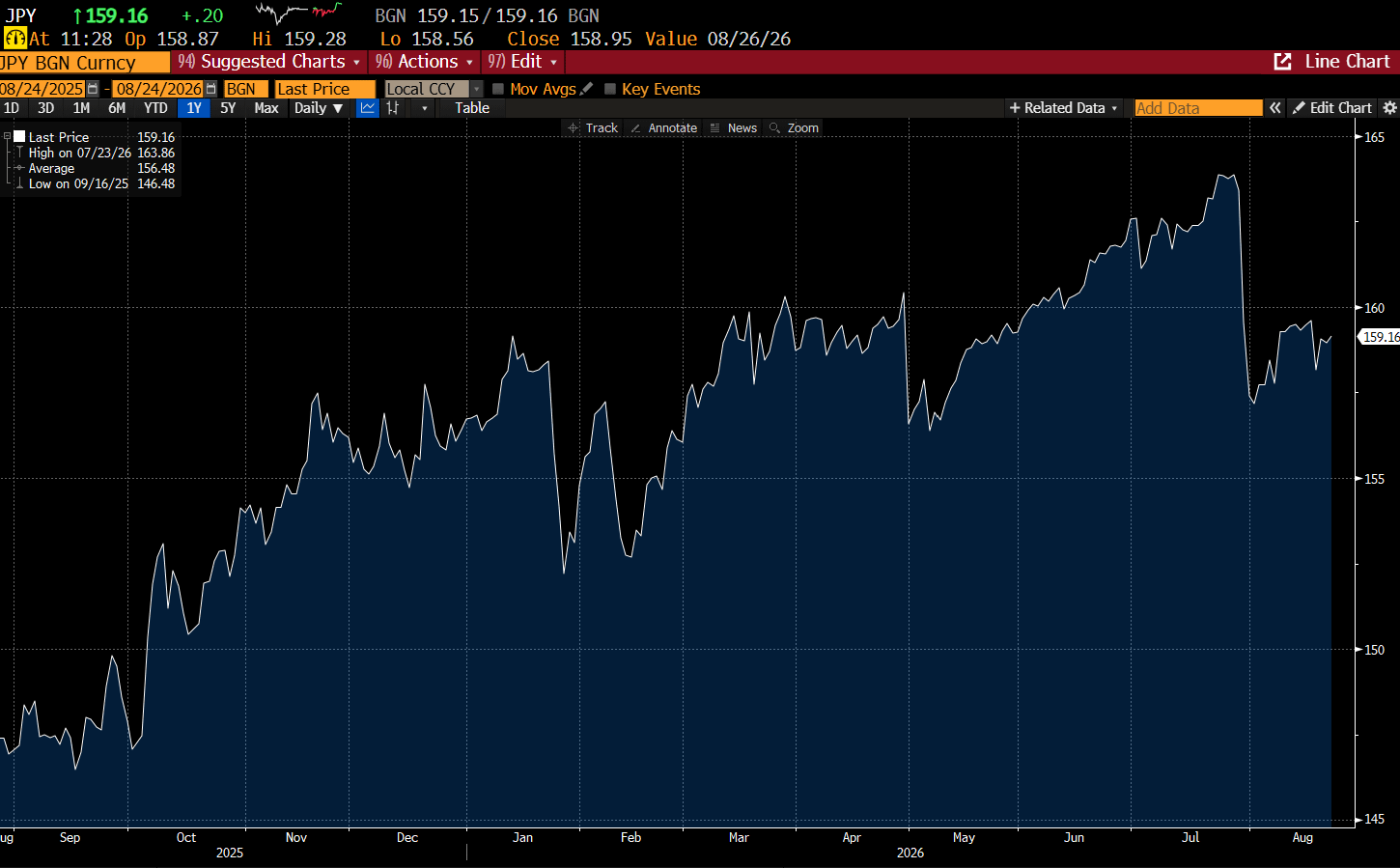
The Yen intervention is more interesting. And the intervention did at least a discernible movement in the market.
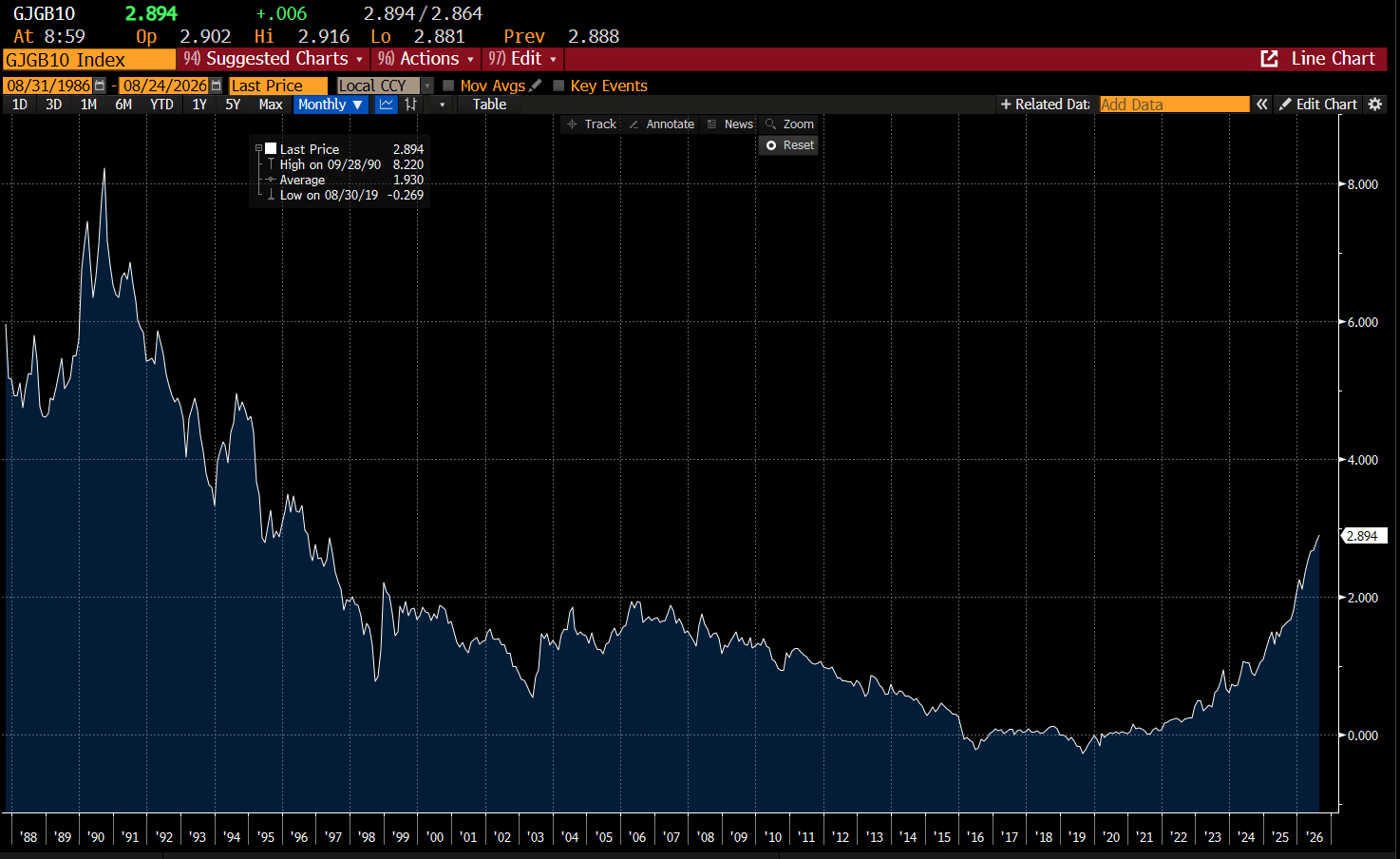
But how exactly is Yen strength supposed to help the US bond market? I can’t help but feel the Yen intervention was an effort to get markets back to a world that does not exist anymore. Which world was that? Well from 1990 to 2016, JGB yields continually fell, and even went negative.
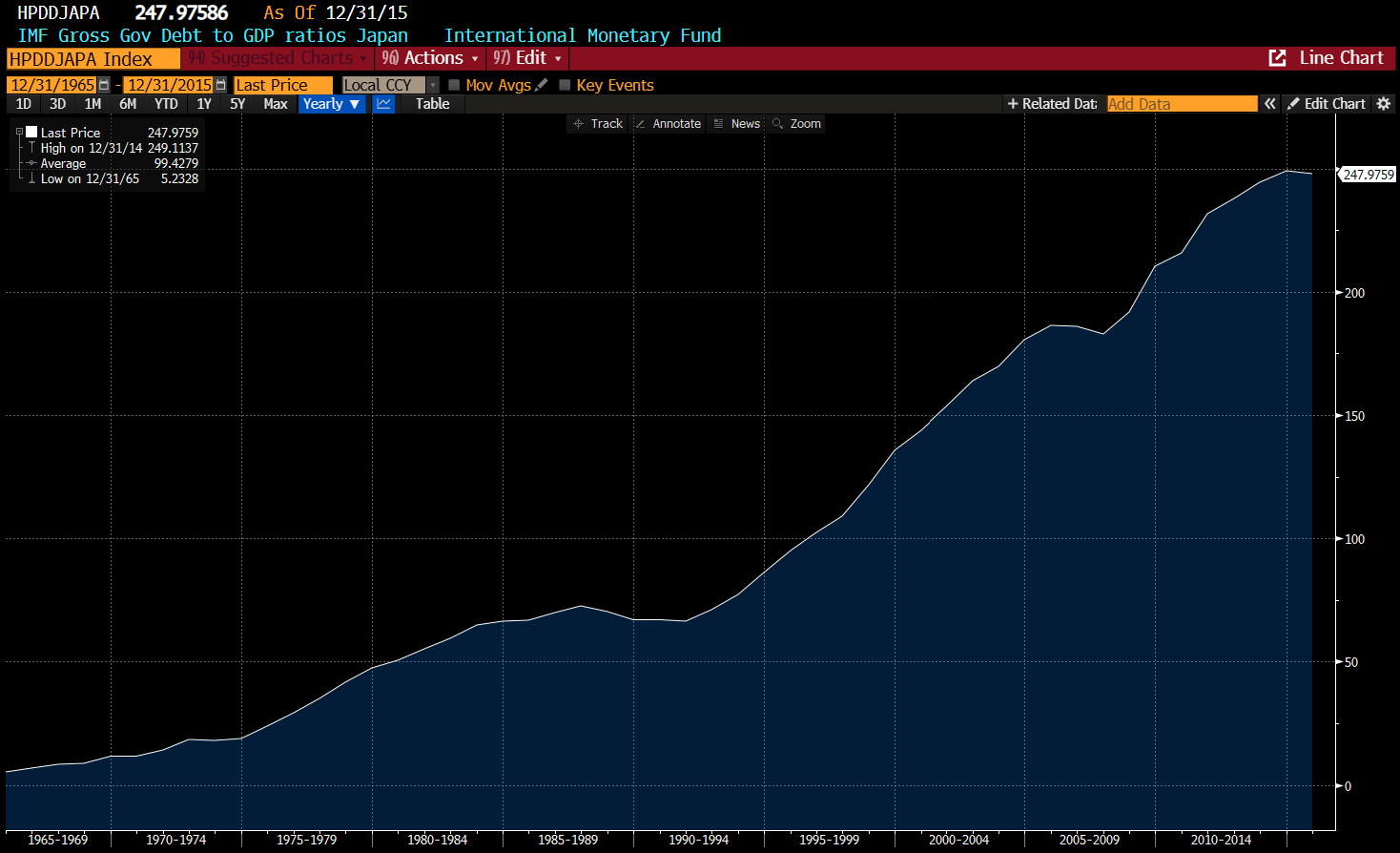
And JGB yields fell even as gross government debt of the Japanese government from 70% in early 1990s to 250% by 2015.
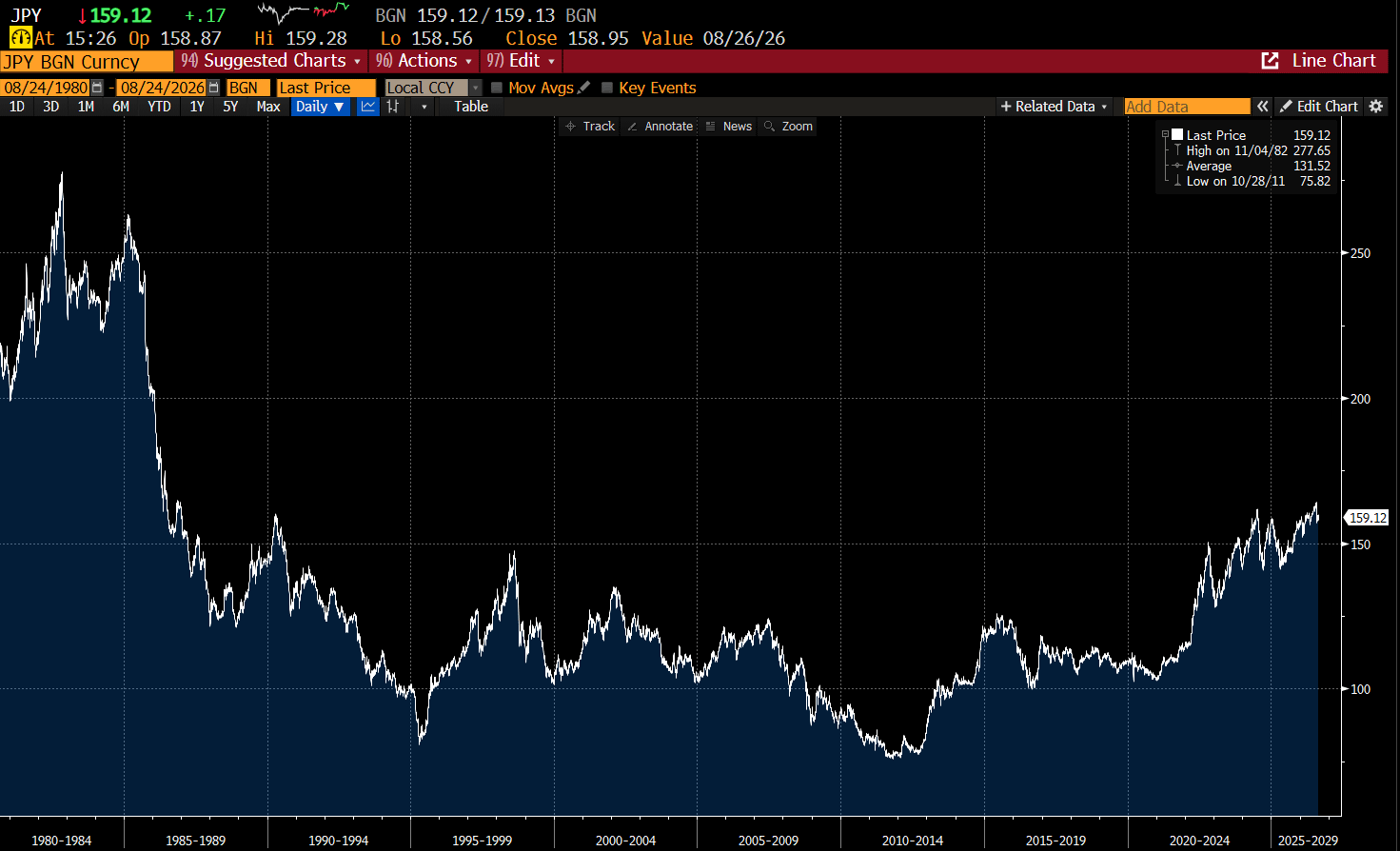
In Japan, yields stayed low, and the Yen was strong. But as yields have gone up, the Yen has weakened. So there is correlation between weak Yen and higher bond yields. But to intervene in the currency market you have to also believe there is causation. Or that the weak Yen is causing bond yields to be higher.
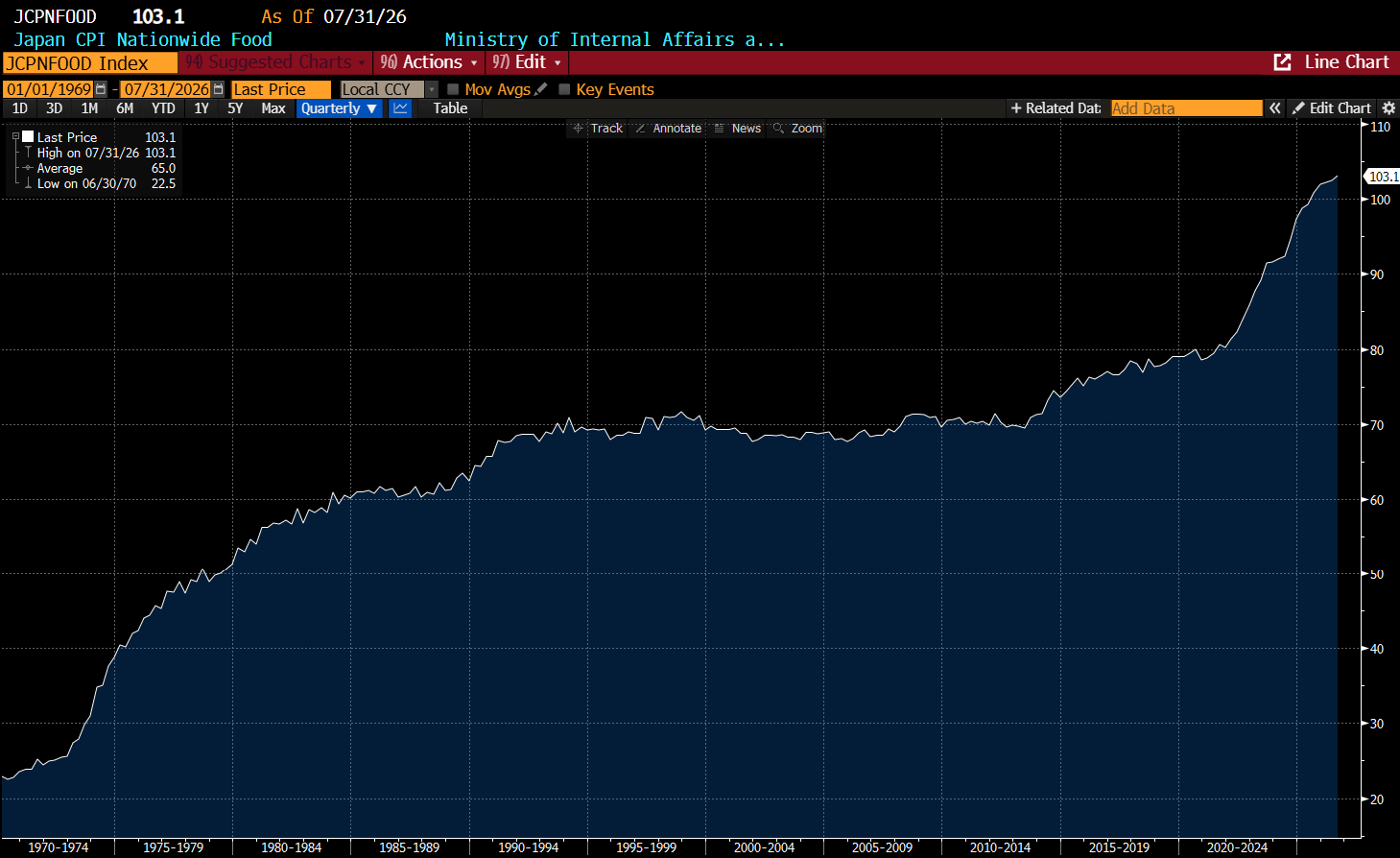
For me the biggest change in Japan has been rising food prices. After stagnating for three decades, they have been rising since 2013. I do not have a strong explanation for why Japanese food prices suddenly started to rise, but I do know that when food prices rise, wages HAVE to follow. If they do not follow then expect huge political repercussions.
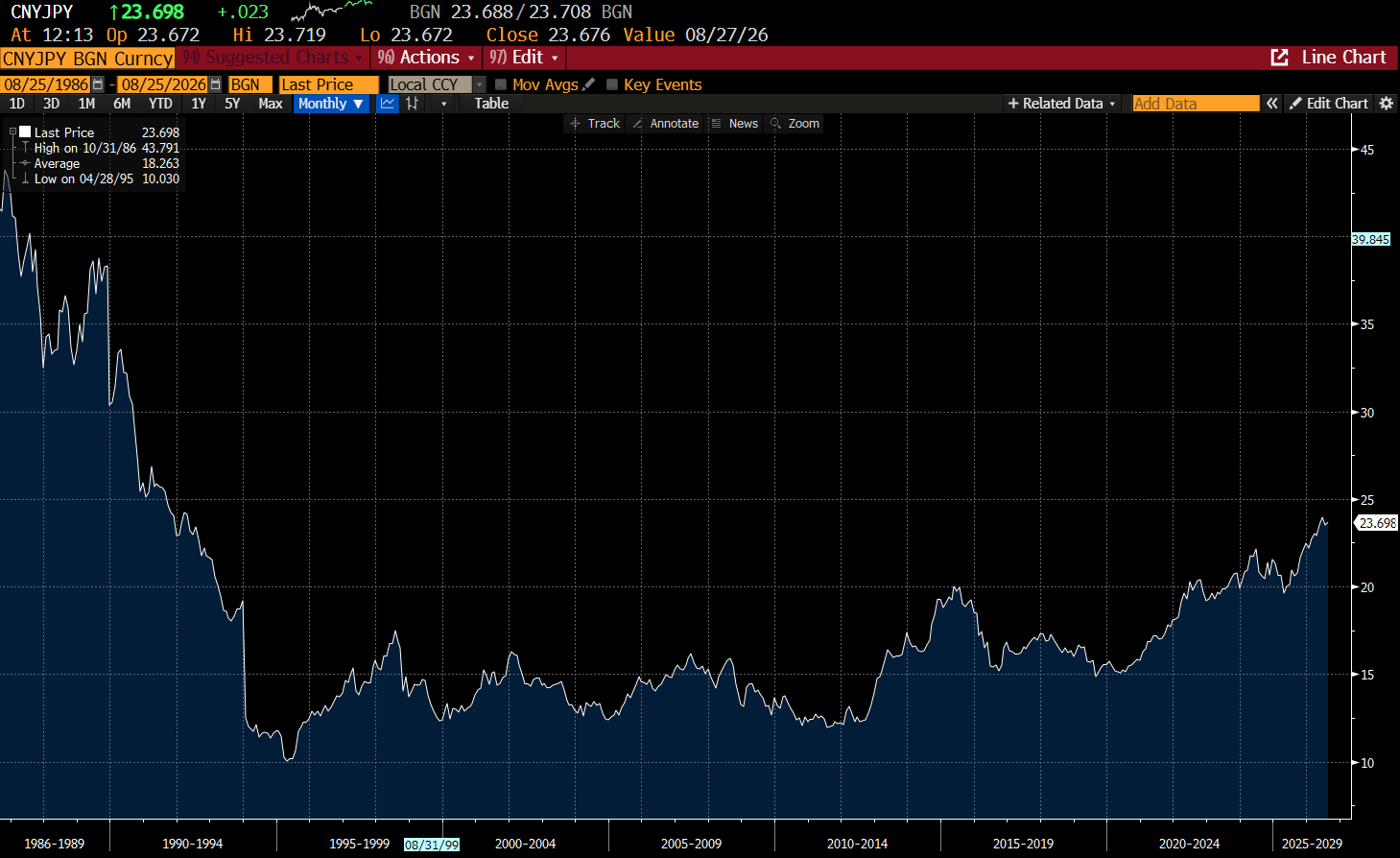
One possible explanation is that Japan does rely on food imports, and particularly vegetables and fruits from China. Against the Chinese Yuan, the Yen has weakened to the lowest level since 1992. And this is very different to before. Usually a weak Yen has caused other Asian nations to devalue - but Chinese Yuan has remained strong.
And now, I think we get to the rub. Japan and the USA as the two biggest and richest nations in the 1980s, 1990s and 2000s have gotten used to setting the weather. But now there is a third player - China. And China does have low yields, but unlike Japan, is choosing not to buy US treasuries.
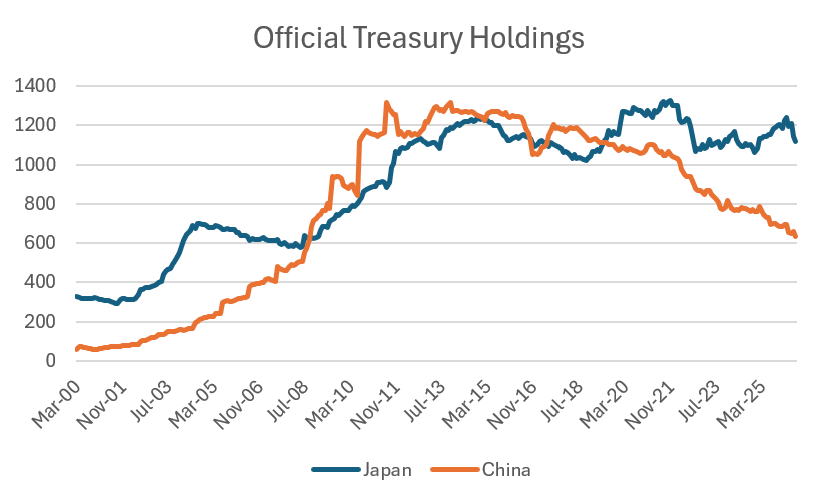
So the real problem is that China is not devaluing, so creating upward price pressure elsewhere (particularly in Japan), and it is not choosing to buy US treasuries. Would sustained Yen appreciation help? If a strong Yuan is the problem, then probably not. It would just create more inflationary pressure in the rest of the world. Just as China changed the commodity world, now China is changing the financial world. The US Treasury interventions in bond and currency markets is a forlorn wish to try and turn back the clock to a world where Japan and the US were the dominant powers.


