

I just got back from a couple of days in Switzerland, where I spent most of my time talking about markets. I also met quite a few Substack subscribers. Here are my thoughts.
SUBSTACK
Substack tells me that my average article gets 8,000 views. I thought this was exaggerated as the usual 10 to 15 people are commenting on it, and a typical article now only generates maybe 5 or 10 new subscribers. I suspected that number of people that actually read my substack was lower than what I was told. This trip has made me think the opposite. Almost everyone I met in Switzerland did read the Substack. And given that I only have 500 subs in Switzerland (or so I am told) - I think the Substack reach is more substantial that I thought. And thank you for everyone who turned up for a beer and a coffee. It was great meeting you all.
TLT
In case you have been living under a rock, TLT got smashed in September. This was nice, as I had suggested earlier this year, it was time for TLT to do more work in the GLD/TLT trade, and so it has come to pass.
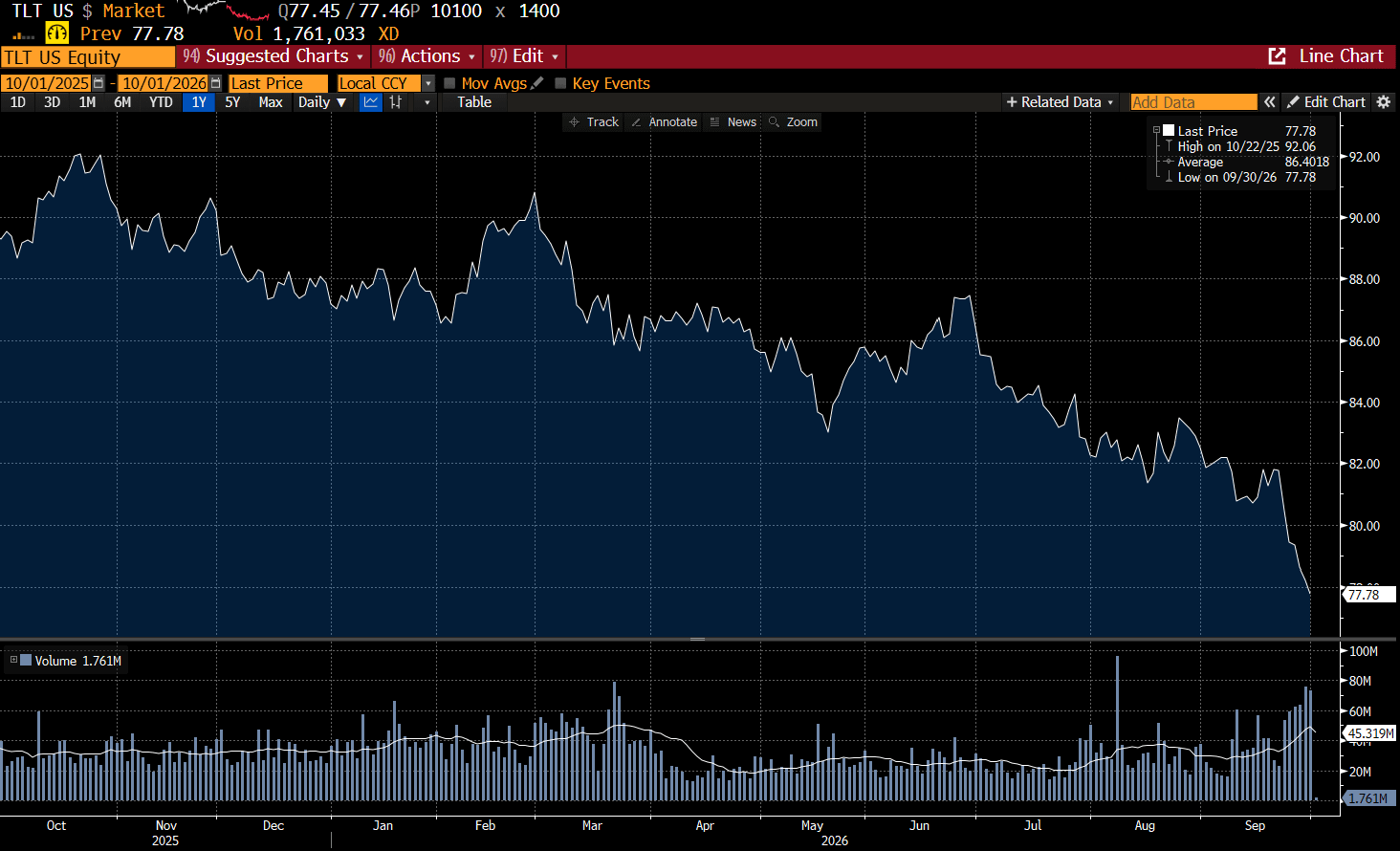
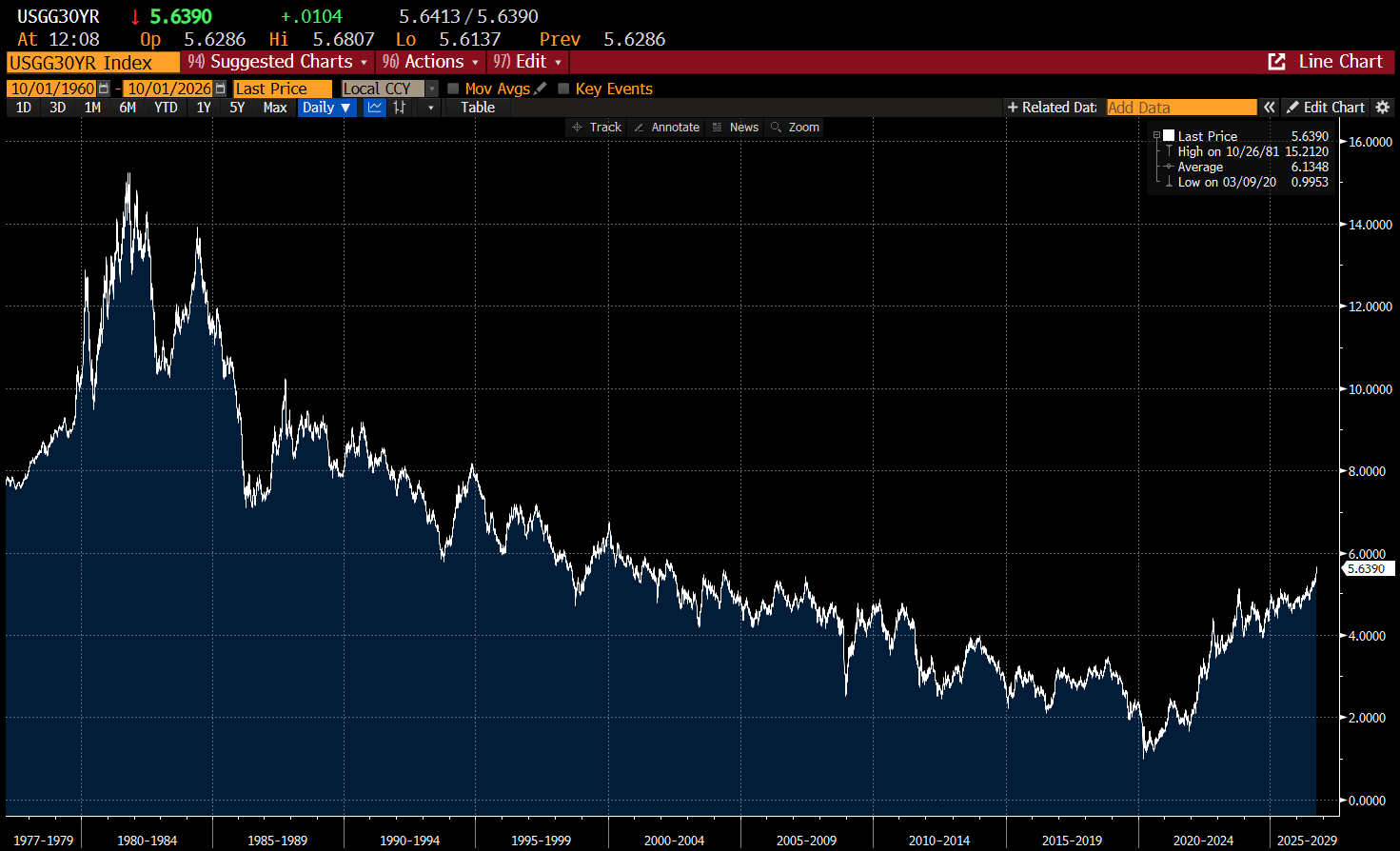
The question to be answered now, is the TLT trade done? I think there are two ways to approach this question. Lets call its the mathematical, logic driven approach, and the political approach. We will start with the mathematical approach. 30 year Treasury yields have risen from 1% to 5.6% - a substantial move. But in 1970s and 1980s, they were well above 10%. So yields could go higher.
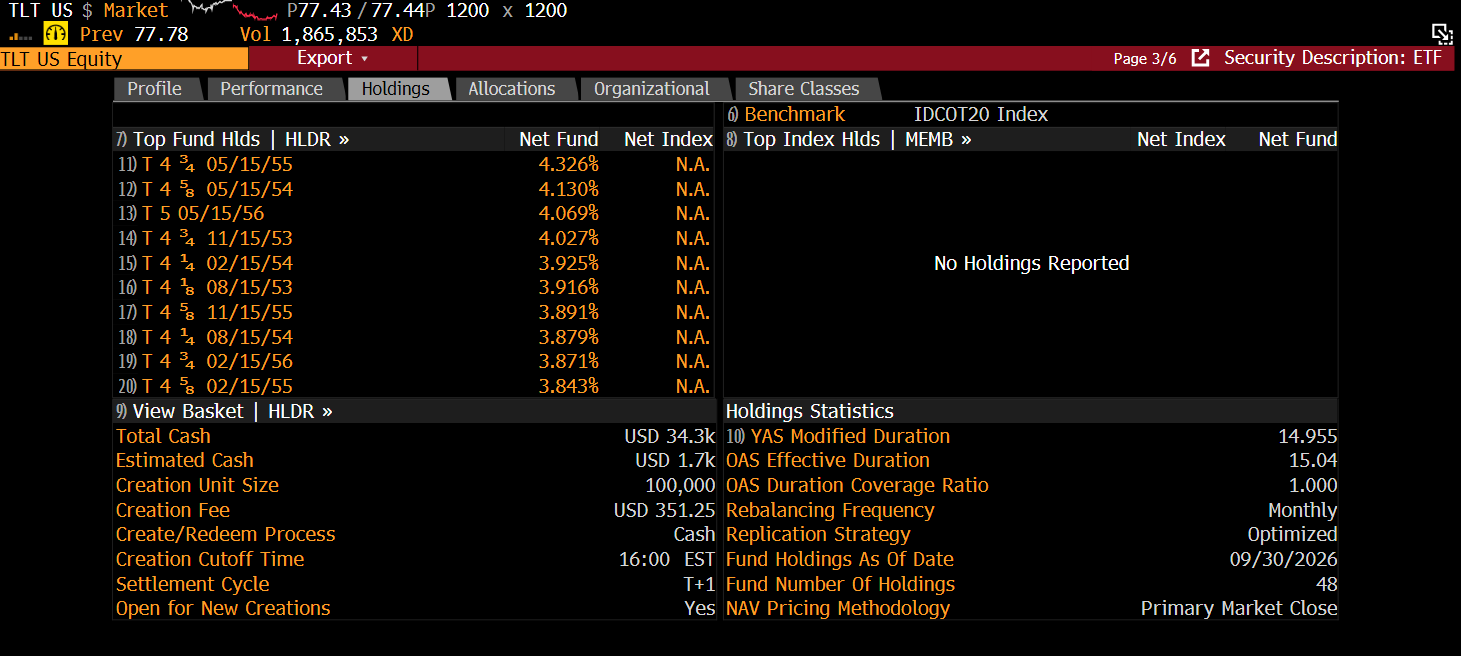
TLT has a duration of 15.
And a current yield of 5% (this is different to the current yield in the bond market, because TLT owns bonds with different coupon rates).
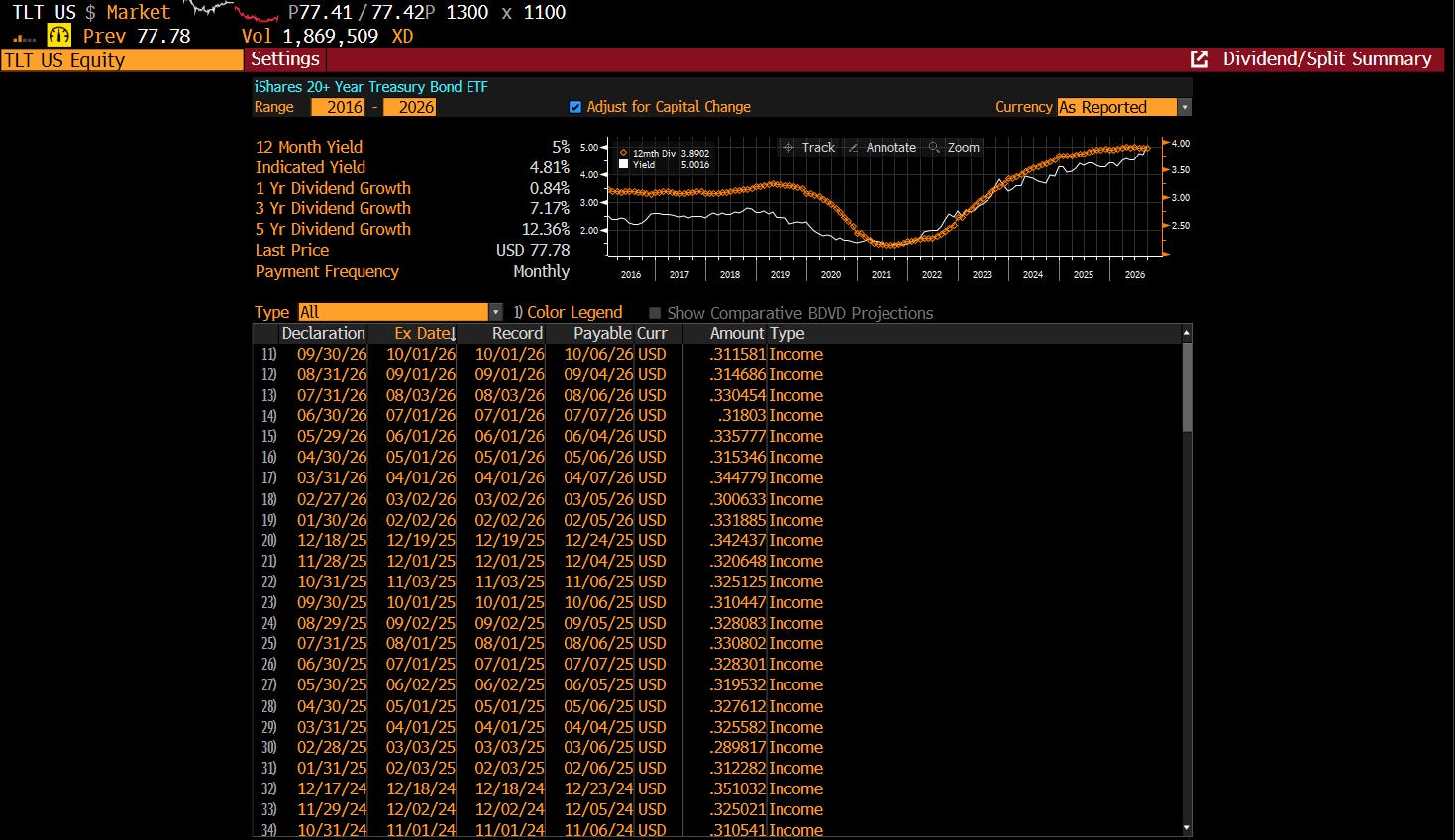
Duration tells you how much capital values fall from a rise in yields. So if yields rose 1%, the TLT would fall 15%. But it pays a yield of 5% - so you only get 10% total return from a short. By definition, we will get less bang for a buck with a bearish view on TLT. Back of envelope calculation makes me think at 8%, TLT will no longer be an effective short as higher coupons reduce the duration and the coupons will overwhelm the fall in capital values. If anyone has a better calculation, please get in touch. One thing to remember with TLT, it has no pull to par, so rising yield environments will see PERMANENT capital impairment. So TLT is still good - not as good as it was, but good. It also pleases me to see the share outstanding in TLT rise again.
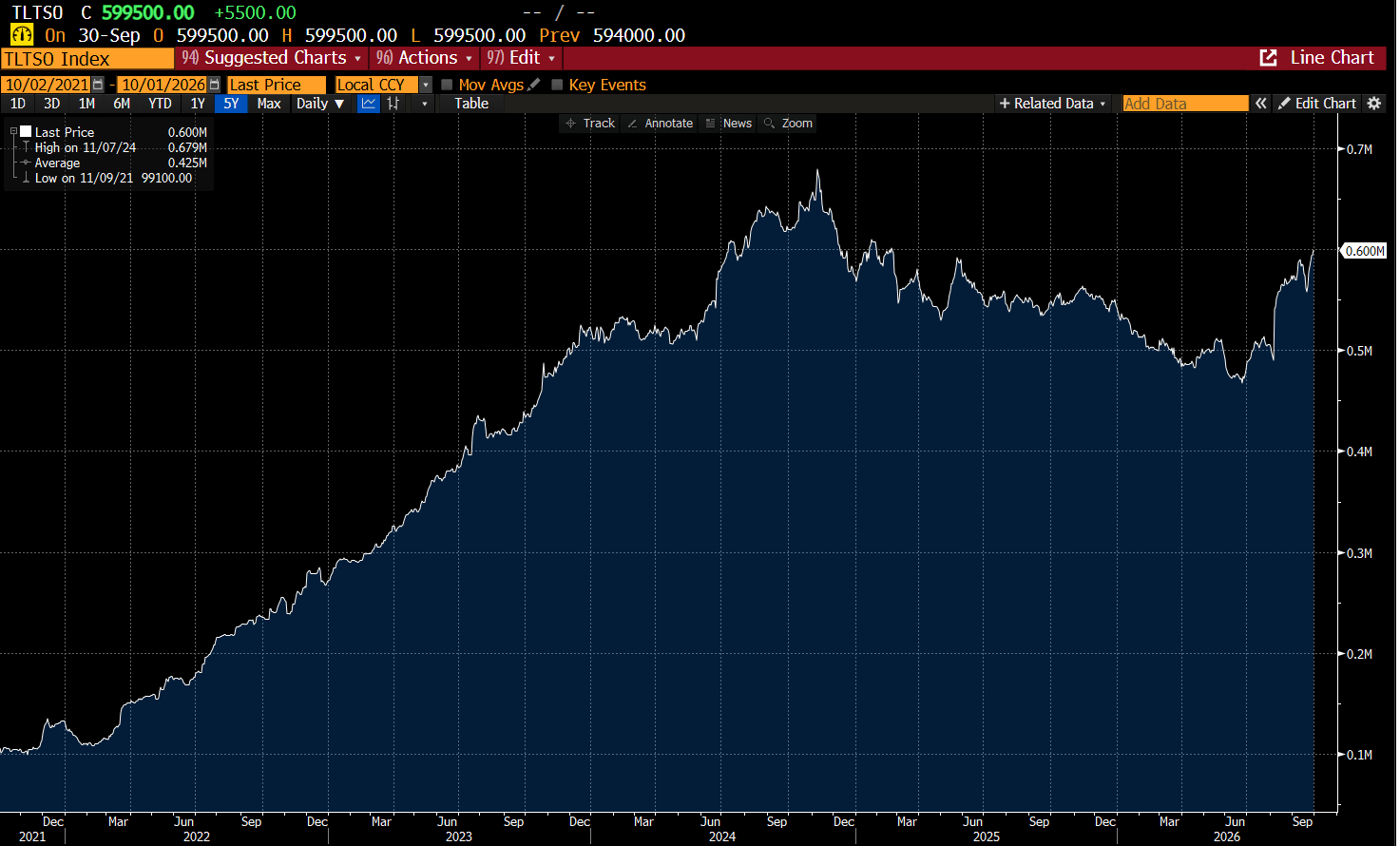
So mathematically, TLT is still good to go. But its politically that really gets me going. This time next year, we will start thinking about who will be running for the White House in 2028. According to betting markets, AOC is the most likely Democrat candidate. Even if she does not win the primaries, the presence of AOC should drag all candidates to the hard left.
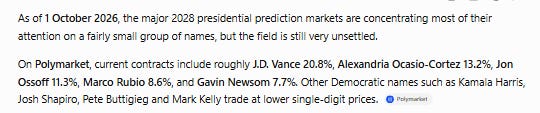
What is most likely then? I think bond yields go higher, and potentially USD lower. Unless I see a sudden shift right in US politics, a short TLT position still makes sense.
CHF
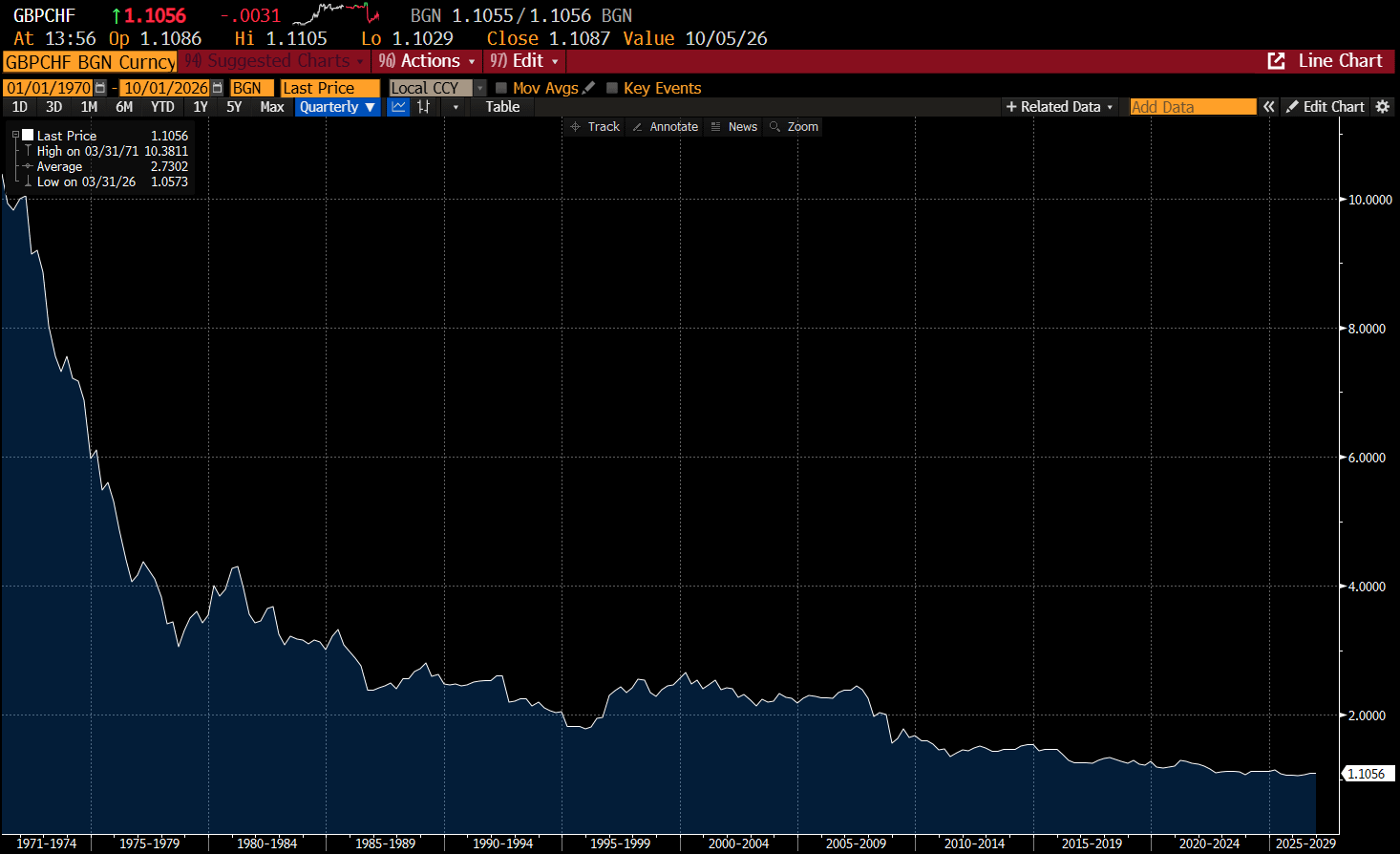
I was hoping my trip to Switzerland would give me clarity on what to do with the Swiss Franc. I want to be bullish on the Swiss Franc. When compared to the Great British Pound, over almost any time frame the Swiss Franc has been a much better currency.
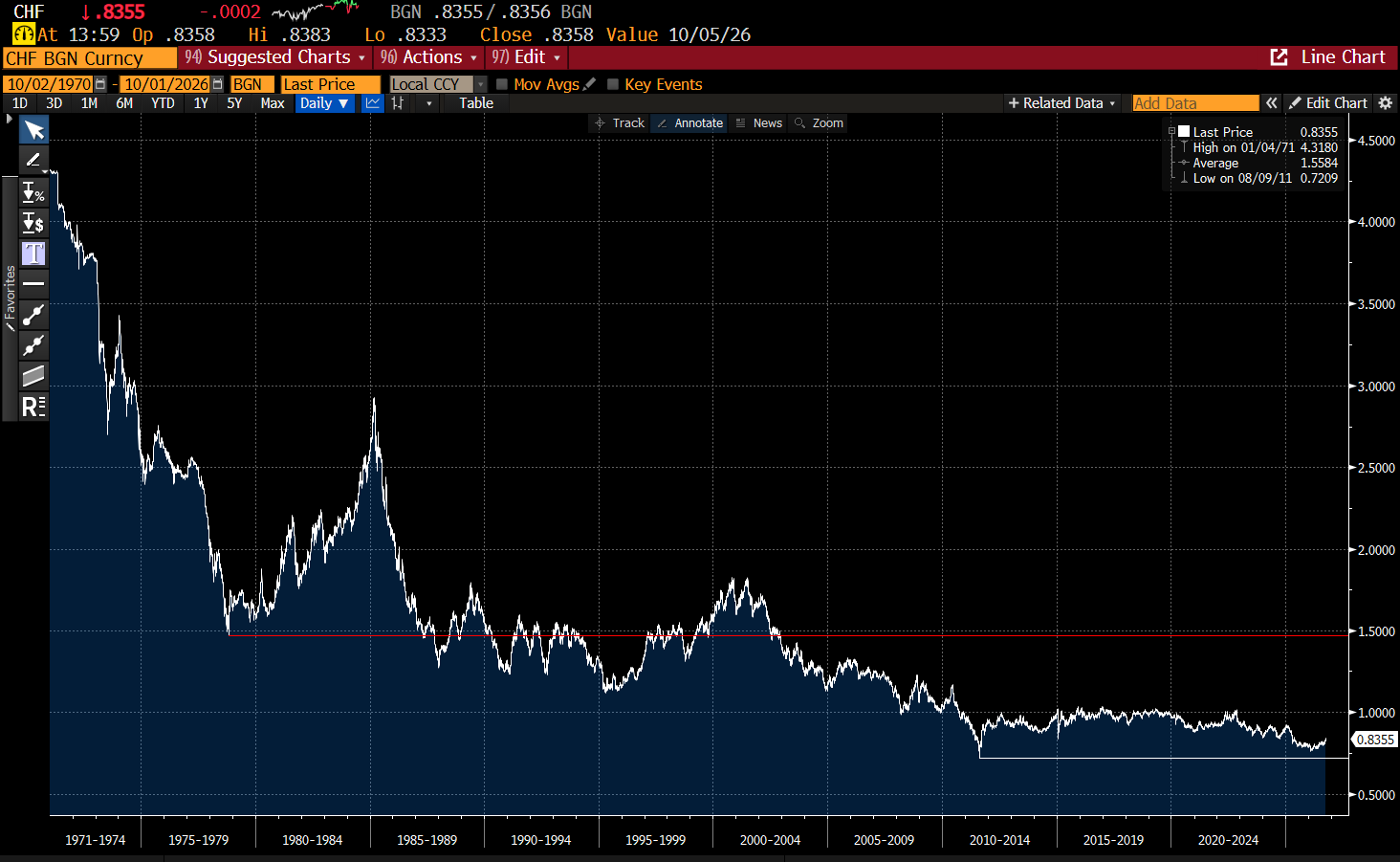
If the main currency of the world was Pounds, owning Swiss Francs would be a no brainer. But sadly the default option is US dollars. Against the US dollar the Swiss Franc still has an appreciating bias, but not as reliable. It tends to have big moves like 1970s or 2000s, and then spends a long time in a range, before then breaking higher again. The Swiss Franc peaked against the US dollar 0.72 in 2011, and has been in a range since then.
Complicating the view on Swiss Franc is the long term Japanese Yen v Swiss Franc Chart. There is no question that the Yen is cheap versus the Swiss Franc, or that Japan is cheap now. It is hard not to look at this chart and think perhaps I should be long Yen and short Swiss Franc.
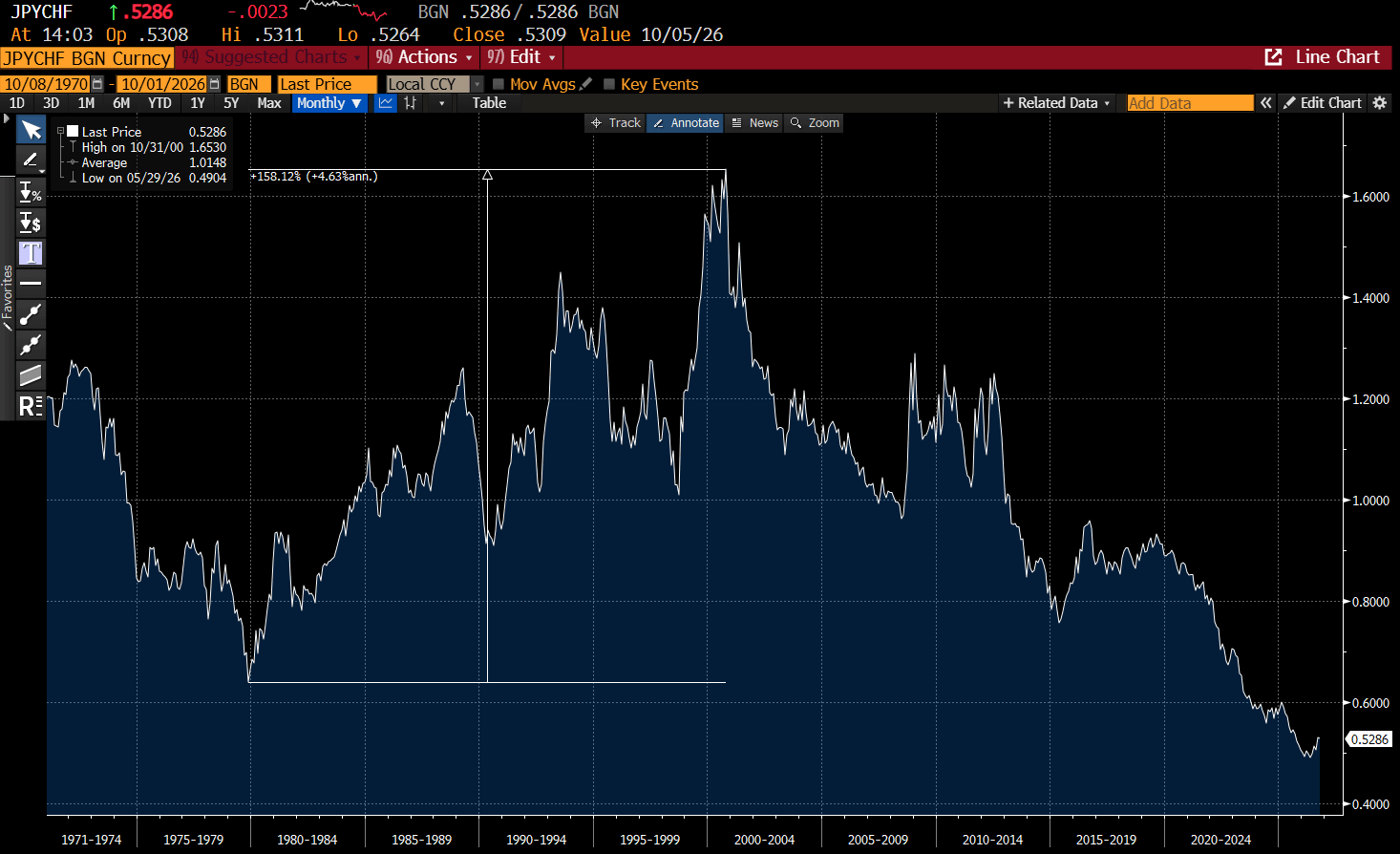
If that was the tactical set up, what was Swiss prices like? Well Switzerland IS expensive, but in line with London on some things, and cheaper in some ways too. The only place I felt that prices were total out of whack was Geneva airport - but airport prices don’t count. A beer at the train station as around 9CHF - so 8GBP. Expensive - but London prices. But Switzerland is a financial centre - it should be expensive.
So what to do with Swiss Franc? Well it reminds me of gold. Everyone is keen play debasement trades (long Swiss, long precious metal, long crypto) and I understand that. The issue is that if US bonds yields are rising, then the debasement trades loose water - and that is what we see. US 2 years up - gold, Swiss Franc down.
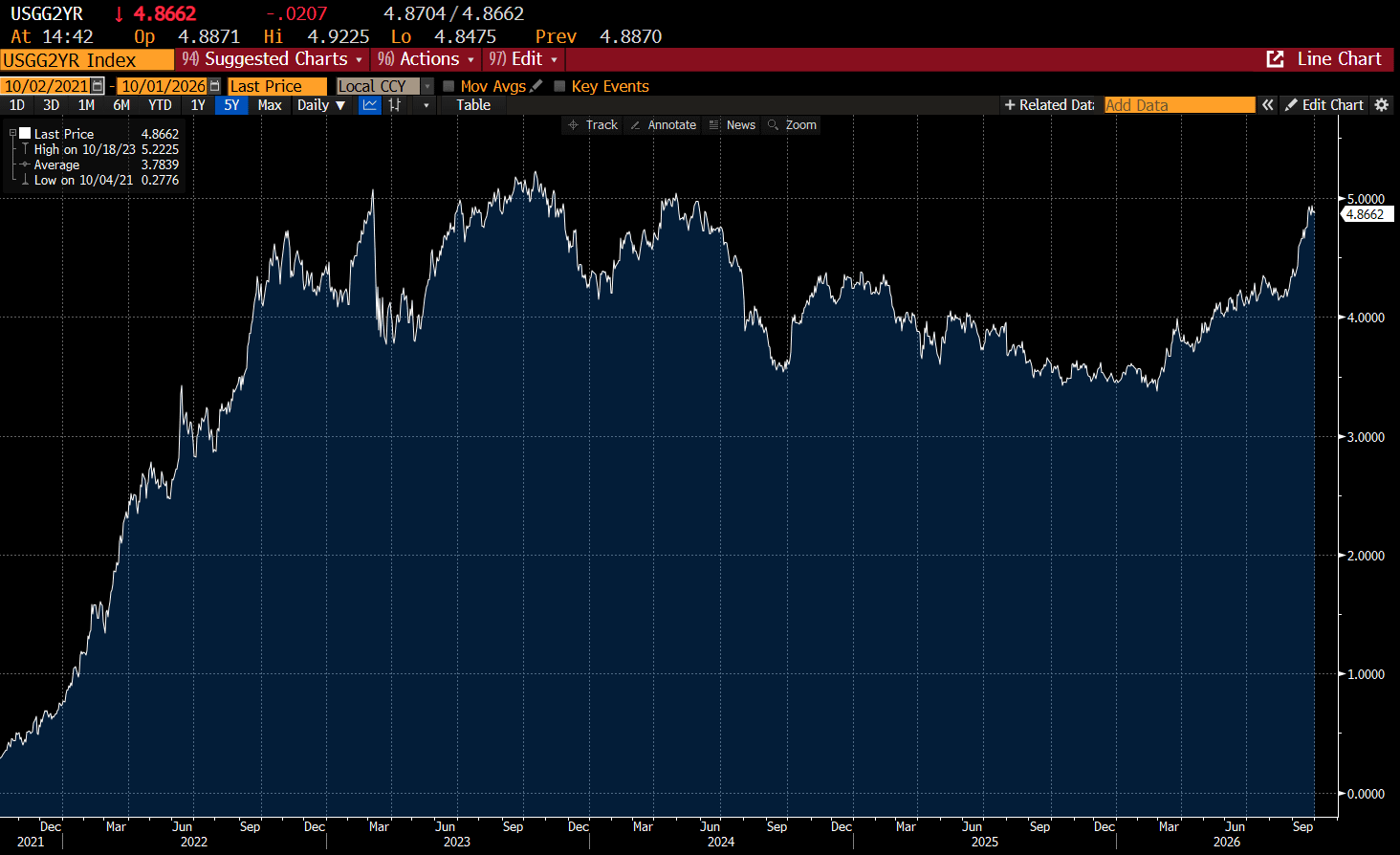
So its a political call - and if you feel confused, you should. The political sounds out of the US are very confusing. President Trump wants lower rates, and Bessent is the House on Yen and does bond buybacks, but the Fed is suddenly hawkish. Ultimately, all I can say, is there is a reason I said GLD/TLT and not long GLD or short TLT. These themes need each other to hedge out political risk, which is what last month showed. Given what I said about US primaries starting next year, long CHF still makes sense.


