
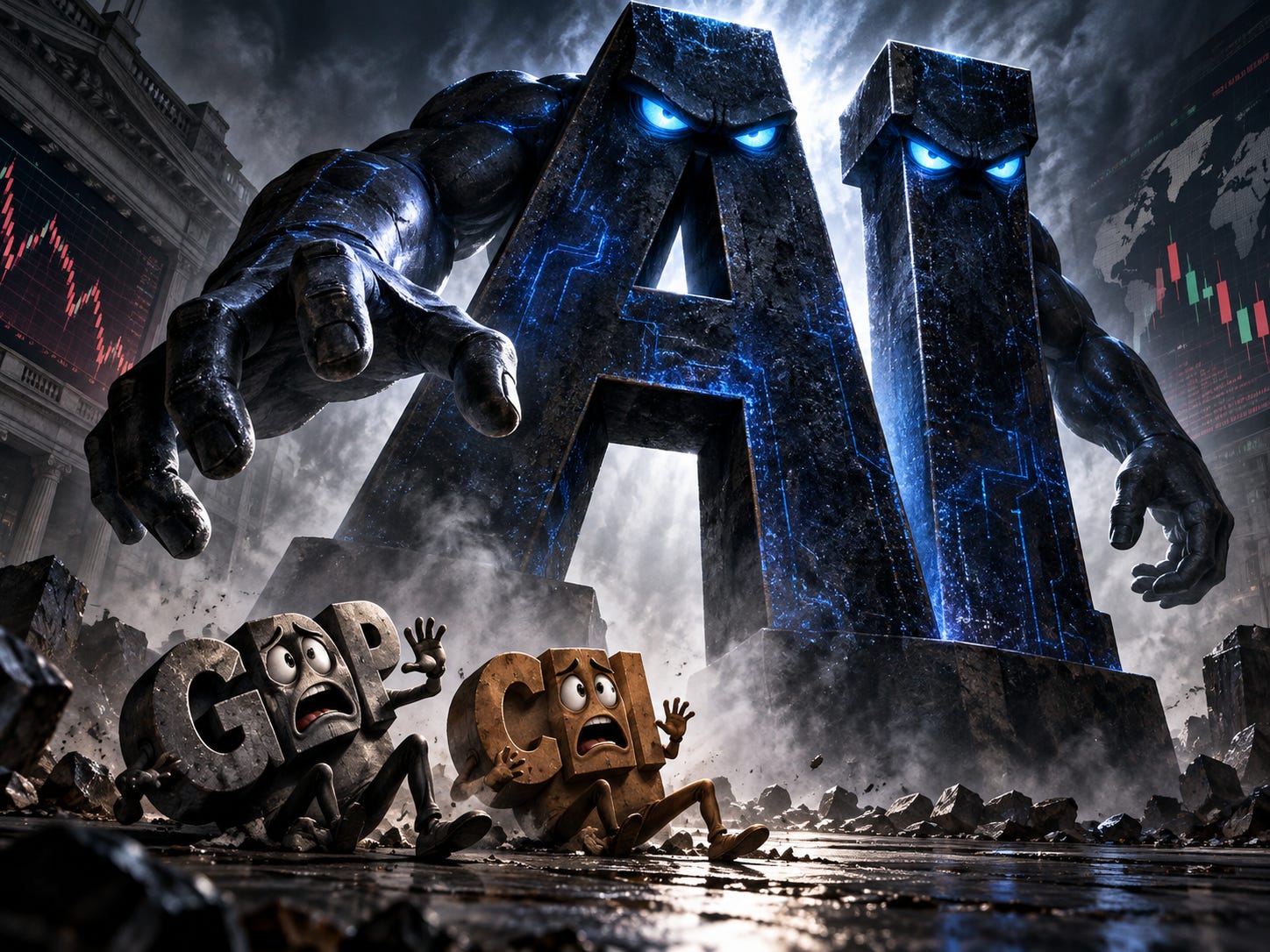
( I sat down today to try and work my way through the AI conundrum - below is a stream of consciousness style analysis - I suspect some with think me insane, and some will think me genius. Time will tell.)
The weird thing about the AI boom is how familiar it seems to me. Back in the day, I made my name shorting mining and emerging markets, based on a very simple observation. I was looking at Chinese production of steel rising almost continuously from 2000.
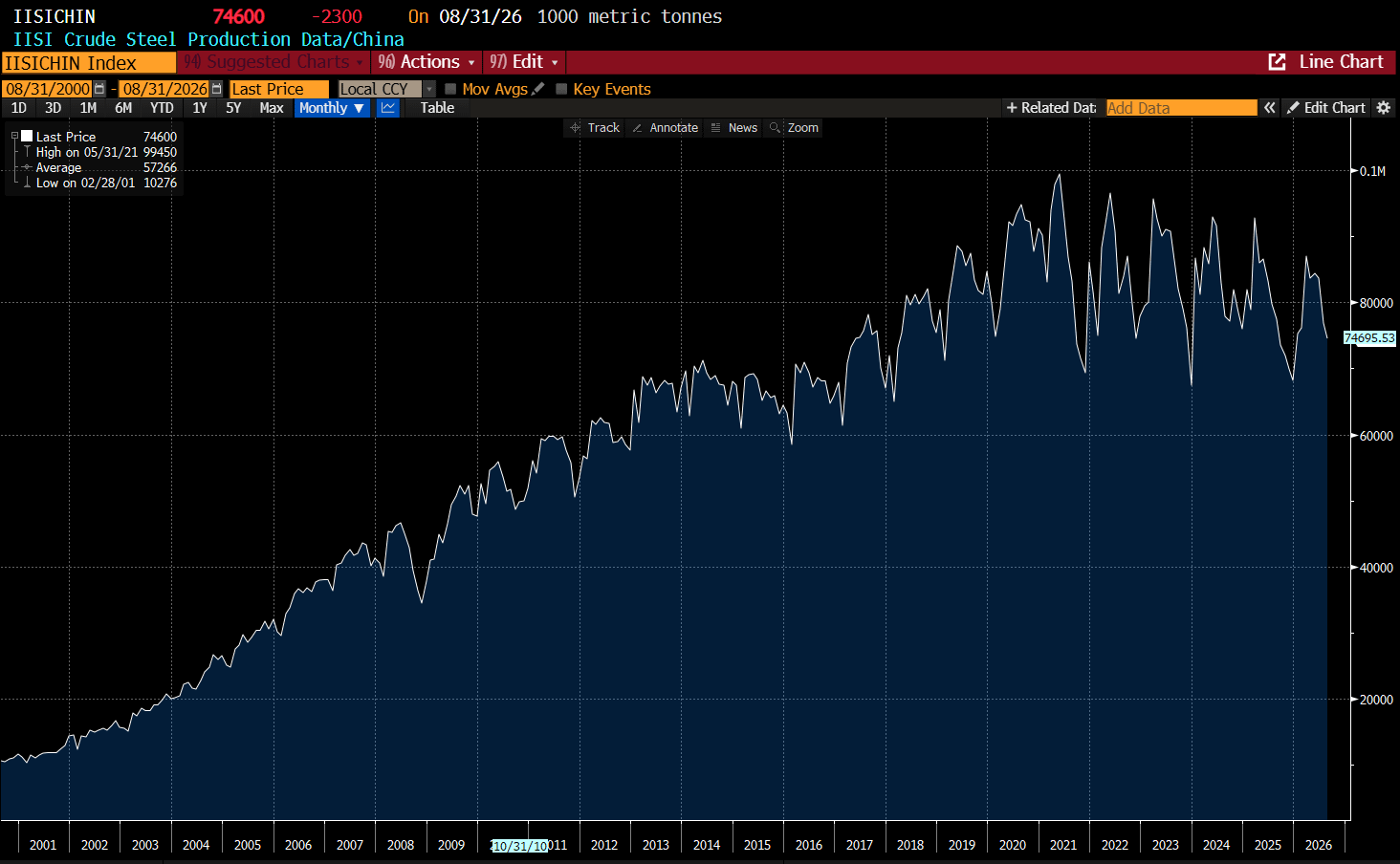
But I noticed from 2008 onwards, Chinese steel companies share prices were moving in the opposite direction to steel production. Basically, over production in China was driving margins down
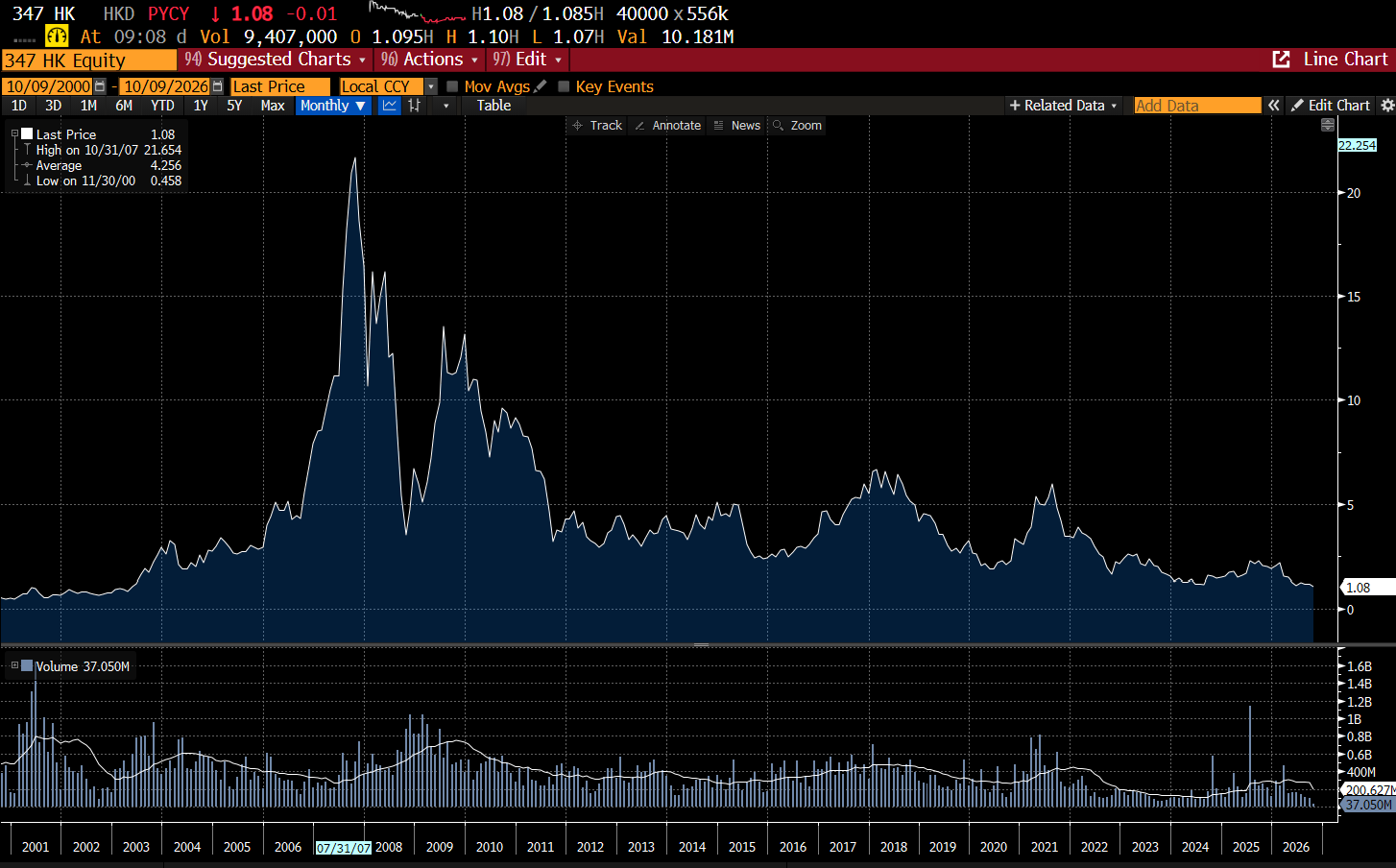
China rebar (type of steel) prices are published daily, and when they started to fall in 2011, I knew that the entire industrial commodity (iron ore, coking coal, copper, nickel) trade was at risk.
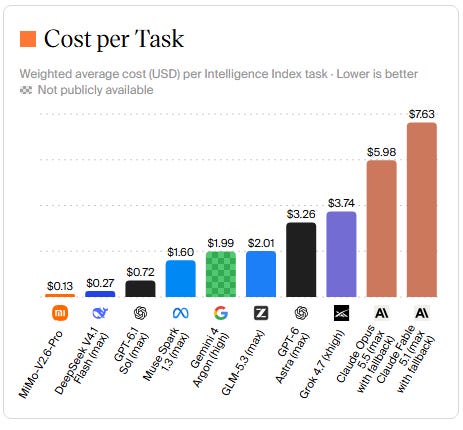
This is capitalism at is finest, and best (in my view). What is so fascinating about AI, is that in China, they seem to have embarked on a similar price war model with tech. Every time I look at AI, Chinese AI pricing is much cheaper. See DeepSeek and MiMo below.
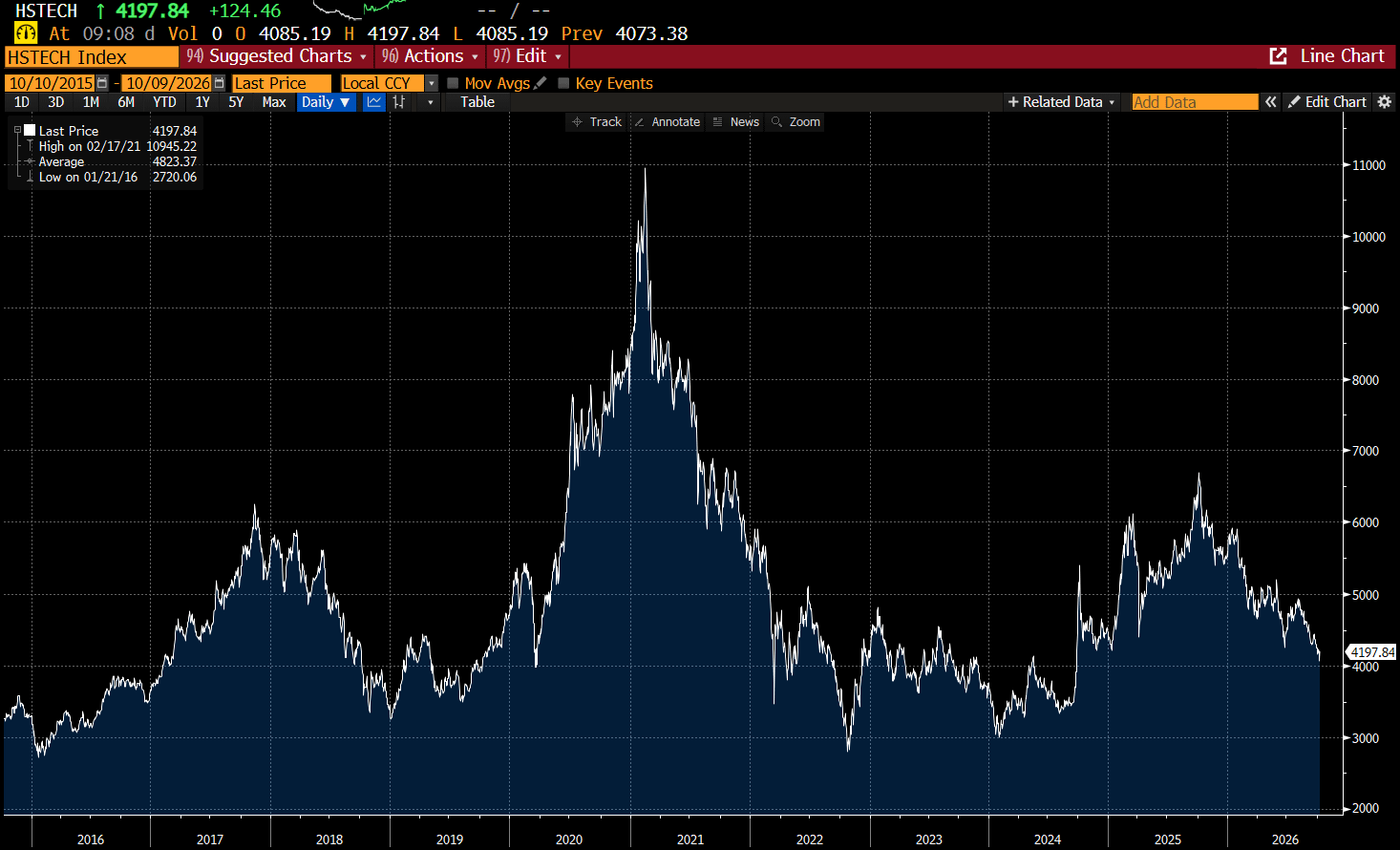
And we see it in the performance of the Hang Seng Tech Index - which basically is so uncorrelated to either the Nasdaq or the Semiconductor index, you wonder if its really tech and not actually steel related!
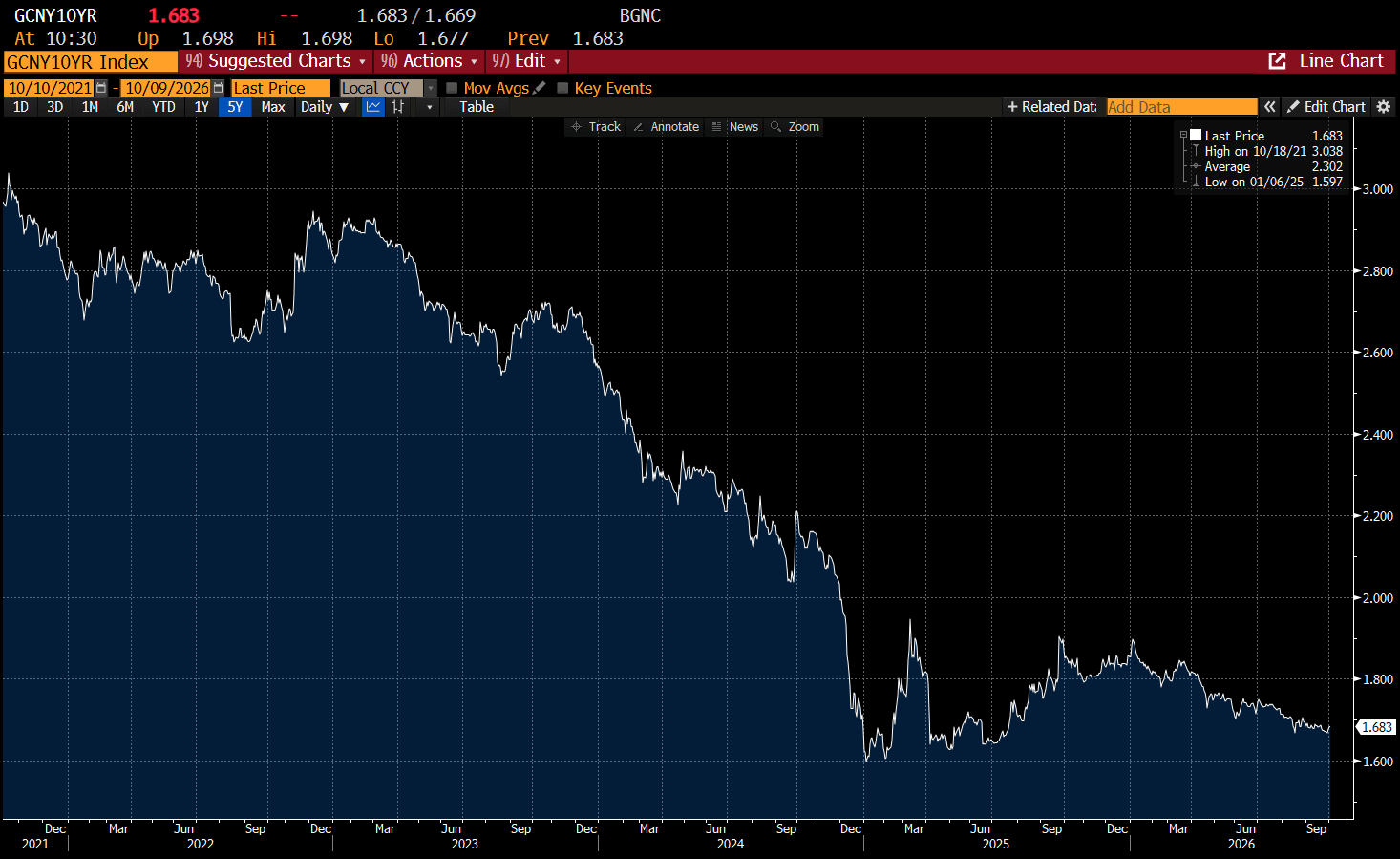
So like steel before it, Chinese tech industry competes via price. This is deflationary, and we see this in Chinese bond yields. Remember this is China, the other tech superpower, and its bond yields are low, and its stock market moribund.
I will not put up graphs of the US stock market or bonds yields, everyone knows they are the complete opposite of China. How can we explain the difference? I think where as Chinese corporates are competing on price, US corporates are competing on capital. Who can invest the most, rather than who is the cheapest. This has lead to a capex boom.
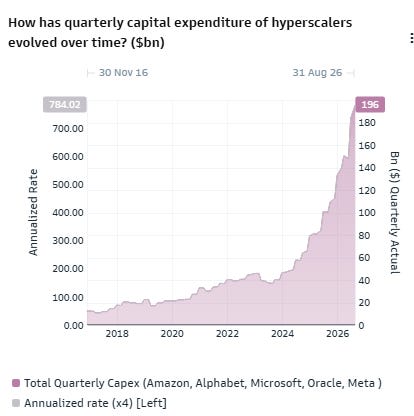
As I tell everyone, I think this is rational behaviour. If I saw Elon Musk entering my industry, I would also spend everything I could, because the other option would be eventual market share loss and decline, as we have seen with legacy car makers who failed to invest heavily in EVs. The problem for the legacy hyperscalers is that SpaceX has a USD 2 trillion market cap, for its current USD 55bn in revenue, which Musk can use to raise capital. He apparently wants to raise USD40bn. This is in addition to USD 20bn raised in corporate debt markets. For the hyperscalers, with cashflow, they generally do not issue equity (buybacks are more common), so they have also become heavily reliant on the bond market.
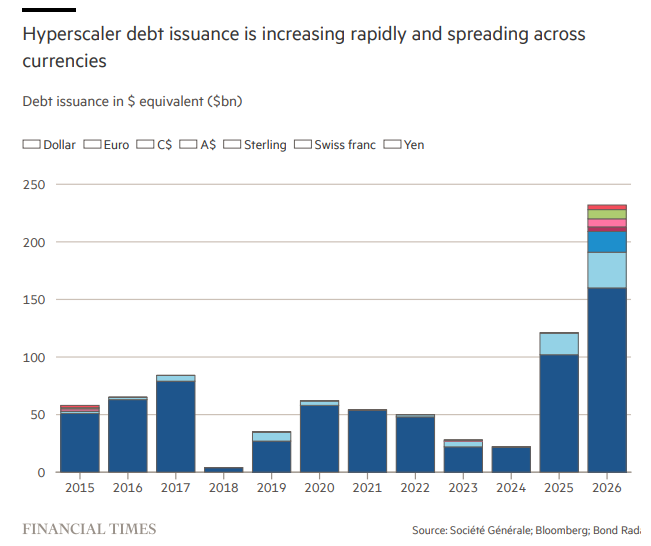
And here is the big question. Do rising tech spreads indicate credit concerns? Or that the capital borrowed is so great, that they need to offer higher prices to get investors to lend to them?
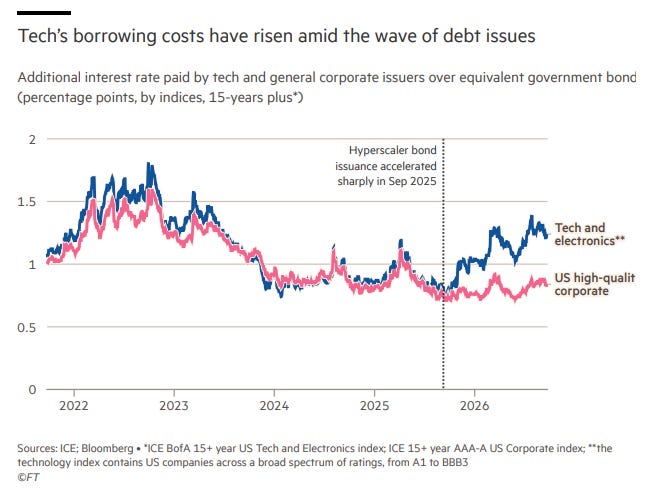
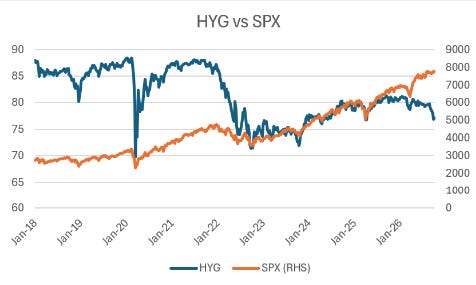
If I wanted to, I could easily paint this as tech rerun of the Chinese steel overcapacity story. And I am very tempted to do so, as many of financial guys on Substack has done, because its great marketing. But for me, I have a big problem. There is no sign that capital markets are buckling. What we have seen is equity do well even as high yield does poorly (macro trading has been poor of late due to these breakdowns).
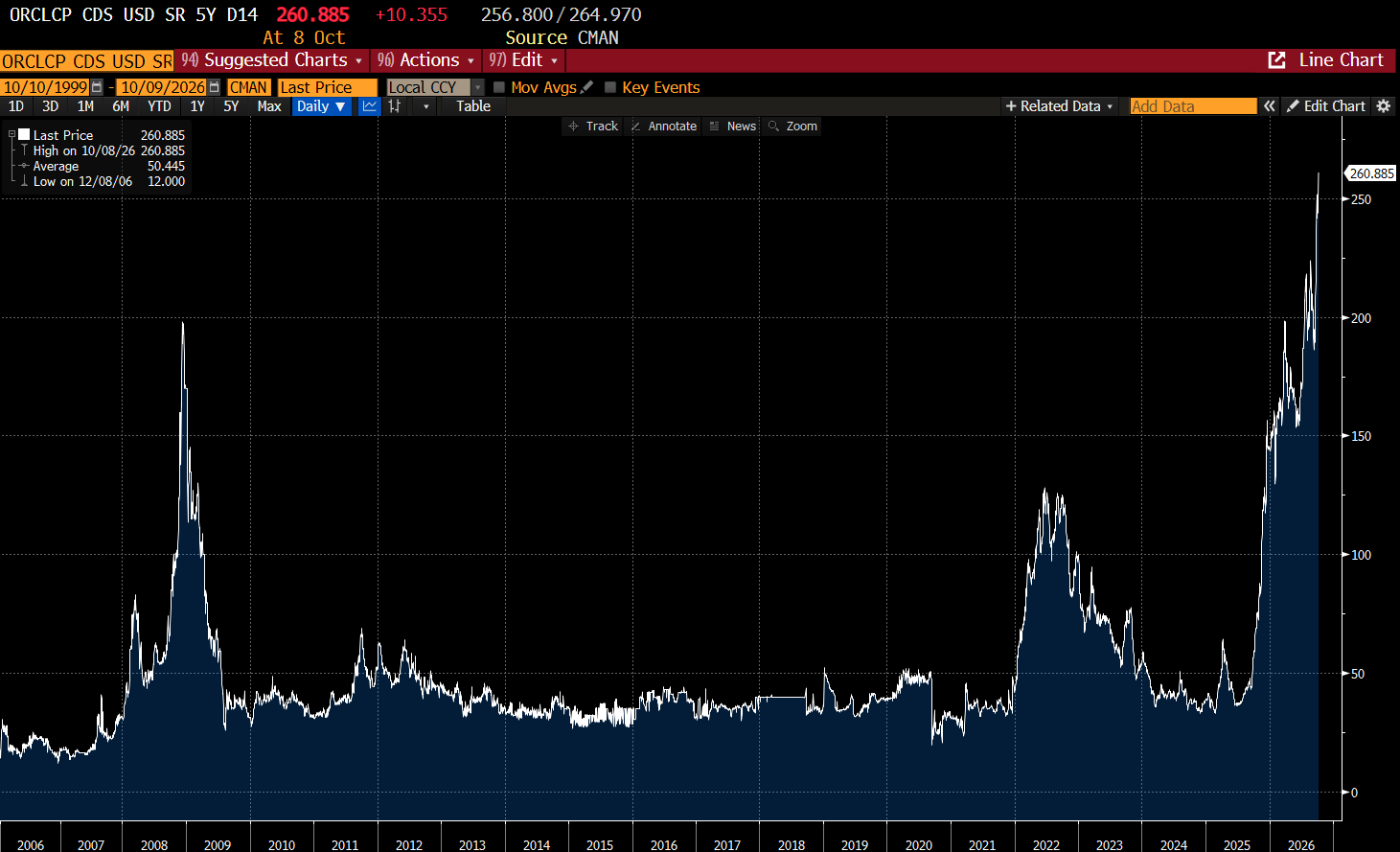
What I find fascinating as I think through this, is that corporate bond investors are basically now creating the inflation that is eating their principal. What I mean is that inflation is now being created by corporate bond issuance - not government bond issuance. Normally credit spread widening is a deflationary event. 1991 - Savings and Loans, 1998 - Asian Financial Crisis, 2007 - GFC, 2015 - China Deval, 2020 - Covid.
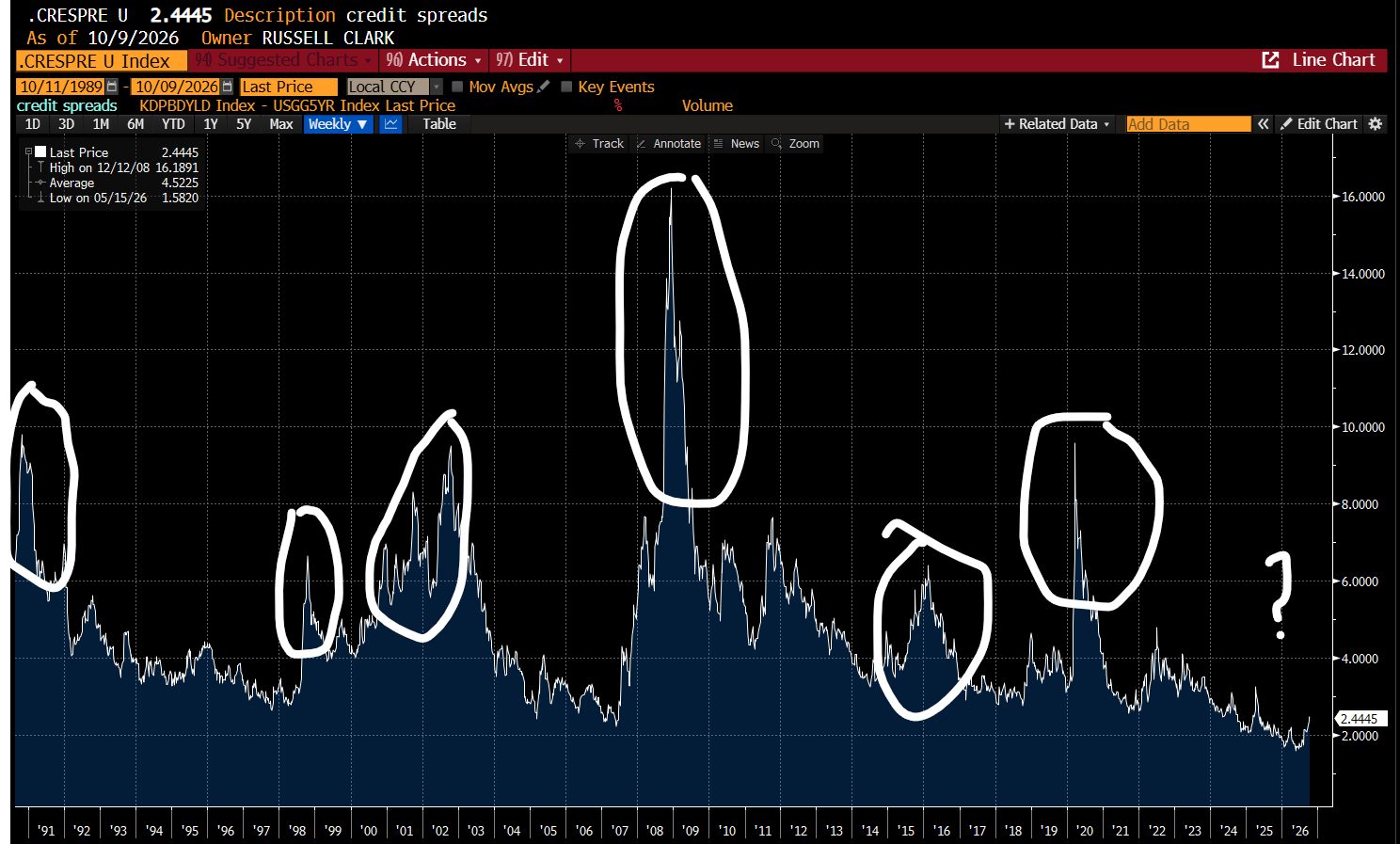
But as noted above, we are seeing spread widening on RECORD issuance of tech related bonds. This issuance is going straight into data centres and Nvidia chips, which drives growth, and inflation. The spread widening is INFLATIONARY. Hence, when investors buy tech bonds, they are creating inflation, which also hurts treasury yields.
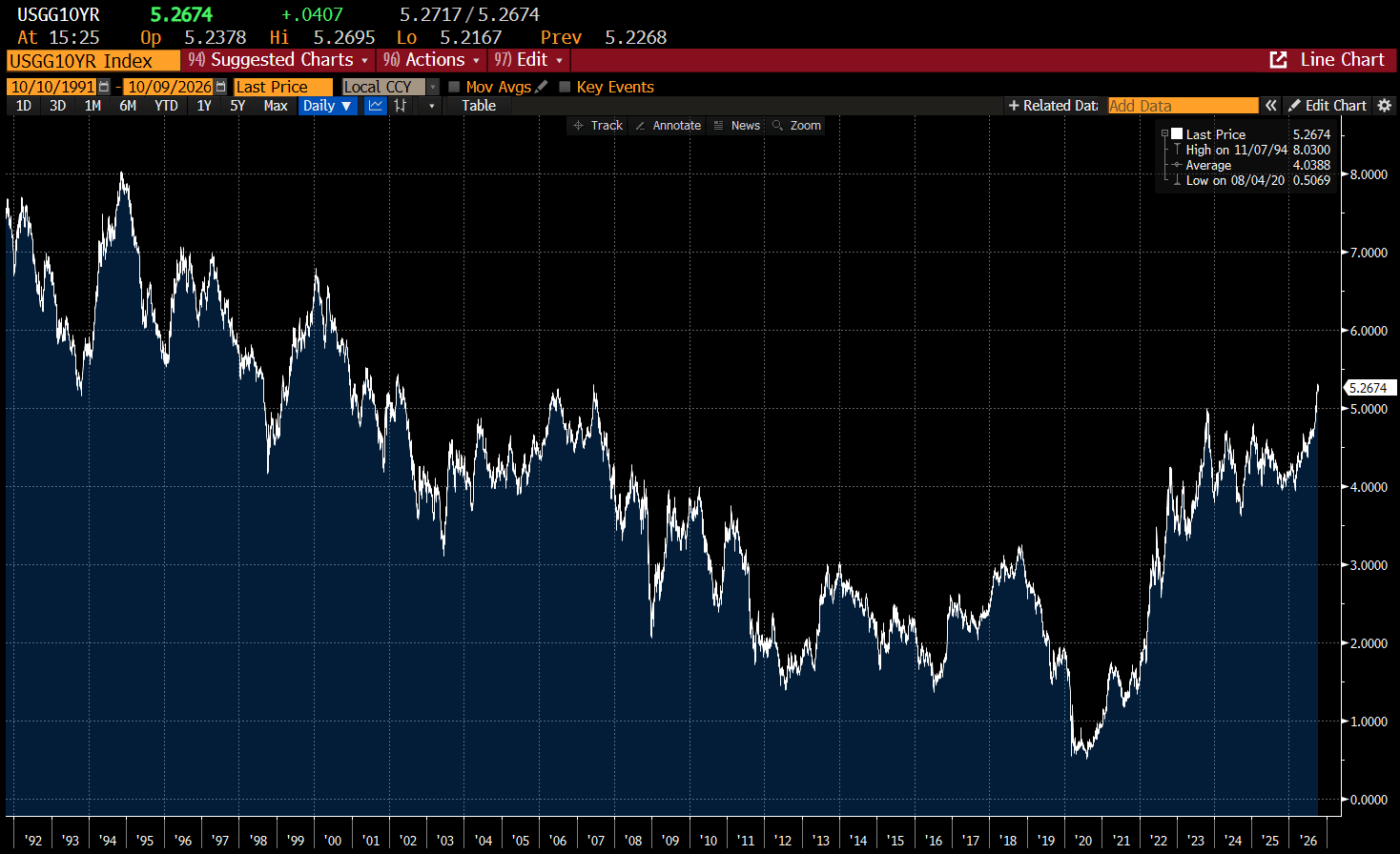
Most financial chat has been about how Oracle CDS blow out marks the end of the AI trade (so far so wrong).
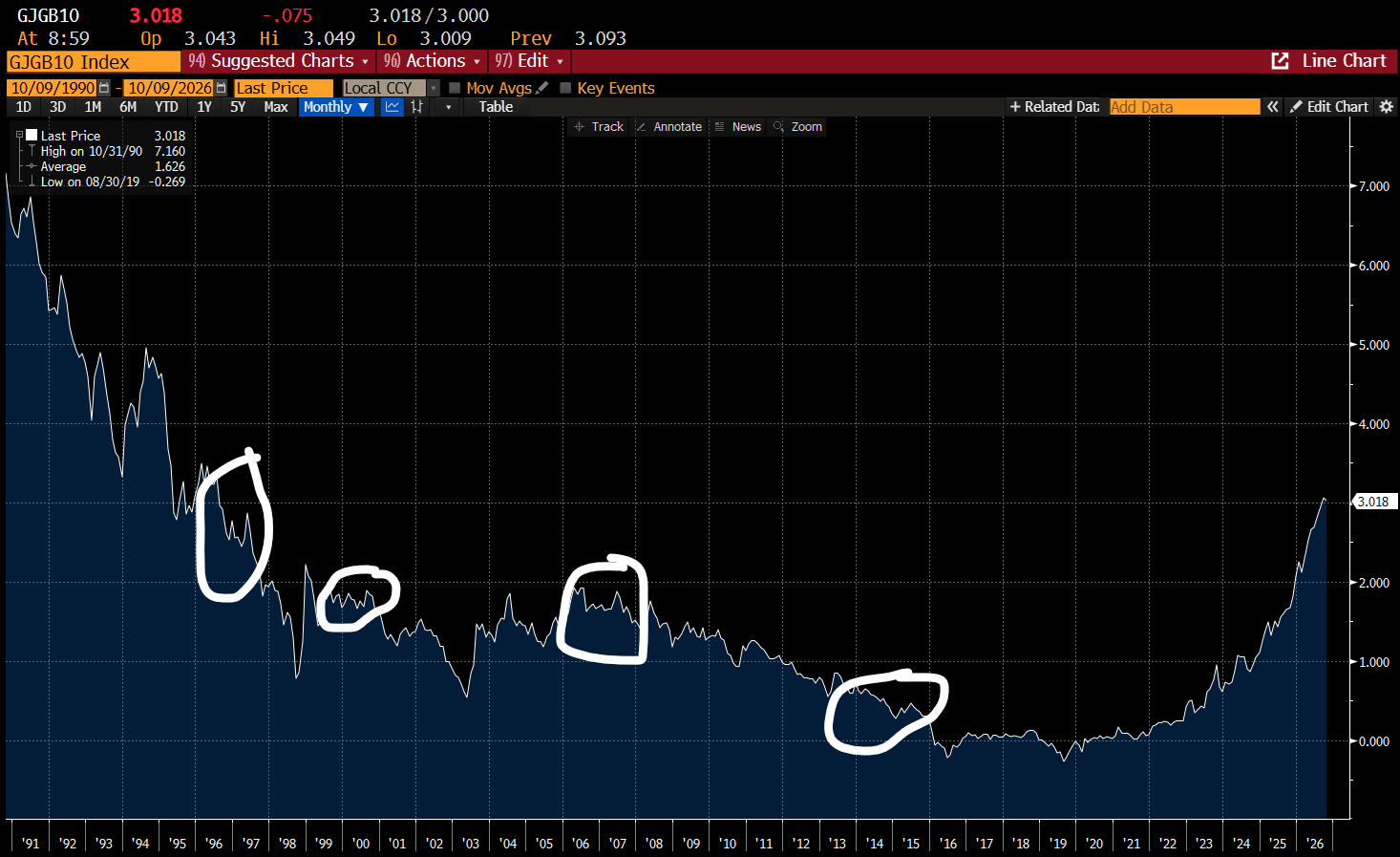
If AI is driving inflation, then we can rely on our tried and tested deflation lead indicator, the 10 year JGB. Its track record in picking deflationary events remains unrivalled. Usually with credit concerns, as seen with HYG or Oracle CDS, you would expect JGBs to rally (ie yields fall) - but not this time, and this above analysis explains why.
Amusingly, if seems if governments want lower bond yields, its looks like they would need to regulate the tech companies, as China has done. The weird thing is that this would be politically popular with voters, but difficult in practice given the amount of money in US politics these days.


