


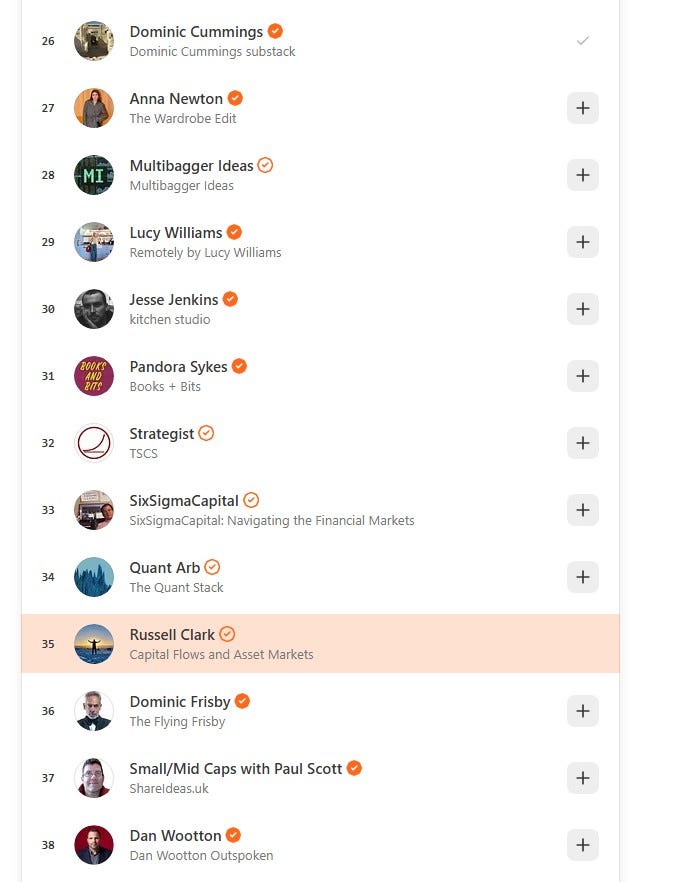
I have been on Substack since 2022, and generally speaking its been pretty good for me. I am on the UK Bestseller rankings, I am slightly above Dan Wotton, but below Dominic Cummings. There is a joke in there somewhere, but it escapes me at the moment. I also do well in the US Bestseller for Finance list.
As a London based bestseller, I have been invited to “Bestseller Summer Drinks”. I was amazed at how young most of the Substack writers were, but ended up talking to one of the other over 50s there - Brian Cox. I did some work with one of his friends, so we got chatting. I don’t like selfies - but Substack photographers managed to prove how photogenic Brian Cox is, and how unphotogenic I am. He is a very nice guy.

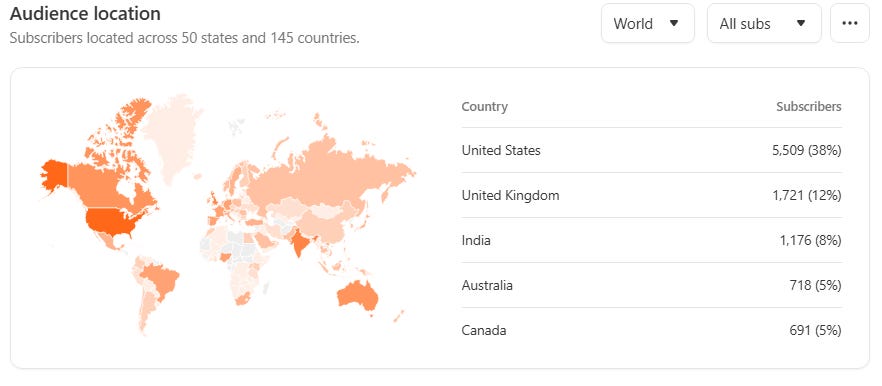
I am also amazed at the reach that Substack has given me. Special shout out to my solitary subscribers from the following countries: Greenland, Mali, Cote d’Ivoire, DRC, and Yemen. Make yourself known to me for a free upgrade.
I have also made some decent money from Substack, so I should not really complain about it - but I did see this article in my feed, from Scott Carney entitled “The Real Reason that Substack is Collapsing”. This article is by far the most liked article he has written. It is not a long article, but basically it says engagement is up, but revenue is down for Substack writers. There are two drivers of this, one normal, and one bad. The normal one is that everyone has seen some hack come on to Substack, and write something and generate some decent income, so has tried it themselves. Basically every failed macro fund manager and short seller is on here now. And honestly, why would people pay for more than one subscription to hear about how “the AI trade is about to implode”? This is normal, and we can lay this saturation problem directly at the feet of normal capitalism. And this is what Scott Carney is writing about. It is a bit like complaining about why we can’t all be NBA players, or all win a Nobel prize for something. Competition makes everything harder - and that’s life.
But there is a bigger problem with Substack, which Carney picks up on, but does fully understands the significance. I generally publish two to three articles a week, and occasionally more. That is 761 post, with another 147 drafts to boot.

It used to be that every post would generate a few more subscribers, and then the occasional viral post would see subscribers jump up. But a year ago that relationship broke down. Subscribers stopped rising.
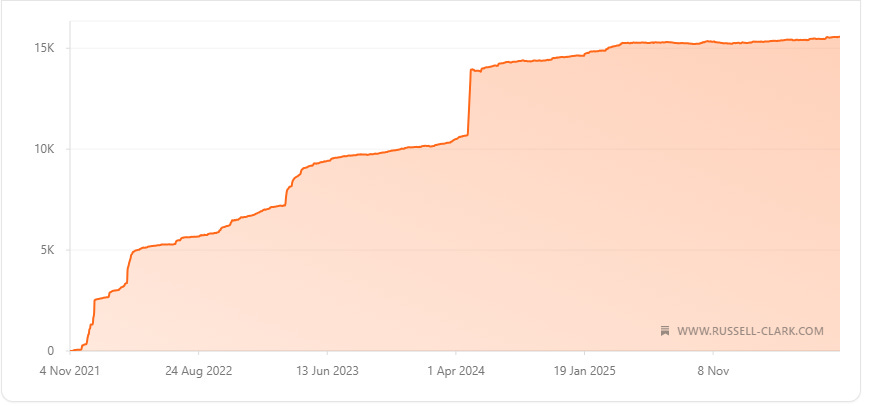
At one of the Substack drinks, I met a Substack employee and mentioned this, and they said the algorithm was now promoting “notes” over posts. Her reasoning was that substack was trying to generate more internal subscribers for writers. The thing about notes, is that it tends to generate more followers than subscribers. If you are subscriber, you are a follower, but if you are a follower, you are not a subscriber. I can download the follower and subscribers numbers directly from substack, and you can see clearly when the policy changed.
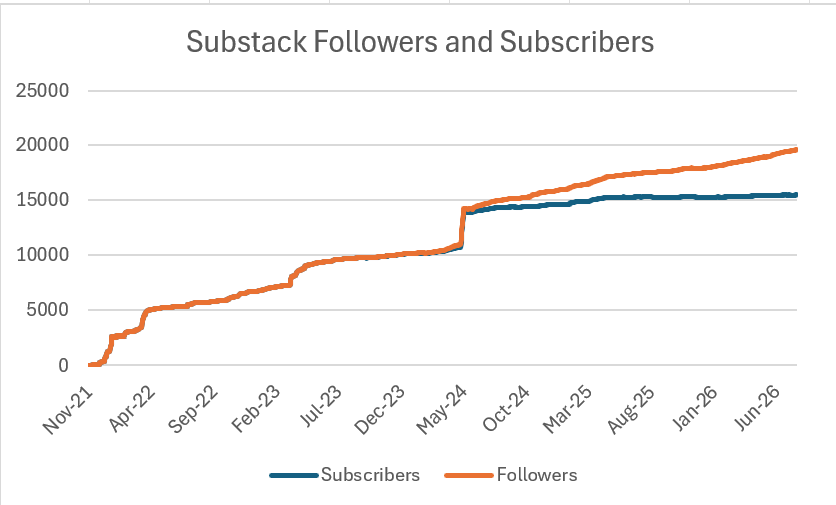
Part of me was happy that I am still increasing my “online reach” - all those posts were still generating growth. But the more I thought about it, the more negative I think this development is. With my subscribers, I can see details like their email address, and also how often they access my notes. I can see that most of my most active subs have paid me some money - and if I wanted I could hassle the non-paying ones if I wanted to.
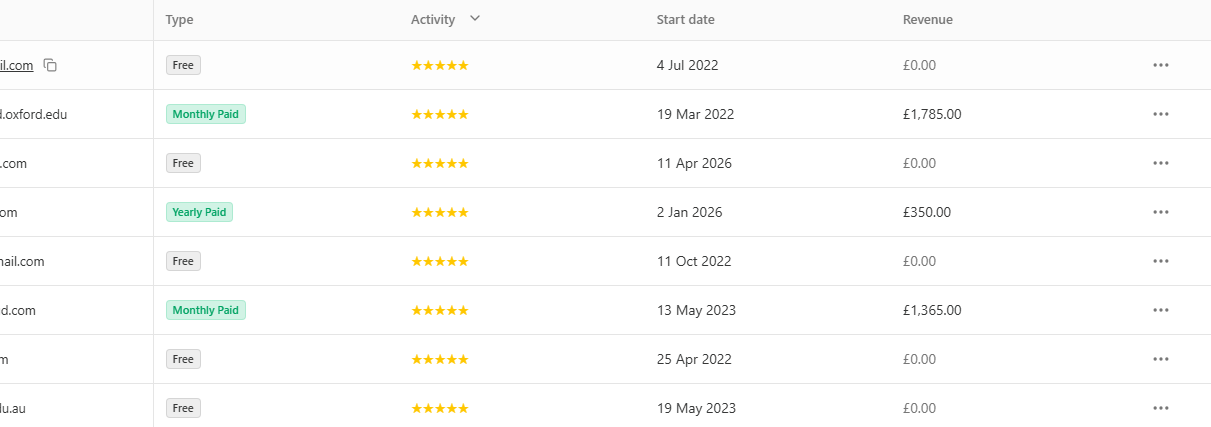
Followers, however give me nothing. I don’t know anything about them - and I don’t even know if they are real. And I can tell you this for sure - revenue follows subscribers not followers.
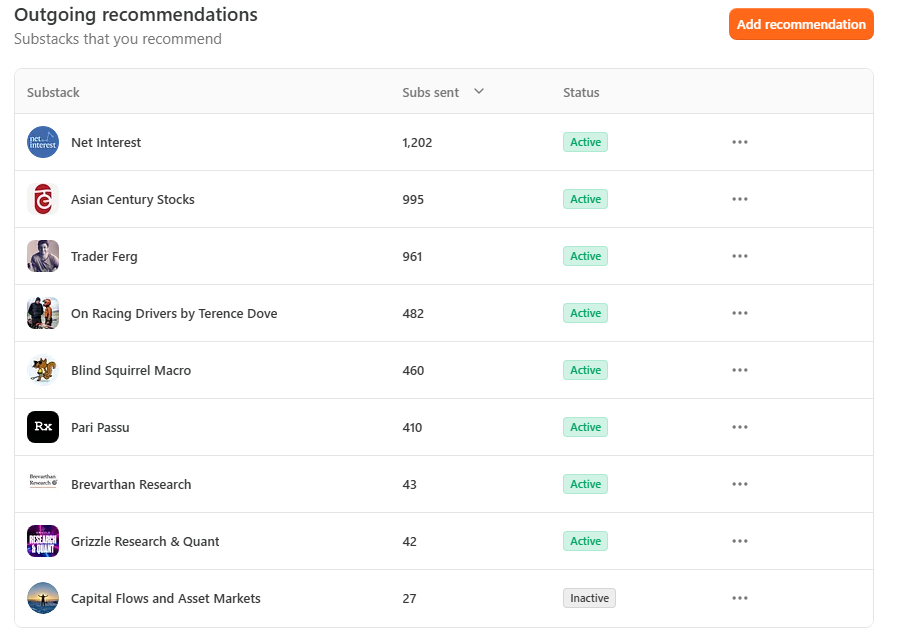
For me, this creates two big problems. The share of followers in my audience is increasing. If I decided to leave substack, I cannot easily take those followers with me. Subscribers I can, as I back up the list of subscribers every now and then. So I could set up somewhere else and move my subscribers there (in fact I run a Slice account for exactly that possibility). But the other problem is that if you are moving from an environment where substack works for you, to where you work from Substack, this makes new writers desperate for attention. In the finance part of Substack, clickbait is already very common (the coming AI bust and/or energy prices to the moon and/or coming sovereign debt default etc etc). I also get a weekly email from some rando asking to swap recommendations to try and build an audience. For what its worth, I only recommend Substacks that are good, and I have learnt something from. For reference I am recommended by 83 other Substacks, I recommend 10. I only recommend Substacks that I actually read - this is the “Russell Clark guarantee”. I am not going to risk my reputation for the sake of a few extra subs.
So the problem with Substack is the same problem that has afflicted every other social network. The pursuit of growth and revenue is driving them to make the product “worse” for users. And once you start down this route, it is very hard to change. I think I need to prepare for the inevitable time when Substack starts raising fees to compensate for slowing growth.
If you are currently only a follower - my recommendation is to change to a subscriber ASAP, so I can make sure you continue to get my views, and not be at the whim of a Substack algorithm. And I will continue to prepare a contingency plan for when Substack goes full “Twitter”.


