


I have used the red pill/blue pill analogy before. I like using it because it does capture the idea of do we choose to continue to stay in an artificial world, or do we choose to face reality? I also like it as the original Matrix was filmed in Sydney, and in fact in the lobby of UBS. The lobby that they destroy, was indeed the lobby I walked past everyday. I felt cool by association.

It goes without saying, I am a red pill type of guy. Bull markets are about dreams - blue pills, and bear markets are about realities - red pills. A lot of people are going to say the AI boom is a blue pill. I disagree, AI boom is straight out of US Business Strategy 101 - spend as much money as possible to try and destroy your competition - exactly what we saw with Amazon, Netflix and other big tech companies. Capex as a moat. Its just with AI, the competitors have more money than any other corporates have ever had before. At some point, someone will lose the AI fight, and cut spending - and when that is, I don’t know. And I am more than happy to make money from AI plays where I feel the risk reward makes sense. So no, blue pill, red pill does not refer to AI. It refers to bonds and interest rates. First of all, plainly the US fiscal position make little to no sense. With Donald Trump essentially withdrawing US security guarantees - why would any foreigner want to own this “asset”?

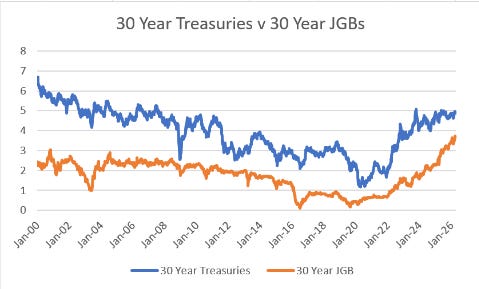
Much of the MMT model, which seemingly the current and former US administration lean heavily on, was driven by the extremely low bond yields in Japan despite large fiscal deficits. The problem is that yields are not low in Japan anymore.
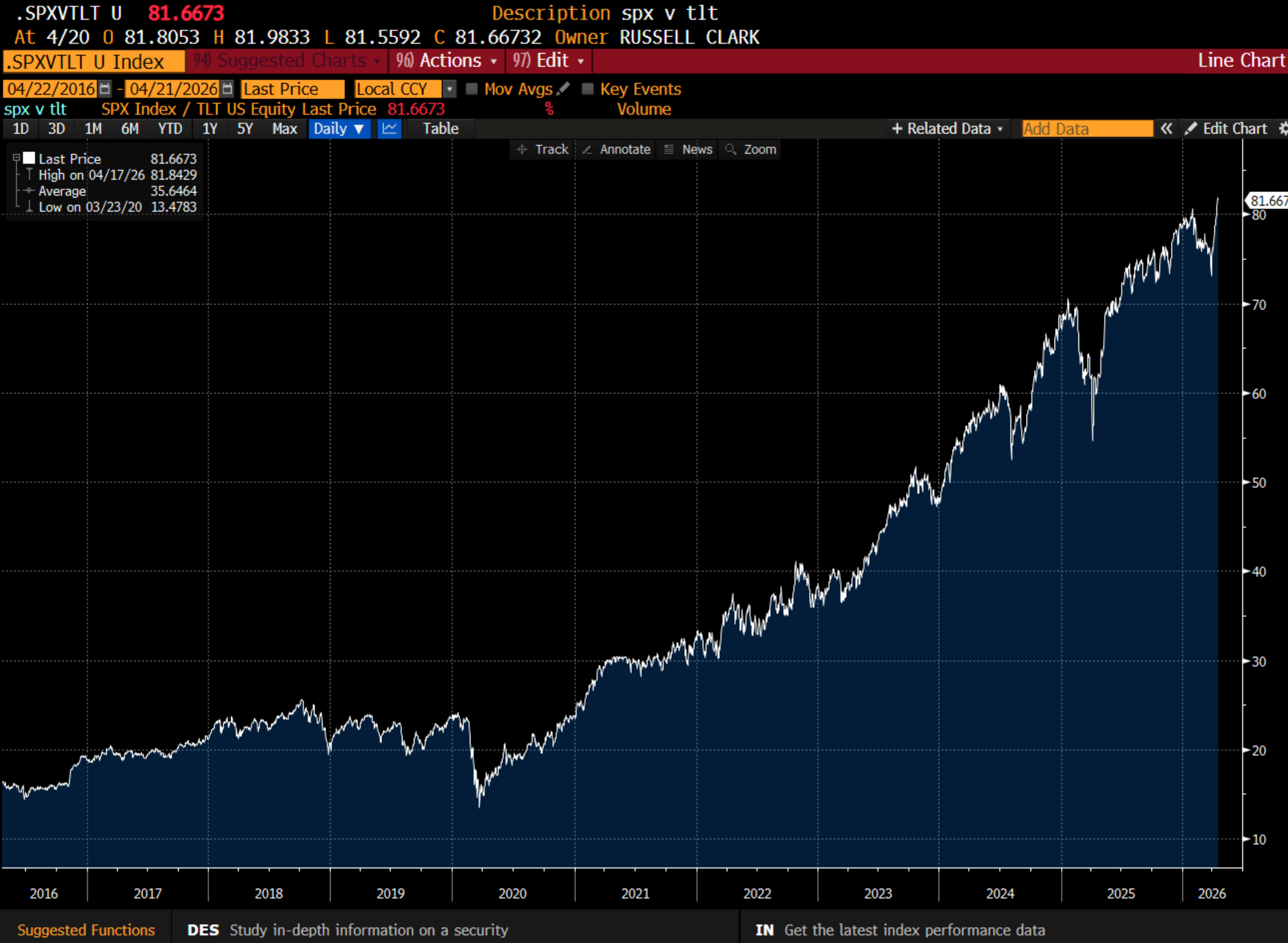
Since 2020, the best way to play this MMT approach is to be long SPX and short TLT. This was the exact opposite of how I used to think about markets, and as I like to point out, is an ideal market for passive. Many people say passive distorts markets, but I see the success of passive being driven by a market that is very supportive of passive investing. In recent years, we have seen some sharp reversals in this trend, but so far the trend is still holding. I see this as tremors before a bigger shock - but I could be wrong.
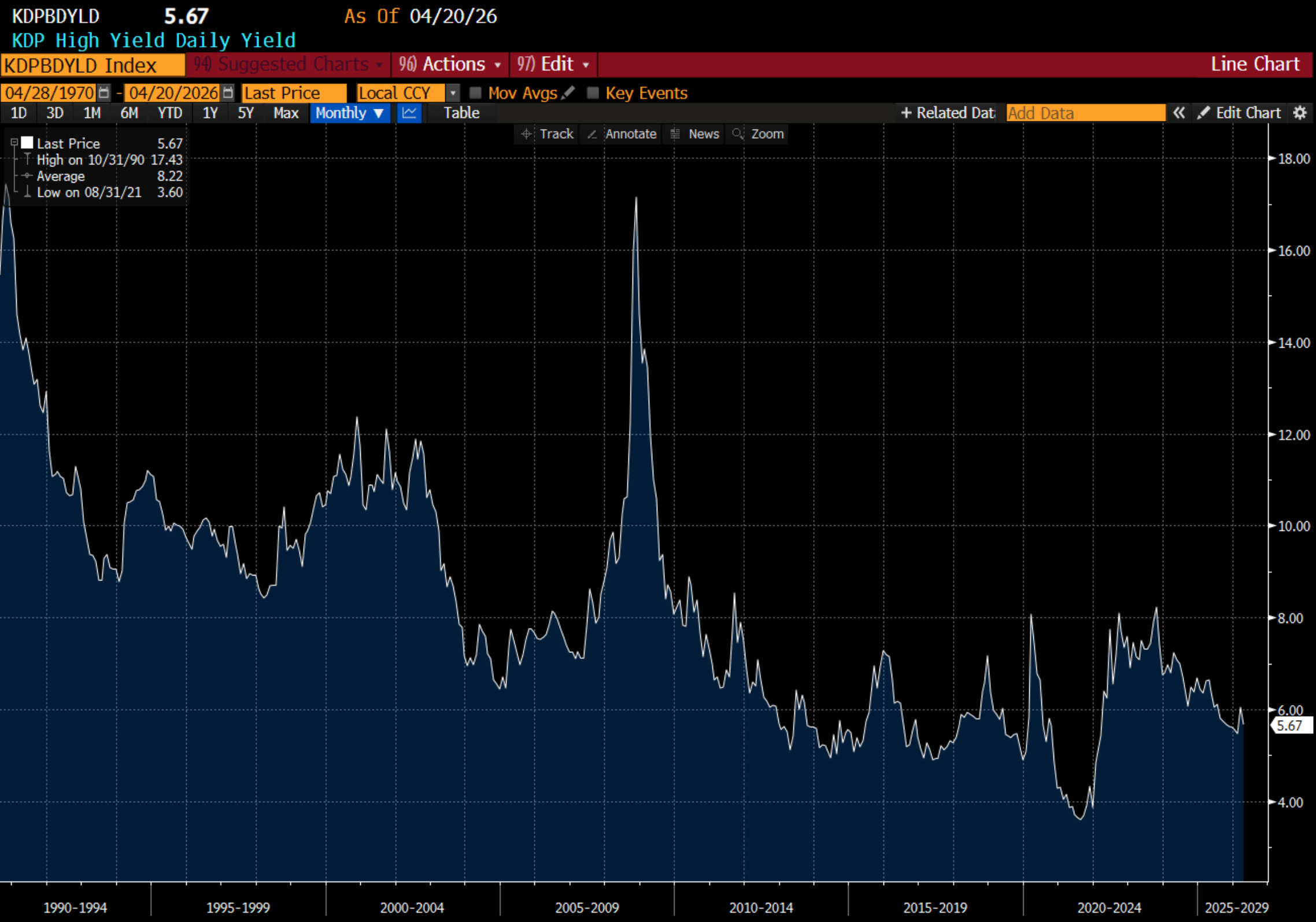
Why is the SPX/TLT a blue pill type of trade? Equities are highly correlated to corporate debt markets. The yield of KDP High Yield has rarely been lower in nominal terms.
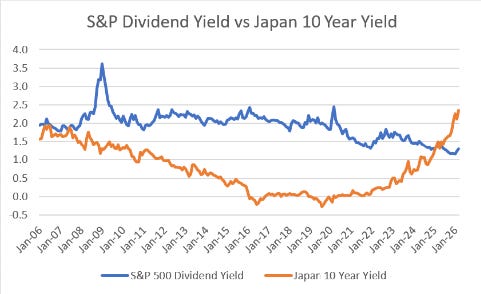
Or another way to look at it, US equities have never been more expensive relative to JGB yields.
So going back to the title of this substack, “Capital Flows and Asset Markets”, my expectation is that capital should look to leave the US at some point, which should become a mutually reinforcing shock. As capital leaves, the cost of capital rises, which makes US assets less attractive, causing more capital to leave, so on so forth. For me, the best sign of this happening would be gold beginning to outperform the SPX. Why? Because in essence, US fiscal spending has socialised all corporate risk - so if the US government gets into trouble, everyone is the US is in trouble. And in that scenario, all US assets are unattractive.
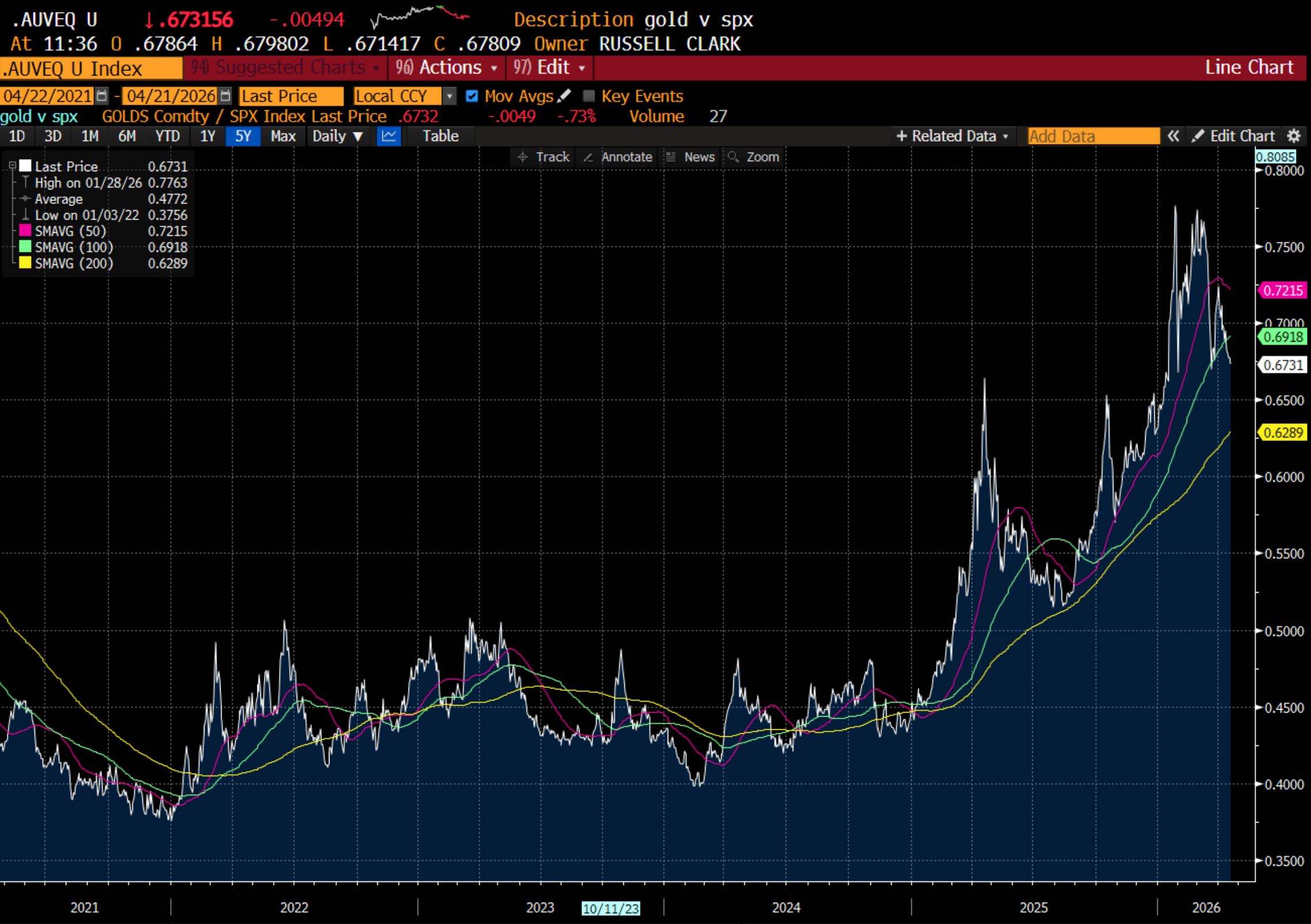
So the red pill/blue bill analogy here is that gold and JGBs are saying that markets can see yields going higher. High yield debt, and the SPX are saying yields are going lower. Looking at a graph of US 30 year yield, market is in no man’s land. You can believe what you want to believe here - blue pill or red pill.
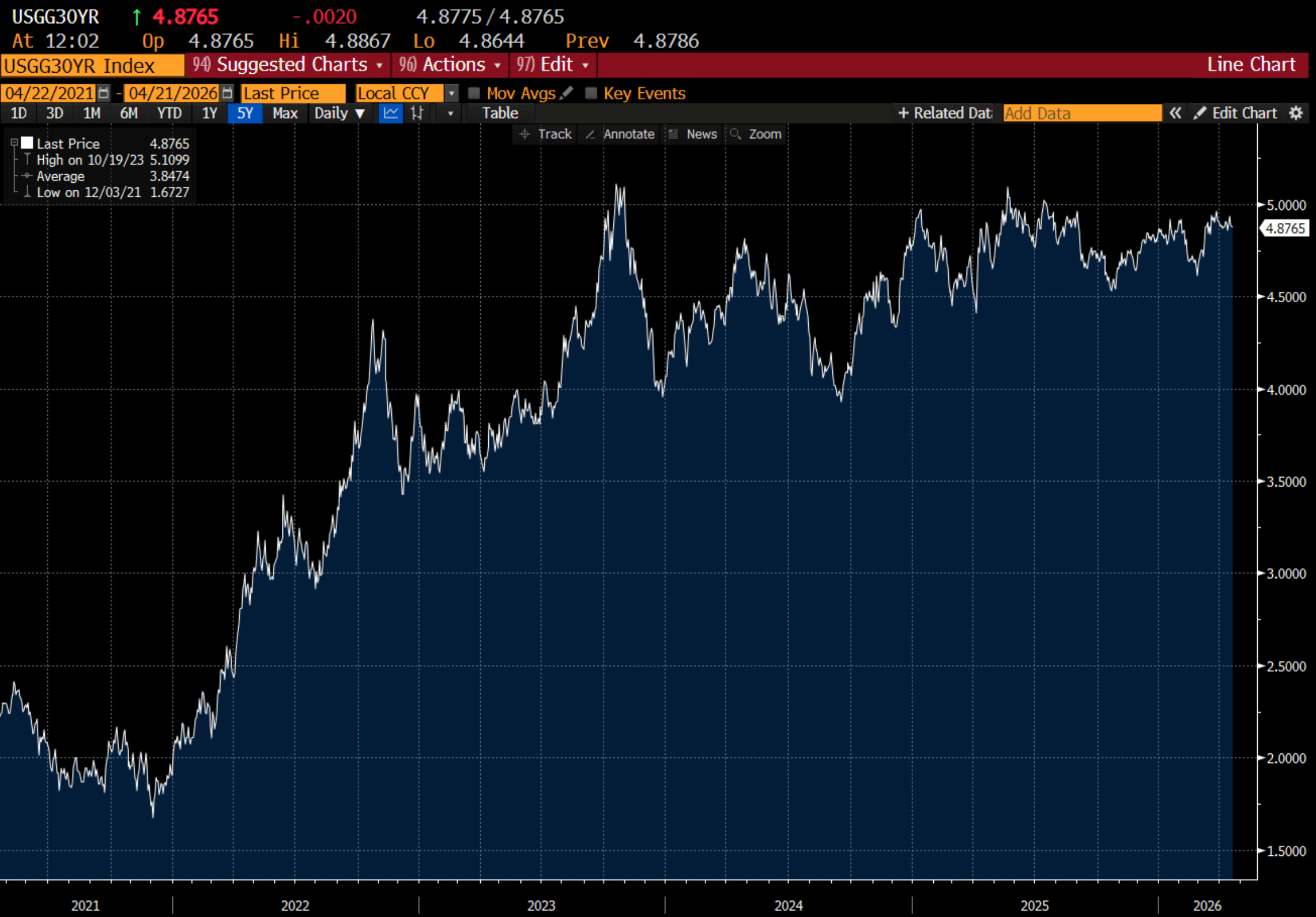
I think red pill from here - but if yields fall, AND gold falls from here - then we know we are in a blue pill world, and the best trade will be SPX/TLT. But it does feel like a pivotal moment for me - markets are confused, trend followers are all over the place. These are the moments when big moves can happen - red pill or blue pill. We will find out soon.


