


Three years ago I wrote a note on How to Read The Economist. A lot of financial people do not take the Economist seriously - there is the famous contra indicator of the cover being the exact wrong thing to do. I do not disagree with this. But as I say above, and in my previously published note, the key to the Economist is to read it backwards.
The first thing you find at the back is the Obituary. I find reading the Obituary is great motivation to try and do great things with my life. In fact one of my goals is to have my Obituary published in the Economist. This does mean I would have to fake my death to know if I have achieved this or not. This raise a few issues, but I will deal with that when I think I have done enough with my life to get a write up.
So when I picked up the paper copy of the Economist on my way to the toilet, rather than read about Indonesia at a Crossroads (again), I started at the back. The Obituary of Raghu Rai, and his photographs of the Bhopal tragedy humbled me. I pondered if that is the standard, then I will never make it. Raghu Rai was not only an excellent photographer but a brave and moral man. I must do better.
After contemplating my shortcomings for awhile, I turned the page from left to right. This took me to the back of the Culture section, which was reviewing the book Project Maven by Katrina Manson on AI and American warfare.
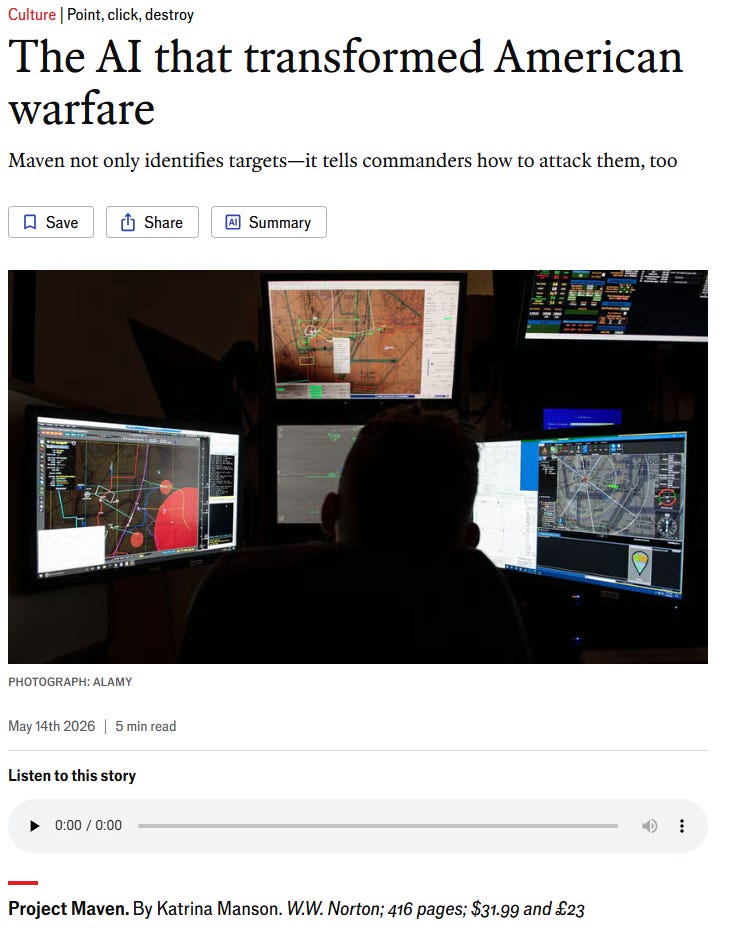
I knew that AI was being used with drones, sometimes to fly autonomously, but from what I had read, Russia was able to keep pace with Ukraine here. But as I read the article, what came clear, is that ability to crunch huge sets of data points was becoming ever more important. The other thing that it makes clear, is that AI starts off making a lot of mistakes, but then learns rapidly.
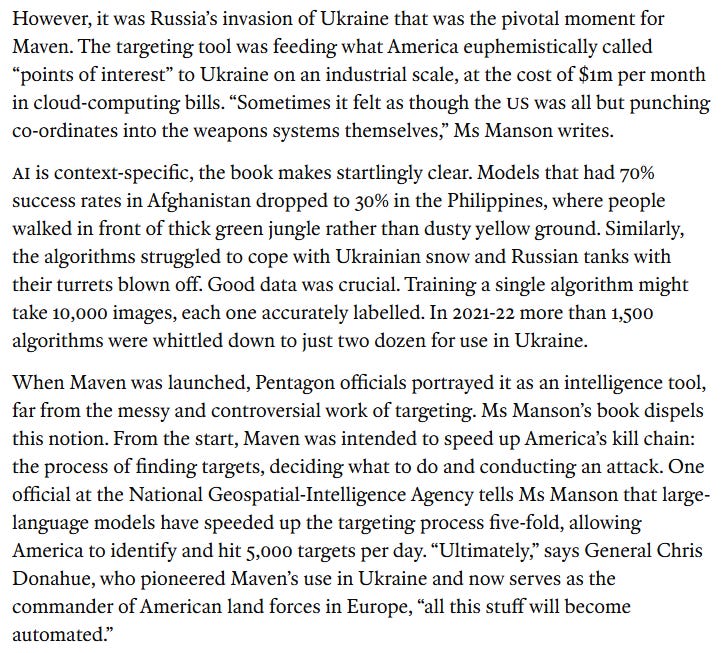
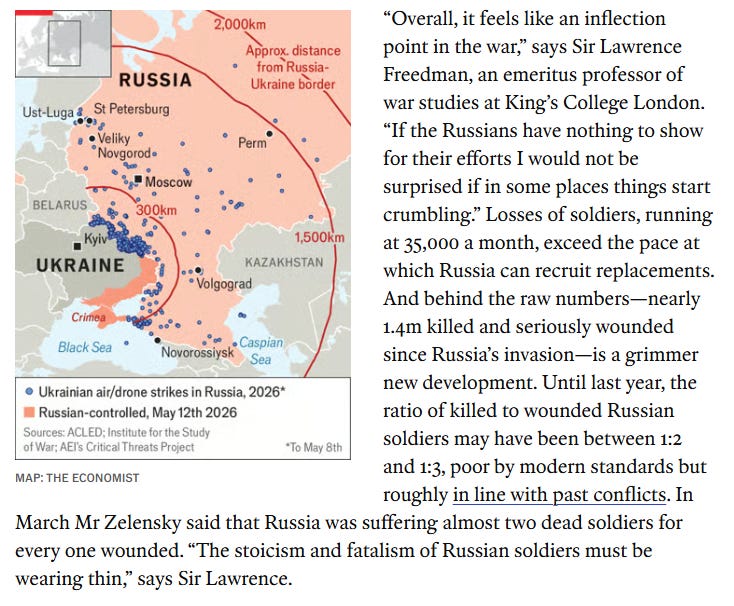
This seems to be made clear with Ukraine now seemingly turning the corner in the War with Russia. Drones and AI now seem to be much more effective than at the start of the war. This below is taken from another Economist article.
Since the AI boom started I have wondered why American corporations have been willing to accept the huge price increases, particularly when Chinese AI seems to be so much cheaper. I really thought the DeepSeek moment last year would be a motivator for US corporations to drive down prices. Instead pricing has continued to surge. In recent weeks, I have been thinking that the hyperscalers are pushing up prices to try and bankrupt the competition.

But if AI is seen as an extension of the “Department of War” then the above pricing dynamics make much more sense. When the size of the navy was important to America, then building far more ships than anyone else was the most important thing. Prior to Pearl Harbor, the US probably correctly perceived that a huge navy was not really necessary. After Pearl Harbor, a navy that was many times larger than Japan’s was seen as necessary.
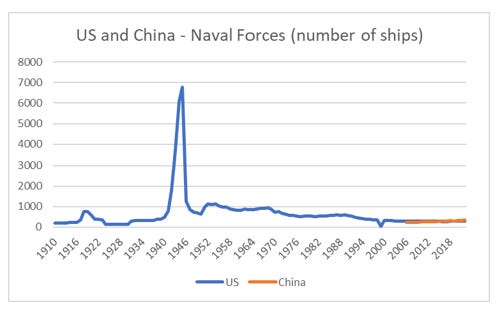
A similar dynamic played out with nuclear weapons. Once USSR had nuclear weapons, too much was not enough.
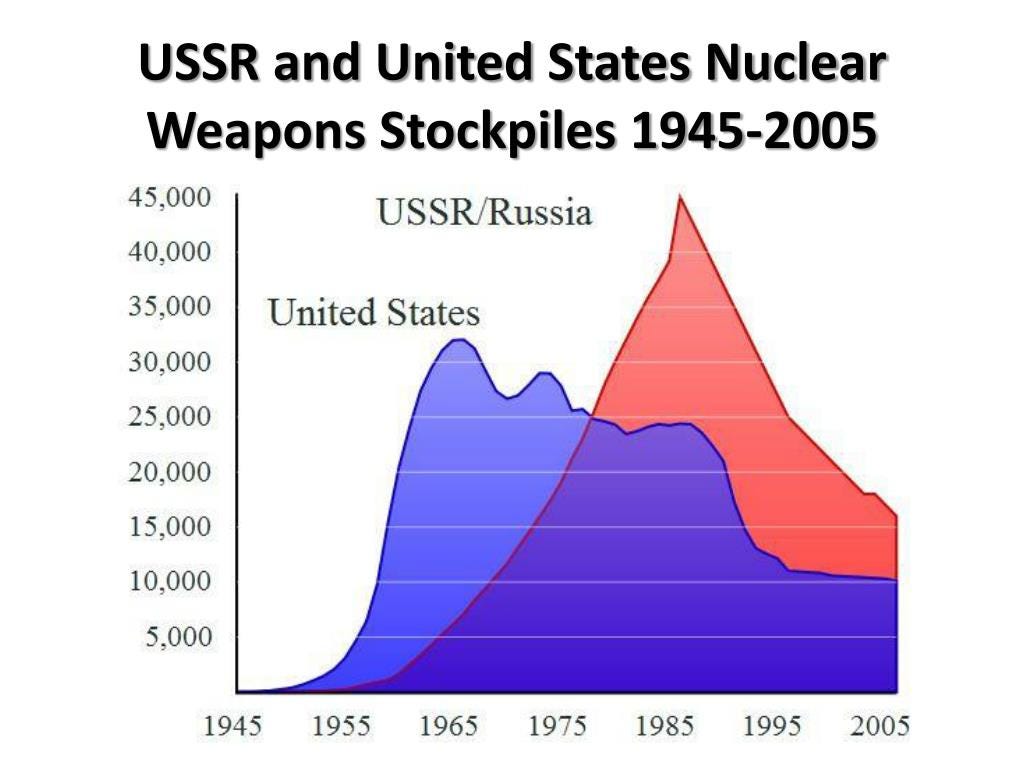
And the US has a good model for bringing on supply - it guarantees payments and profits to encourage private sector investment and innovation. If anyone watched the movie Aviator about Howard Hughes, he was criticised for building a plane that was never flown, but this was perfectly inline with how the US does things. AI as a military trade makes much more sense than a rational economic exercise. But the risk/reward for AI then moves to a political calculation. More on that another time.
Also, if the above analysis is correct, and AI is learning, we should expect US drone strikes to become more and more effective against Iran, just as Ukraine has become more effective against Russia. That would be a real game changer and bearish for oil. It would also effectively imply that Taiwan was also now impregnable, and could only be reunified through peaceful means. Strangely, if that did become the case, it would be bearish for AI trade as rational investing would take over again. Interesting times indeed - and another lesson in why I read the Economist backwards.


