


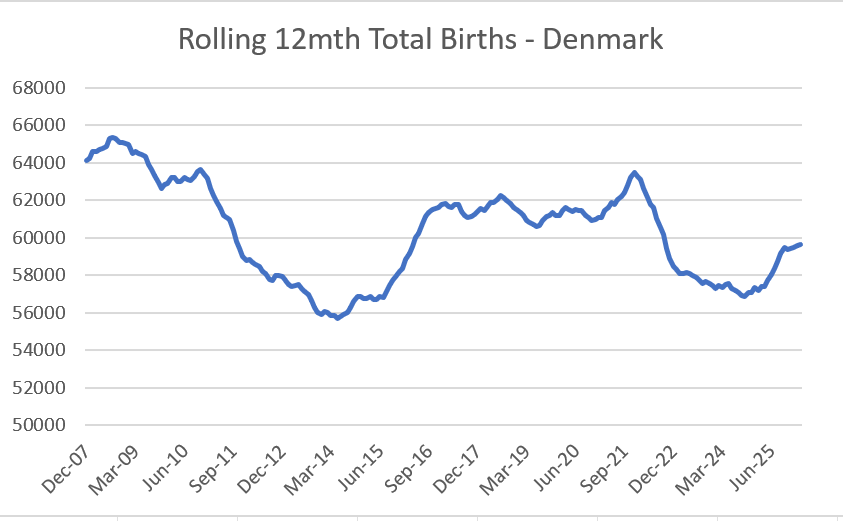
I have been generally very bullish on fertility rates rising again. I saw three big changes - first was rising wages, the second was improved reproductive technology, and thirdly was the rise of “work from home” culture, which made raising children easier. The one country that might be the first to show an inflection higher in birth rates was Denmark, which has greatly liberalised its access to reproductive technology. Sadly, month birth data has not really supported this view. Laws were liberalised in 2015, which saw a birth spike, but post Covid birth rates have fallen again.
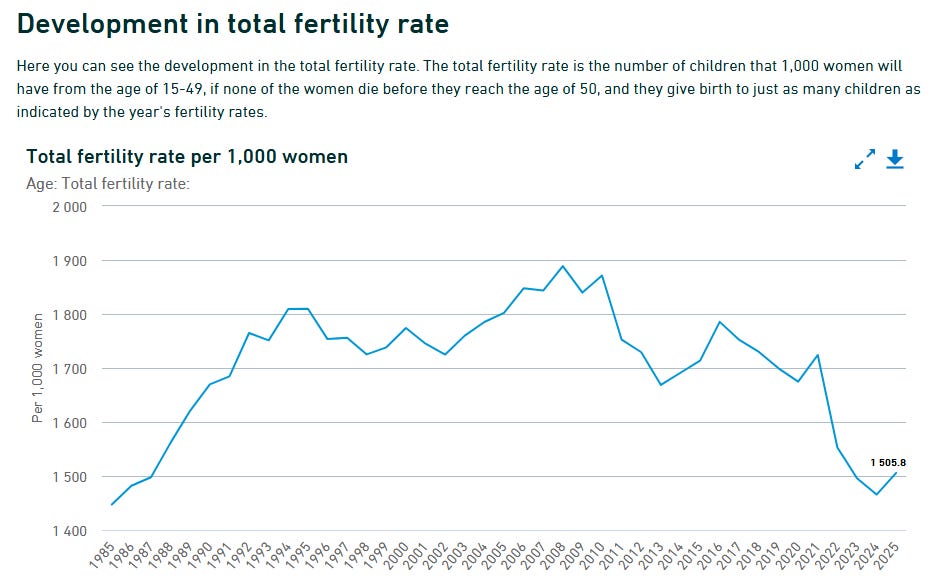
I also liked Denmark, as Scandinavian nations tend to be quite progressive, with strong maternity rights. Despite this, Danish fertility rates remain low.
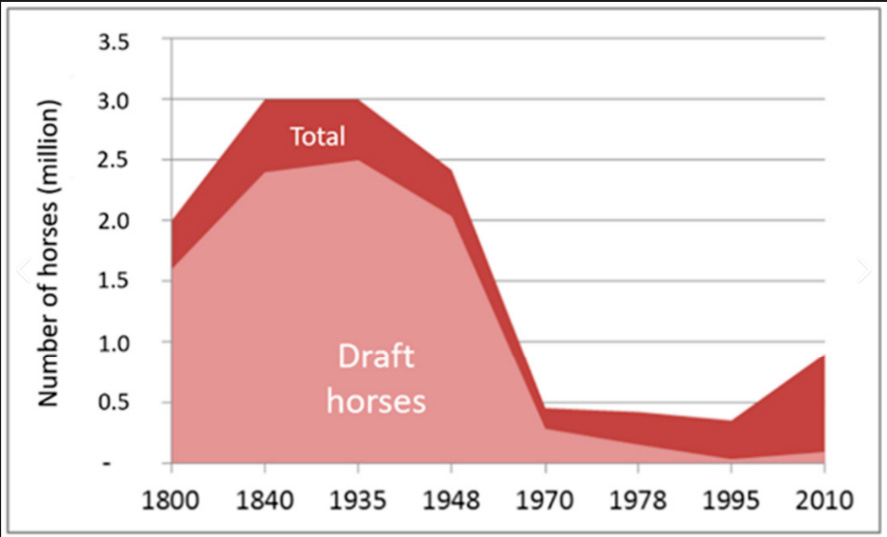
My brother forwarded to me a post on Facebook under the account name The Visible Hand which I found interesting. Basically, Visible Hand is arguing that fertility rates are declining because children are no longer a necessity, but a luxury. Whereas a hundred years ago, you needed kids as free labour and potential pension pot, now these needs are met through other means. The comparison he made was to horses. We used to need horses for everything, but as mechanised transport took off, horse population has collapsed, and owning a horse became a luxury/prestige item.
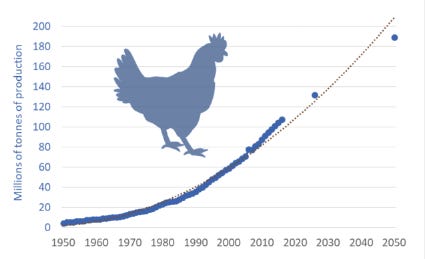
And we can compare this to say the numbers of chickens that exist today. Obviously we still need chickens for sustenance, and so their numbers continue to increase. For anyone familiar with chicken breeding will be familiar with the extreme use of technology to optimise chicken production.
It is an interesting argument, and it does raise the question of free-will. Horse and chicken populations are closely controlled by humans. And after the Malthusian fears of over-population in the 1960s and 1970s, humans made a conscious effort to reduce population growth, most notoriously with China’s one-child policy. But for the last ten years or so, politics has switched from reducing population growth, to promoting it. But as the Danish data shows, with still little to show for it.
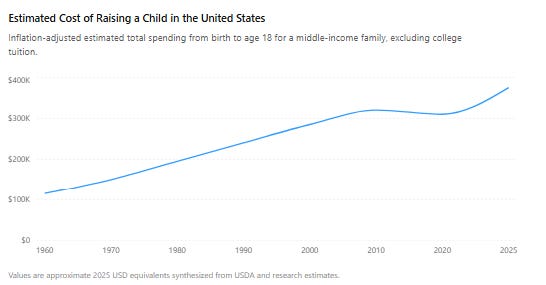
As anyone with children knows, raising kids is expensive. And getting more so. Below is an inflation adjusted cost of raising a child from birth to 18. If we divided these numbers by 18, we get that annual cost in 2026 dollars in 1960 was USD 6,000 a child. In 2026, you are looking at USD 20,000. Or in other words, for the money you pay for one child today, you could have raised 3 children back in 1960.
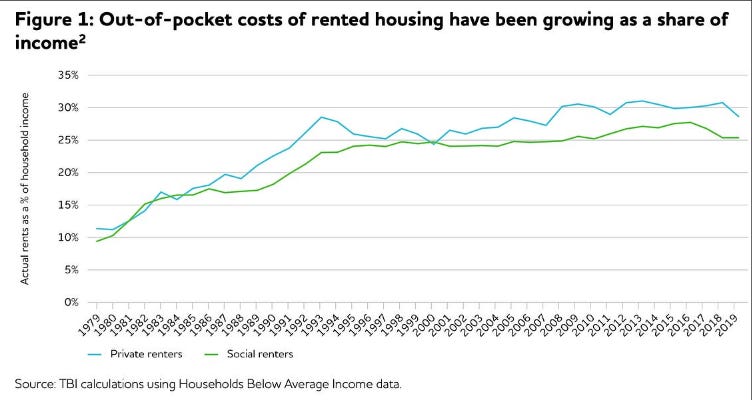
As someone who grew up in the 1970s and 1980s, I can tell you that some of the cost savings came from a blatant disregard of modern health and safety norms, and I don’t think we are going back to a time when 6 years old are allowed to walk home from school unsupervised. The other big change has been the rising cost of housing. Rents have been rising as a share of income for decades.
One of the reason I am still bullish on fertility rates is that women increasingly are freezing their eggs, and then using IVF later in life, presumably when their incomes have risen. In the UK, we have seen a share rise births from frozen embryos, and a decline in births from fresh embryos.
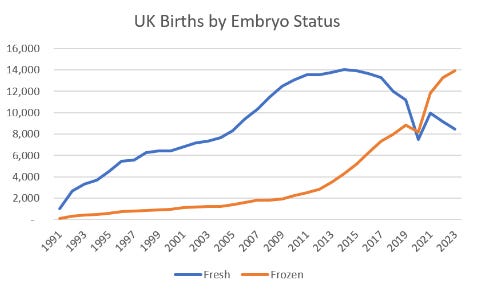
The bullish argument on fertility is that with rising female participation in the work force, the age that couples started families were pushed back, and this naturally reduced fertility rates. But now that IVF is “solving” that problem, fertility rates should rise back above replacement rates, but with a lag.
The bearish argument is that capitalism required more labour in the post World War II period, so humans responded to the low cost of raising children, and relative high wages by producing more humans. And now, as automation and AI reduce the relative wages that labour can command, we are reducing supply, and turning child raising into something akin to raising thoroughbred horses.
When I write both arguments down, both are reasonably convincing. Even from my personal experience. I would liked to have had more children, but after having our second child at nearly 40, one more was a bit daunting. On the other hand, the two children we have are far better educated, travelled and trained than I was at that age. They are also more expensive than I ever was.
I guess what I like about both arguments, is that they both point to a world that is getting “better”. If its the first argument, technology is solving the issue of women having children at an older age - which I like. If it is the second, falling population growth is due to substantially more investment into children, which is creating a “super-generation” of humans. Right now, I would say the evidence is evenly split. As a fund manager, I would argue that the markets are not priced for rising fertility rates, which is what makes it more interesting - but this type of thinking is why most people hate finance people.


