


Americans love freedom. Perhaps they care about freedom in the rest of the world a bit less these days, but they certainly love freedom in the US. Donald Trump certainly likes the freedom to act as he wishes. Fiscal restraint seems downright un-American. If President Trump wants to run a 6% fiscal deficit, why can’t he?
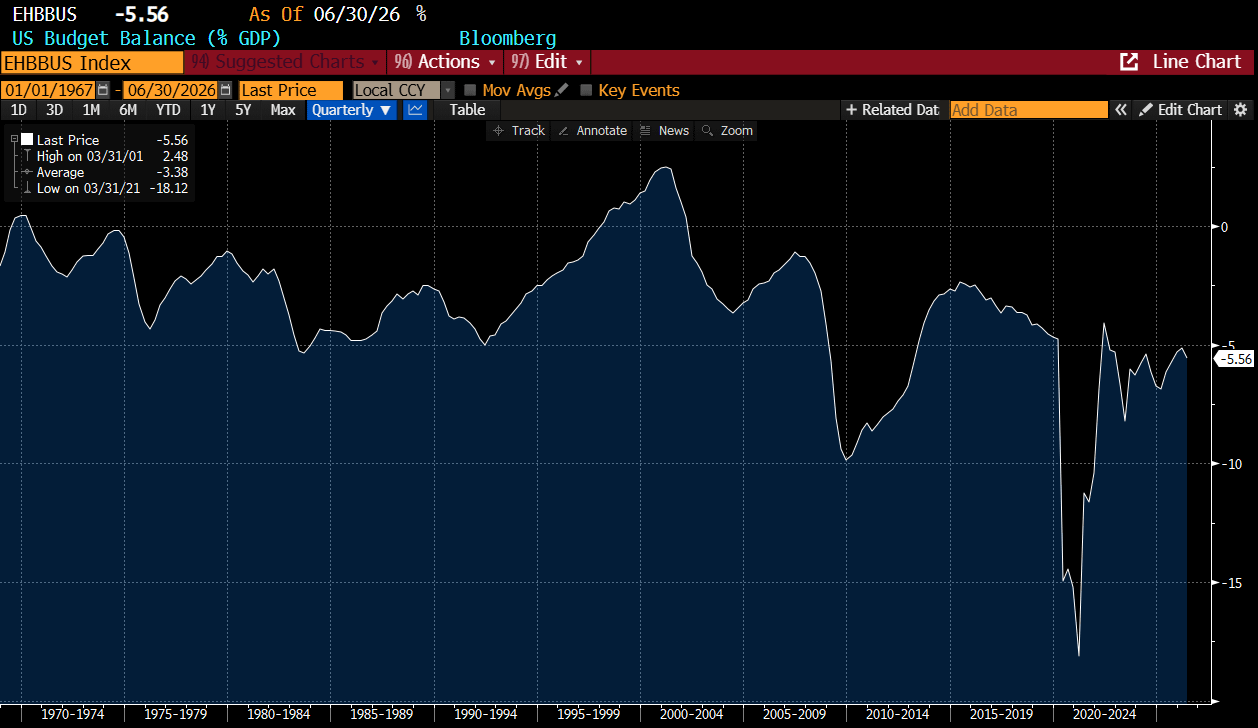
Other nations have tried to work free from constraint - Turkey now, and Argentina until recently as least. Typically the price of being fiscally liberal has been higher interest rates, and usually a weak currency. Turkish Lira has NOT been a safe store of value.
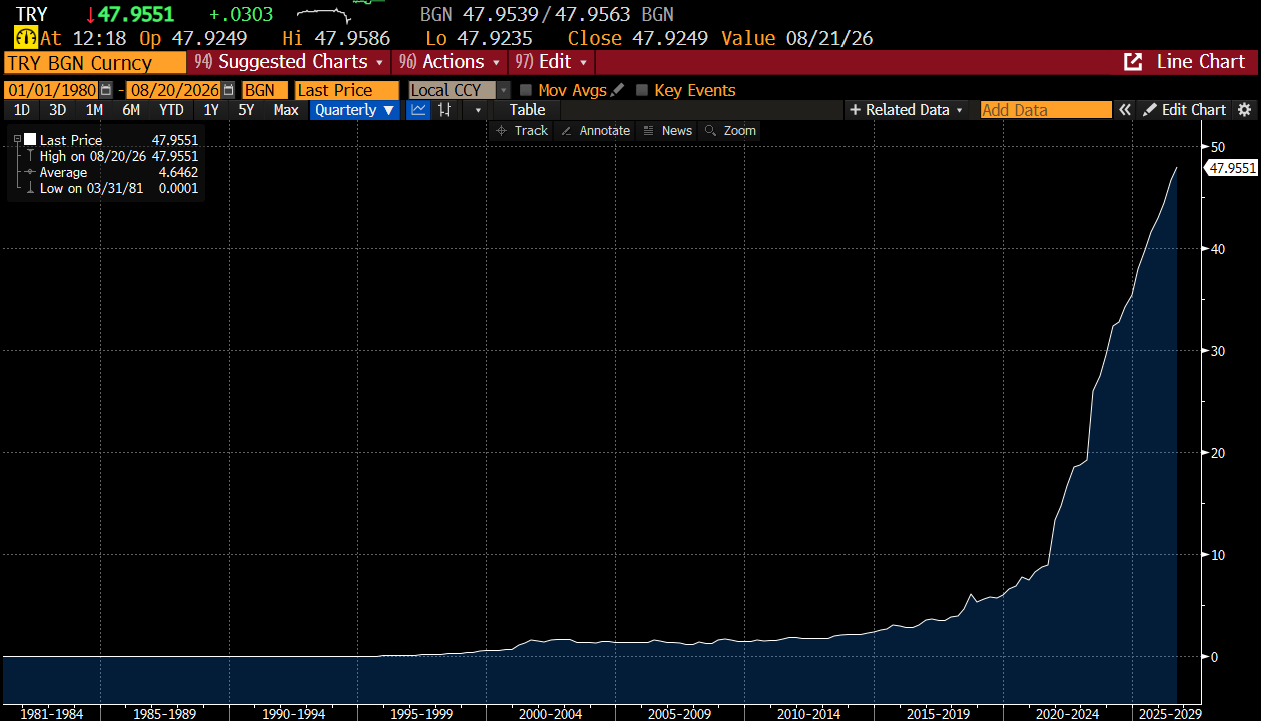
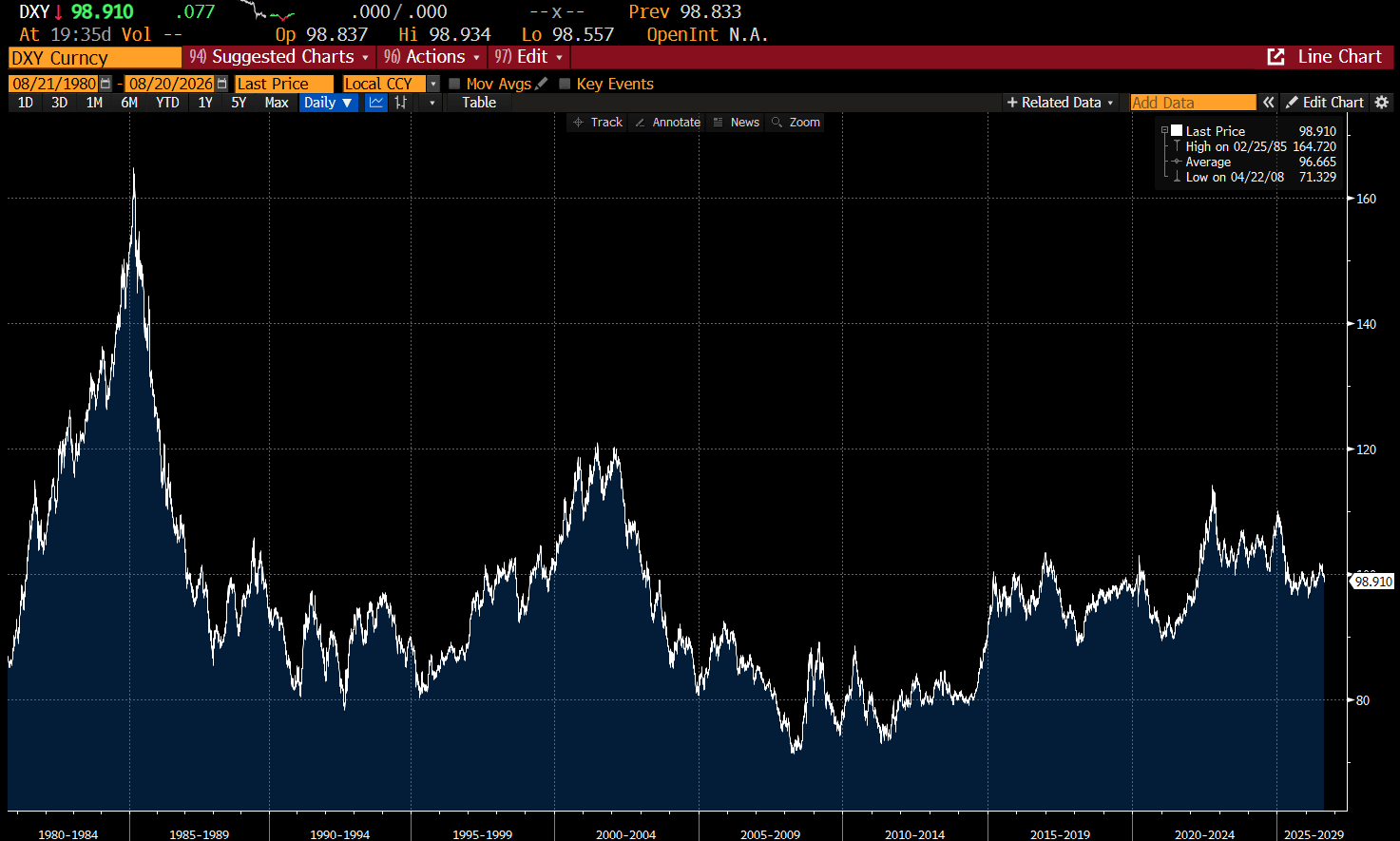
But even with large fiscal deficits, the US dollar has been conspicuously strong to stable against other currencies.
And perhaps most importantly, corporate borrowing costs have stayed at low levels, with only the Covid era seeing lower yields. In fact corporate yields have fallen under Trump 2.0. Why worry about fiscal deficits if corporate American can borrow cheaply?
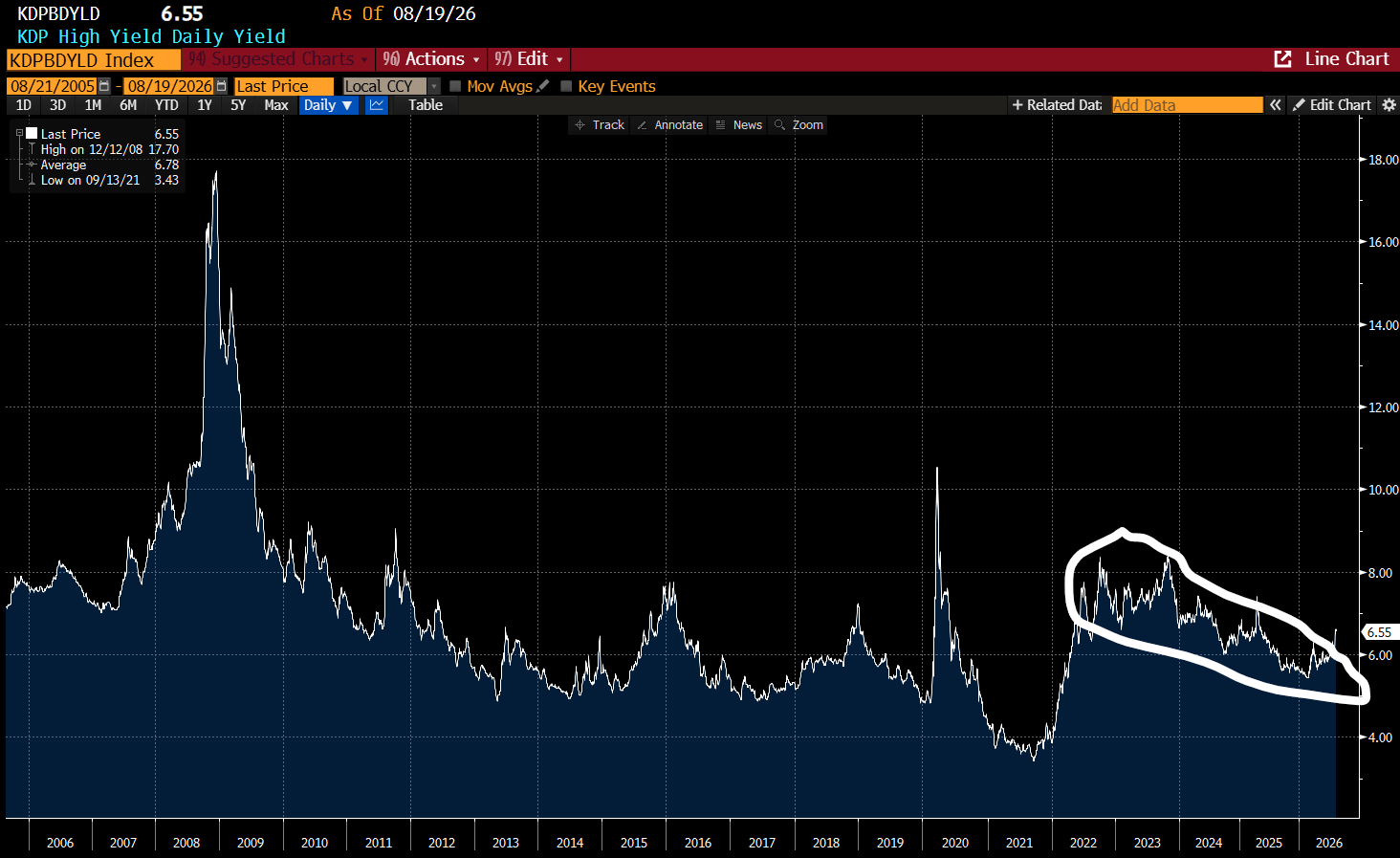
But a lot of the lowering in corporate bond yields has been driven by collapsing spreads. Of the market pricing corporate and sovereign yields very similarly. Spreads are as tight as they get.
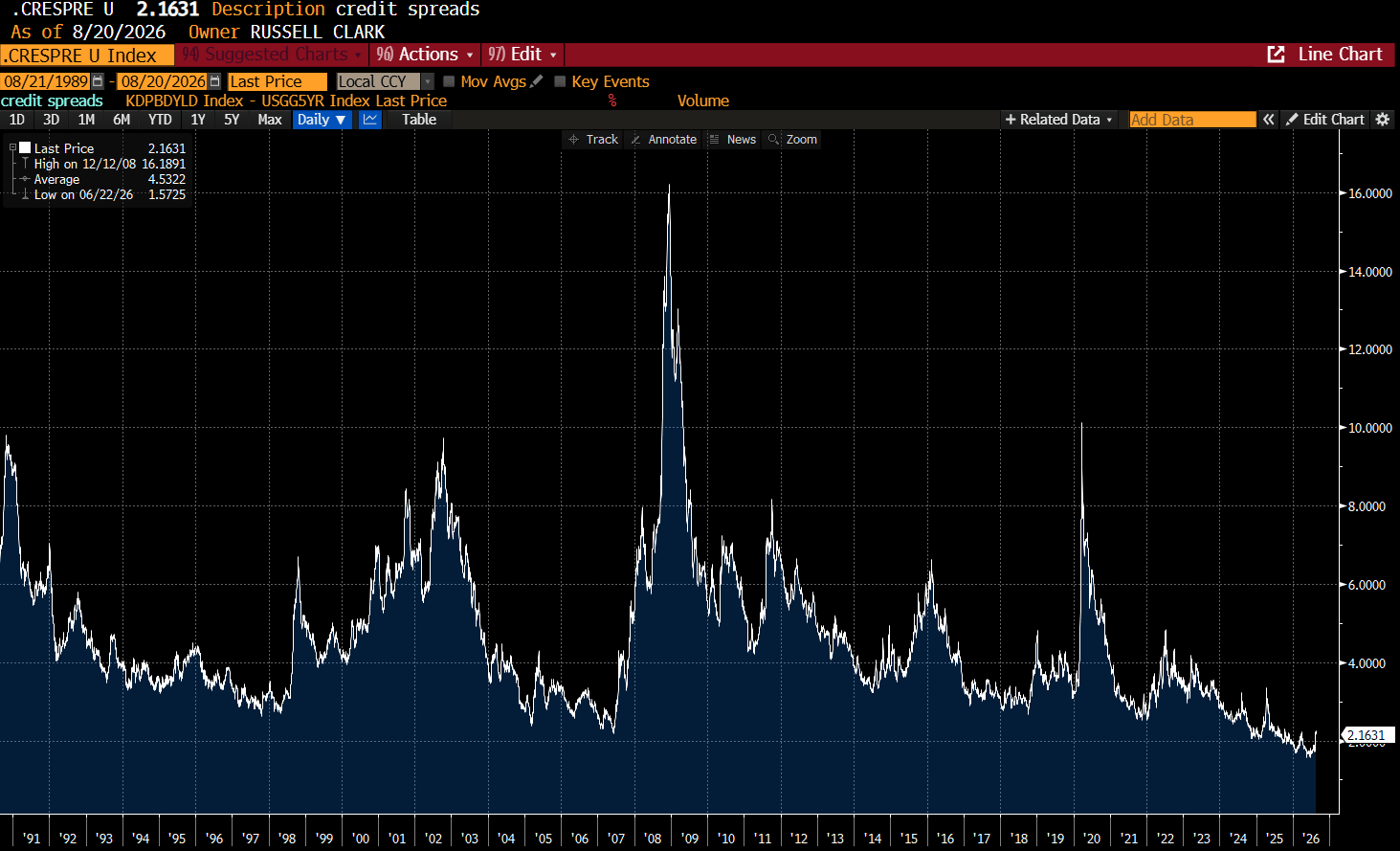
For the last few years I have marvelled at the ever lower gap between lets say 30 year JGBs and US corporate debt. Both have inflation risk. The JGBs are long dated, KDP is short dated but has default risk. Essentially the market has been saying, inflation is the problem, but default is not. This sort of makes sense, but also doesn’t. If inflation is a problem, eventually governments will do something about it, and then default risk will go up a lot (this assumes a policy of austerity and increased competition to get prices down).
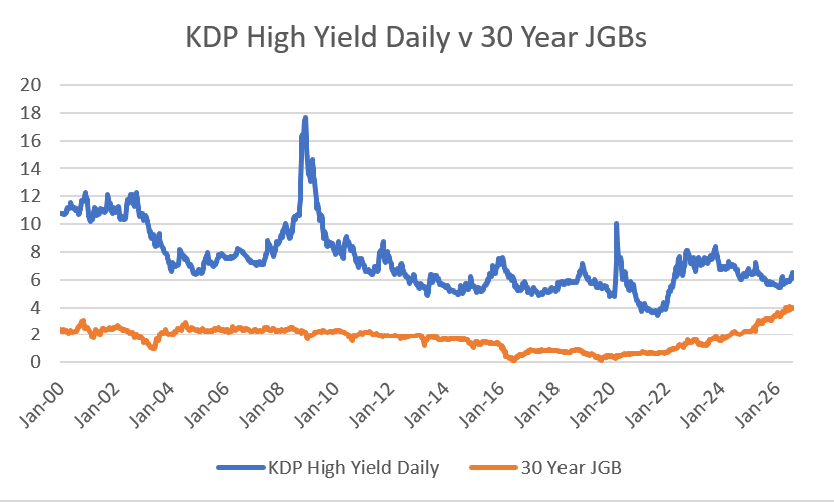
Originally, I though the market was saying the time to worry was in 2025, when gold started to outperform the S&P 500, but S&P 500 has been fine, even as gold has done well.
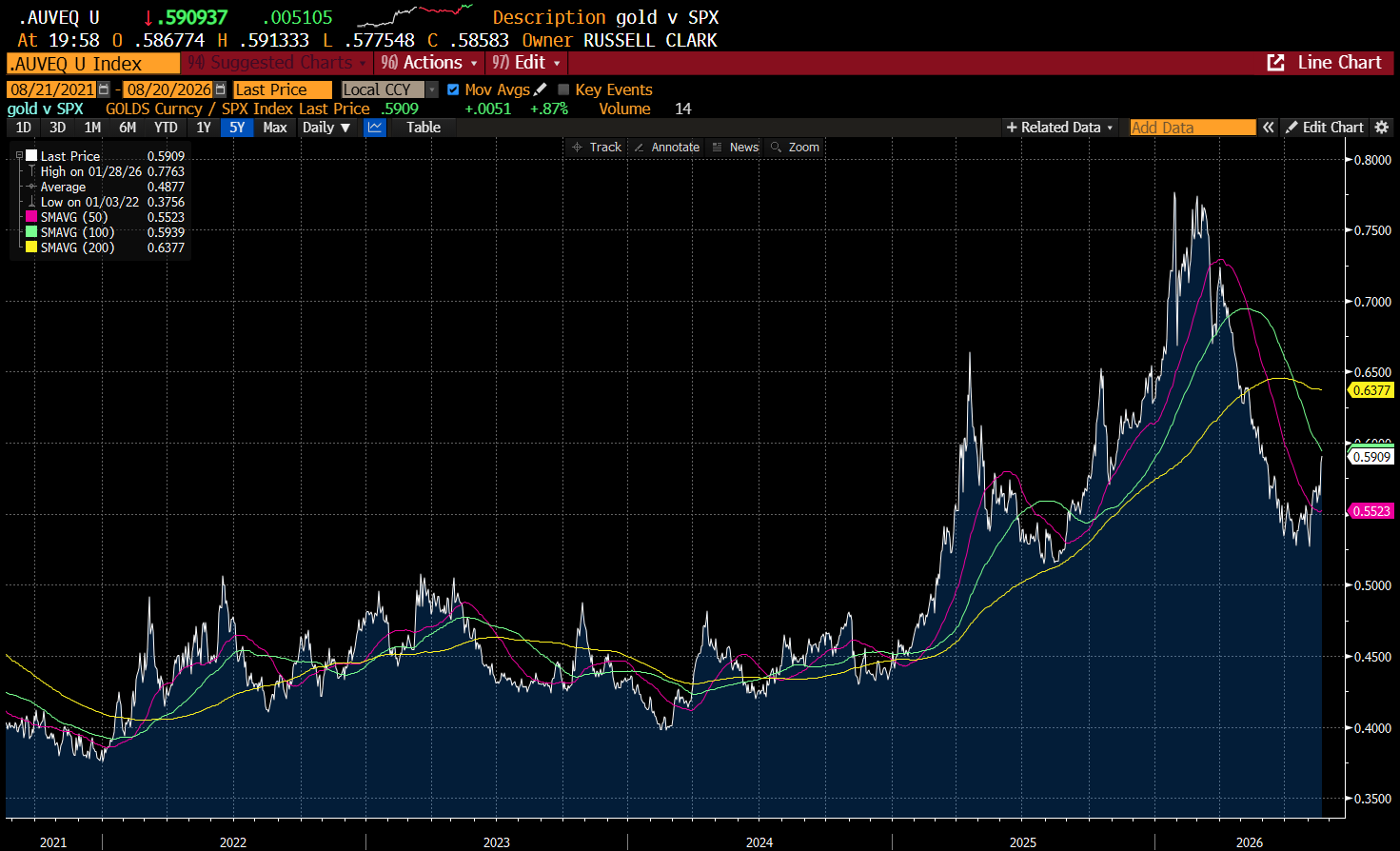
To be brutally honest with you, market based signals worked well in the 1990s, 2000s and early 2010s, but since 2016, policy has been the much better signal. That’s why recent policy changes are so interesting. First of all the US and Japan tried to intervene in the currency market. This is pretty easy to understand. Persistent Yen weakness has caused inflation to rise in Japan, and bond yield to rise. Strengthen the Yen should hopefully allow JGB yields to fall. The problem is that real Yen strength would probably require austerity from the Japanese government - and that looks unlikely.
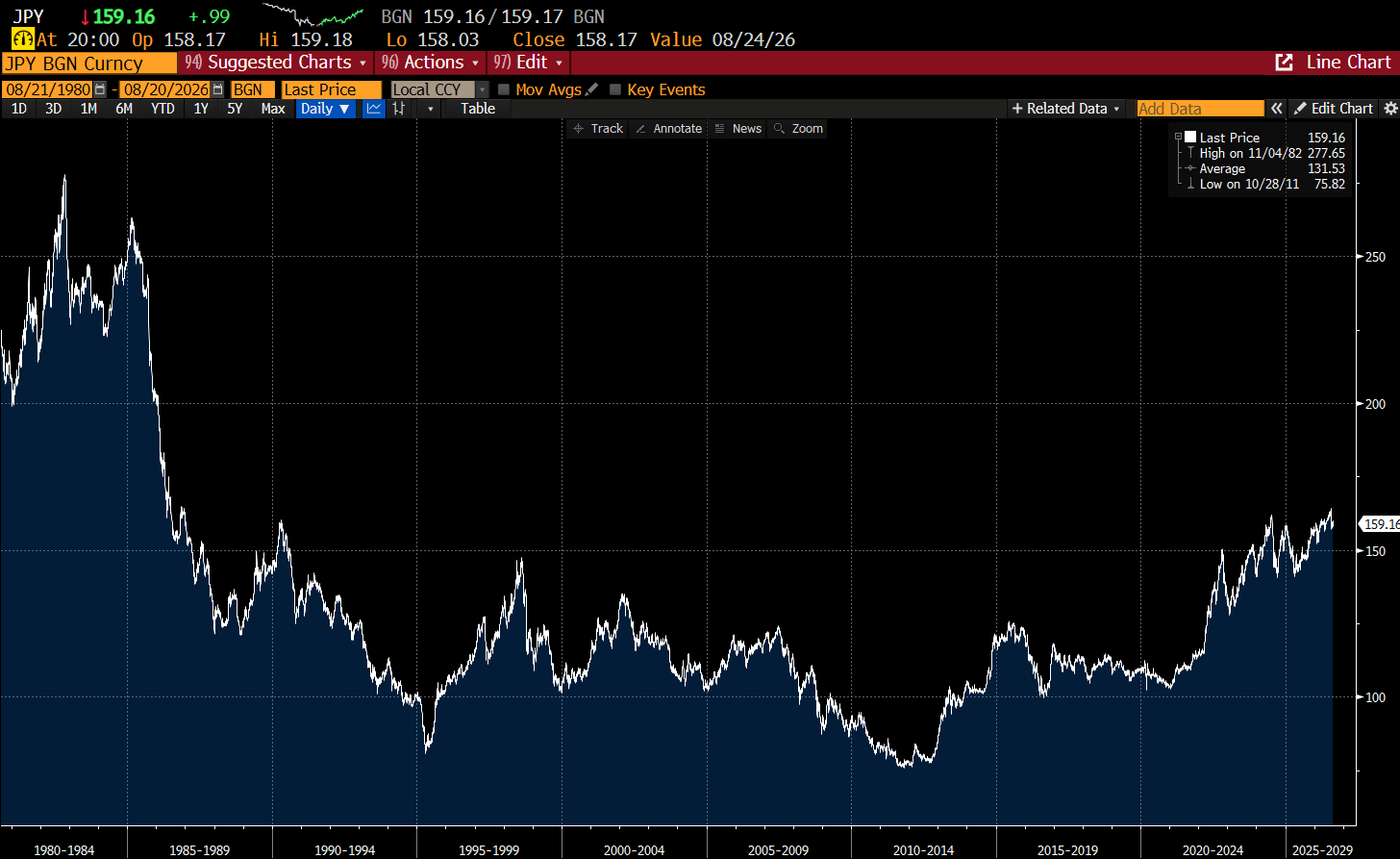
And now the US treasury has increased its purchases of 30 year treasuries via selling more bills.
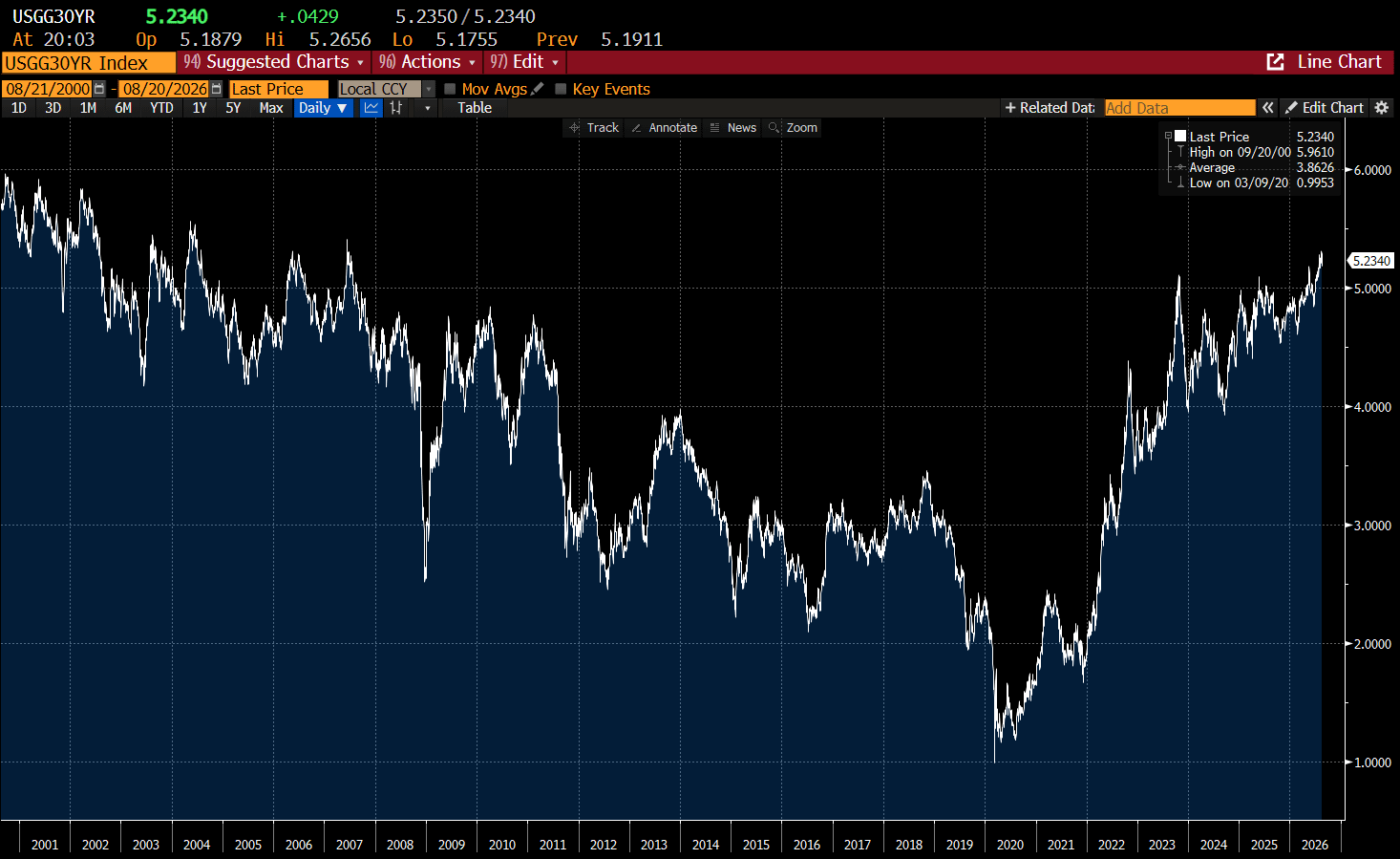
While still early days, neither the Yen or 30 year treasury have moved that much. Why? Well the problem is the Yen and the Treasury are both reacting to loose fiscal policy. When you intervene in bonds or currency markets, you send a big signal that nothing is going to change. You are going to keep spending, your just trying to find ways of making it cheaper. It would be like going to your bank and saying, I am really struggling with my mortgage, could you cut my interest rate please? A good bank would probably ask you to start paying more, or make changes. That is by saying your bill is onerous, you invite it to become more so.
The reason I call this the beginning of the end is that yields have been rising for a few years now, and markets have generally speaking been happy with this. But now the US government is saying, things are a problem. A good proximate reason is that interest payments are now greater than defence spending in the US.
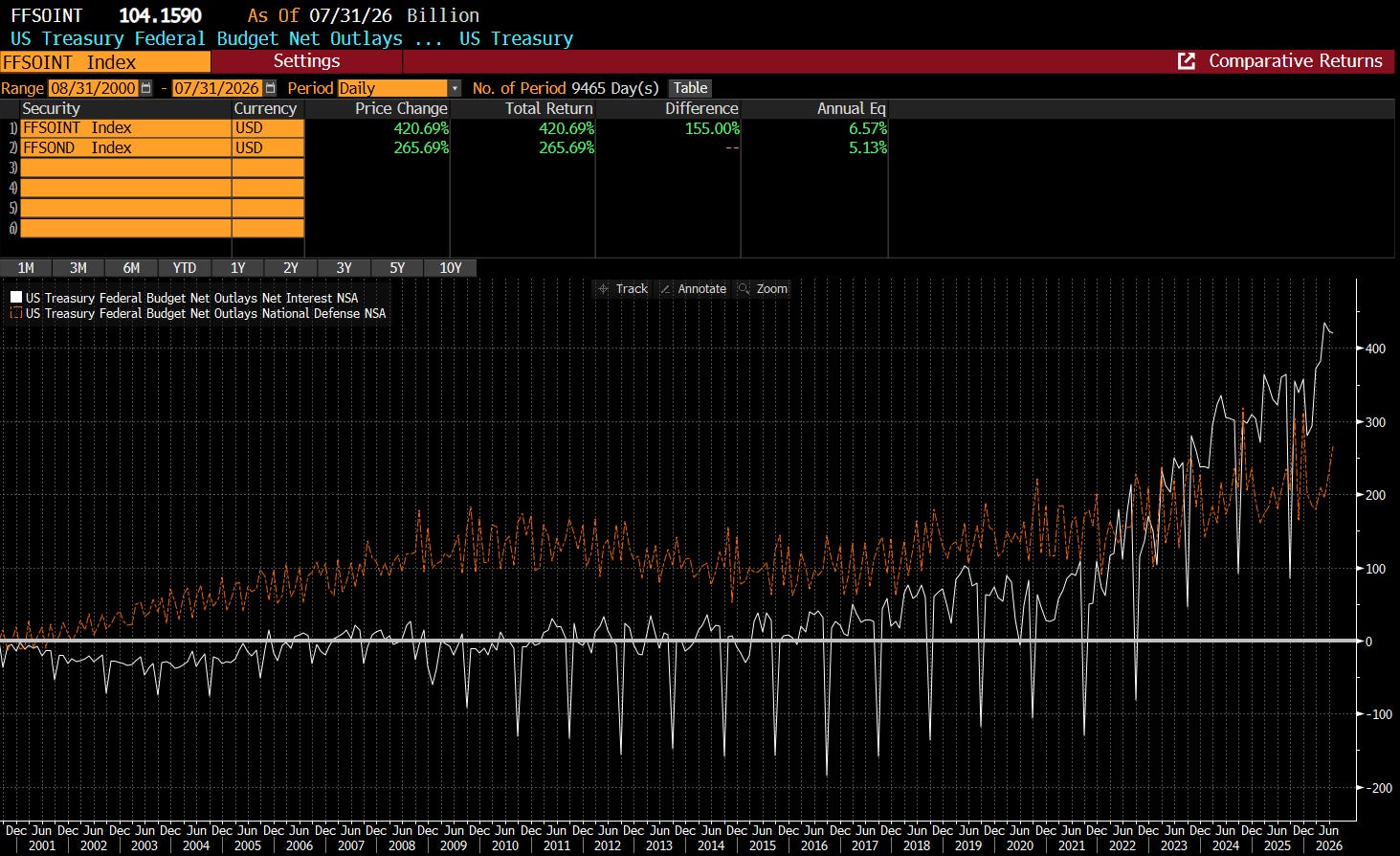
So here is the rub. In Turkey, President Erdogan, who shares much in common with President Trump, has tried very hard to get interest rates lower. The problem is that when the market thinks interest rates should be higher, the only way to get capital is to basically steal it. And once you start stealing capital, more of it wants to leave, creating a viscous cycle. Now Turkey is Turkey. And the US is US. The US has far more leverage to convince people to lend to it and uncommercial rates. So maybe the party can carry on, who knows? But what we learnt this month is that for the US treasury we are now at a pain point. I wonder is markets try pushing a bit further to see what breaks? The key issue would be a derating of US equities. Typically equities de-rate in an inflationary environment - but in the US have seen the opposite.
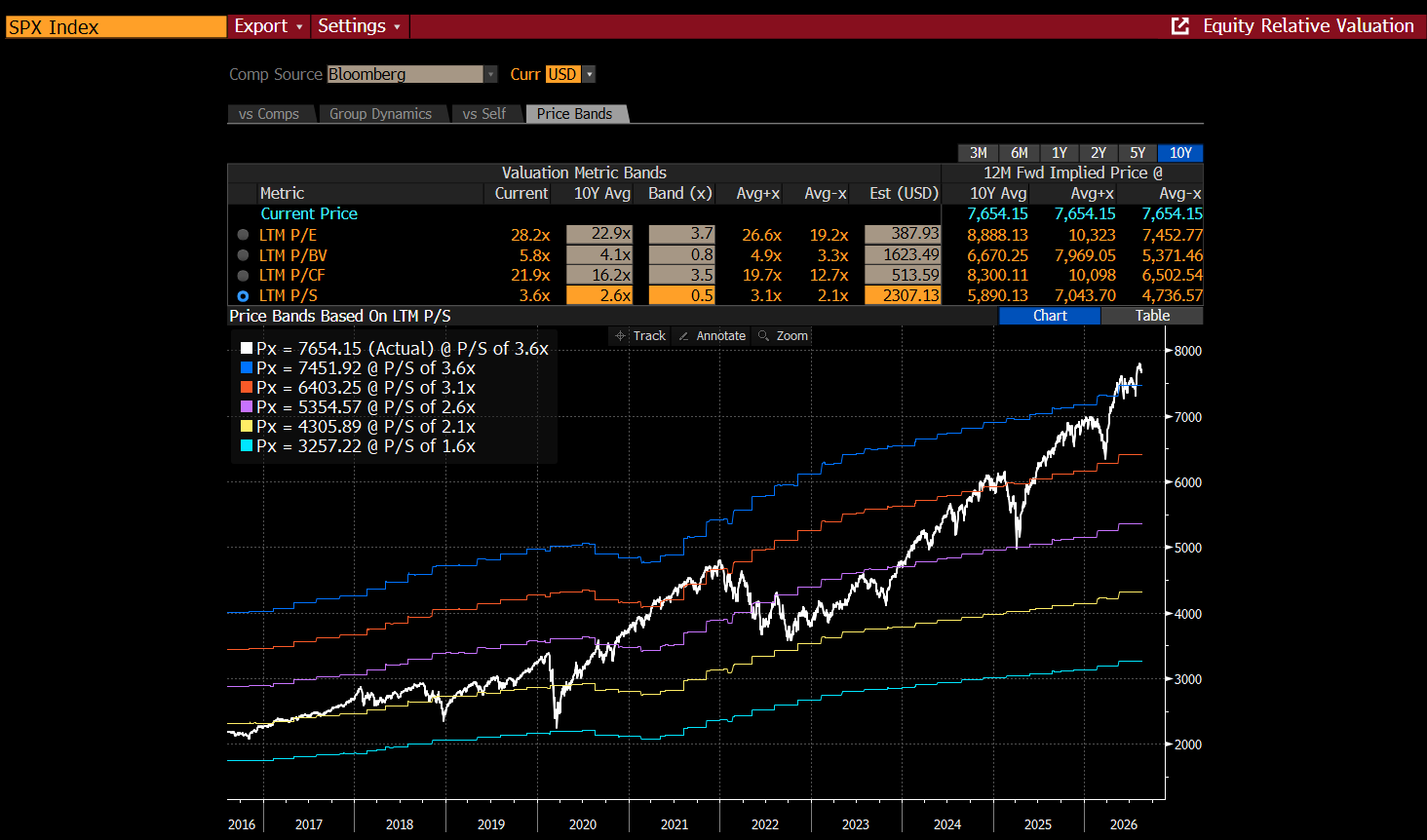
I thought 2025 was the beginning of the end. Maybe its 2026. One thing I have learnt in life, when something can’t carry on, then it does end. Just sometimes takes a bit longer than you think.


