
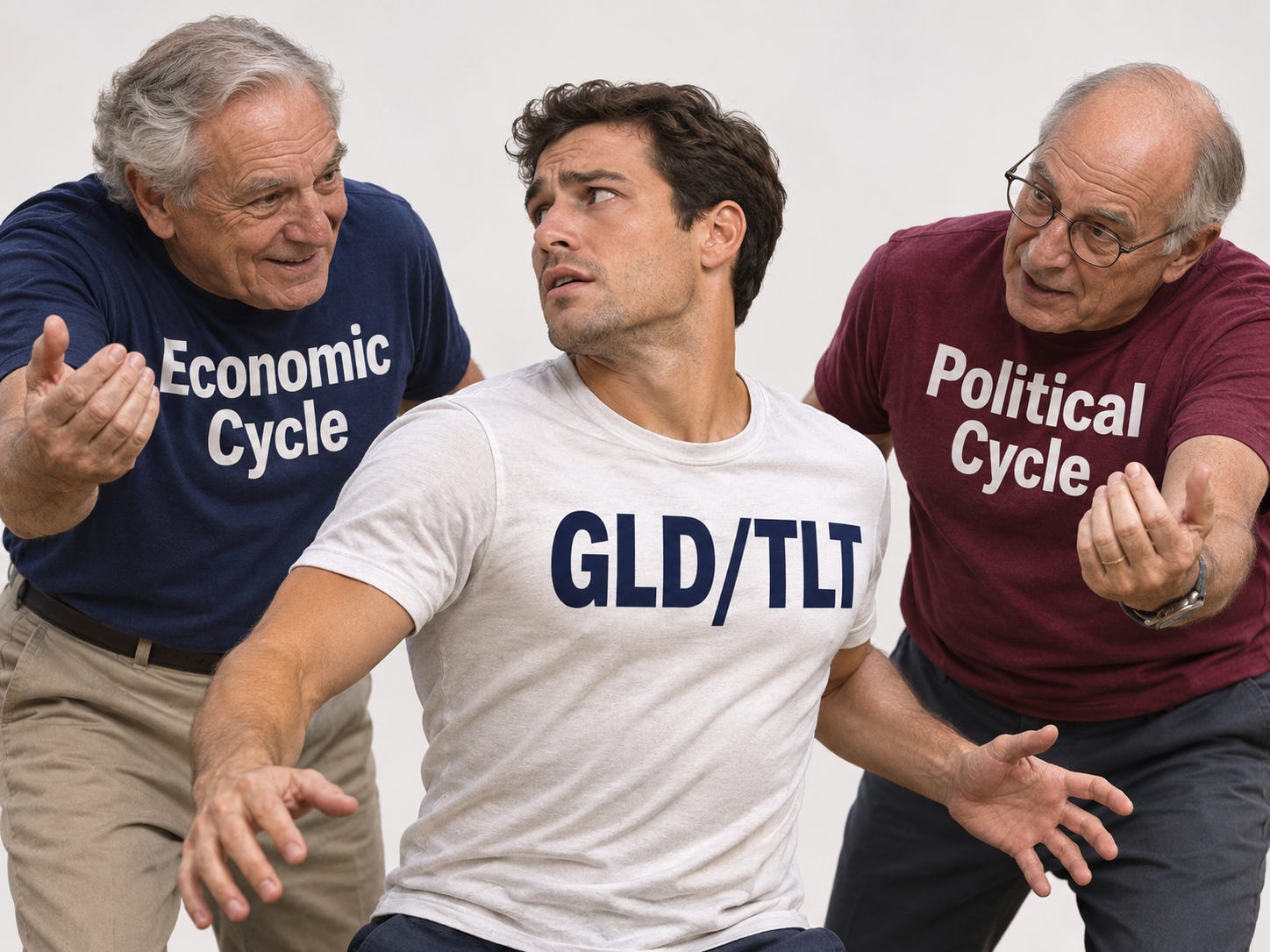
GLD/TLT has been surprisingly weak this year, admittedly after a terrific run.
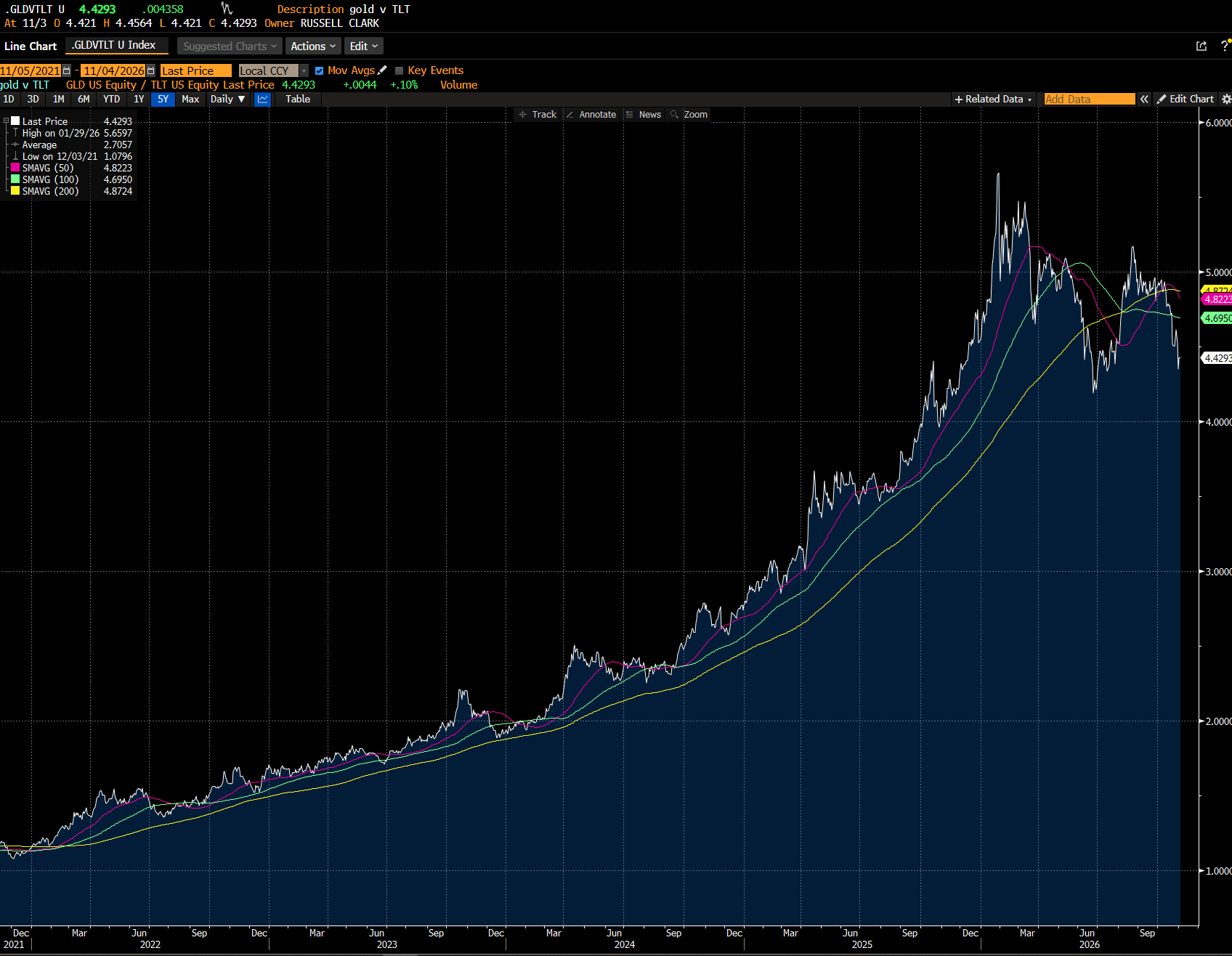
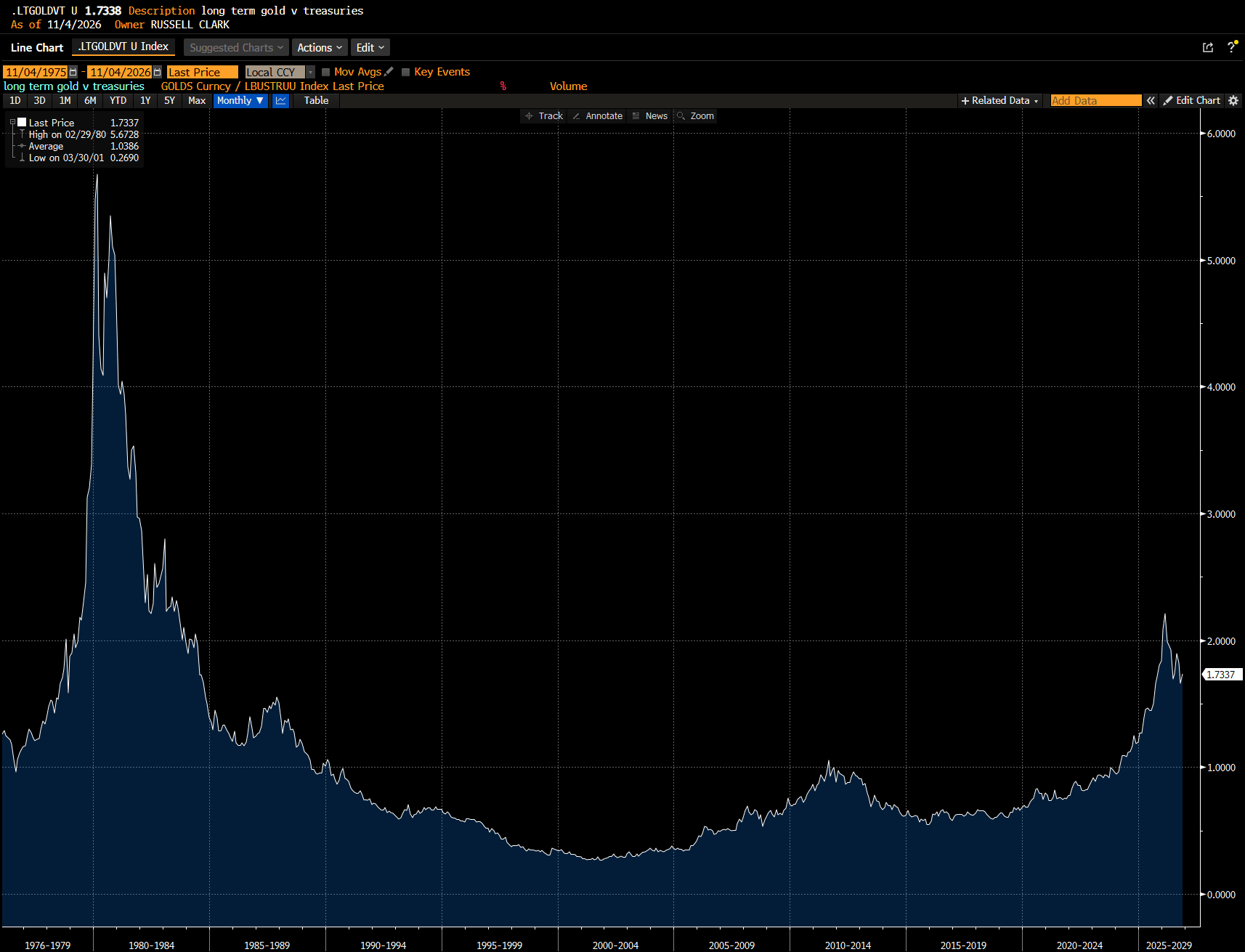
It is not meant to be a economic trade, but a political trade. That is politicians will keep acting to favour labour, and wages, which means inflation should be stronger than expected. Looking at the last pro-labour era, you should end with a period where gold is strong and bonds are weak - a debt crisis, which then ushers in political change (There is a secondary trade of China swapping treasuries for gold - but we will leave that for the moment).
But you can also portray GLD/TLT as a cyclical trade. If you think the cycle is going to turn, you definitely do not want to be short bonds, or long gold. If you think unemployment is going to go up in the US, you do not want to be in cyclical trades. Looking at initial jobless claims, taking a view we must be near a cyclical top is easy to make. It has been so good for so long, there are 36 year olds who have never seen a recession in their working life.
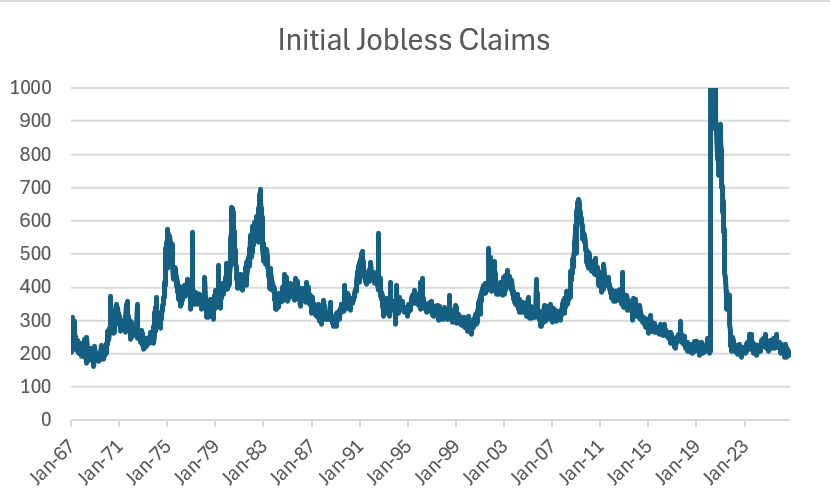
It is hard to believe the last real recession in the US was nearly 20 years ago. The 70s, 80s, 90s and 2000s were all about recessions. It just became assumed they were unavoidable. Now my read is, that this politics of non-stop boom, or pro-labour politics will continue - until wages and asset prices have normalised. That is wages have caught up to asset prices. In a pro-labour world, that happens with inflation. In a free market world, that happens with the most enormous recession and bear market. I still think politics is pro-labour, so this seems unlikely to me. My read of the mid-terms is that the most pro-labour policy of Trump was to cut immigration. He was very successful at that. But high oil prices and cutting benefits was not pro-labour at all. At the end of the day, pro-labour is about giving workers more money, not rich people. So what do the mid-terms mean? Well I would expect the Democrats to advance a tax and spend budget, which Trump will veto, so you end up with just a spend budget. I see zero chance of the Democrats agreeing to any austerity. I also think market will start thinking about what a Democrat President will look like. Trump so thoroughly controls the Republican party, its hard to see how they can even put up a fight at the next presidential election. I would also see this as inflationary, but with the offset of tax increases. I suspect the long end of the Treasury curve should weaken (ie yields go higher).
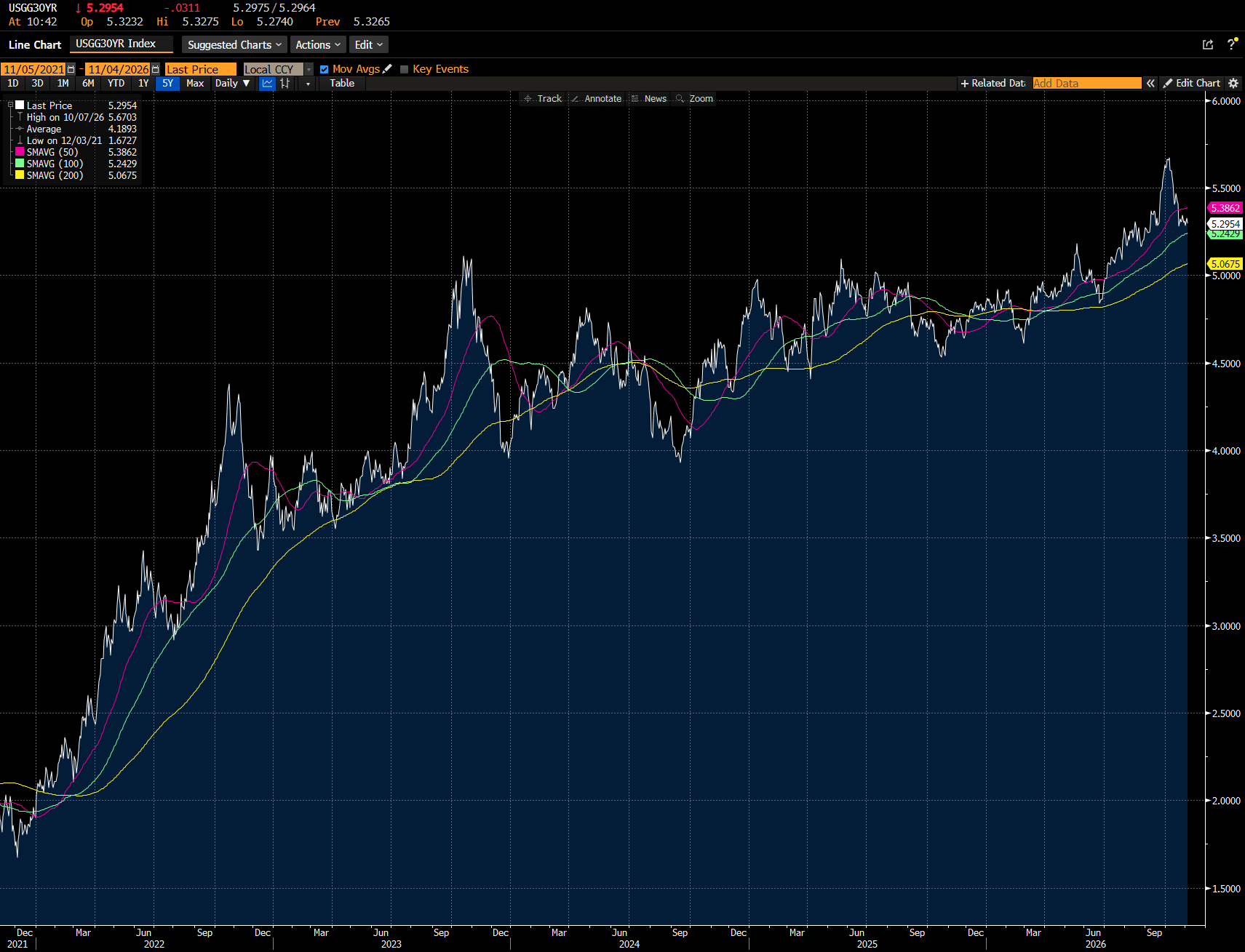
As mentioned previously, the “Starve the Beast” strategy of the Republicans is meant to leave Democrat administrations with no money to spend, and fiscal discipline to be enforced by the bond market. My best guess is we will need to see actual bond market stress before we see any political change. So politically, I see the mid term result as bullish for GLD/TLT.
Economically the bear case is the Democrats legislated to end the data centre build out.
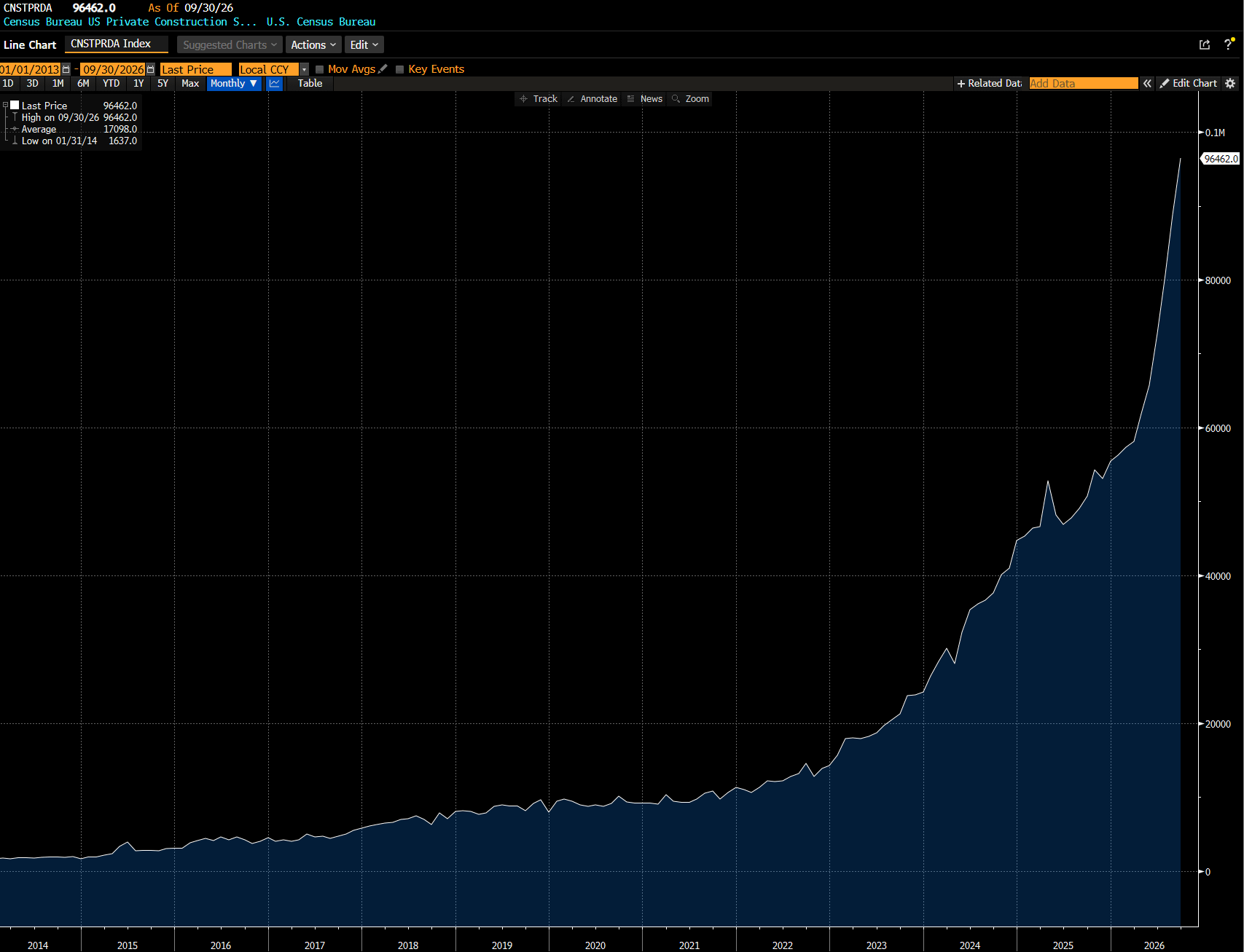
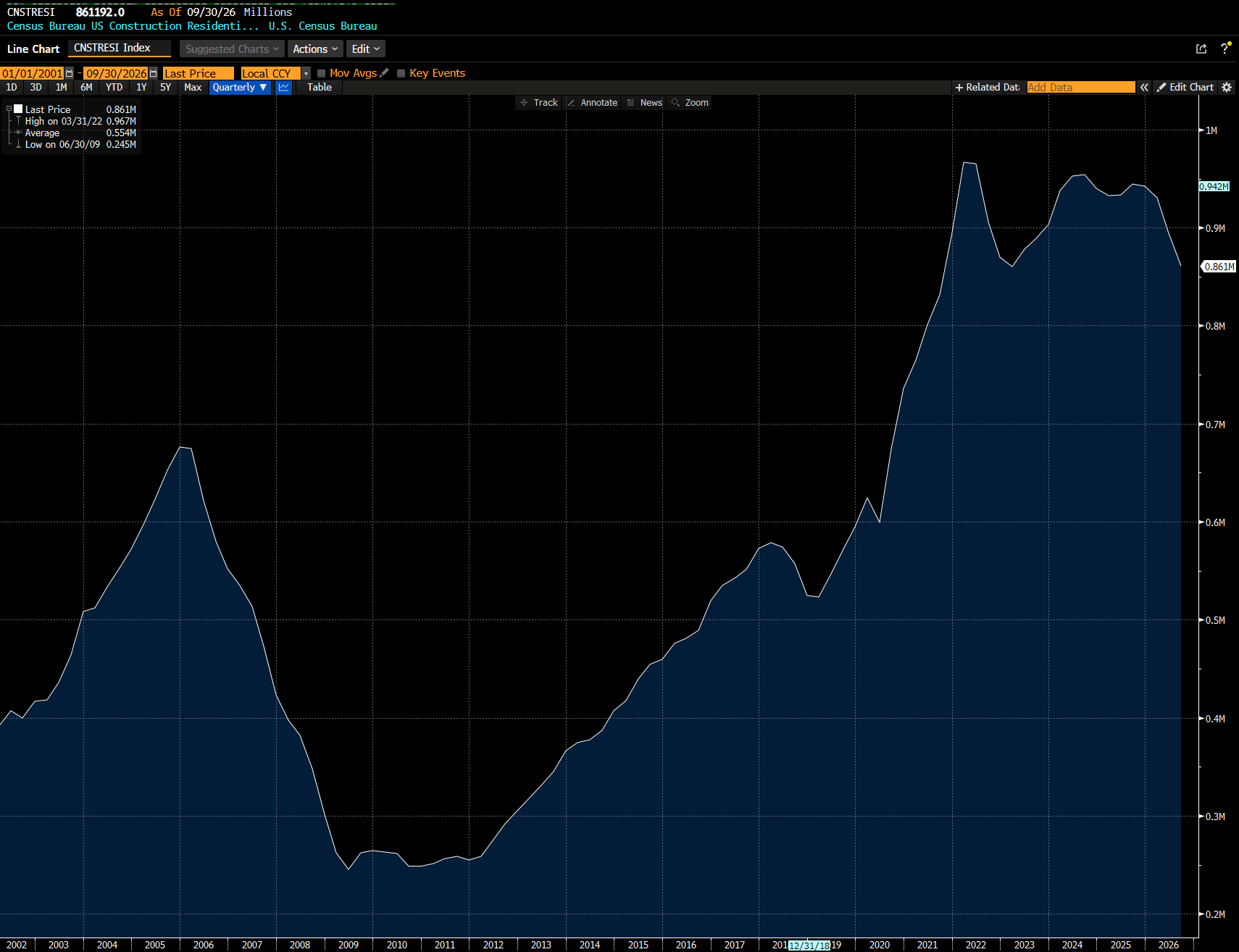
Which given the roll over in the residential construction market would probably be the top in the cycle.
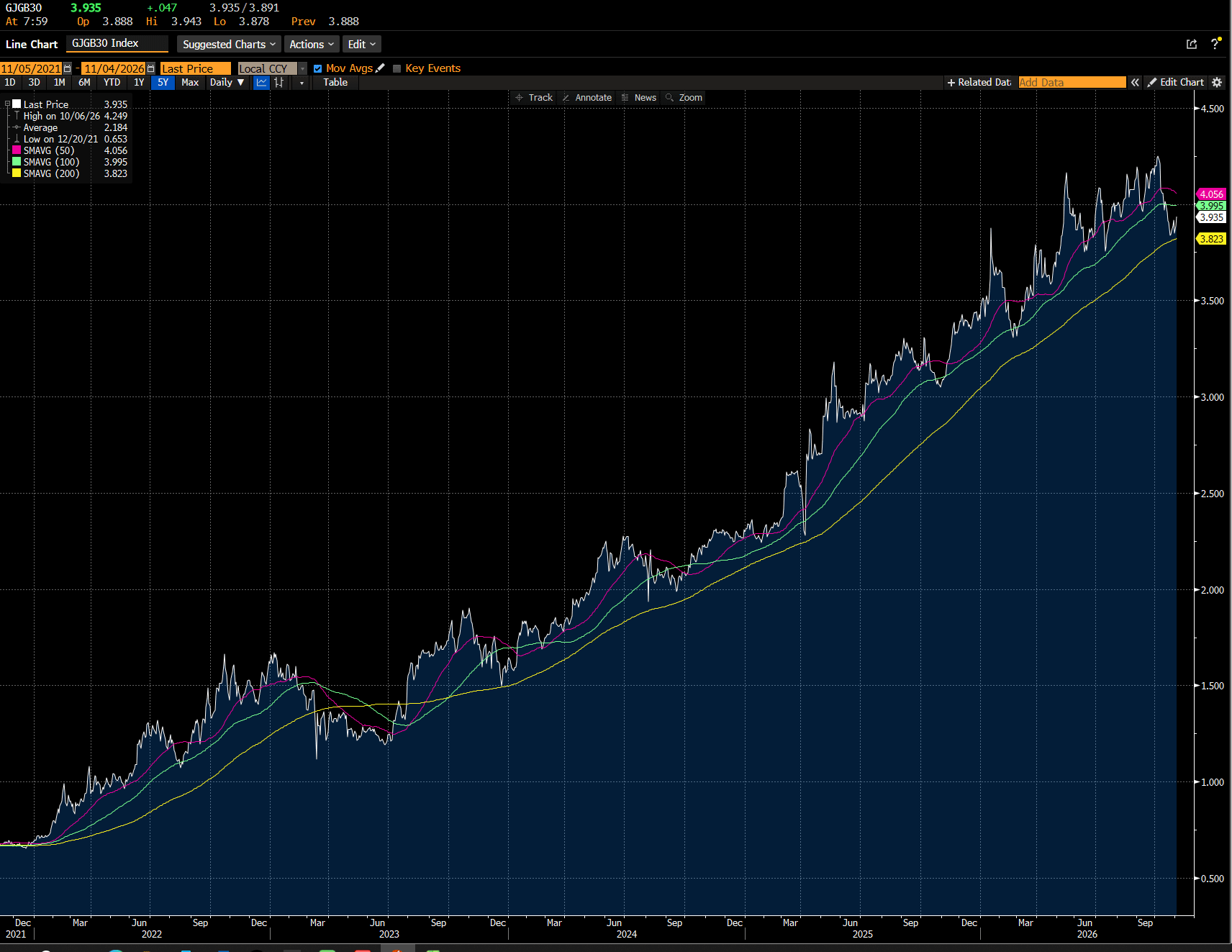
Having looked at the plans for hyperscalers, and the way they think, I expect them to move data centres to wherever will have them, including Europe and Japan, that is until space becomes viable. Potentially a negative for the US and the US dollar. But the fear of being overtaken by China in AI should allow for negotiation on data centres - which is a political view. That is politics should keep the economic cycle going. I will keep leaning to the political view of GLD/TLT as long as JGB yields are tending higher.
And I will finish with Russell Clark’s third iron law of politics. It does not matter which party you vote for, you end up with the same policies. I still see fiscal excess, tight immigration policy, tariffs and industrial policy continuing - at least until the voters tire of it. I do not see the mid-terms as a repudiation of that.


