
In my old fund, I used to hire summer interns. Like everything I do in my life, I looked at the results, and then try and improve the outcomes. When we first started, we asked for CVs first and then did interviews. This process sometimes worked, and sometimes didn’t. The interns that seemed great on paper and interviews, were just not great investors. One summer I changed the process, and I asked potential interns to write 200 words on an investment idea. I also asked them to submit the idea with just the mobile phone number, so we had no idea of sex or ethnicity of the candidates. Inverting the process improved the intern outcome substantially. We wanted people who understood investing, not people good at writing CVs or doing interviews.
One of these interns from the enhancde process has gone on to quite a successful career in fund management, and whenever he starts his own fund would put some money with him (which is about the highest praise I can give). He recommended I read Leopold Aschenbrenner’s essay, Situational Awareness, which became the basis of this hedge fund. I can see why he raised so much money. It is surprisingly clear. The first graph is really the key one, and basically says the same thing as what Anthropic is saying in its prospectus.
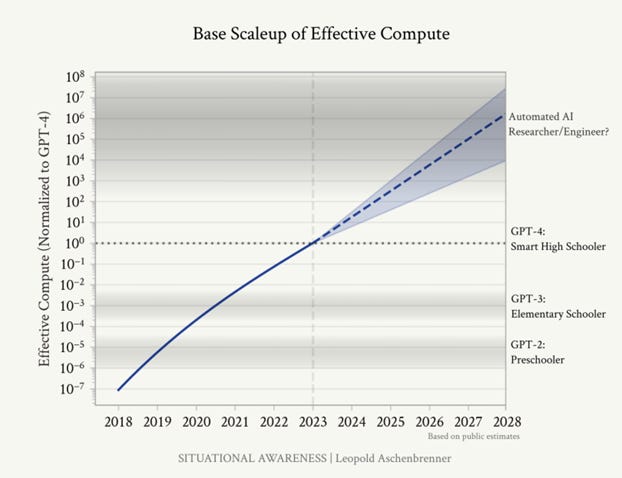
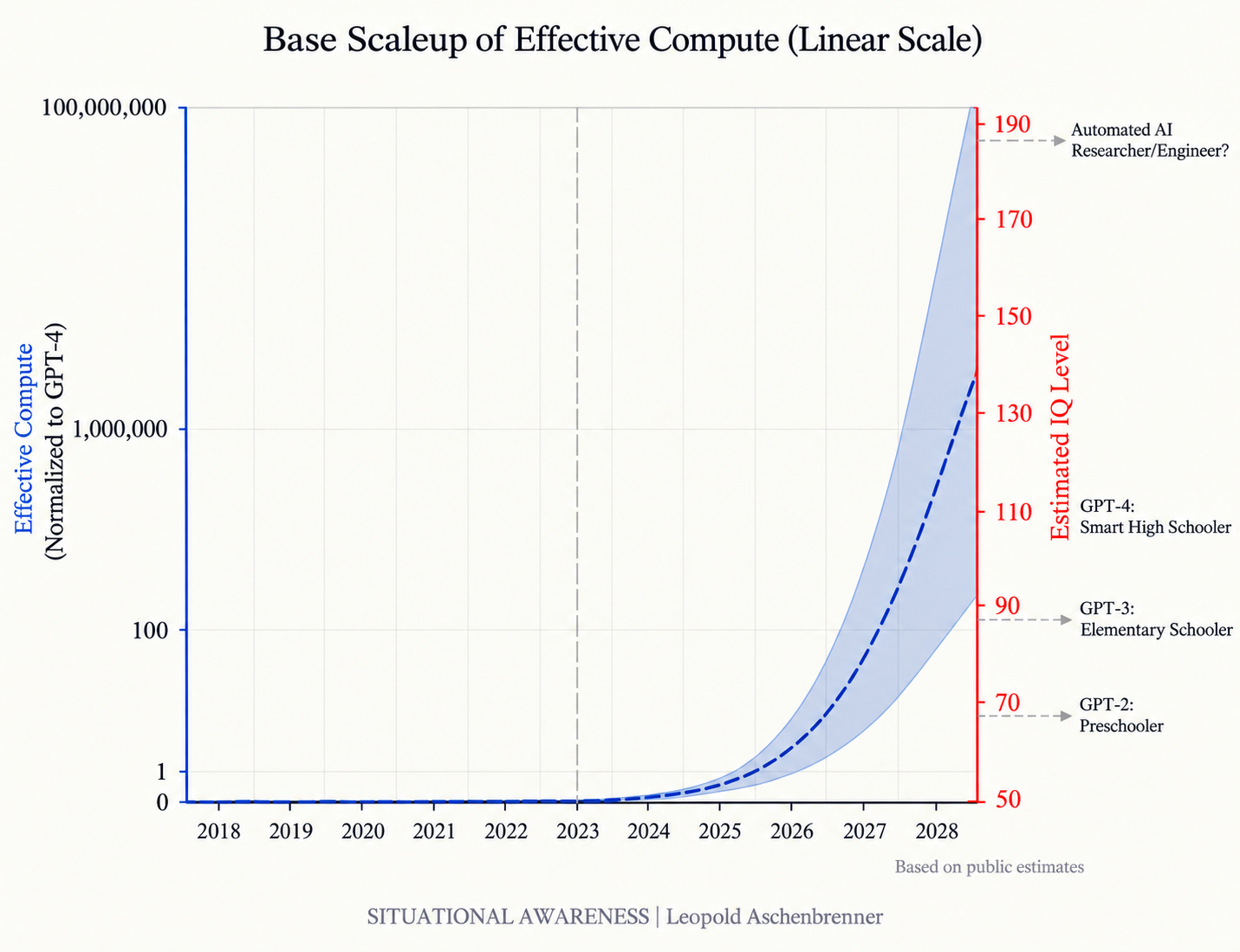
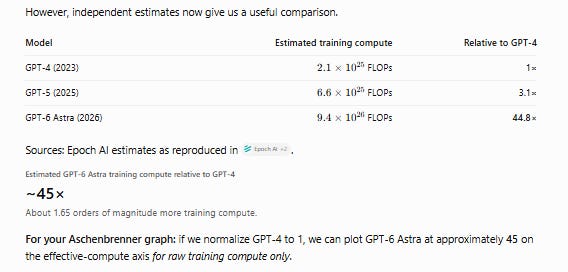
This is a straight line graph, but it is a log graph. And the intelligence scale on the right is a bit arbitrary, but we can easily correct that (using ChatGPT of course - my new intern). In simple terms, as you add compute, you add intelligence. But it is non-linear axis, it is log scale. Adding 10 times the compute generates 10 point IQ increase. Note Chat GPT-4 is standardised at 1 here. Today’s Chat-GP6 used 45 times more compute - so would be at 45, so we falling behind a little on his chart above. The key idea is for a linear increase in intelligence, you need a order of magnitude increase in compute. This graph from ChatGPT is not exactly right - like an intern it still makes mistakes, but its close enough for our needs.
Here is the full estimate of the compute increase.
Humans are bad at exponential stuff. We are just not hard wired that way. But looking at this graph, I can see why the big tech companies are investing so heavily. But you may be asking, what exactly does more intelligent mean? IQ is really an arbitrary measure I once went to a Mensa meeting (long story) and was not impressed by what I saw. IQ and life success do not correlate, at least not at Mensa anyway.
In this case, IQ for AI means it gets cheaper to do the same task, or easier. What we humans call smart. So using a state of the art chat bot, actually is cheaper to do the same work. I find this confusing as well There more expensive the training, the cheaper it does the work. There is a motorsport analogy here. Better engineering is always good, but more money is always better.
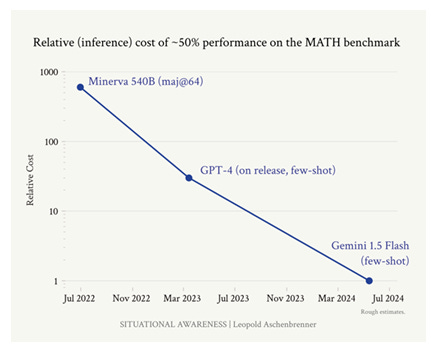
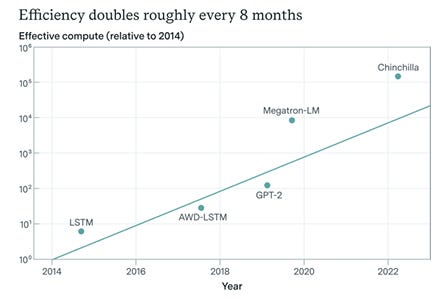
To be fair to Aschenbrenner, he also points out where things could surprise. Efficiency has been doubling every 8 months, which is essence is the bear case. There will be a bear market if efficiency improves so quickly, that current investments look diabolical. But he also points out, we could have already picked the low hanging fruit in efficiency gains.
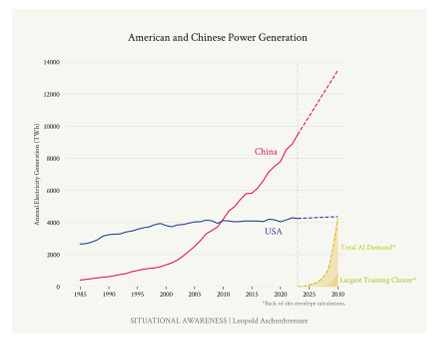
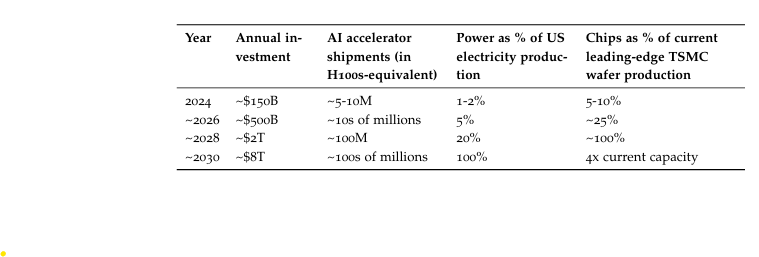
The exponential nature of AI does lead to some wild graphs. On the trend he predicted, AI would need 100% of USA power generation in 2030. This is probably the most bearish graph in the essay. Does the rest of the US give up electricity in the search for super intelligence? I think not.
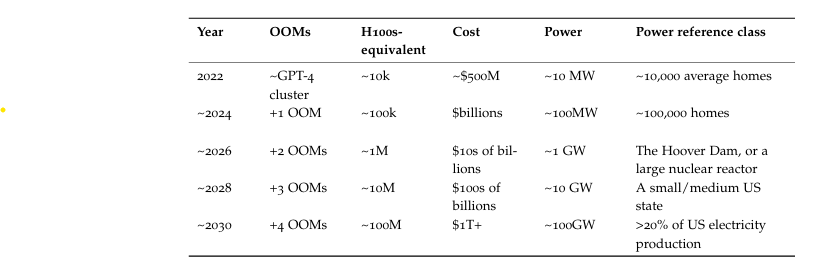
But despite that Ashenbrenner also sees the USD 100bn and even USD 1,000bn clusters coming. No doubt these numbers are what made Elon Musk think about space based data centres.

Looking at his prediction he made in 2024 for 2026 and 2028, he is not far off.
I would also say his predictions on TSMC capacity look about right.
To be fair, this is one of those very good bits of research you read from time to time, and they are so wild you think they are crazy to start with, and over time you appreciate the prescience. I have my own experience of this. I did two degrees in Australia, Asian Studies and Economics. One of my friends, did the same two degrees, and ended up at a mining company in 2000, at the very bottom of the market. He told me a story about how management asked the research department to forecast Chinese steel demand over the next 20 years. They looked at Japan, Korea and Taiwan, and assumed a similar growth pattern. They pretty much predicted China would be half of world steel demand, and would need to import 6 to 7 times the then current amount of seaborne iron ore the world produced at the time. Management sent the report back, and told them to put some more reasonable numbers in. In the end management were wrong, and the economists were right.
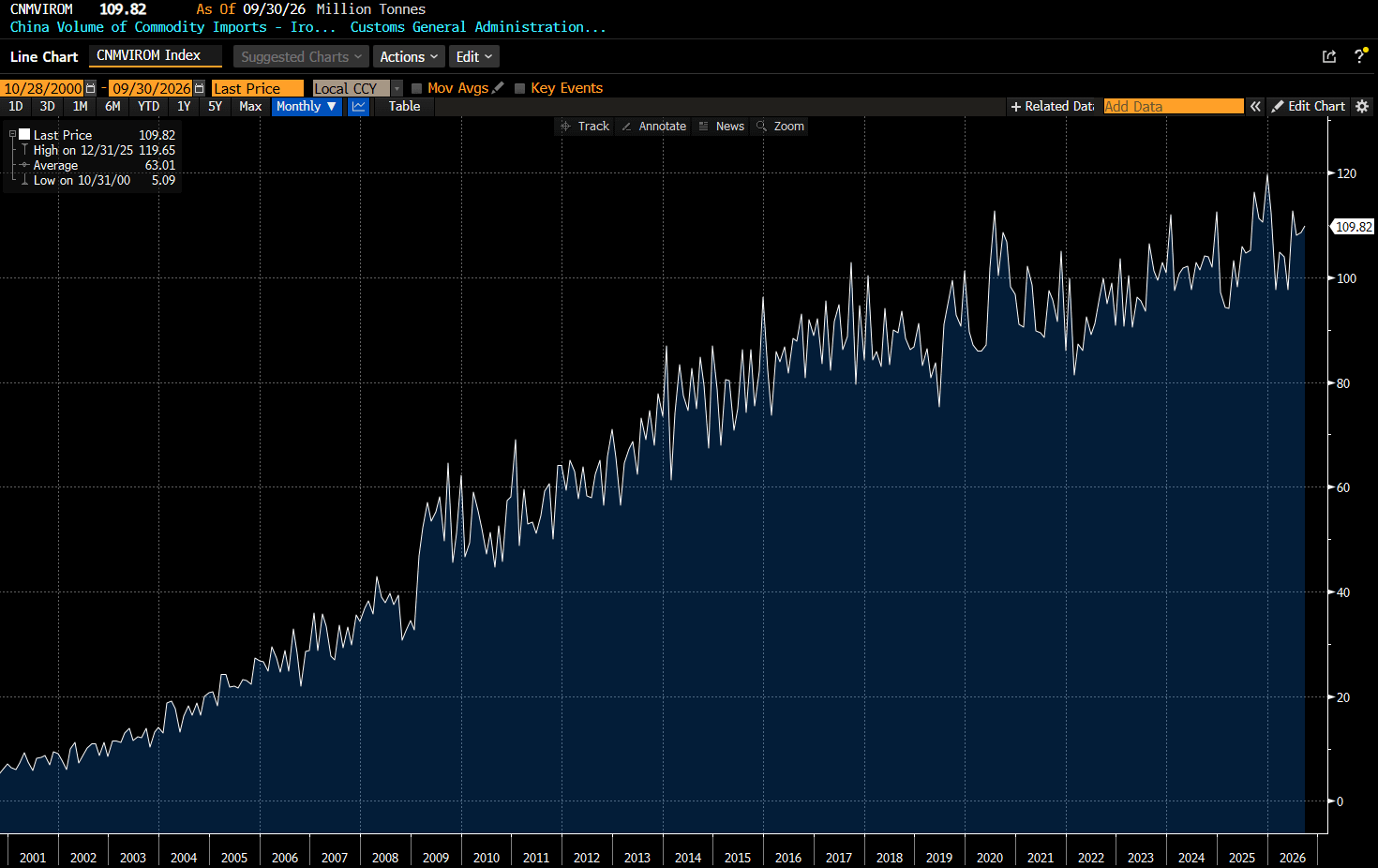
Why I mention this, is that humans have a habit of rejecting big numbers - so we need to keep that in mind with bearish AI narratives. But iron ore miners became shorts when the rate of increase in Chinese iron ore imports slowed around 2011, and supply took off. What is different here is Aschenbrenner is saying that order of magnitude growth will continue (with caveats about power and compute limitations). Knowing when Chinese demand for iron ore would slow was actually easy - you could use the same Japan and Korean analogies. With AI - we are flying blind. But at least I know what sort of data set that Elon Musk and Mark Zuckerberg are looking at when they make their USD 100bn investments.


