
(Apologies for this post - it is slightly more stream of consciousness that I like, but it is my thought process. Will follow up with more clear logic)
When something does not make sense to me, my subconscious keeps nagging away at me. Generally speaking I trust my subconscious - its gets things right. If I wake up in the middle of the night, worried about a position, then I know its probably too big or just wrong. My best positions, both long and short are always when I am so excited, I just need to get the position on NOW. Historically speaking, the price action at Coreweave would normally motivate me to get heavily short Nvidia and the whole AI trade. And yet my subconscious stops me. This note is trying to work out why.
Historically speaking, the set up look a slam dunk short on Nvidia. For example, many years ago I wondered why William Brother a pipeline company, whose main client was Chesapeake was doing so well, while Chesapeake was crashing. After taking a good look, I discovered that the deal Chesapeake had with William Brother was a fixed quarterly payment, no matter how much gas they piped. When the deal was signed, it was a win-win. Williams could show its investors steady revenue, and Chesapeake could cut costs by pumping as much gas as possible. The problem was that Chesapeake and its competitors where piping so much gas, prices were collapsing, and something had to give. I shorted William Brother confident there was limited upside, and big downside. I was correct. However, working out why the market was so divergent did take a couple of weeks digging.

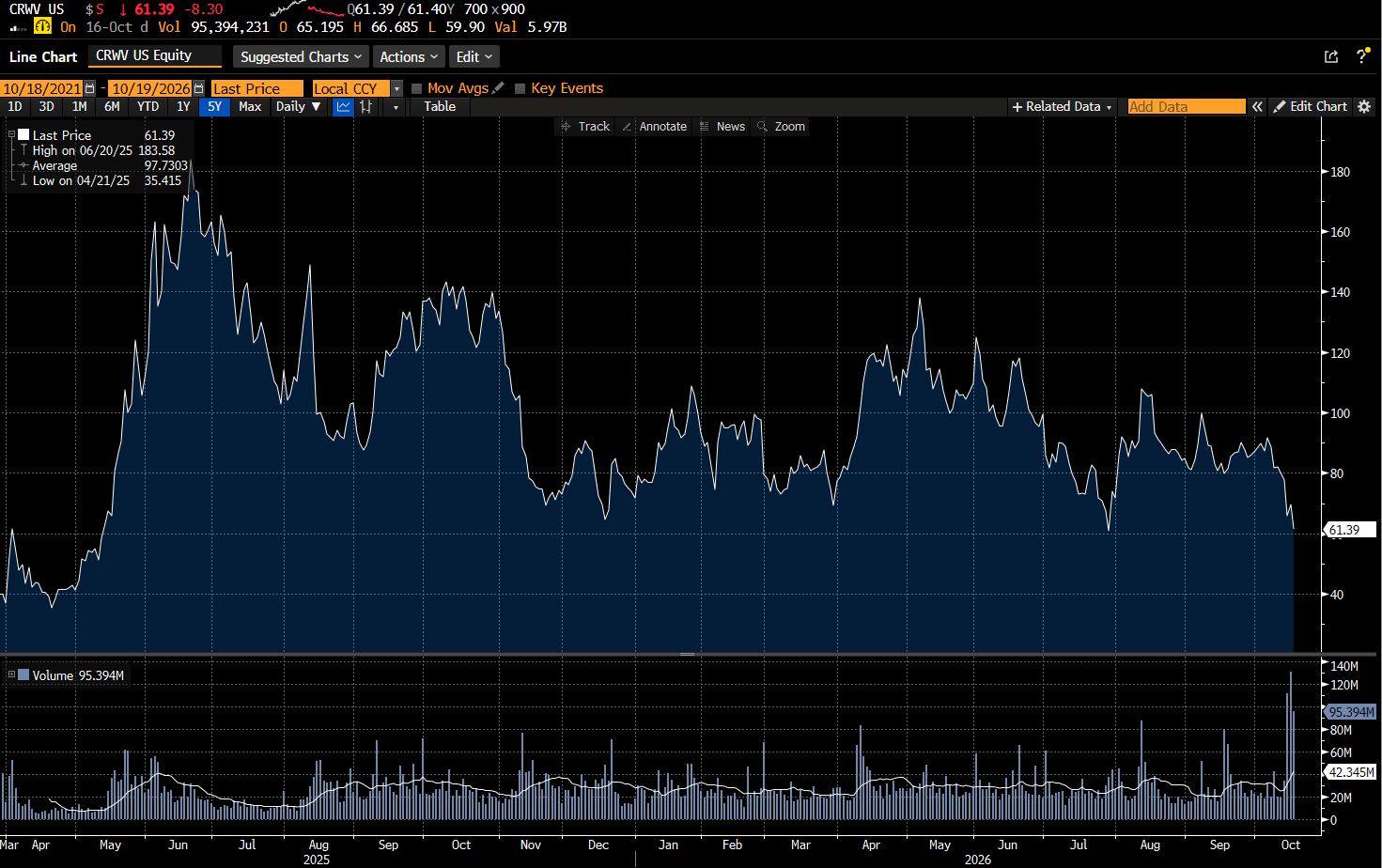
I am getting a similar confusion when I look at Coreweave, which I know is telling me something, but I just don’t know what. This always bugs me. First of all, Coreweave stock has been weak, but it is back to levels seen in July. It has been clear the market is struggling to price this business.
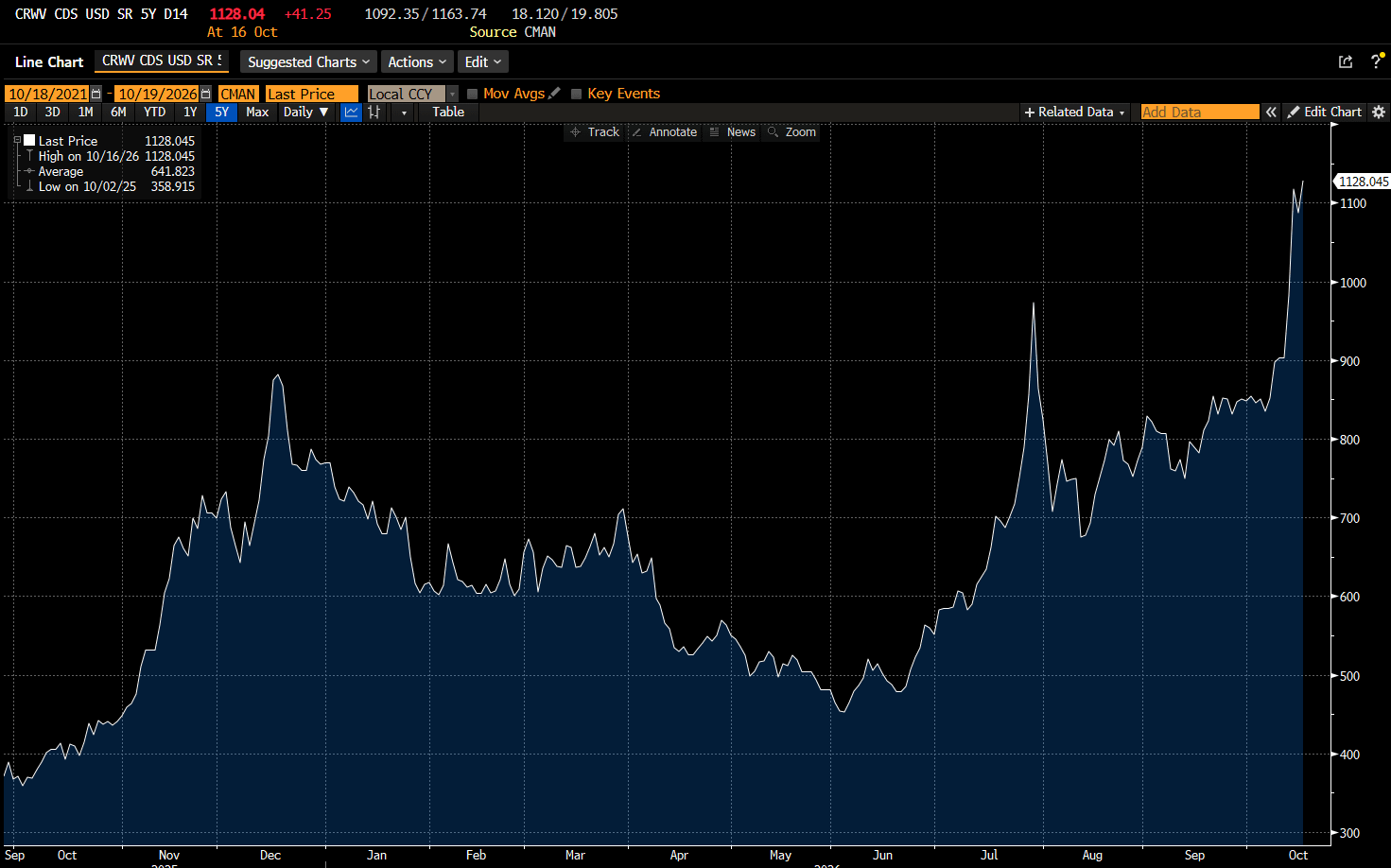
But on the other hand, its CDS are at new highs of 1128 - and a level that implies serious concerns over its debt. This is most unusual. I would expect a stock price to be collapsing with the CDS this high. In fact, Coreweave trades at 6 times book.
Is Coreweave reacting to problems with its customers? Well here is a little tricky, because its main customers also have data centres, but use neoclouds when they need extra capacity. Microsoft share price is close to highs. So that does not seem the problem. I wondered if neoclouds were getting squeezed by the hyperscalers, but pricing seems to be rising for neo clouds and hyperscalers.
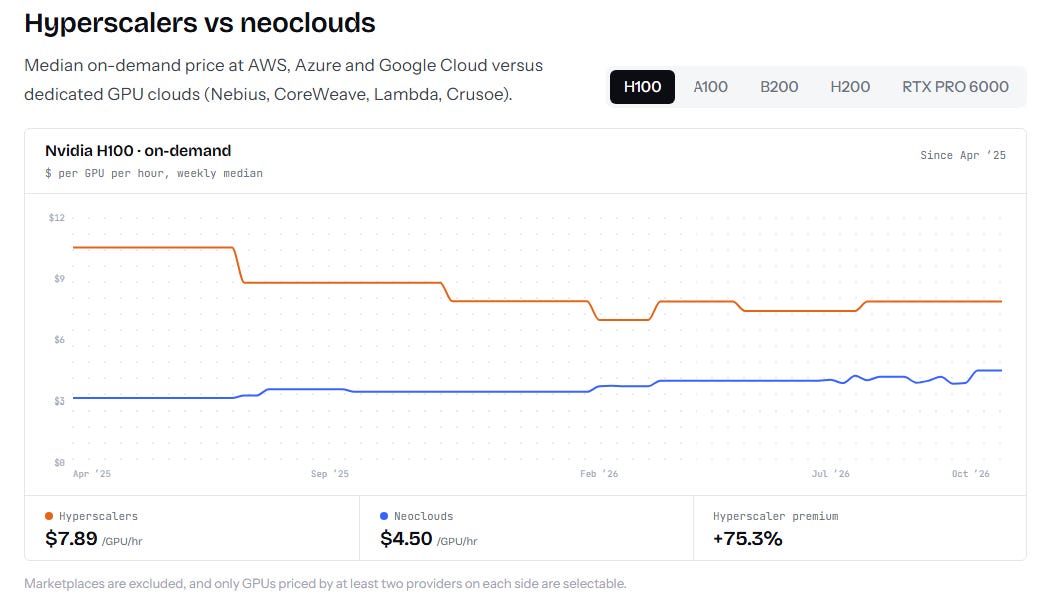
And if GPU rental prices are rising, its pretty safe to say GPU prices are stable too. So that’s not the problem. I think the problem comes for Coreweave outlook. They have been investing aggressively this year, with Capex in the first two quarters of near USD 15bn.
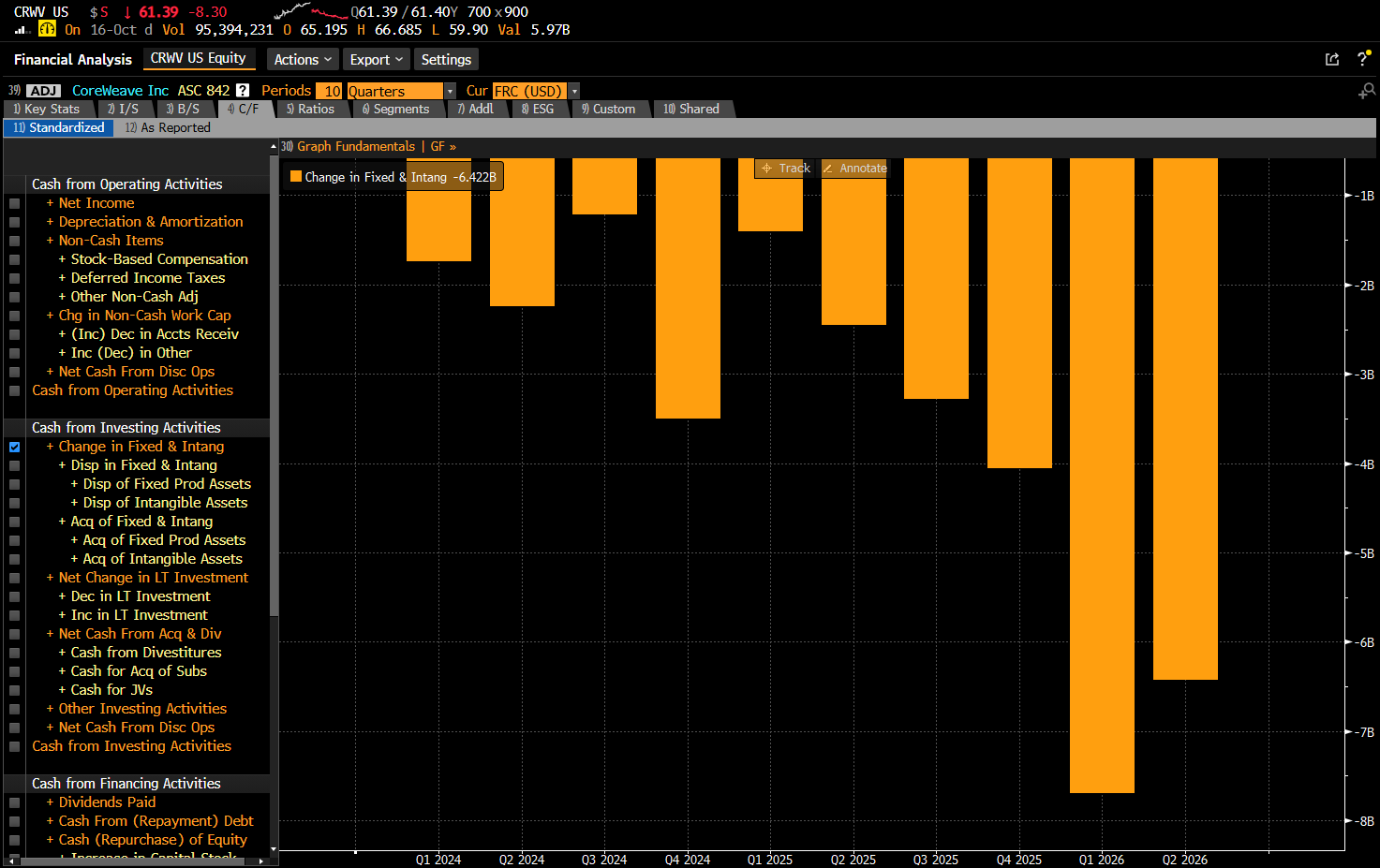
But in their most recent outlook statement, saw up to USD13.5bn for Q3, and up to USD39bn for all of 2026.
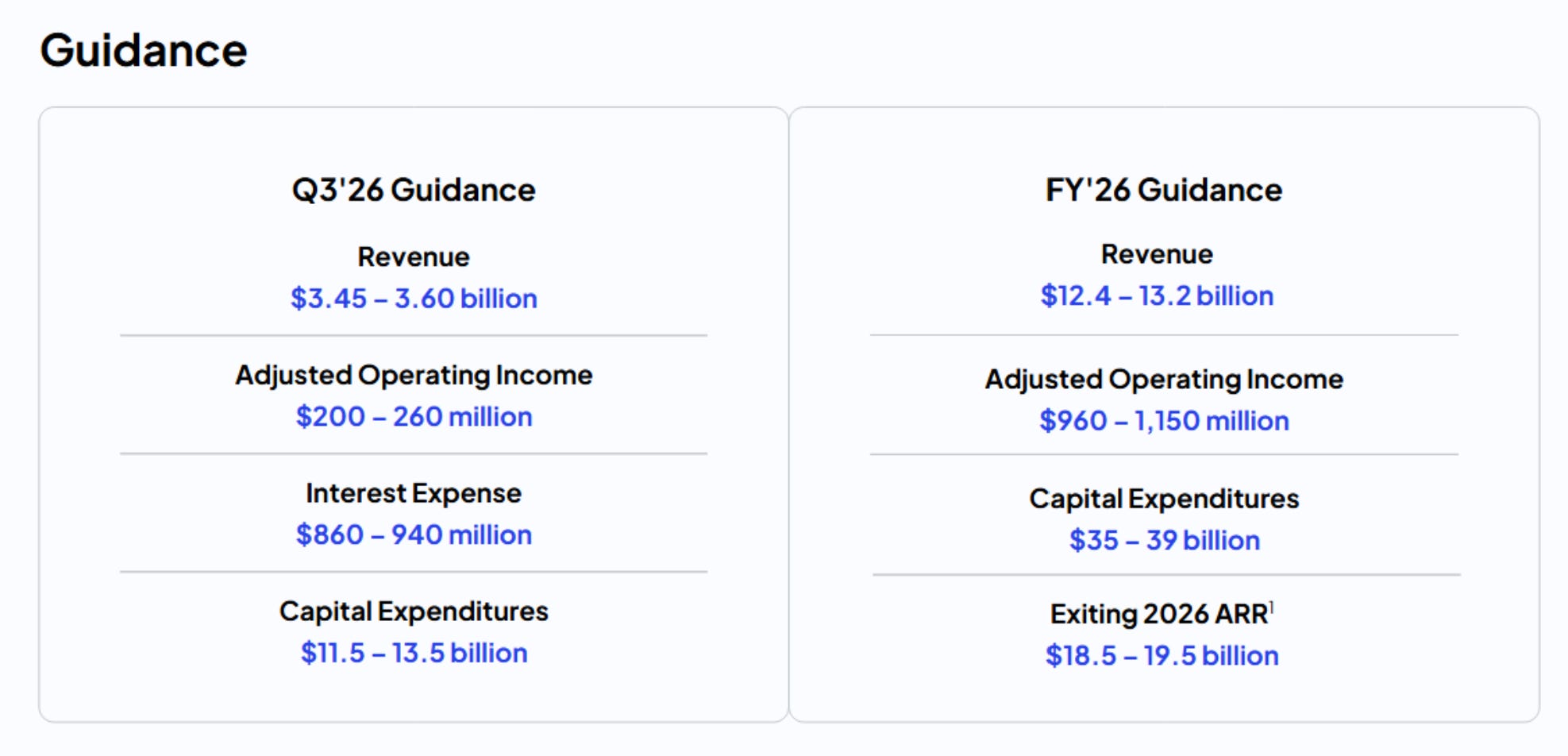
So Coreweave CDS seems to be reacting purely to capex plans.
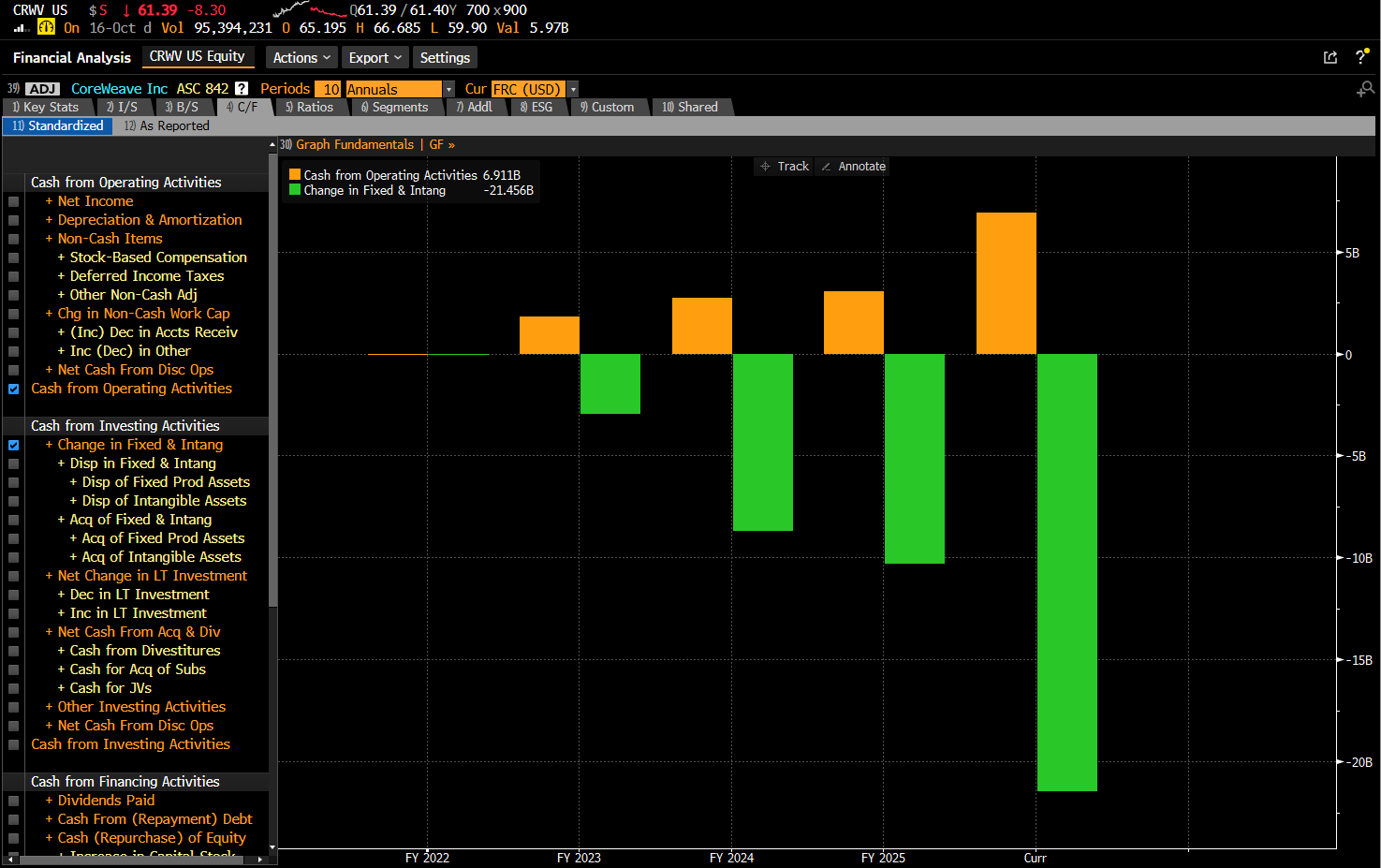
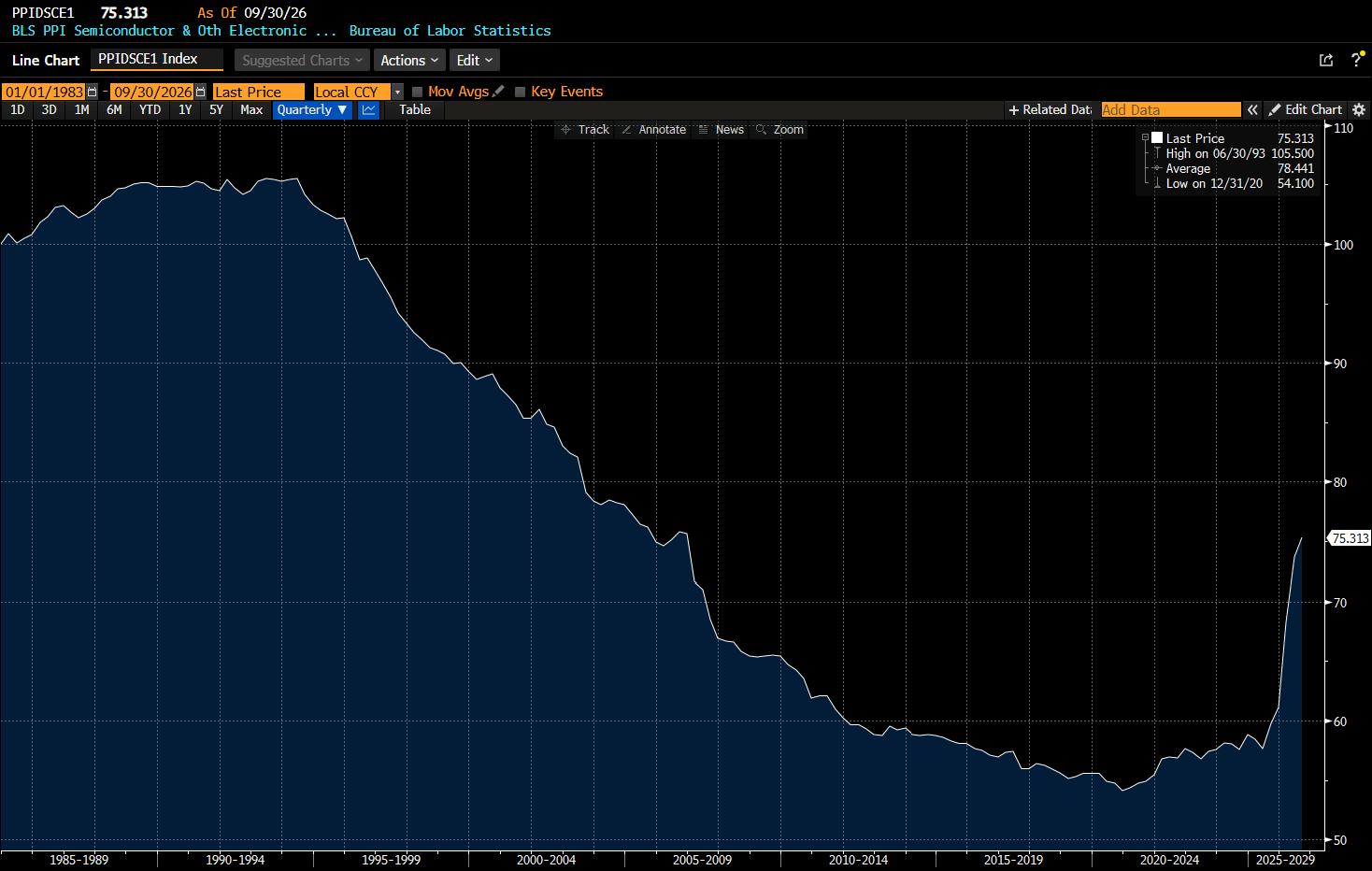
And now I know why Coreweave bugs me. Its share prices is falling because it has huge capex plans - which is good for Nvidia and all the other hardware stocks. Try as I might, I cannot find any data that shows falling prices in GPUs or AI costs. That is, unlike the William Brother/Chesapeake example above, there is no sign of a price war, or over supply. In fact PPI for semiconductors says the total opposite, as does DRAM spot prices.
More logically, the market is probably pricing in an equity issuance. With a current market cap of USD 36bn, and guided capex of USD 36bn for 2026, and Barron’s suggested US 50bn for 2027. This level of capex would undoubtedly make current equity holders and debt holders nervous. I have had my concerns of AI capex before, and then along came the SpaceX IPO, which delivered Elon Musk the capital he needed to be build xAI. That is equity investors seem happy to fund at least Elon’s capex plans.
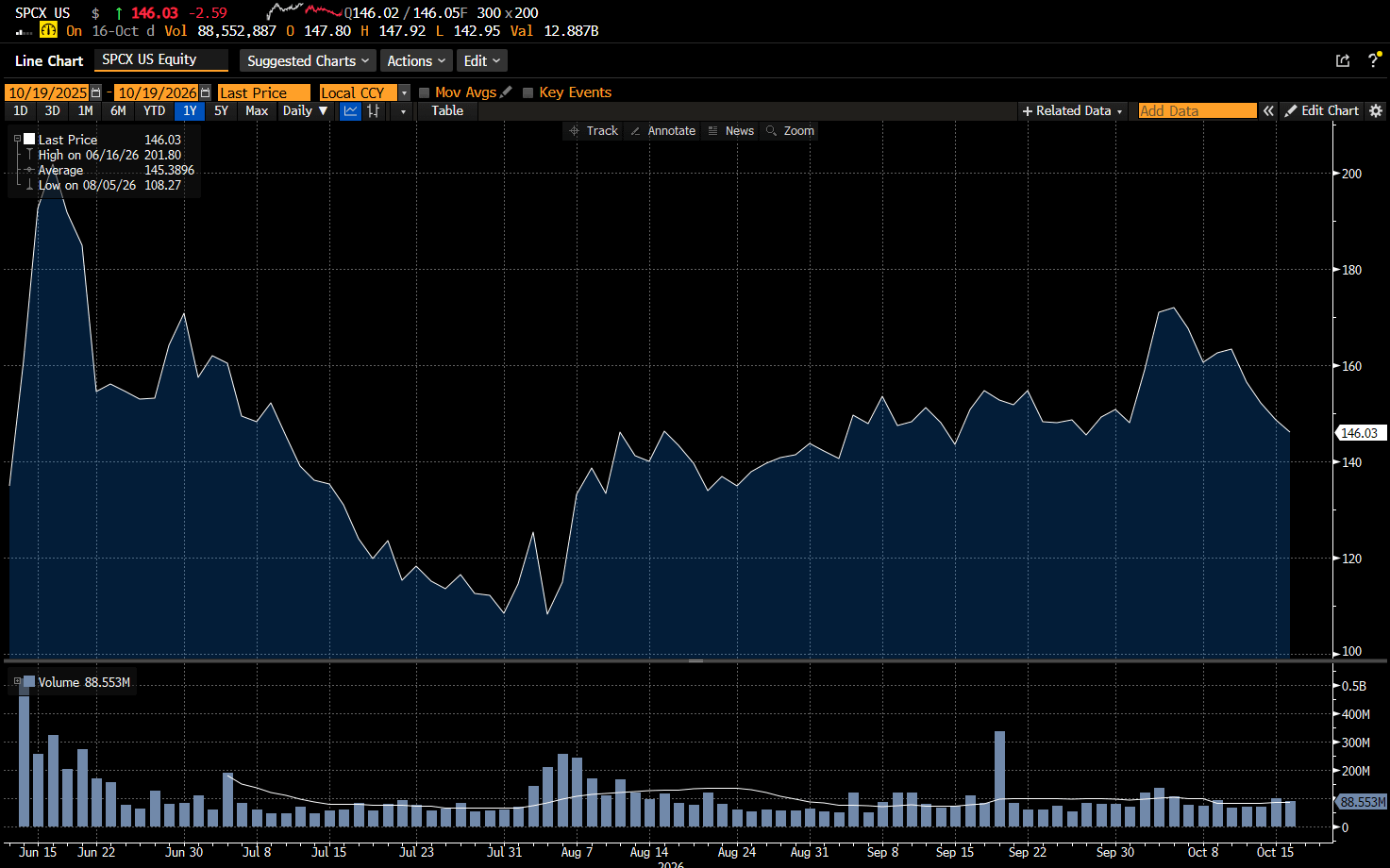
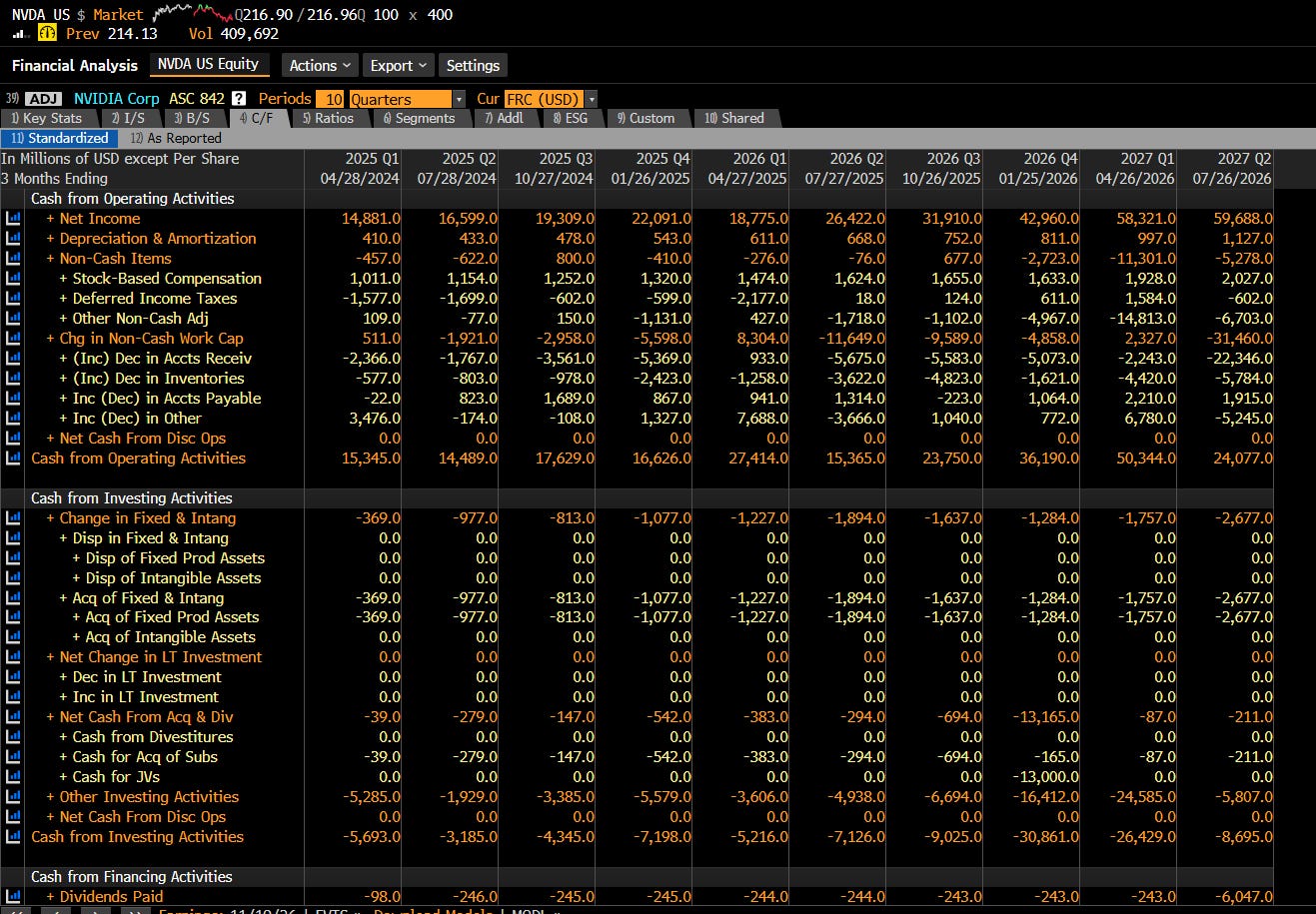
This is what I would expect to see from the “capital war” that is being waged in AI. But this “capital war” is happening in a time that pools of capital are being run down. The question is when do we run out of capital? I am pretty sure, we can say that the credit markets are close to being tapped out. The question is whether the equity markets are tapped out or not. Now this is where it gets “weird”. Elon Musk has no problem tapping equity markets for capital, but the rest of the tech stack does. Nvidia is a good example. In the most recent quarter, its account receivables went up as it changed payment terms. Despite this, it should be noted that Nvidia also bought back share this quarter, to make USD 50bn of share repurchases this year.
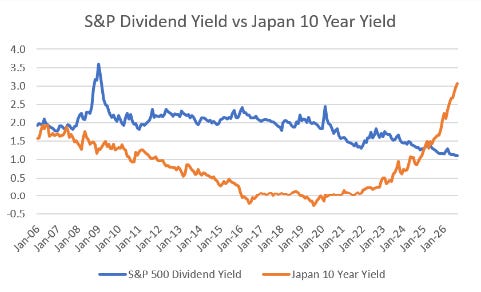
And now we get to the heart of the matter. I have puzzled over this chart for some time. The cost of capital rises, and yet equities get more expensive.
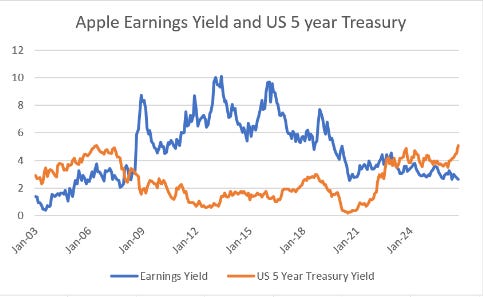
Or a better way to understand it, is that US equity valuations are built on an understanding that share buybacks will continue no matter what relative valuations look like. Apple, which has conspicuously not entered the AI race, and essentially returns all cashflow to share holders, has just touched a new all time high. When Apple started its share buybacks, it was a no brainer trade. Is it still a no brainer trade today? Does it even matter? As long as share buybacks push the share price up, its MUST be considered value creating.
What I am trying to say, is that modern US capitalism has become extremely focused on share holder return, with a heavy focus on share buybacks. This has led to a greater focus on raising capital via debt markets than via equity. If we look at shares outstanding on the S&P 500, it still bears no resemblance to the massive issuances we saw in 2000.
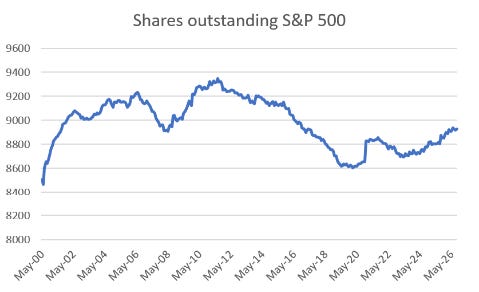
What I am seeing is the culmination of two trends in US business. One if the blitzscaling model - that of massive capex to gain market share, and the other of creating share holder value via accessing the debt markets rather then equity markets. Both are now under pressure. First the blitzscaling model does not work if everyone does it. The idea of blitzscaling is to give you a dominant position, which allows you to set and raise prices. This is not happening yet. And the second as Coreweave shows, when everyone is blitzscaling, the debt markets are correct to get nervous.
What does that mean for markets? Well its hard to see neocloud’s cutting capex. If you cut capex you admit you will be a subscale producer, and you are dead anyway. Oracle share prices has been under pressure for a year now, and no capex cut has been forthcoming. In some ways, US business represents the political position we are in now. Everyone HAS to spend, as they cannot afford to lose. The true meaning of Coreweave is that yields go much higher - for everyone.


