

I have been out talking to people of late. One thing I hear a lot, is how attractive “real yields” are. My question is always, the same. What exactly is a “real yield”? And they will say something like the 10 year yield less inflation. In my mind, I always think, its 10 year yields minus what we think inflation MIGHT be. Its a little more sophisticated than that, but that’s the gist. If you go on Bloomberg or the Fed Website, you can get a graph of real yields. These yields are based on TIPS yield. TIPS (Treasury Inflation-Protected Securities) have been around since the 1990s, and are designed to protect your principal from inflation. We can use them to back out a “market based” real yield.
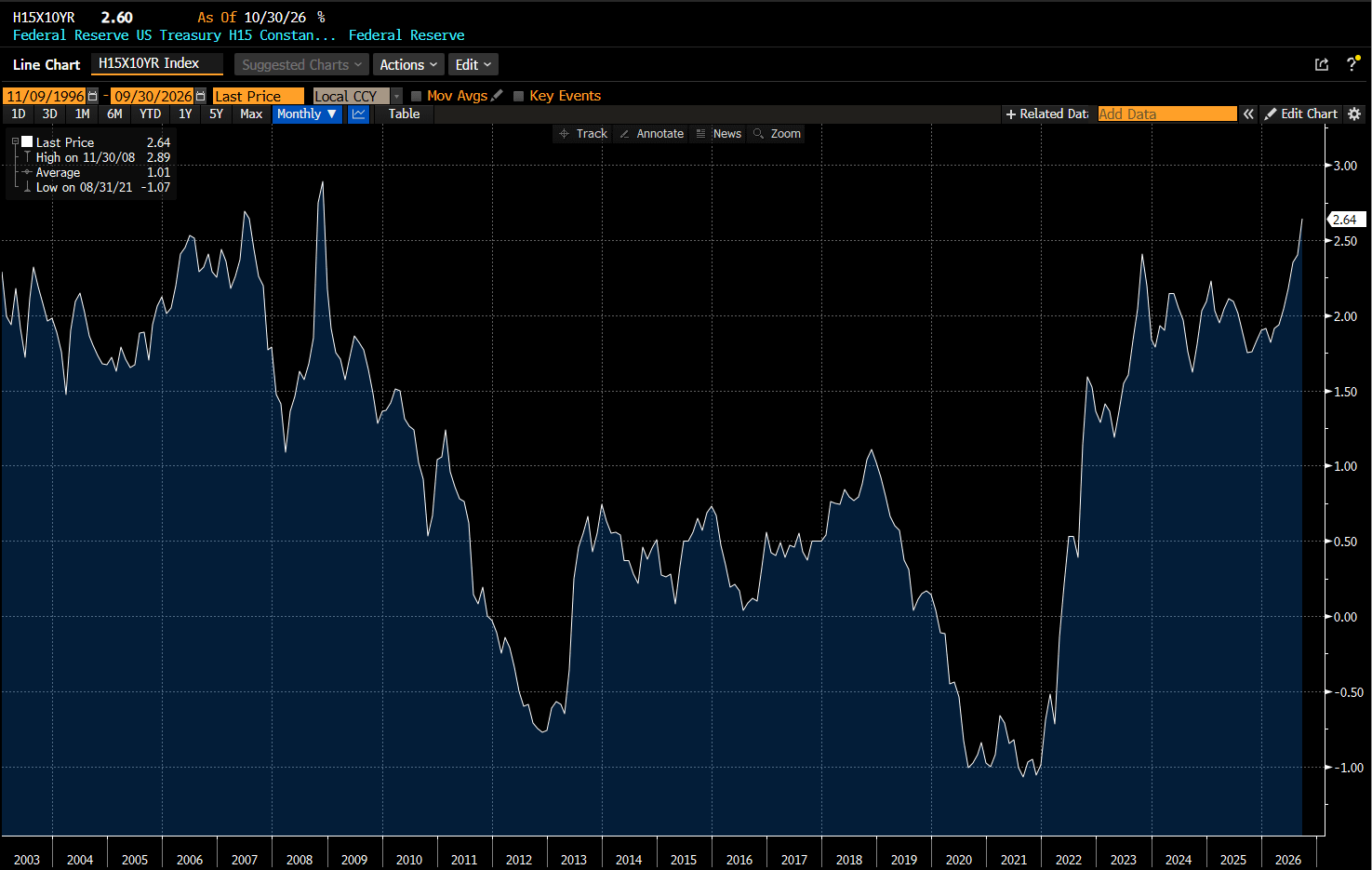
You can make a long term real yield graph. This is taking 10 year bond yields, less core CPI. Back in the 1990s, a 4% real yield was more common, but you had highly negative and highly positive yields in the 1970s. This is more volatile as inflation was more volatile.
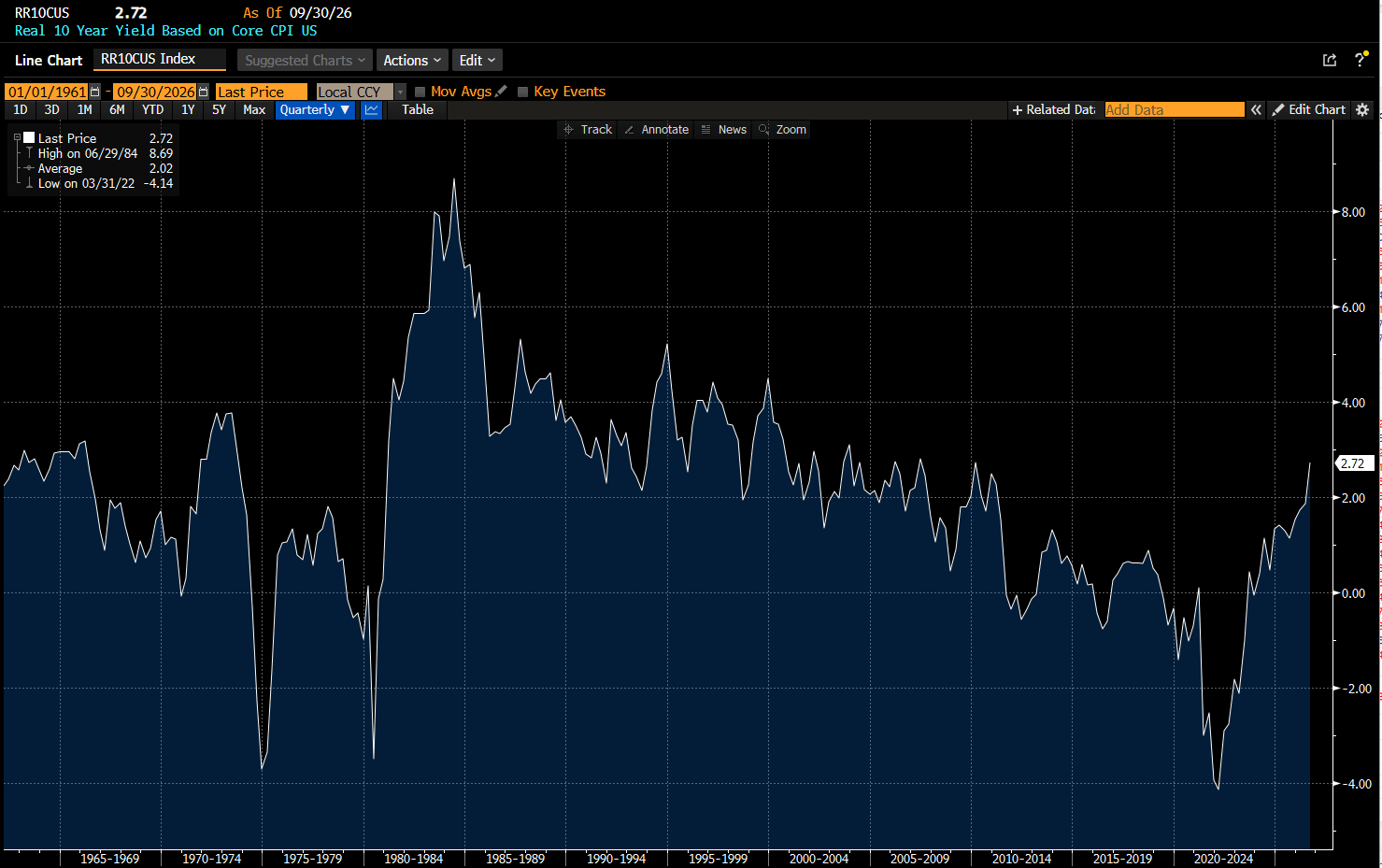
According to this, real yields today are 2.6%, some of the highest seen. So they look like a buy. My problem is that TIPS were only introduced in 1997. So for most of the time, they have existed in a falling yield environment.
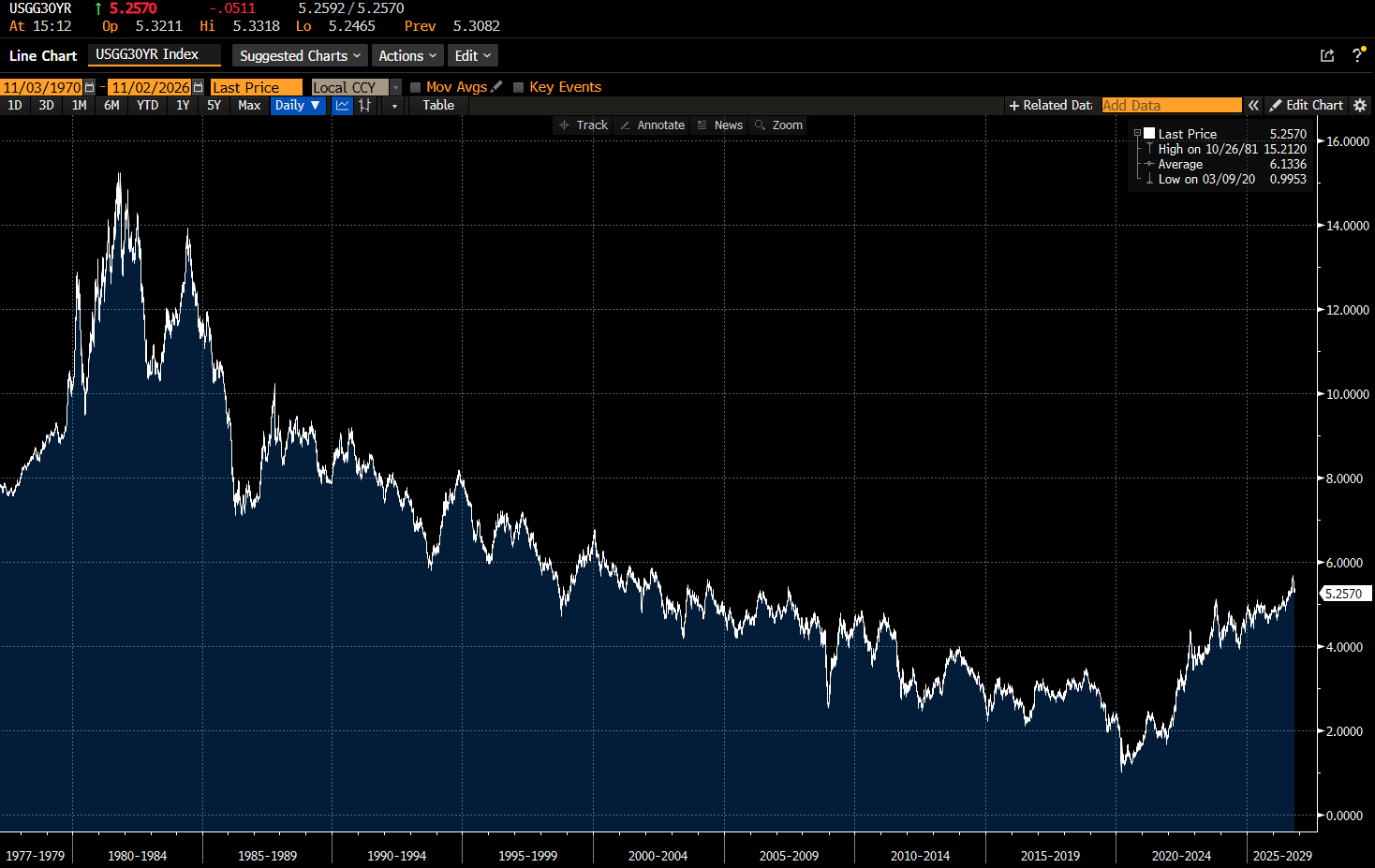
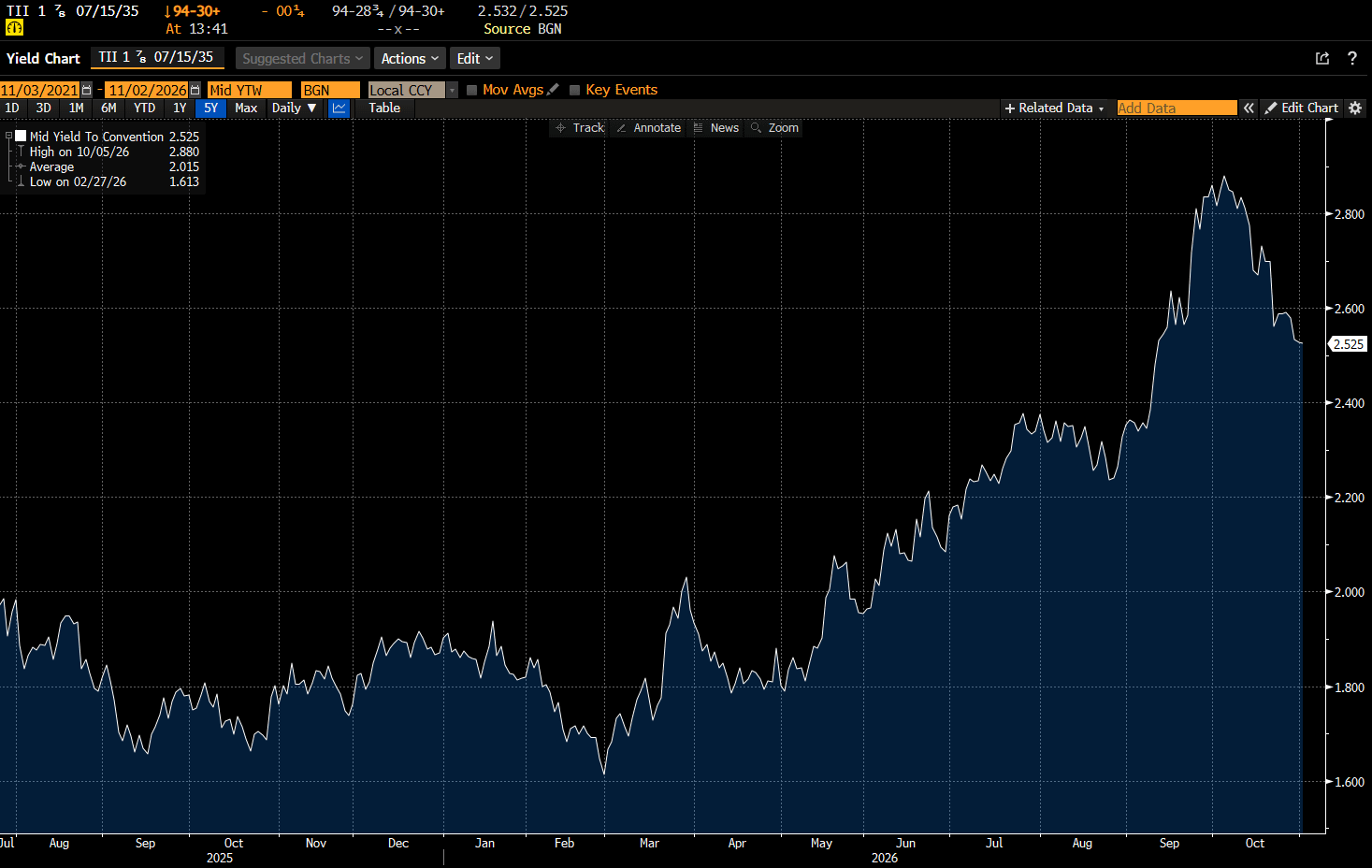
So what can you do if you think “REAL YIELDS” look attractive? Well you could buy TIPS. And there is an ETF to do just that, TIP US. Its share price does not scream “inflation hedge” - but this is without including dividend income. TIP US holds a collection on inflation linked bonds. Here is a screenshot of one.
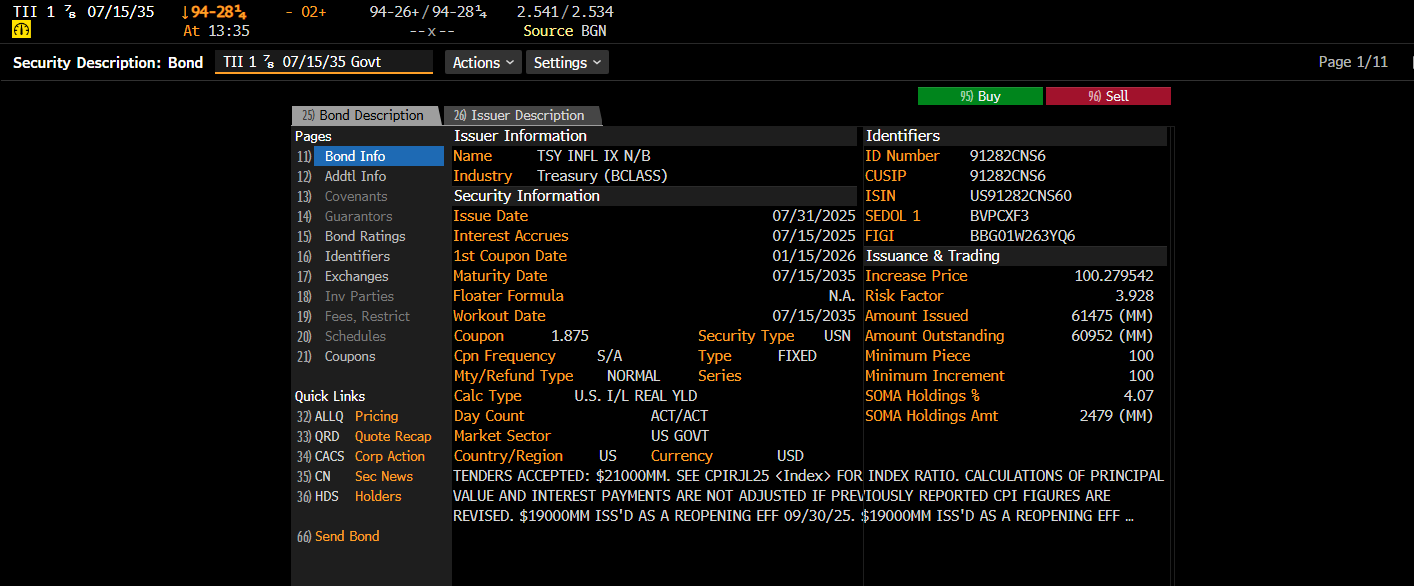
If you are not familiar with TIPS, you may think a 1.875 coupon as pretty miserly. And it is, but the thing with TIPS is that they add the increase in CPI to your principal. So if CPI doubles in 10 years that a TIP is issued, you get 2 times your principal back. And the real yield, is calculated from TIPS. If you squint, you can see this one is priced at 95, which means your current yield is 2.5%.
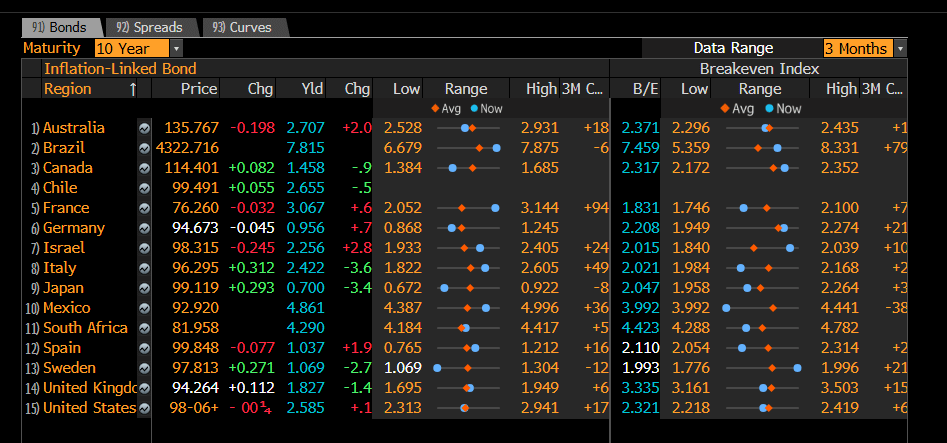
The problem with TIPS is they are a bit of a Texas Hedge. Inflation would spin out of control if the government lost control of debt markets, so when you need TIPS the most, they are least likely to pay you (or fudge the CPI measure). We can get an idea of what real yields look like in a higher yield/inflation environment. There are various inflation linked bonds you can look at - and Bloomberg provides a useful table. Real yields are meaningfully higher in Mexico, South Africa and Brazil, all counties with higher inflation than the US.
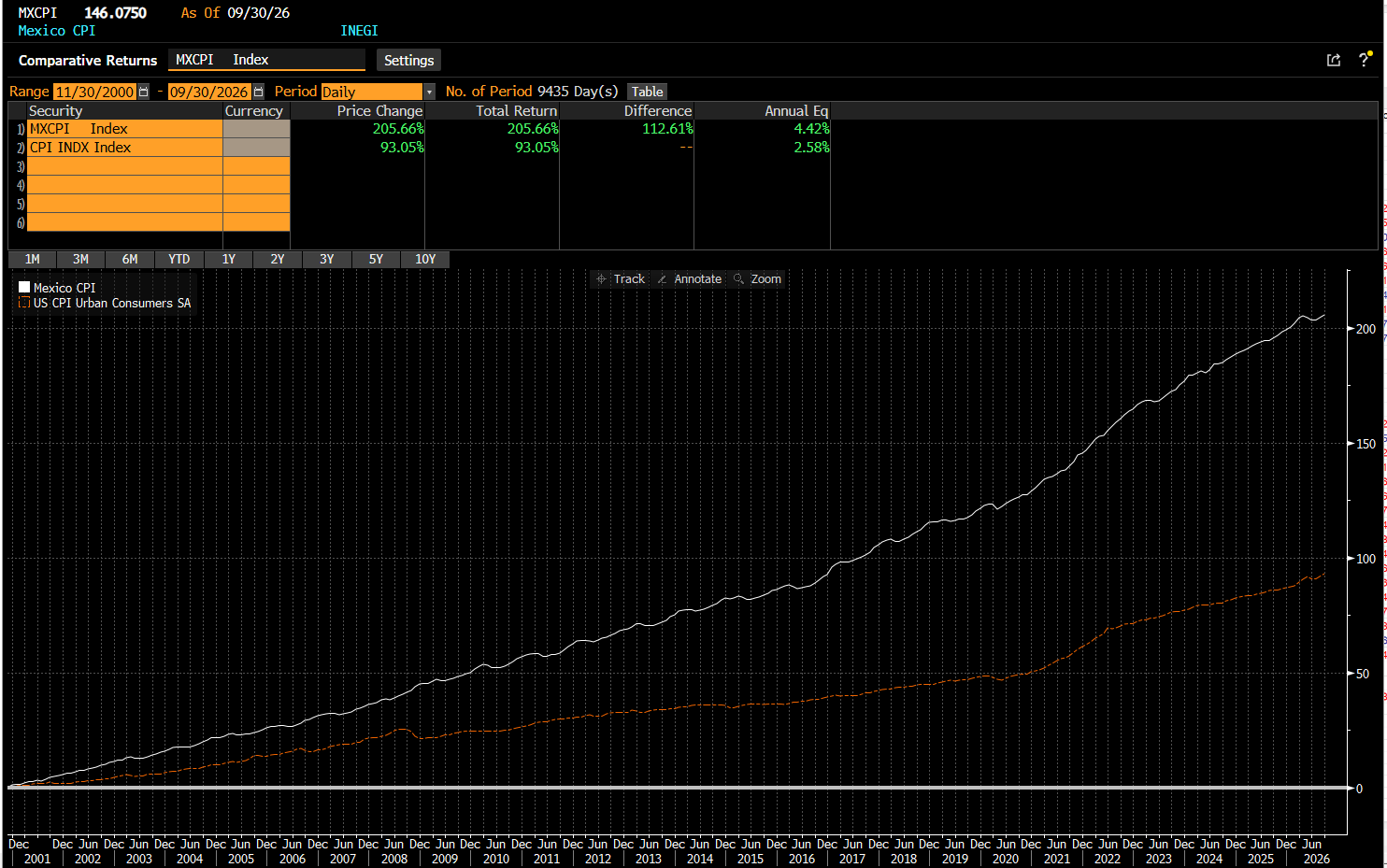
Looking at Mexican CPI relative to the US, double the real yield looks about right. Since 2000, Mexican prices have risen at twice the rate of the US. This has been reflected in an exchange rate that has halved relative to the US dollar.
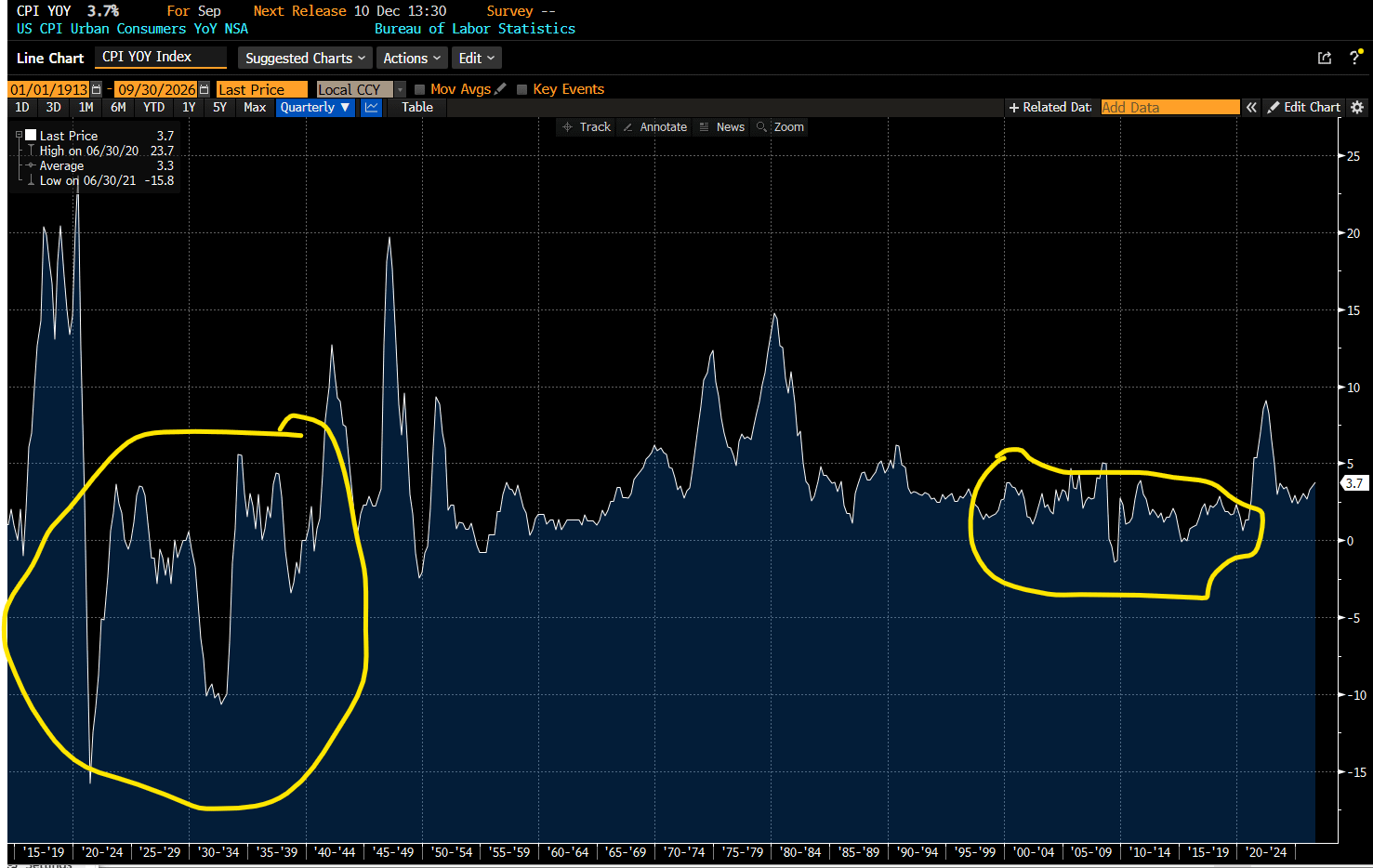
The problem I have with real yields and bonds in general, is that the move to a “pro-labour era” implies we remove the possibility of deflation. The interwar period, and post Cold War period saw outright deflation from time to time. Post War Period through to 1980 saw none, and the power of compounding saw inflation rise rapidly.
My guess is future inflation in the US will be much higher - perhaps close to Mexican levels. Not only would US treasury yields have to rise, but so would real yields. I can’t help but feel “real yields” are still pricing a past that is no longer with us. That is, they are not real at all.


