

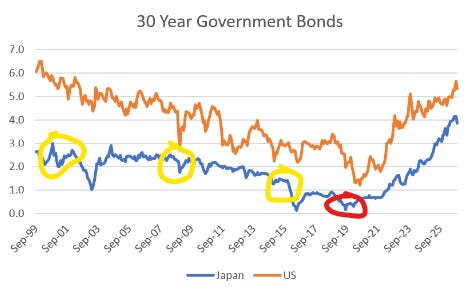
I learnt a long time ago that in financial markets, simplicity breeds elegance. Or, if the trade is complicated, it probably won’t work. For me, my super simple idea is that yields would keep surprising to the upside. Why? Because politics was moving to favour workers and wages, and this would be achieved through tariffs, industrial policy and fiscal dominance. When I thought about what this would mean, I actually thought equity markets would be very choppy. Why? Well the benefit of rising revenue growth would be offset by rising costs and rising yields. My loadstar for rising yields were 30 year JGBs. Before every deflationary cycle I have seen, JGBs have fallen before the US treasury market. And it picked up the inflationary turn in 2020 well before treasuries. That is, if I was wrong on yields, Japan would give me fair warning.
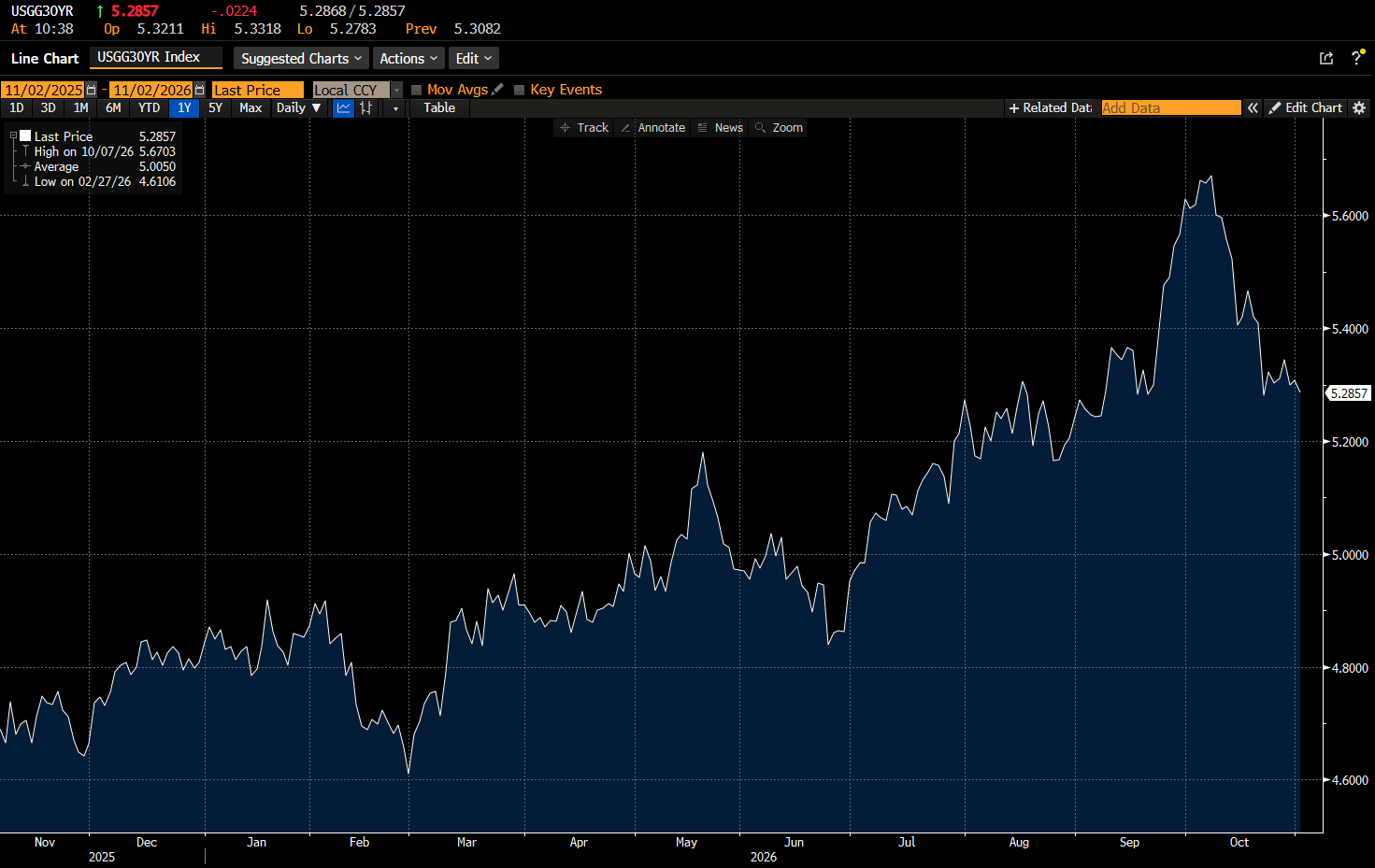
In September, the 30 year Treasury had finally broken out its range, and my expectation was that it would keep selling off. Instead it fell back substantially during October.
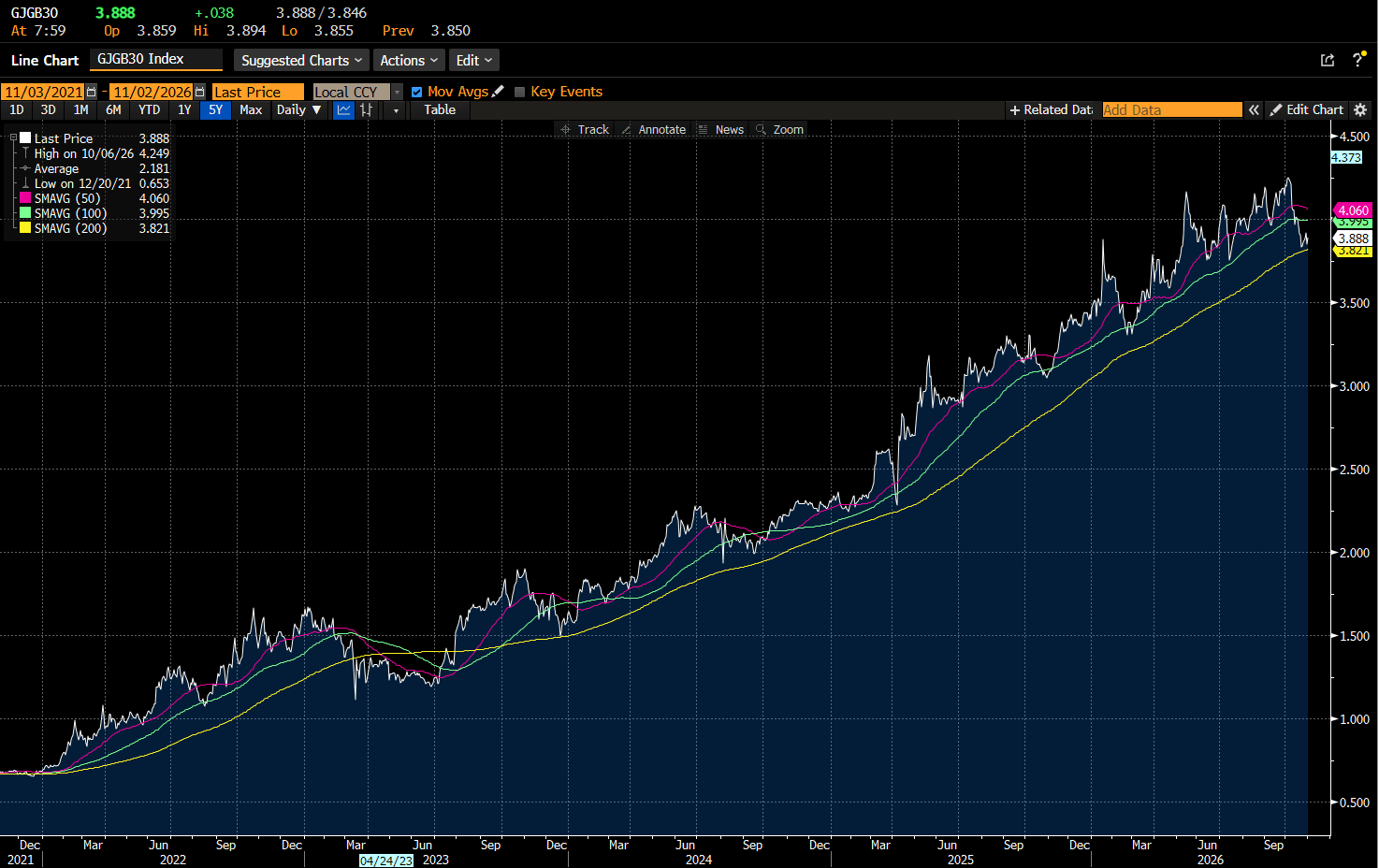
For what its worth, JGB 30 year yields also fell back to the 200MDA during October. So you could see that as deflationary. But it would break the trend of Japan pre-emptively moving.
Why did I think that yields would keep selling off? Well I thought dollar strength was coming to an end. If we use DXY Index, the dollar has been strengthening this year.
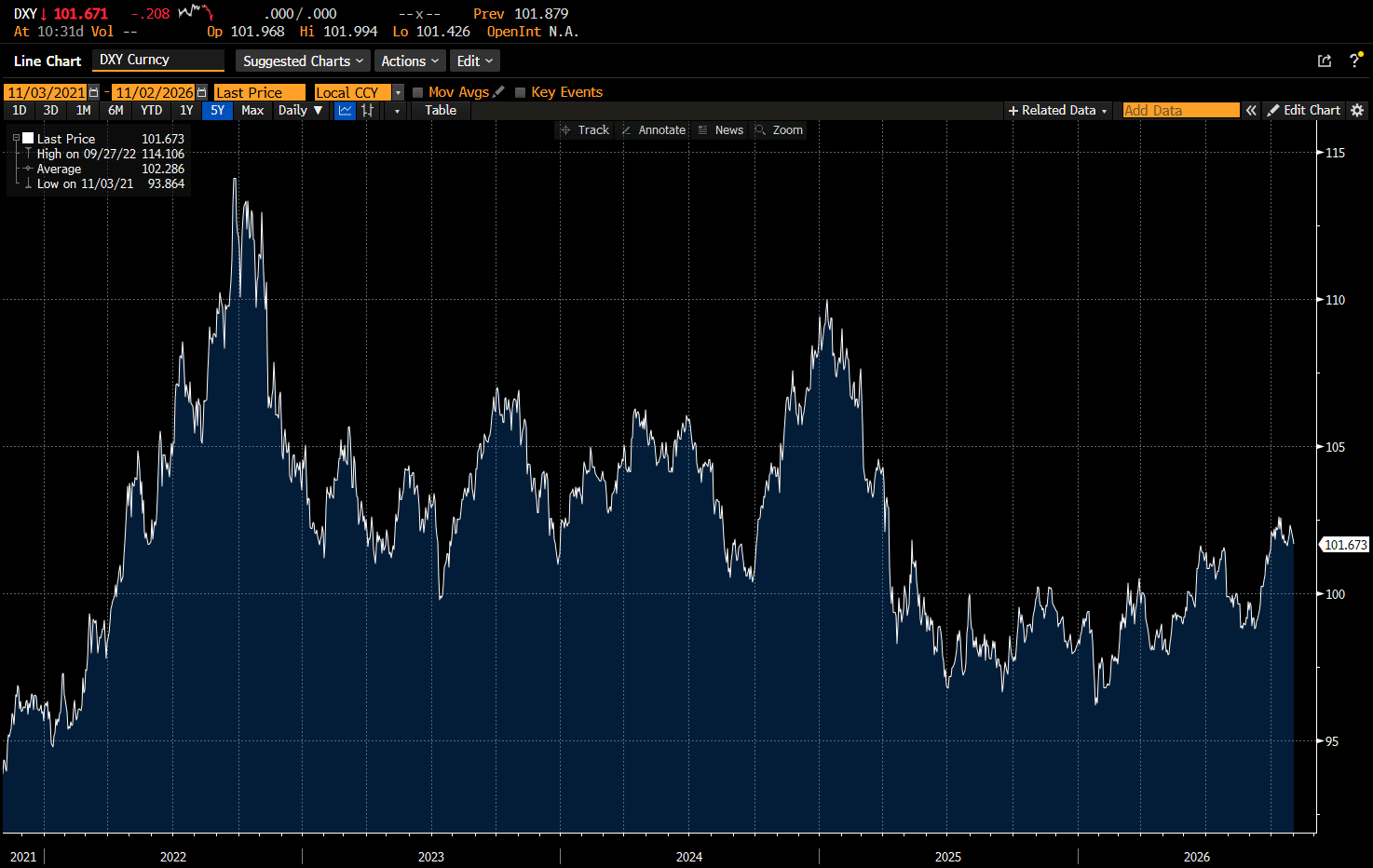
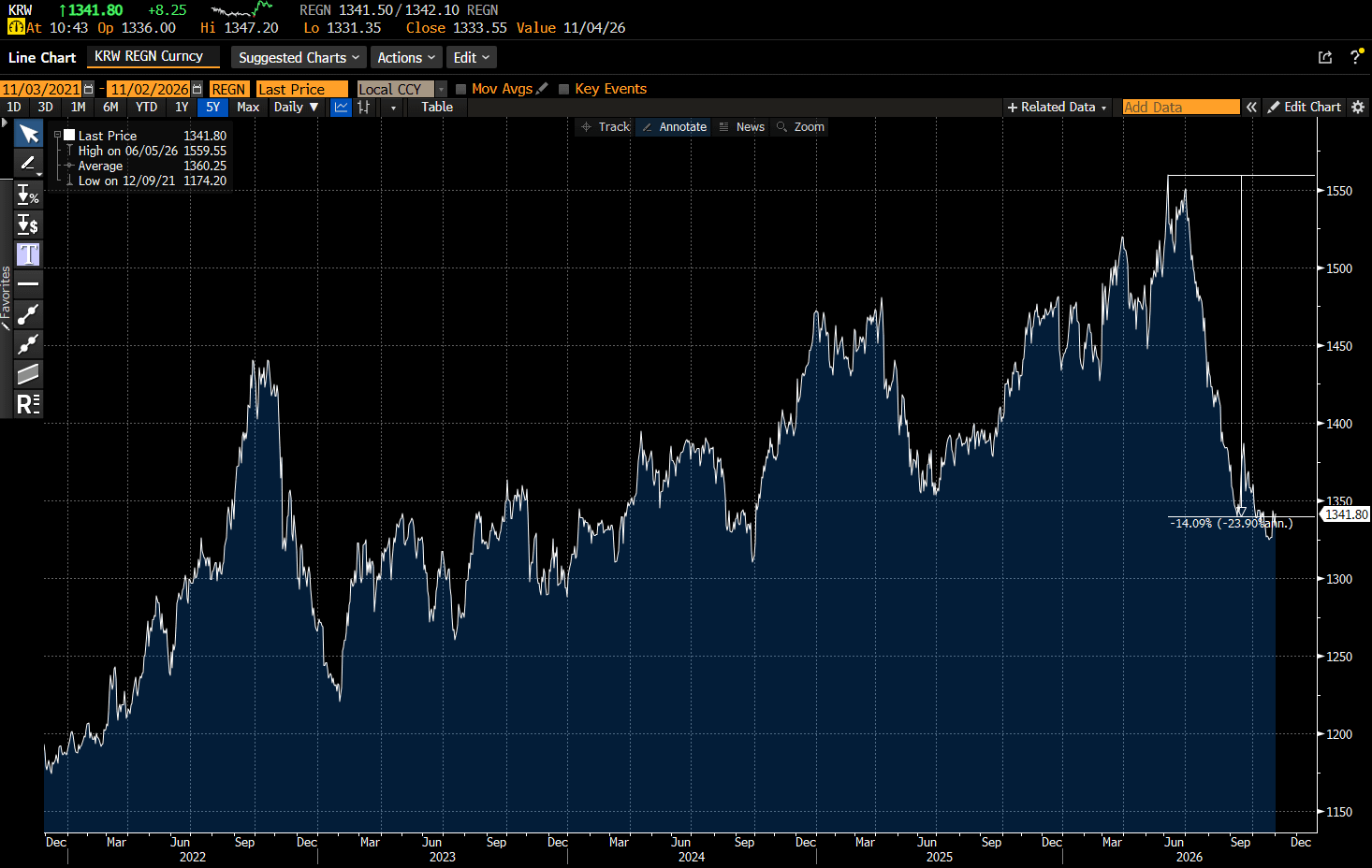
But Bessent wanted the dollar to weaken against the Yen, and both the Chinese Yuan and Korean Won have been very strong against the dollar in recent months. I thought this would allow Yen strength, and dollar weakness to come through. That is I would have expected falling US yields to ignite the inflation trade/debasement trade.
If that was the set up, the market action was very different. Gold, which was meant to react to positively to falling yields, responded poorly. GLD/TLT fell 11% during the month, with GLD down 6% and TLT up 5%.
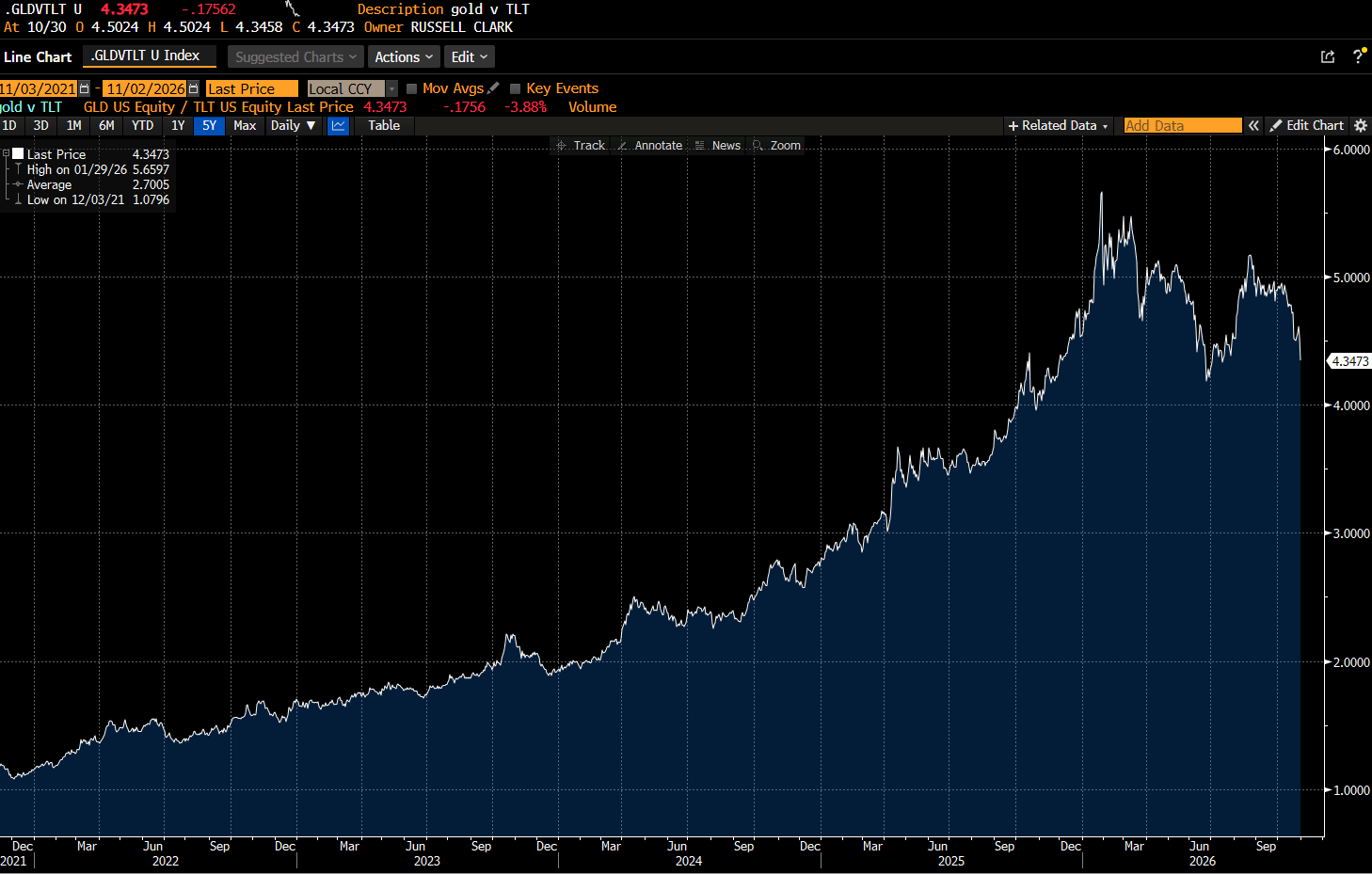
If I look at equity markets, there was a clear rotation out of cyclicals and into defensives. That is the market was saying the economic upcycle was coming to an end. If this is true, the short GLD, long TLT WOULD be the correct trade, and I have had a version of this trade from 2011 to 2015.
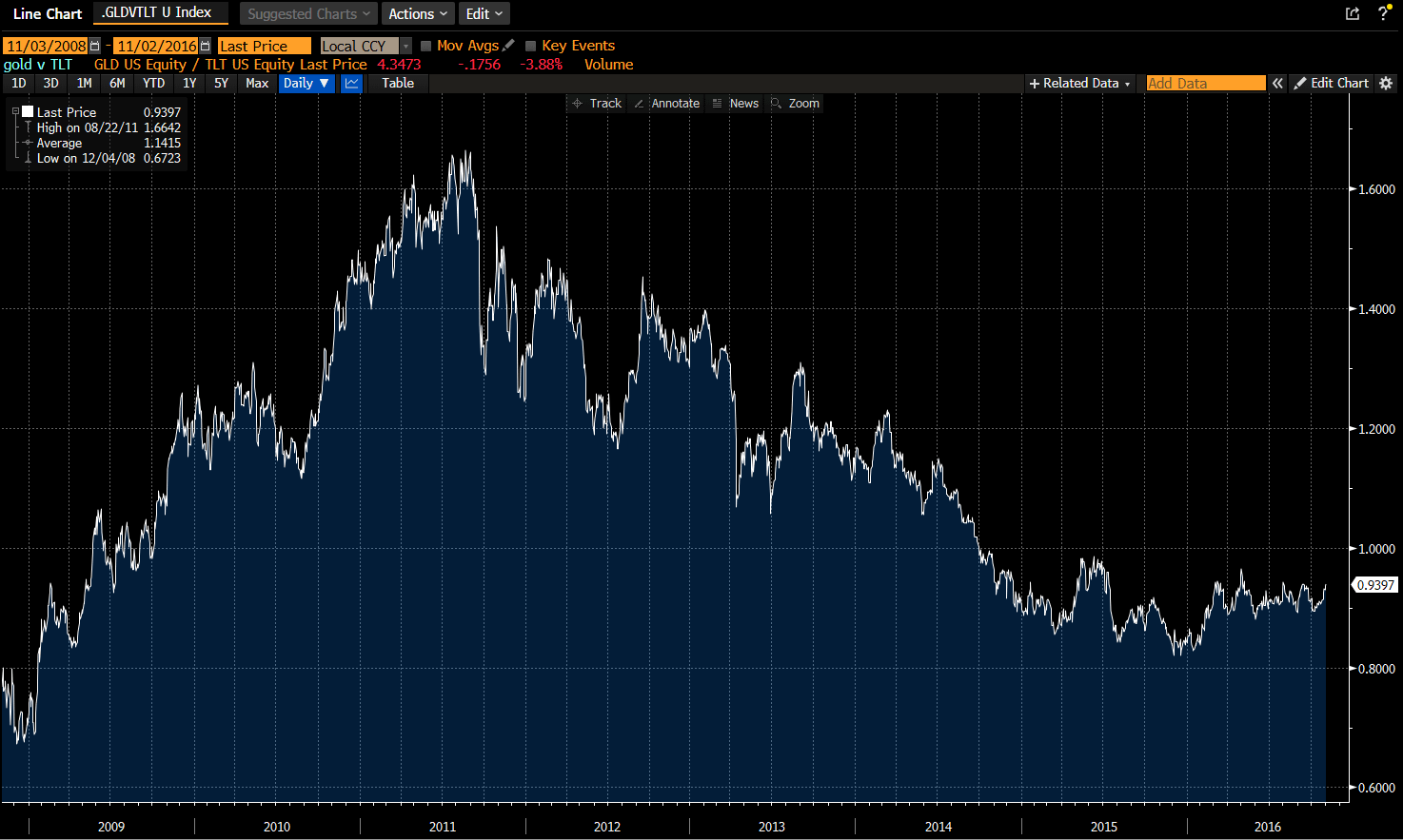
So I am going to let you in on a secret - I would be delighted if I thought we were going to a deflation cycle. I have a proven track record in a deflation cycle, and most of the people I meet are terrified of a deflation cycle, and so in a deflation cycle, you could probably raise a large fund easily. On substack, I see the deflation trade has become popular, particularly for AI related themes. The problem I just see no confirmation. As I mentioned above, I believe simplicity breeds elegance. For the 2011 cycle, Chinese steel prices ended up being a great lead on that cycle, and in 2015/6 accurately called the turn.
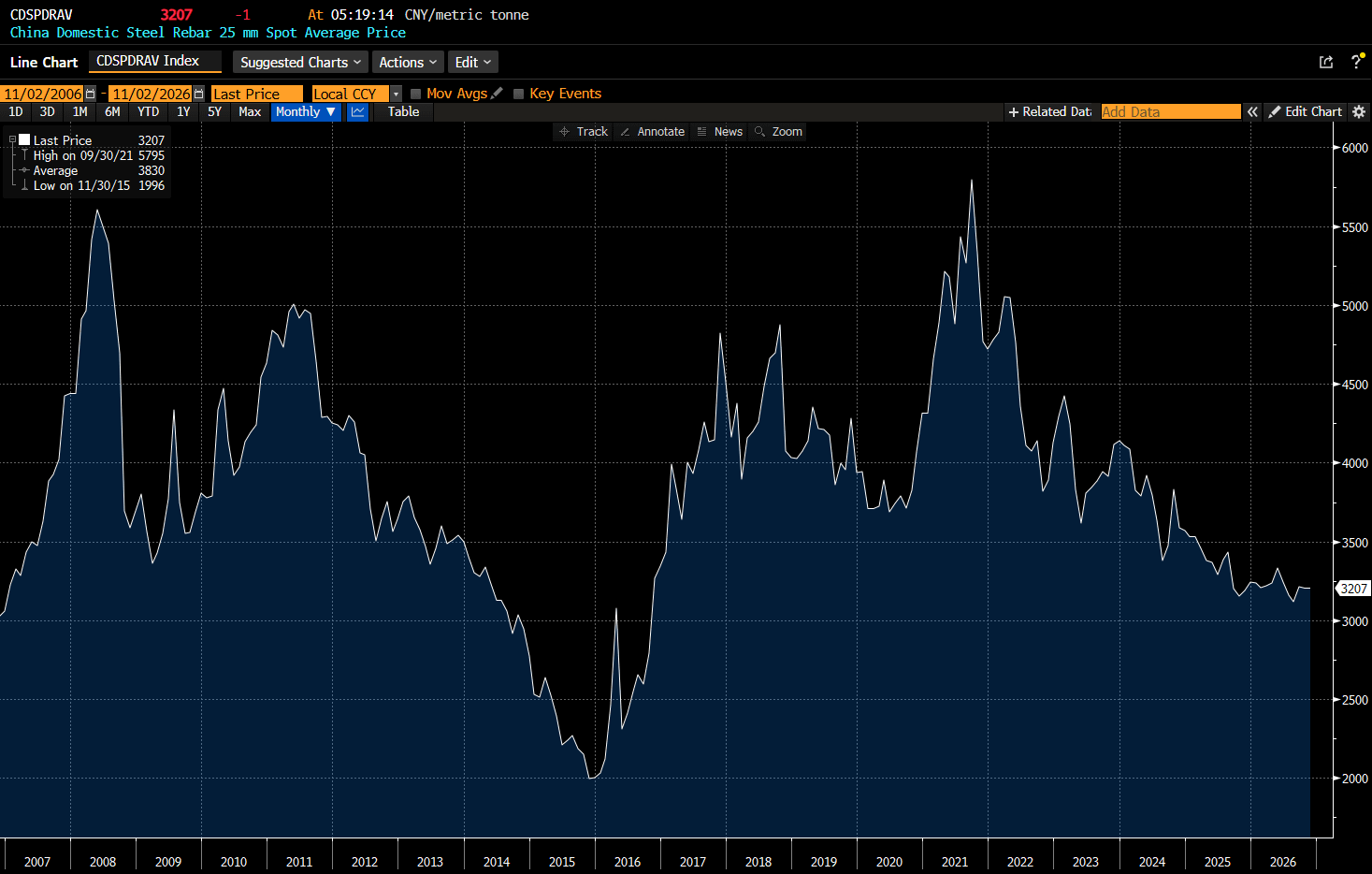
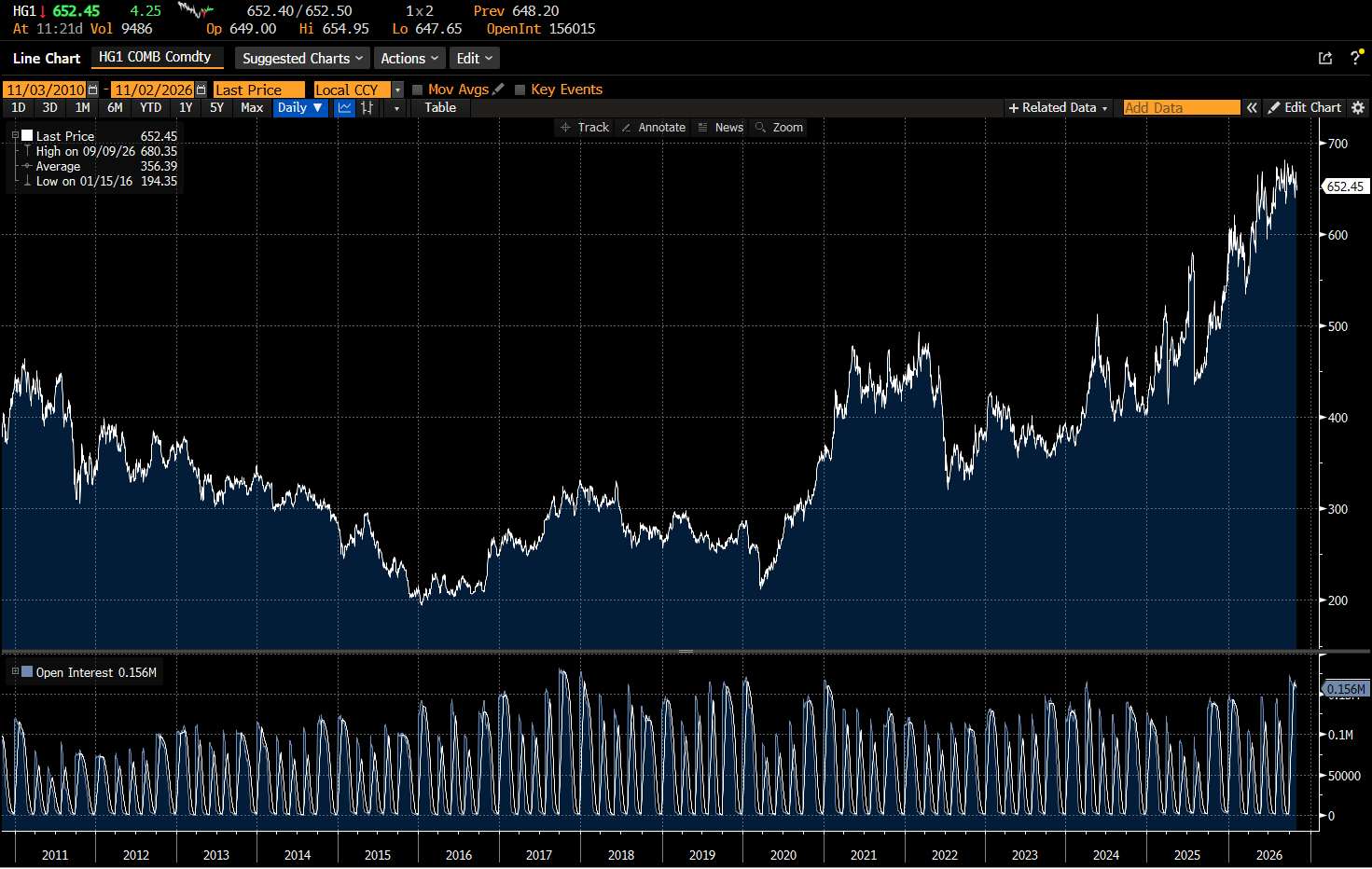
As mentioned above, bond yields gave no preemptive sign of deflation trade. I also do not see it in copper prices.
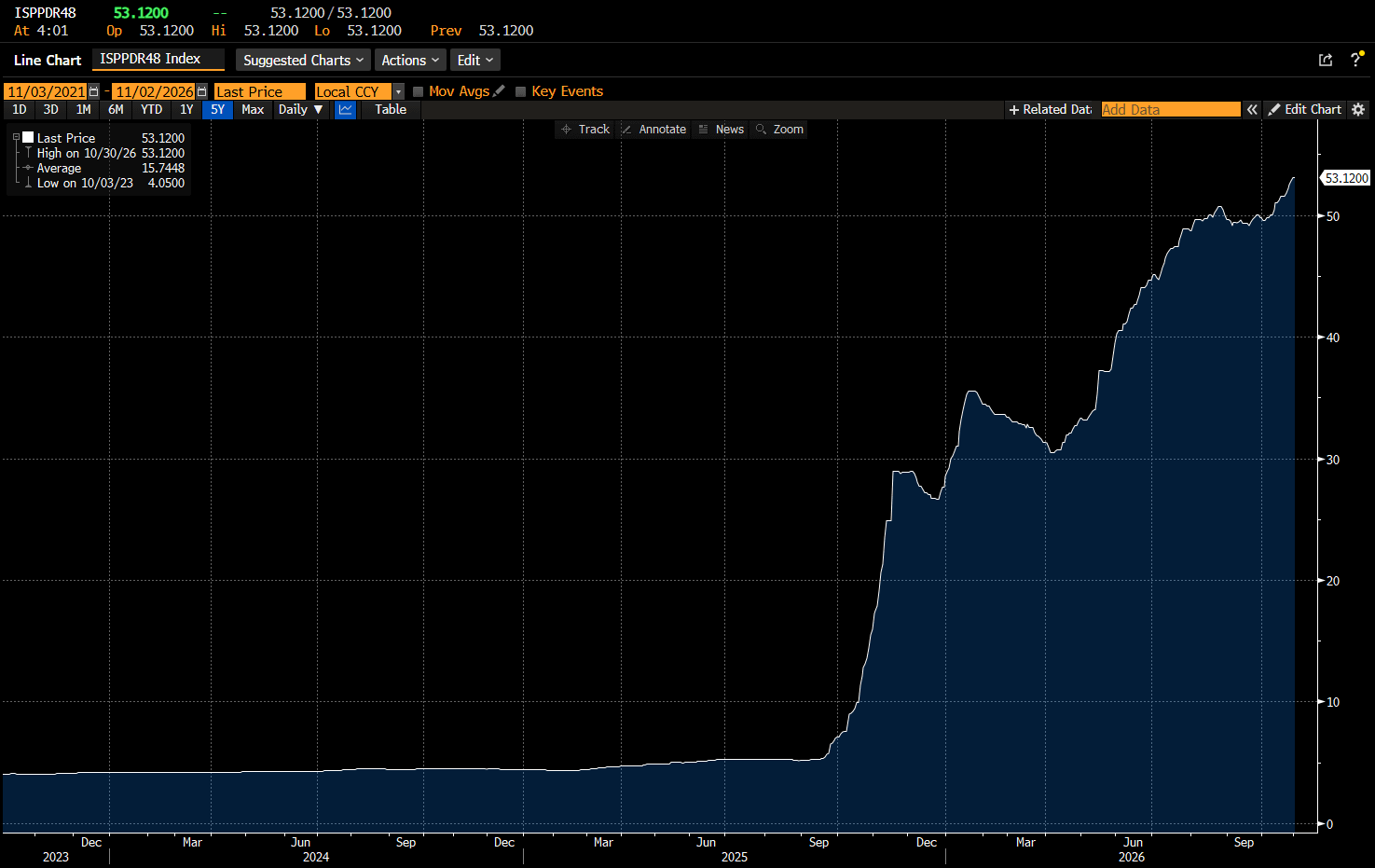
Or even in DRAM prices. I would expect both to show some weakness if the AI trade really was over.
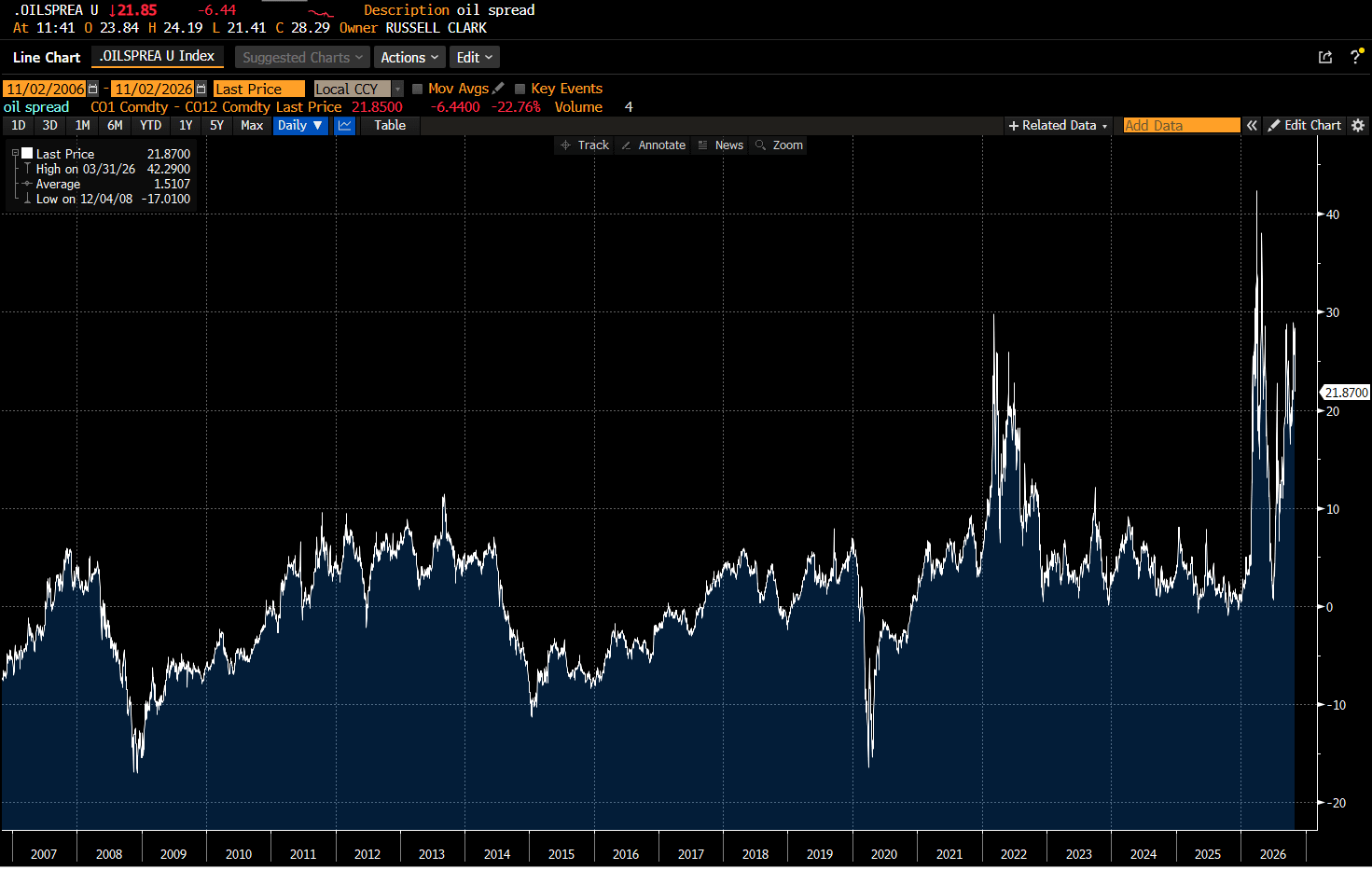
There is one way, I can see why equity and bond investors may be preparing for a deflation cycle - and that is spiking oil prices. But the current spot spread, makes future moves in the oil price very hard to predict.
The other more popular conclusion is that the AI trade is dead. I struggle with that conclusion, as the main players, the ones with clear access to customer acceptance, and the cutting edge ability of AI, keep spending. You don’t need to like Elon Musk or Mark Zuckerberg to recognise that they are both some of the best investors of their generation. Both have raised capital to put into the AI trade, and that is despite neither having a business currently threatened by AI. As mentioned in a previous post, I often wondered why everyone was just long bonds during the 1980 to 2020 bull market. I think this month is a good example of how hard it can be to hold on to a trade. Of course, I could be wrong about inflation vs deflation. Maybe all bond yields move together now, and maybe equities are correctly calling falling memory prices in the future. But when I look at the politics of the world, calling deflation here seems odd to me. And equities have a very poor record this year, both in the demise of SAAS and in Brazilian electoral trends. In both cases, betting against what equities were saying was the right trade.


