


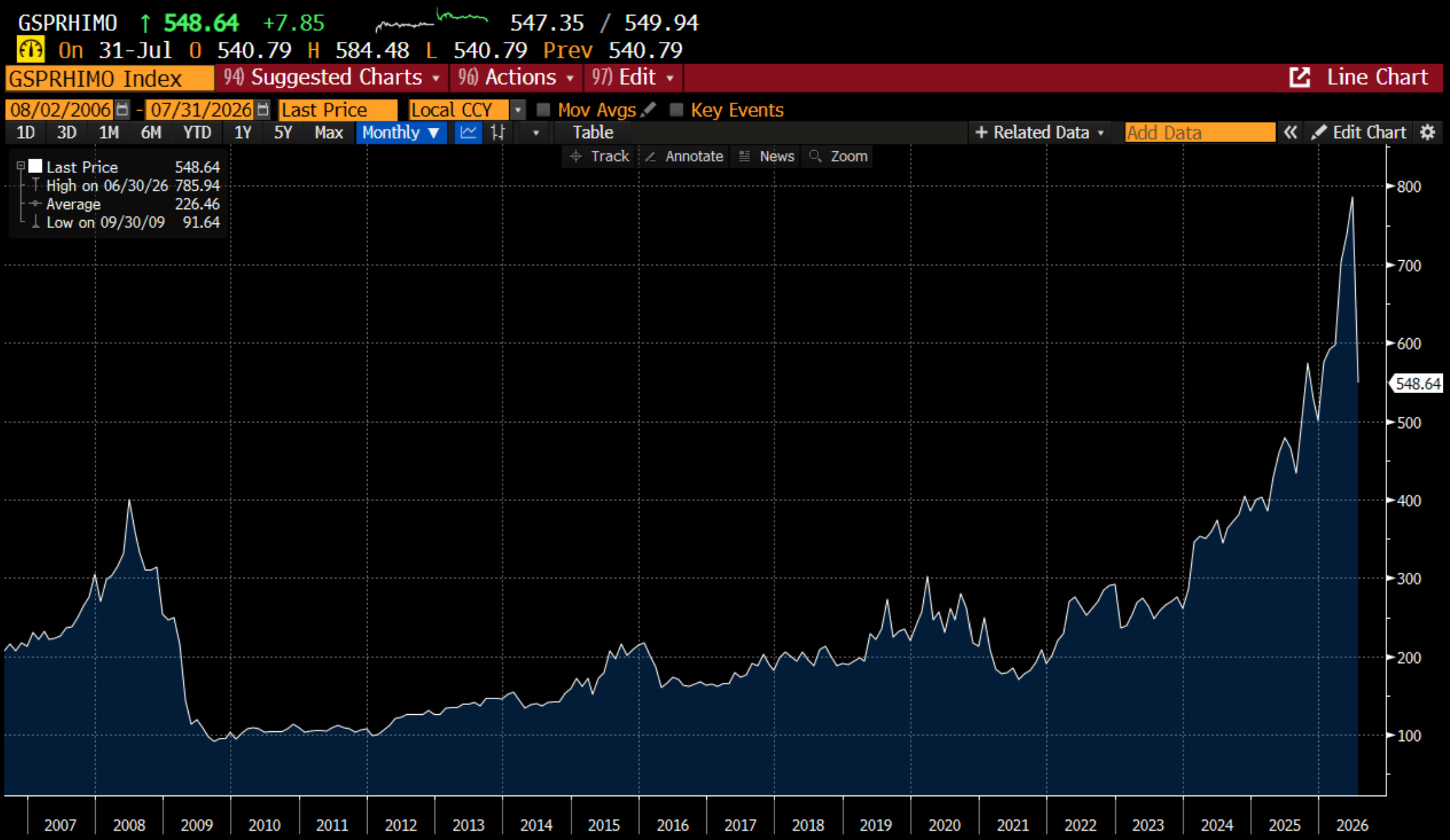
It was a wild month in equities, where momentum investing got destroyed. The GS US High Beta Momentum Index shows it well. You have to go back to 2008 to see a similar size move.
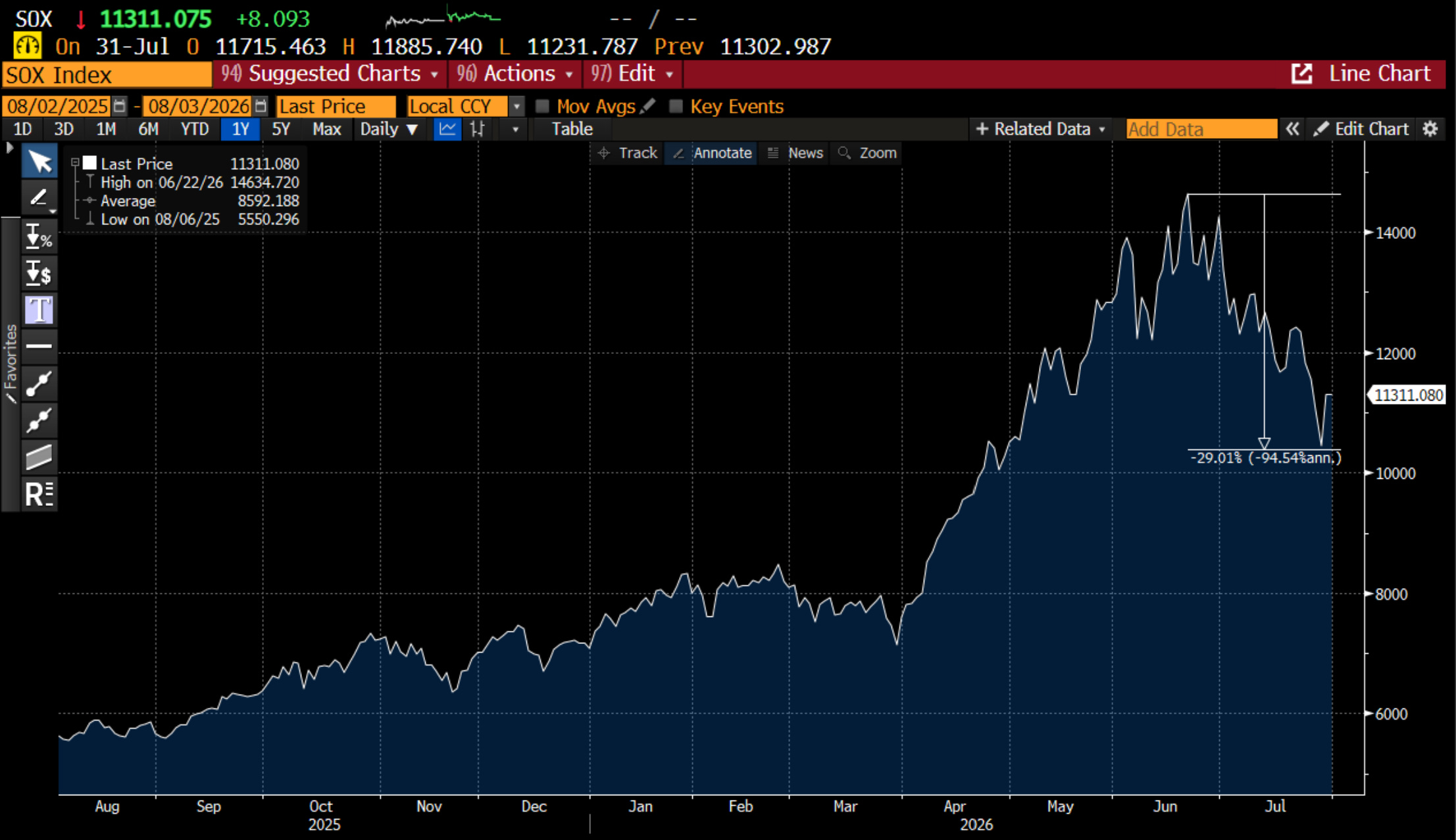
Semiconductors were the area to get nailed in July. Philadelphia Semiconductor Index fell nearly 30%.
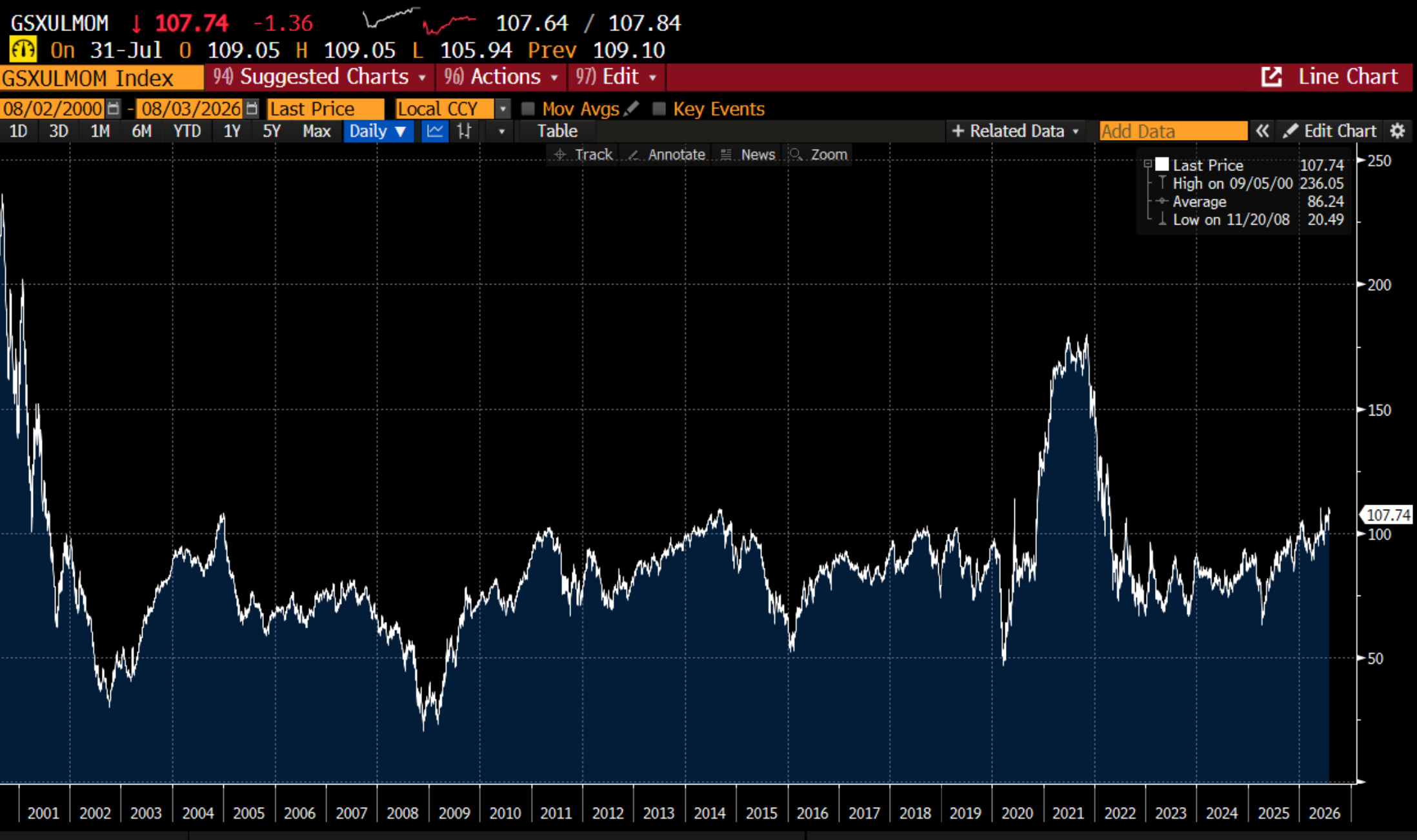
What really stood out to me was the rally in heavily shorted names. The GS Short Momentum Index rallied through the month. Certainly what I saw during the month.
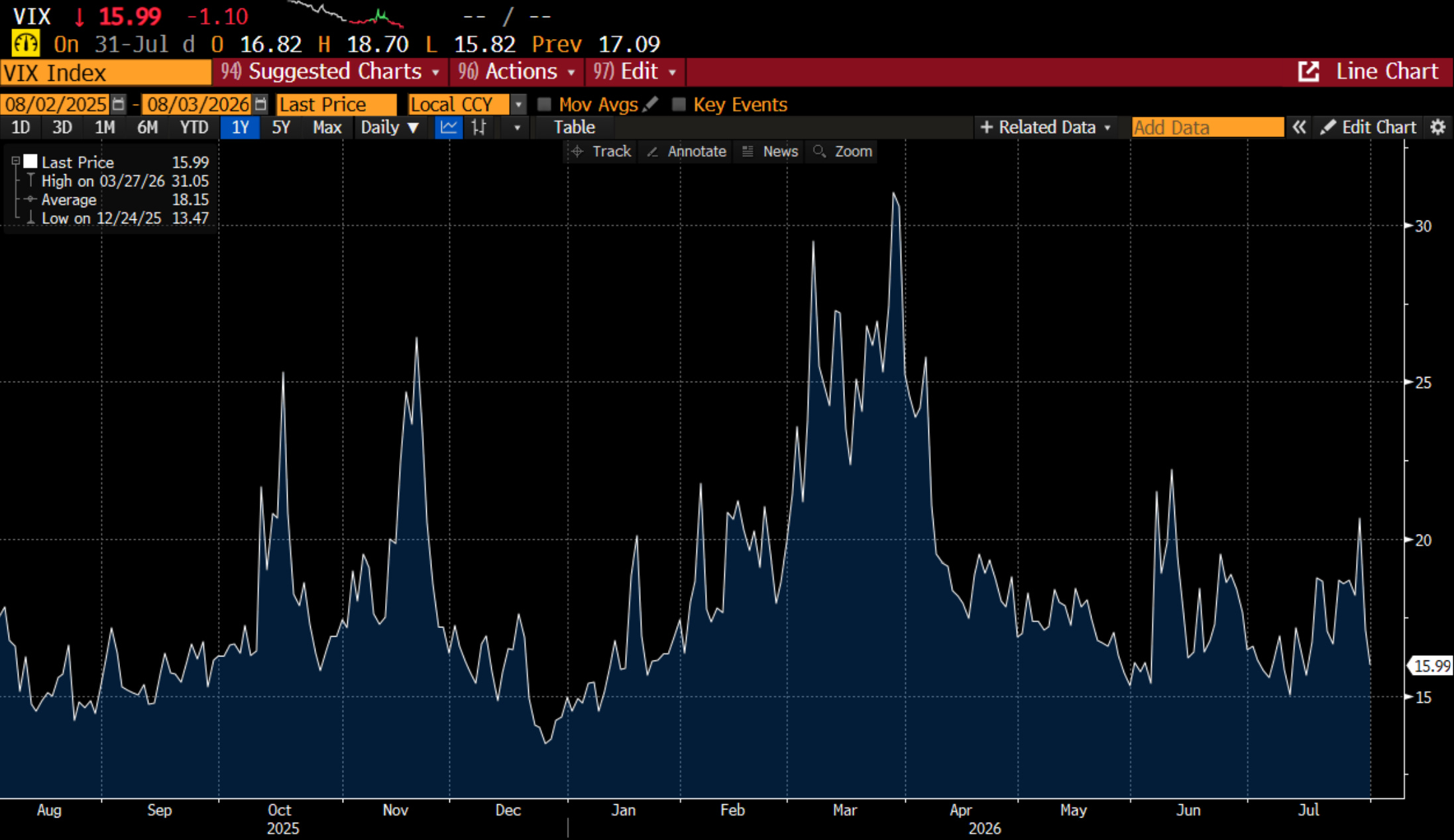
We now know that the hedge fund Situational Awareness became aware it was in a situation, and was forced to sell longs and buy back shorts. This was very reminiscent of LTCM, back in the day. And it was noticeable that markets stabilised once it had deleveraged. The VIX finished the month at 16 which feels VERY at odds with individual stock volatility.
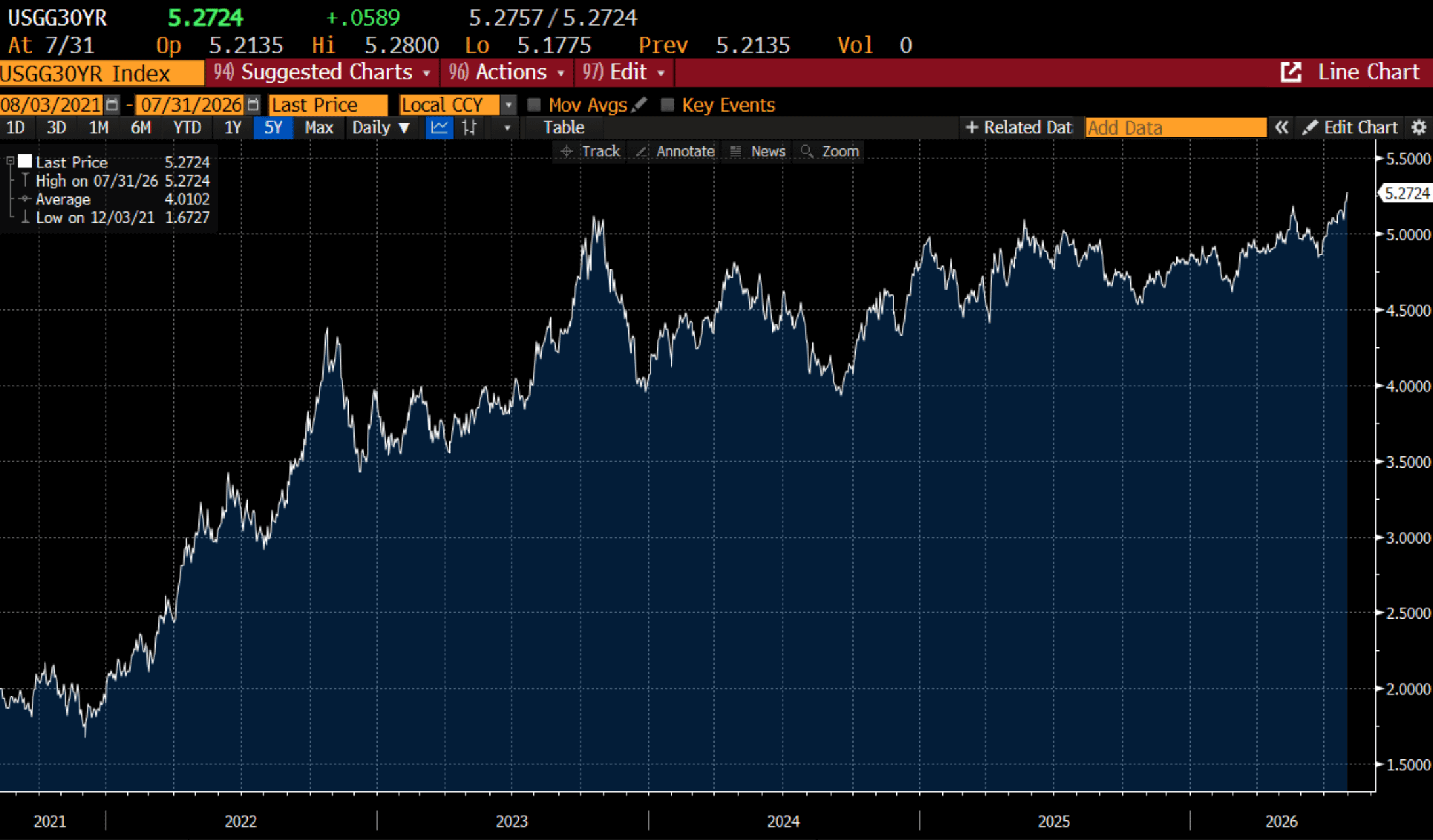
Amidst all the drama, the Federal Reserve decided not to raise interest rates, despite the largest investment boom in modern history, and the largest fiscal deficit in modern history. The market decided to sell off Treasury yields, and the 30 year finally pierced 5%.
The other, and in my view, highly related move was in Japanese Yen.
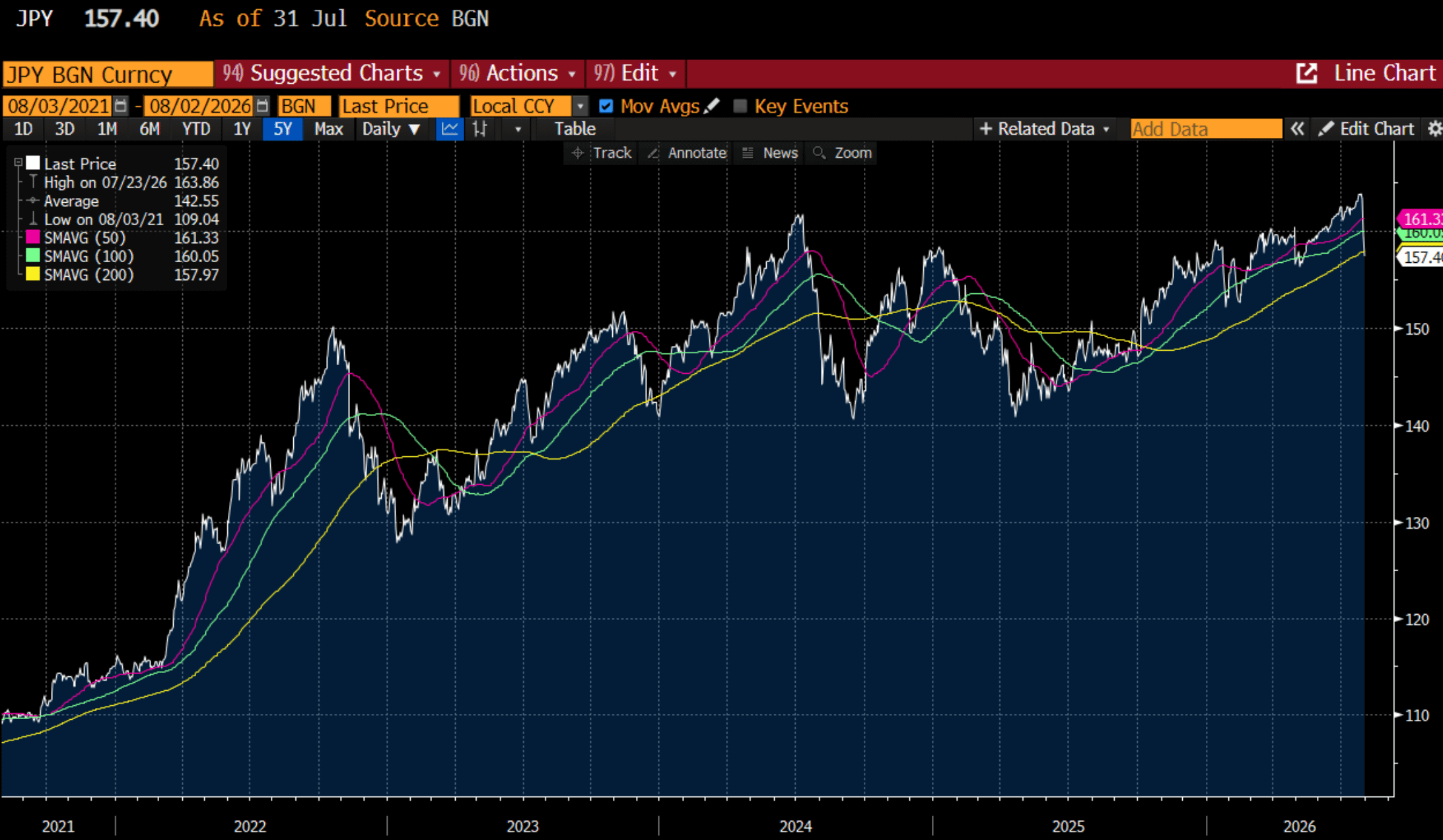
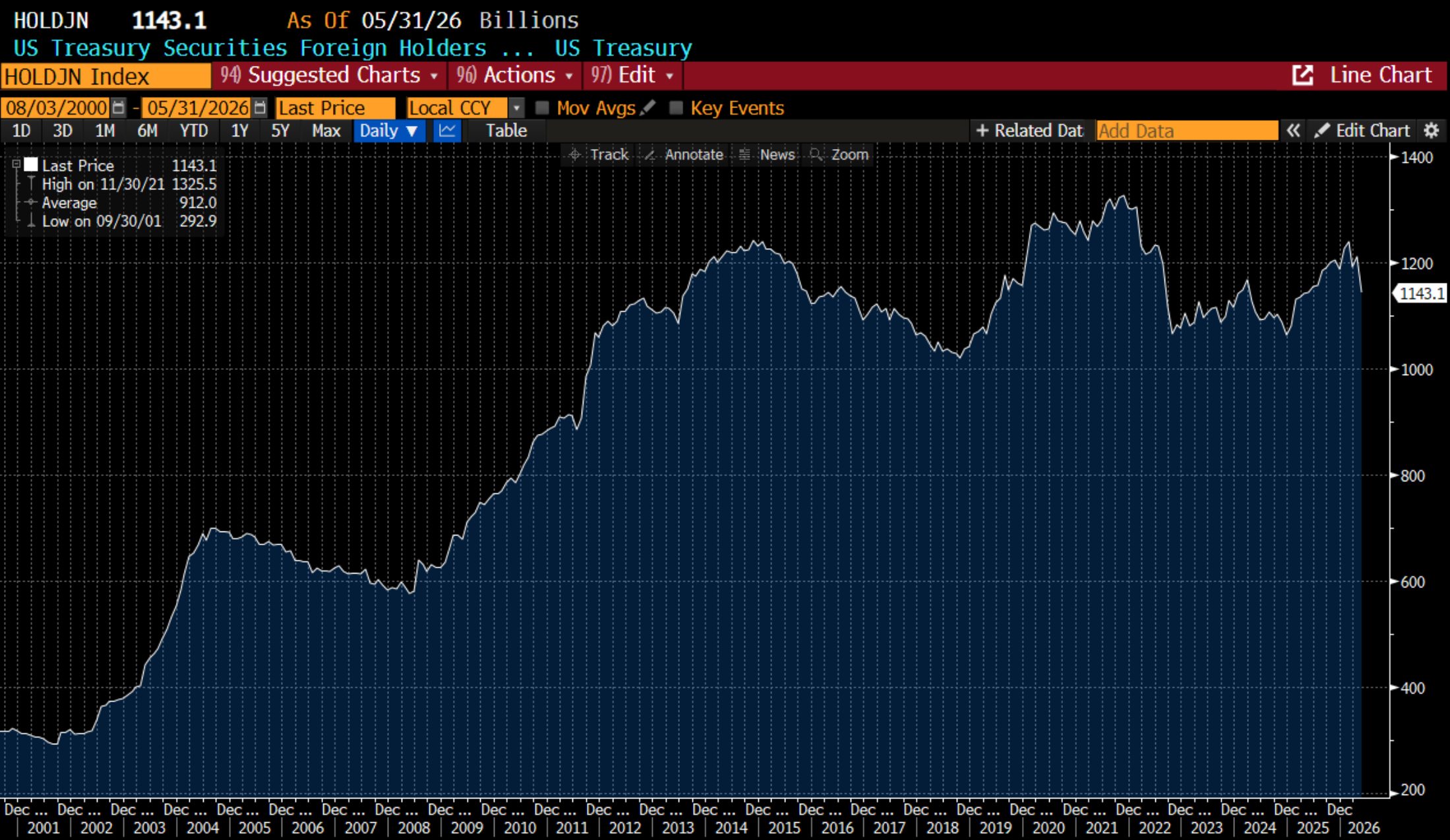
But for me, the move in Yen was not the big news. It was the amount of Treasury selling that was needed to make Yen move was the big news for me. Estimates range from USD 50bn to USD 100bn. If we look at Japanese official holdings of Treasuries, at USD 1,143bn - it is pretty clear that they spent a big chunk, just to get Yen back to where it was a month ago. That is, if they just intervene, and do not change fiscal or monetary policy they will run down the foreign reserves very quickly.
The market clearly wants higher interest rates in Japan, but the BOJ is afraid of what has happened previously. Raising rates in mid 1990s started the Asian Financial Crisis, in 1999 the Dot Com bust, and 2006 the GFC.
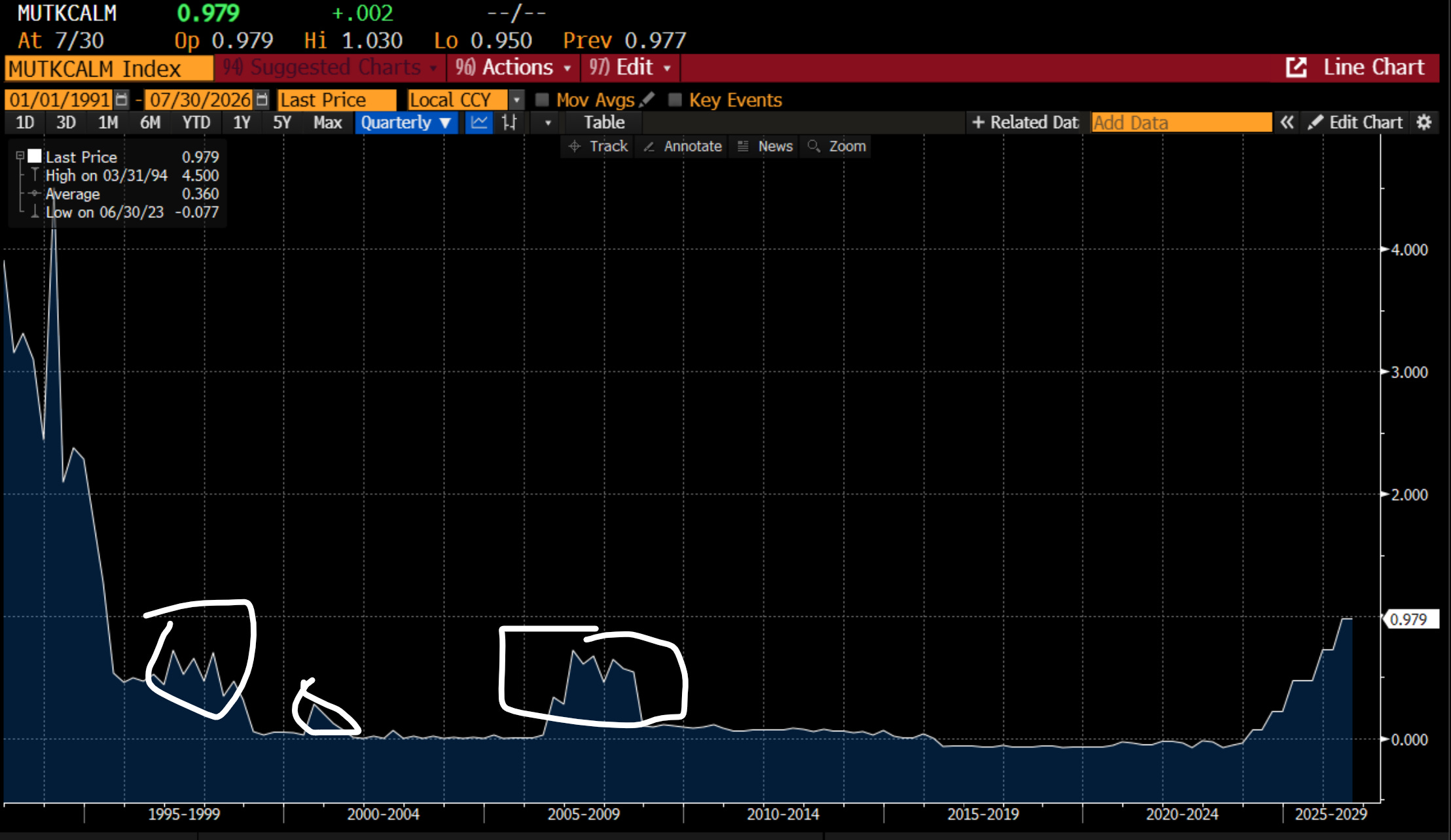
The thing is that the JGB market sniffed out trouble pretty early in those situations. This time, it keeps selling off. Or in other words, the JGB market sees inflation. I agree.
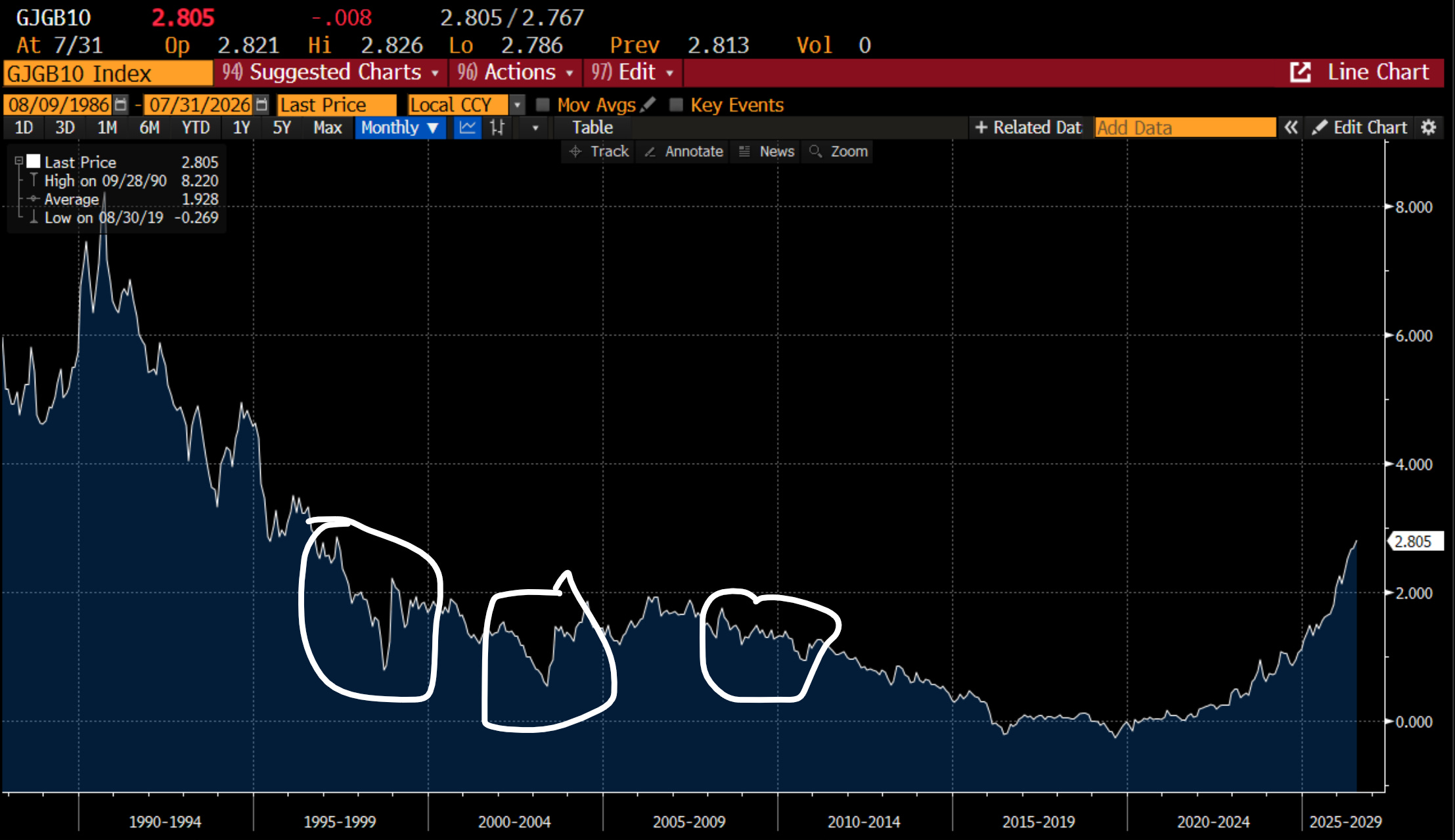
I think people are starting to wake up to what I have been saying for a few years. We are in a rising cost of capital world, driven by rising investment needs, and the realisation that neither our governments (which are populist, or populist threatened) or our central banks are acting to keep inflation at bay. This incentivises people out of cash, and makes inflation even worse. Warsh could have ended this vicious cycle early - I think a 50bp even a 100bp increase was called for. Now the Fed is in catch up mode. What I mean by that, is both the BOJ and Fed will come under pressure to raise rates by a lot more. They could have avoided this outcome - but they chose not to. GLD/TLT has had a long rest, but looks interesting to me.
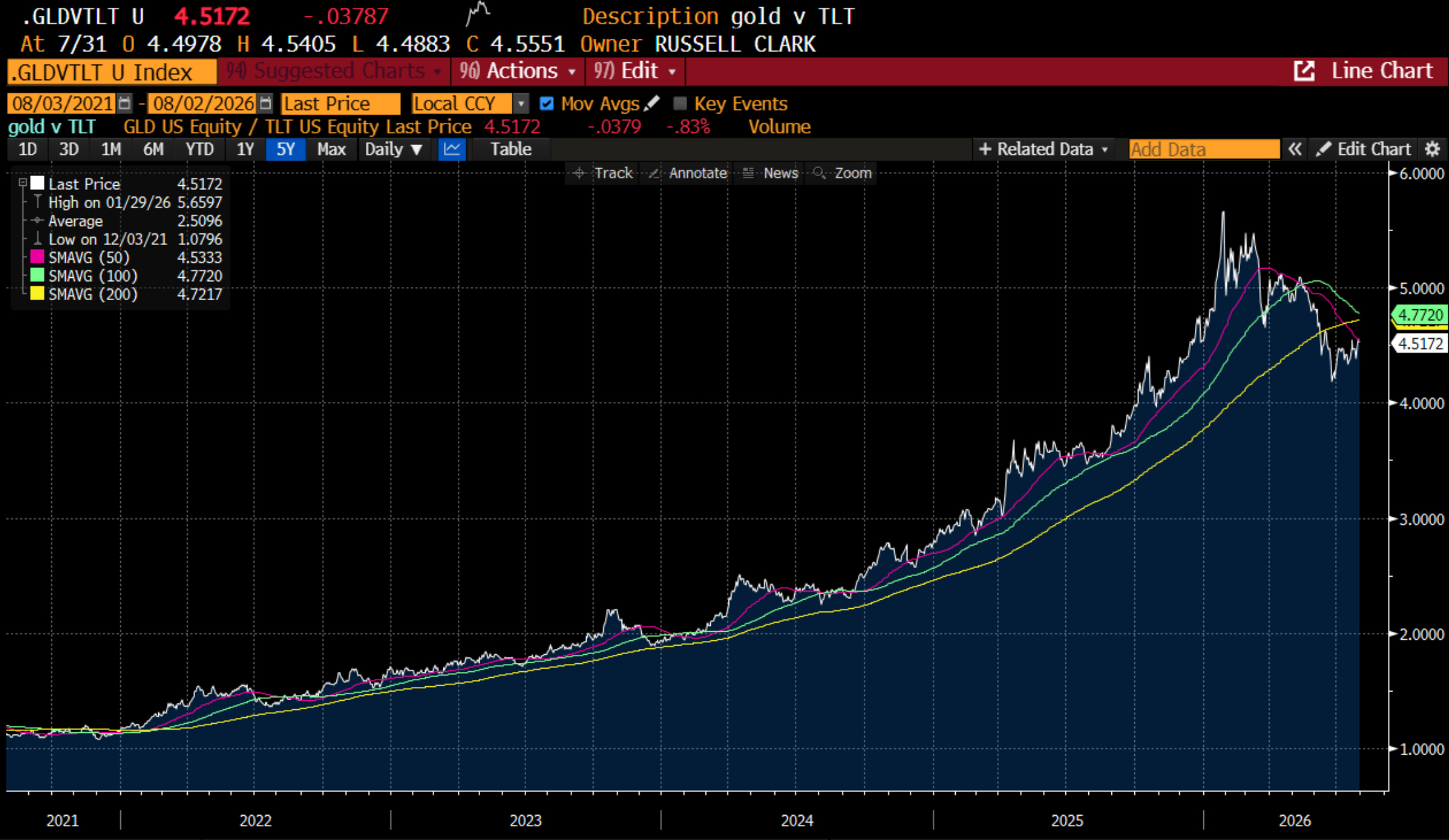
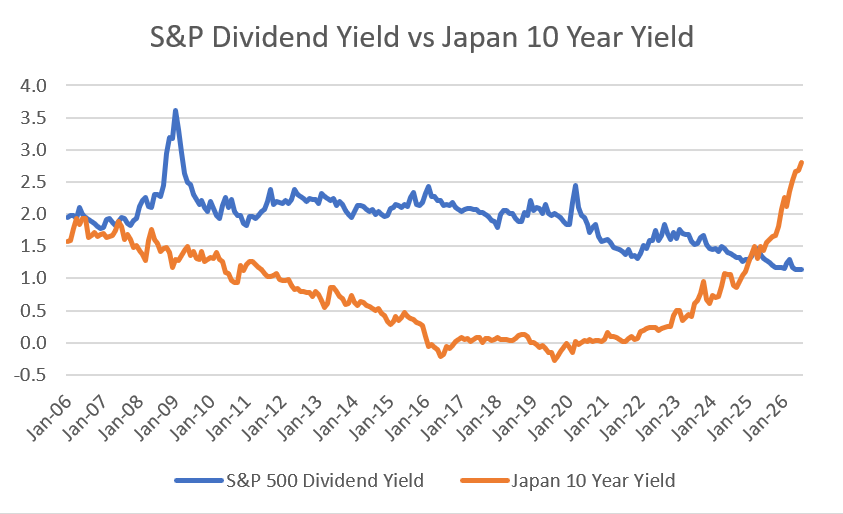
But I think the short TLT looks more interesting than the GLD side here. What I think is more likely is that bond yields rise, and at some point President Trump or American business will ask the Fed to “fix” the bond market. If they attempt YCC, or QE or something like that - THEN gold goes to the moon. That is Fed inaction - causes yields to rise. Fed intervention - causes gold to rise. The only way to get bond yields down now it to jack short rates way about the 30 year yield - which would be 6 or 7%. I don’t see them doing that - especially after blinking in this meeting. The real mystery here is at what level do higher bond yields hurt the S&P 500?
Exciting times.


