


I have been pretty sure that bond yields would keep rising, mainly because governments are going to keep spending. But I did think rising bond yields would act as a break on equity valuations. This is very typical in emerging markets, where high interest rates and bond yields have tended to depress equity valuations. Brazil is a good example, where it has historically had high interest rates, mainly due to high inflation rates.
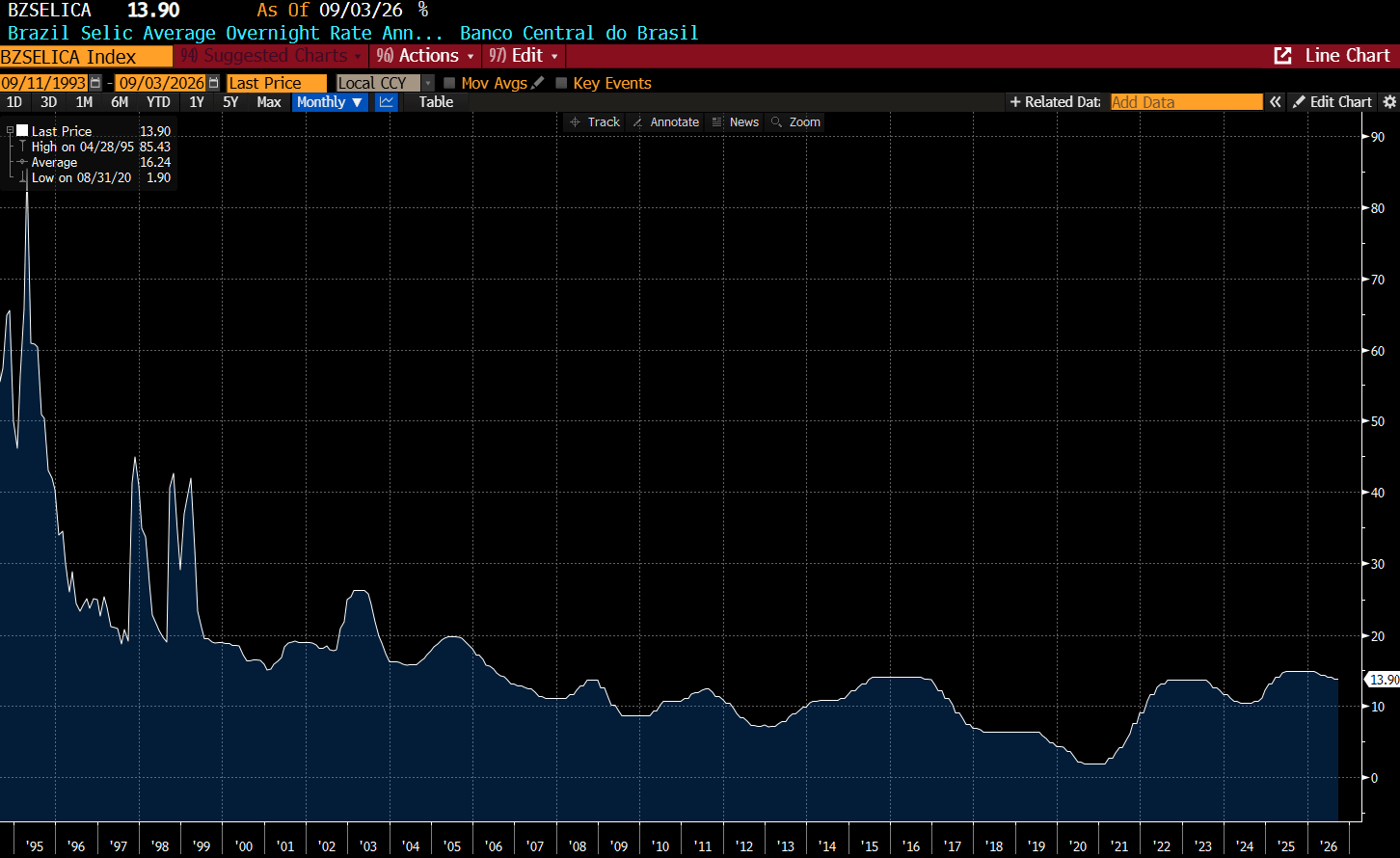
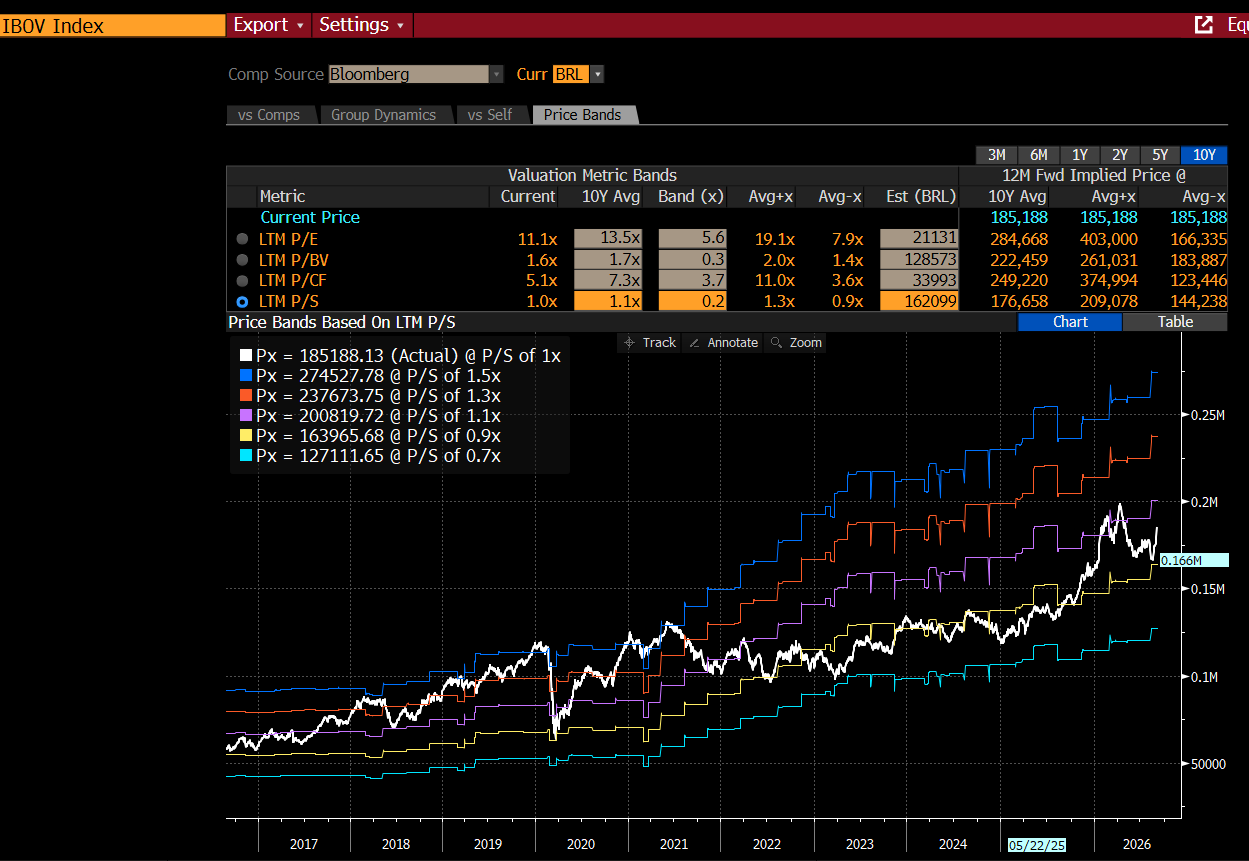
In 2020, interest rates reached an all time low, and then rose again. Using Price to sales, the Bovespa traded at its highest price to sales in the 2019 and 2021 period (Covid did kill the market in 2020). But derated from 1.5 times sales to around 1 times today as interest rates rose.
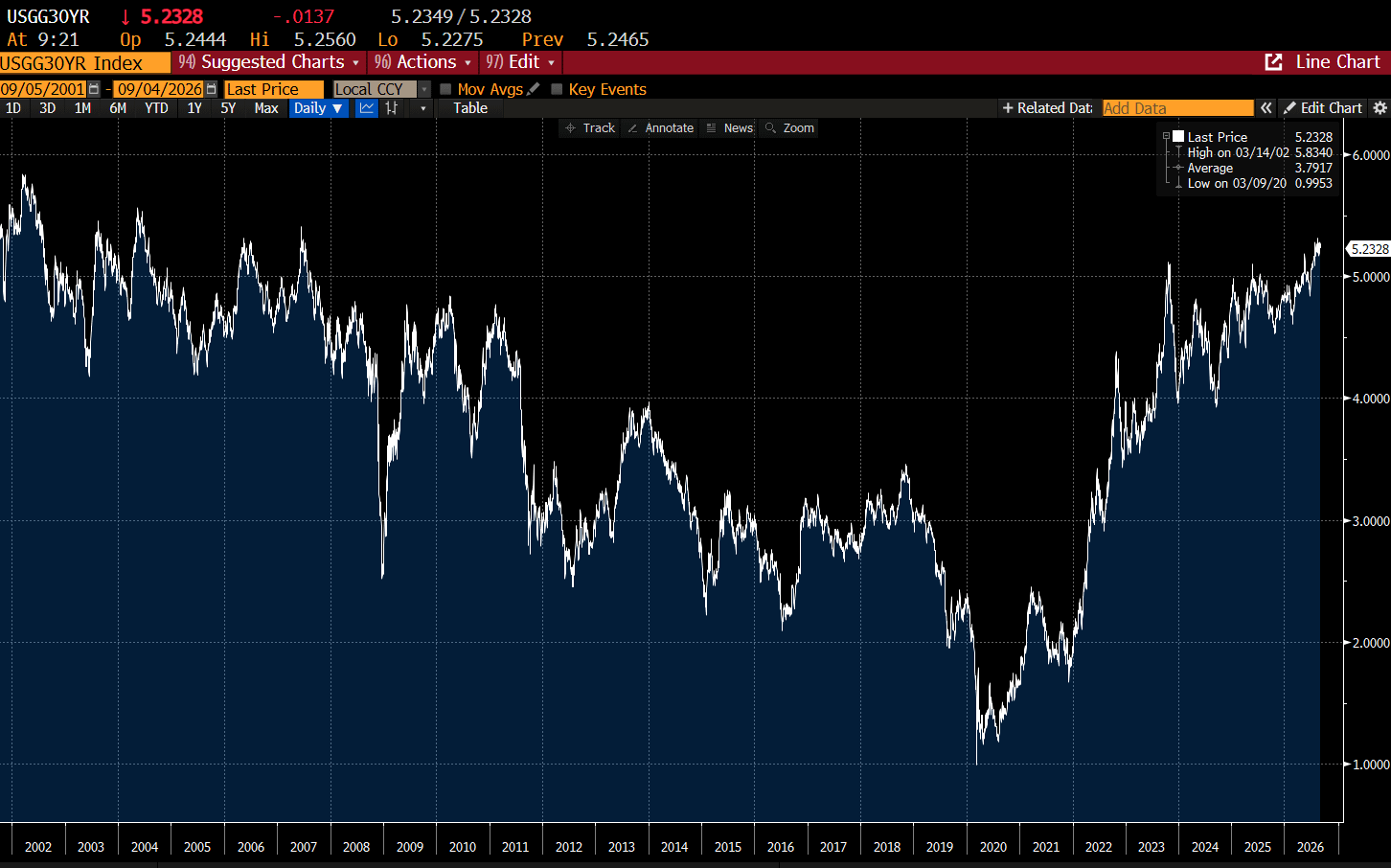
However if we take the US, the opposite has happened. US 30 year Treasury yields now offer 5.2%, the highest level in 20 years.
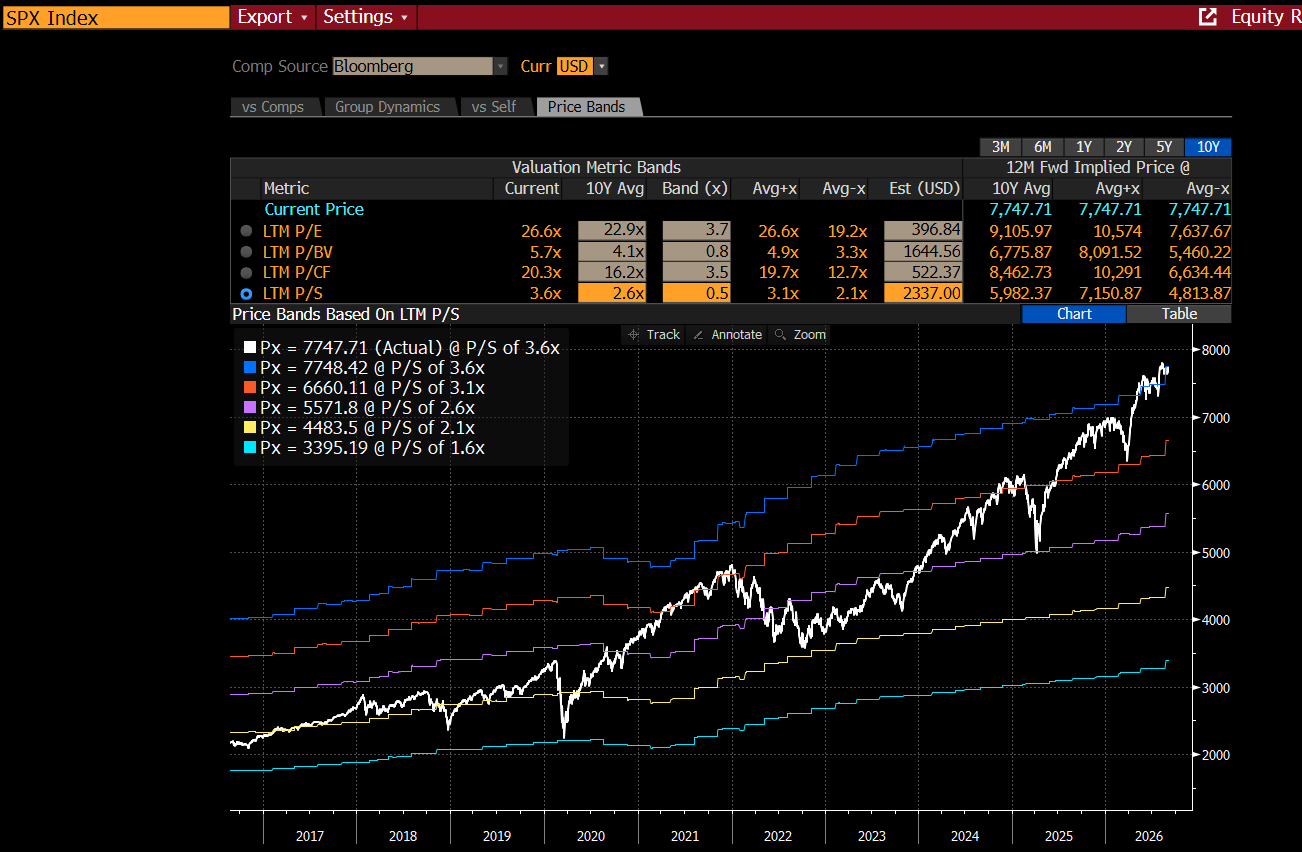
But again using price to sales, US stocks have rerated higher, from 2 times sales in 2019 to nearly 4 times sales today.
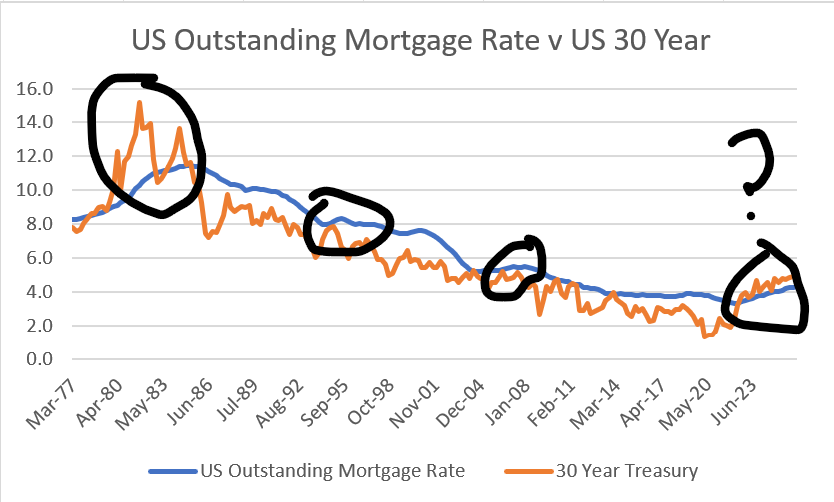
One argument you could use is that as bonds are so unattractive, they are driving money into stocks. Which sort of makes sense - I think Hartnett at Bank of America, calls this the Anything But Bonds (ABB) trade. But there is a good reason to think that high bond yields should derate the market. In the US, mortgage rates are closely tied to 30 year treasury yields. When ever mortgage rates have been rising in the US before, bad things have happened. 1970s Stagflation, 1991 Savings and Loans crisis, 2008 GFC. But we have been in a long period of rising mortgage rates - and equities have done just fine.
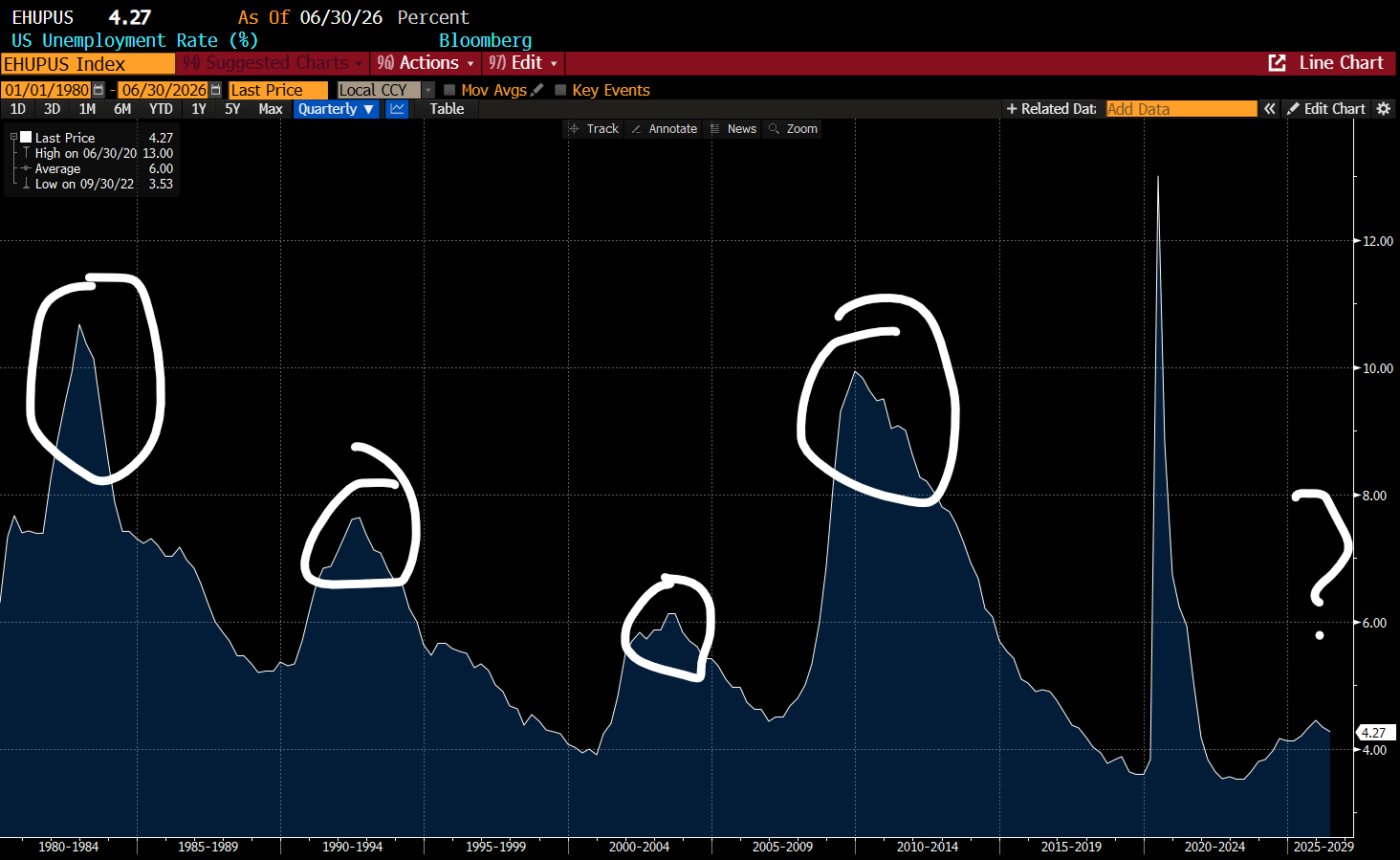
What is different this time, or at least so far, is that we have not seen a sharp increase in unemployment.
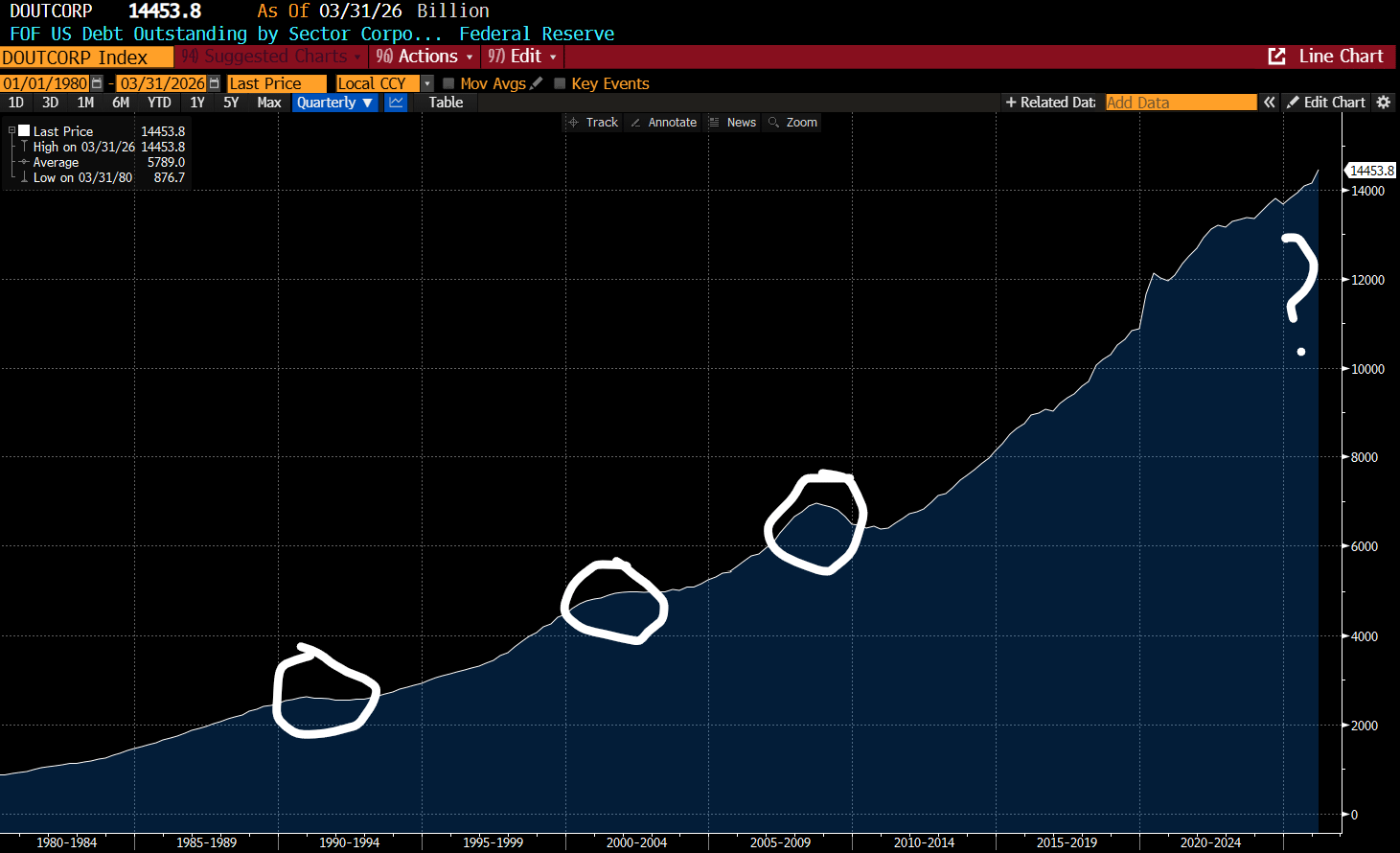
One of the reasons I can find for this is that loan growth has remained strong. Typically as consumer spending has softened due to higher interest rates, corporates have cut borrowing, and we have a down cycle. This time, corporate lending has accelerated.
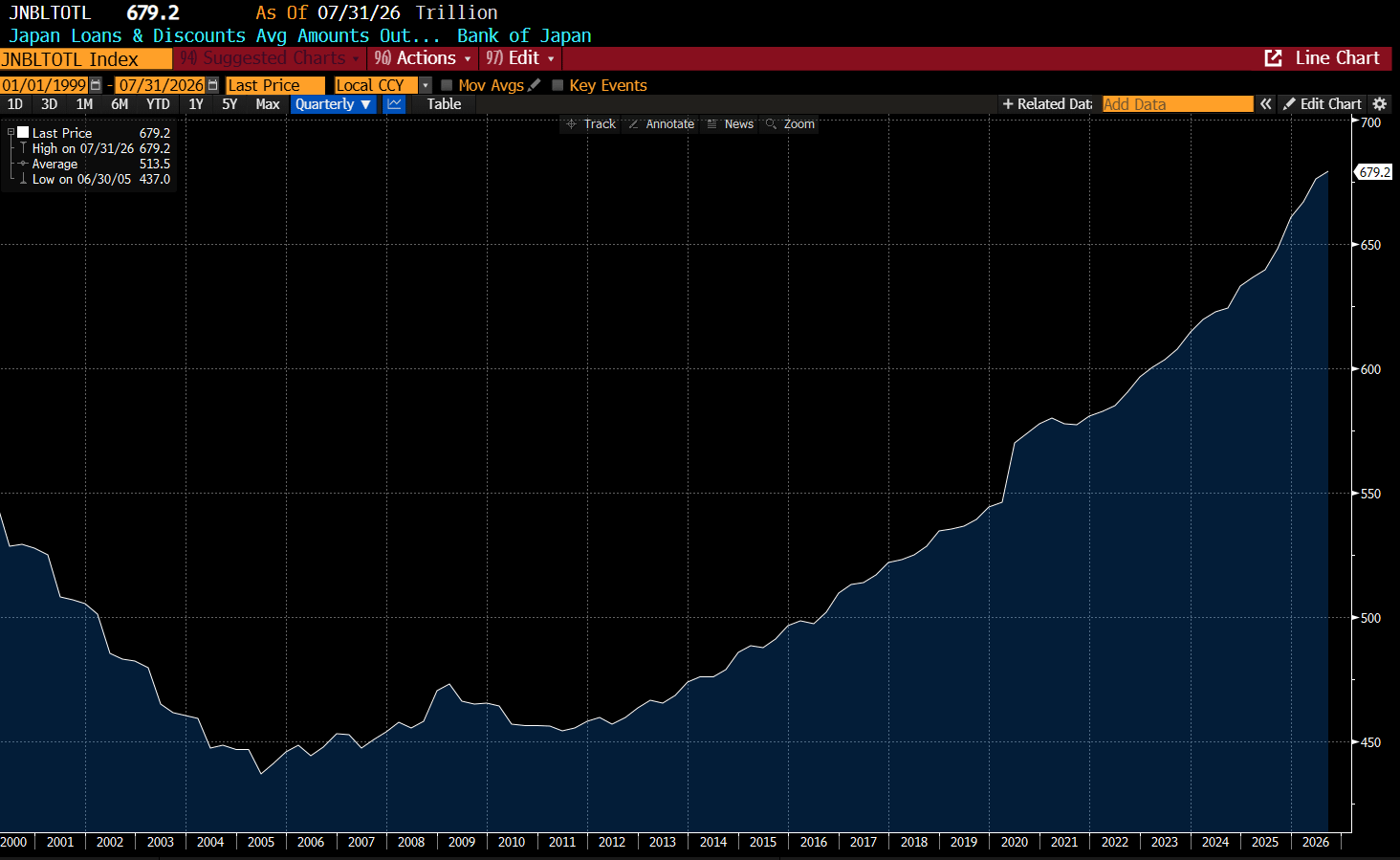
Loan growth seems to be the key here. That is higher interest rates have tended to see loan growth slow, but now loan growth seems unfazed by higher interest rates. Japan is a good example. From 2000 to 2013, loans shrank, but have been growing since.
Does this mean loan growth is good for equities? As long as loans are increasing we should be bullish? The problem with this analysis is that loan growth in 1970s was very strong, but US equities were poor.
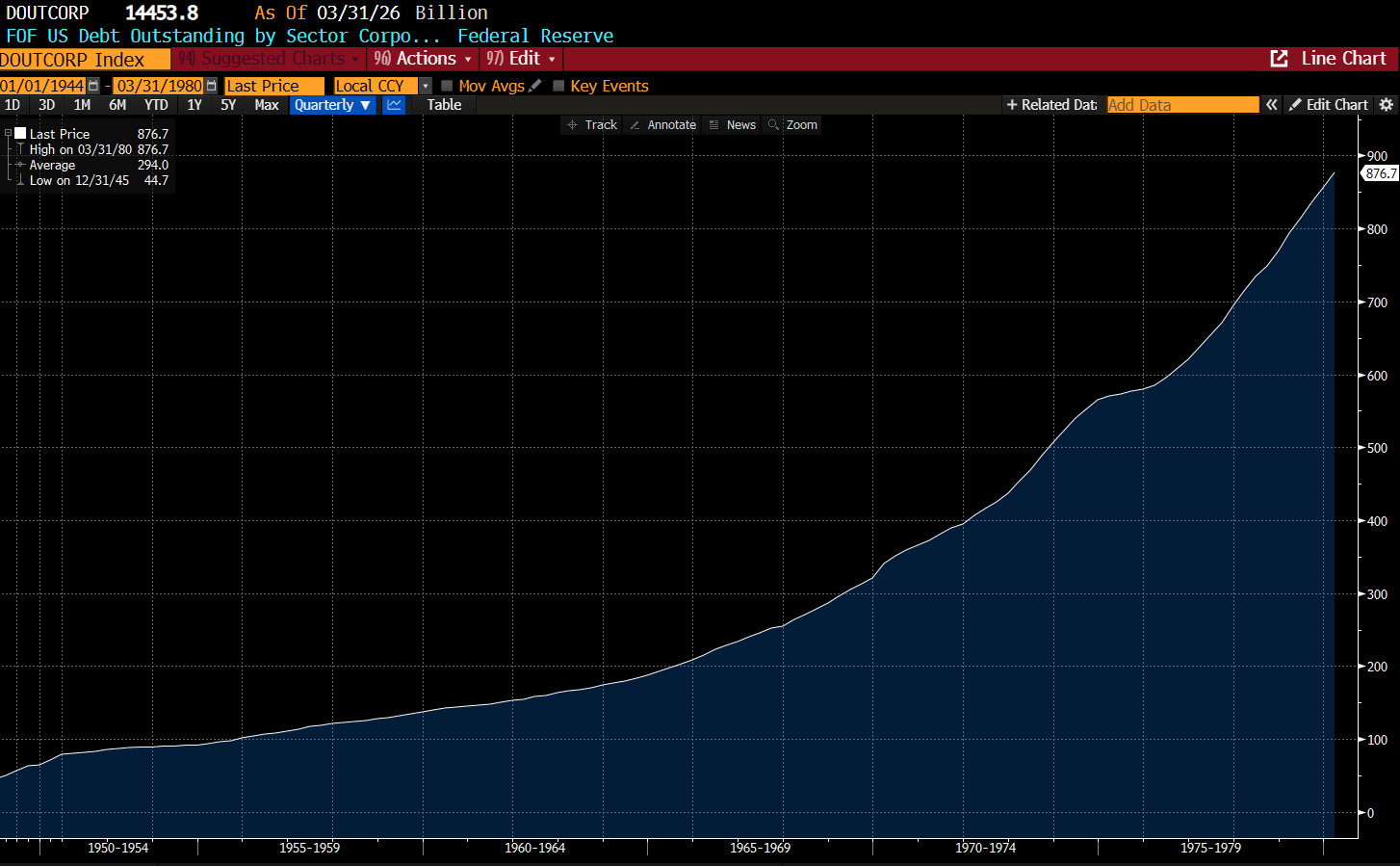
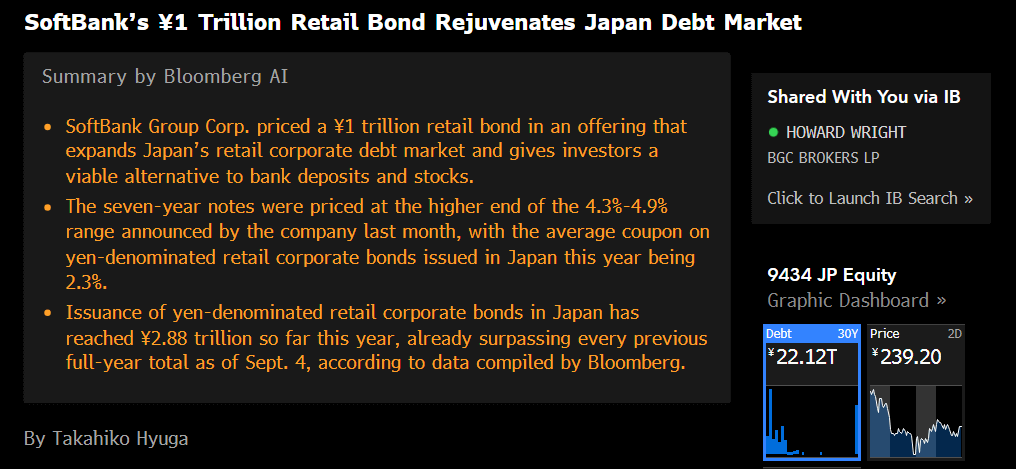
The answer seems to be something along the lines of Adam Smith’s “animal spirits”. When investors think the returns will be much greater than the borrowing costs, then they borrow and invest and growth is good. Of course the higher the interest rate, the less likely that will be true, but not necessarily wrong. The most intriguing thing about the current investment boom, is that is remarkably concentrated. We have the hyperscalers and the AI labs and their backers, and we have Nvidia all financing it. Softbank just issued a bond well above prevailing rates in Japan. While the average analyst is probably unsure about future returns on AI, in my experience, Masayoshi Son and Elon Musk have never been unsure about any future returns, and they are the ones making the investment decisions.
That leaves me in a tricky position. Higher bond yields HAVE had the expected effect on US consumers, which SHOULD be negative for equities. And we have seen this in US facing consumer businesses. But the new technology is leading to an investment boom. But when does boom turn to bust? When do higher bond yields become a problem? I thought a good sign of this is when gold begins to outperforms equities. So now? Maybe?
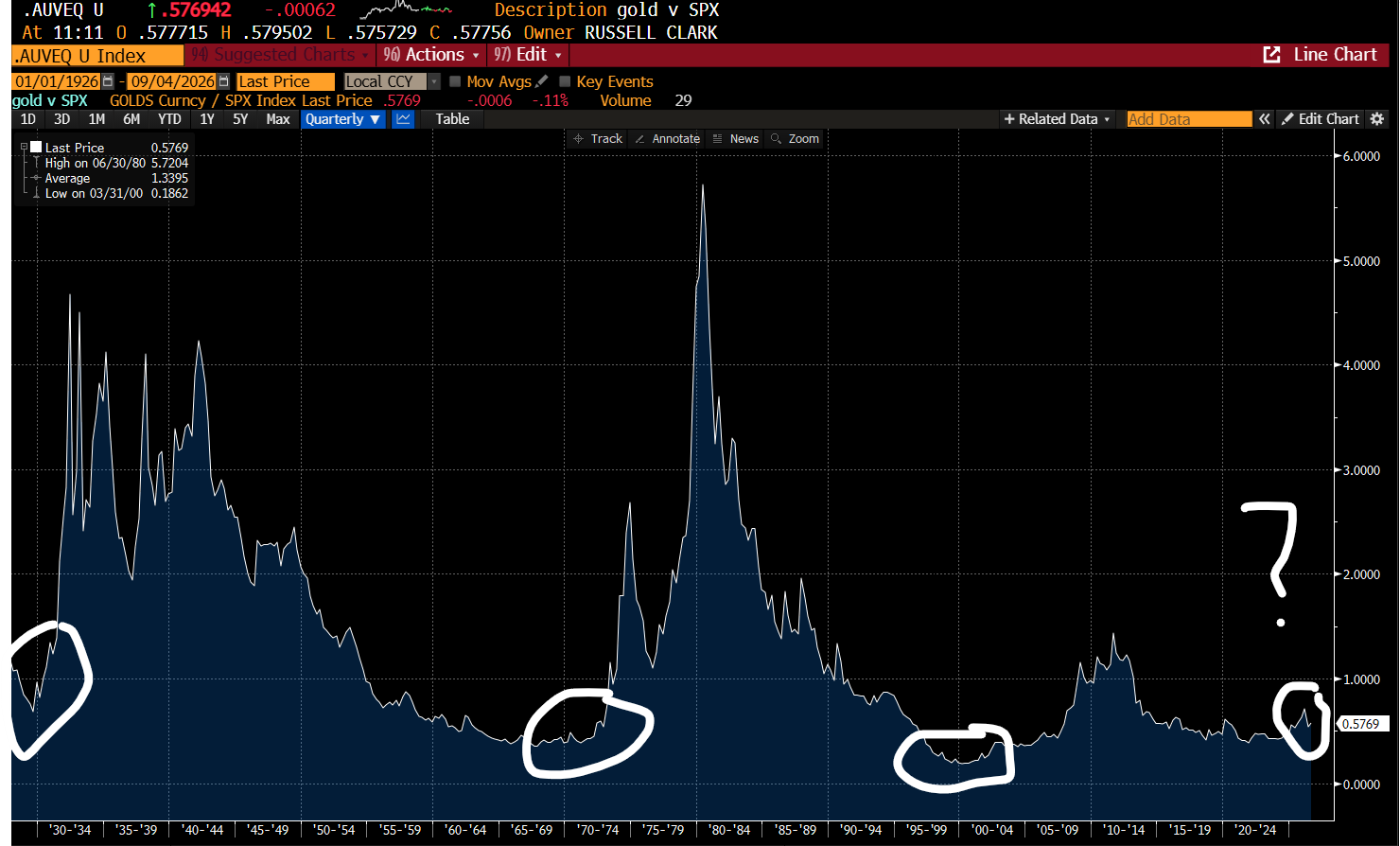
Markets are never simple, as people are never simple. Could a slowdown in the US consumer lead to falling revenues at the hyperscalers, which leads to falling investment? Totally possible. Could the US government keep spending, which keeps everyone else spending and yields keep rising and rising until we get a change back to austerity. Also possible. For me, the relative turn in gold versus the S&P 500 will keep me thinking we are near the point where higher yields start to hurt equities. Time will tell.


