


I have been looking at clearinghouses for close to a decade now. The note below is eight years old - but it does show how clearinghouses price risk. The original note is in italics, and I will add in current observations throughout the note (not in italics).
Clearing Houses and Initial Margins
There is perhaps no market that shows the development and growth of globalisation and internationalisation more than the interest rate derivative market. Total notional outstanding of interest rate derivatives in 1998 was USD 48 trillion ( 1.5 times world GDP). It has now risen to USD 436 trillion as of end of 2018 (or 5 times GDP today).
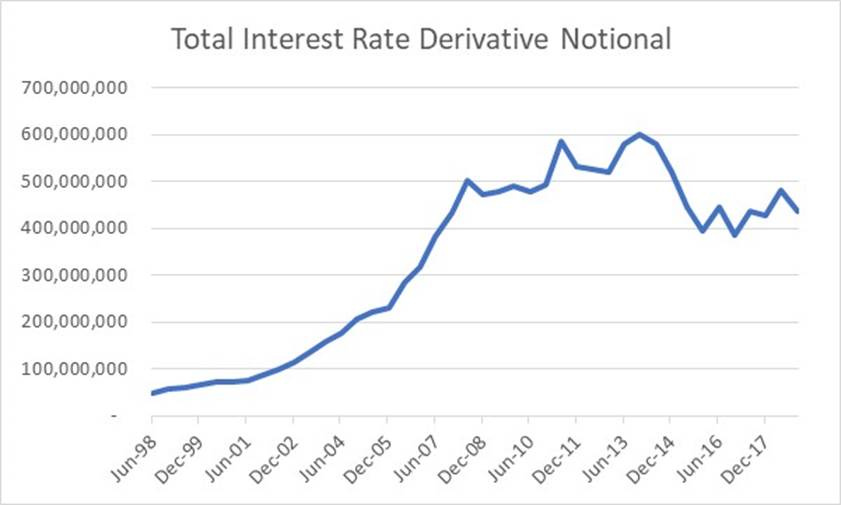
This amount is now just shy of USD 700 trillion, which is about 6 times global GDP.
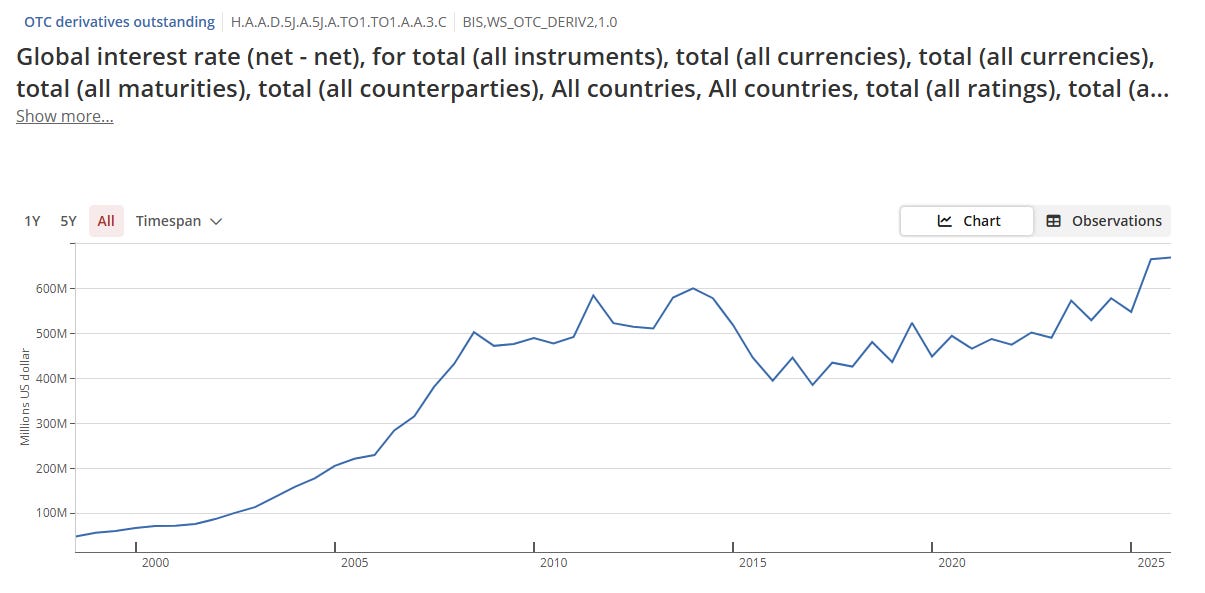
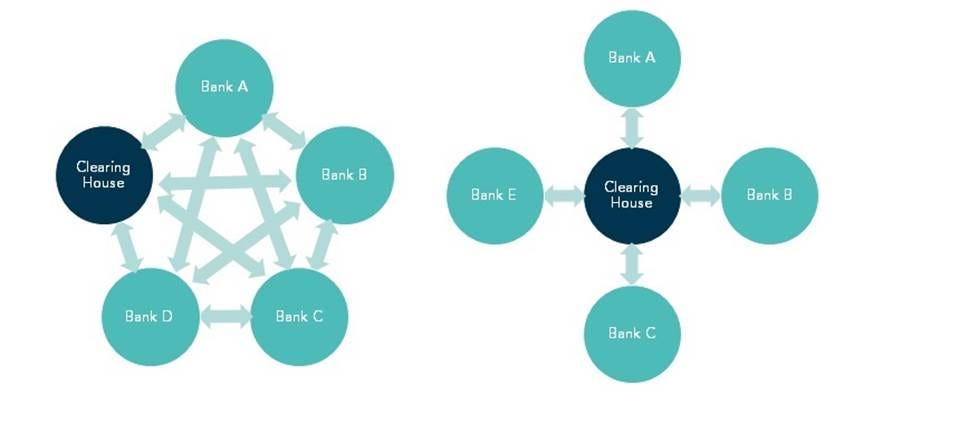
During the financial crisis, the size of the derivative market became an issue, as the bankruptcy of Lehman Brothers meant that it was difficult for banks to know their actual exposure. In the post crisis period, regulators have moved from a bank-centric risk model to a clearinghouse-centric model. Regulators have also encouraged this move by imposing a capital charge on uncleared trades. According to BIS, in OTC derivative markets central clearance rates have been running at around 80% since 2013. The effect of these changes has been to move CCPs from a participant in the interest rate derivative market, to the central player through which all other participants trade. These days central clearance rates are well over 90%.
Interest rate derivatives, and how they are priced are an important market variable. Using BIS data, we can get the value of all of these derivatives, and compare that to the notional value of them, to get an idea of how these derivatives can fluctuate in value. As can be seen, valuation tends to be cyclical, with lows coinciding with market volatility in 2000, 2007 and in 2018.
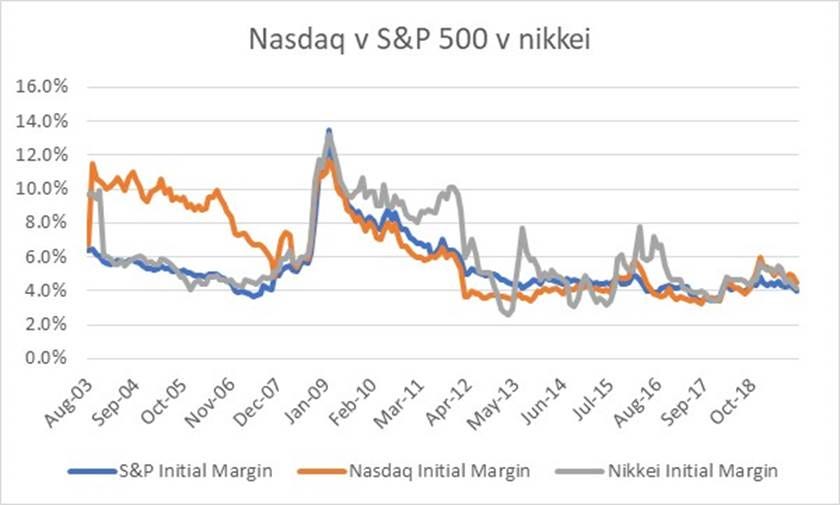
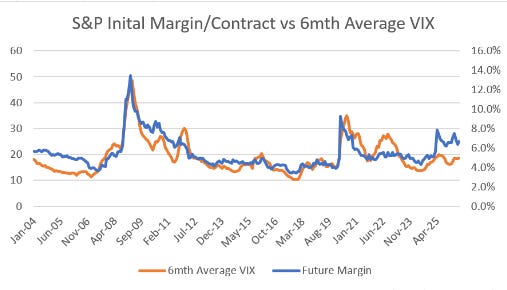
Clearinghouses by design do not to take a view on the market. Most clearinghouse calculations of the level of initial margin are set with a lookback period, and in the case of S&P margin, it is highly correlated to 6-month historic VIX (see chart below).
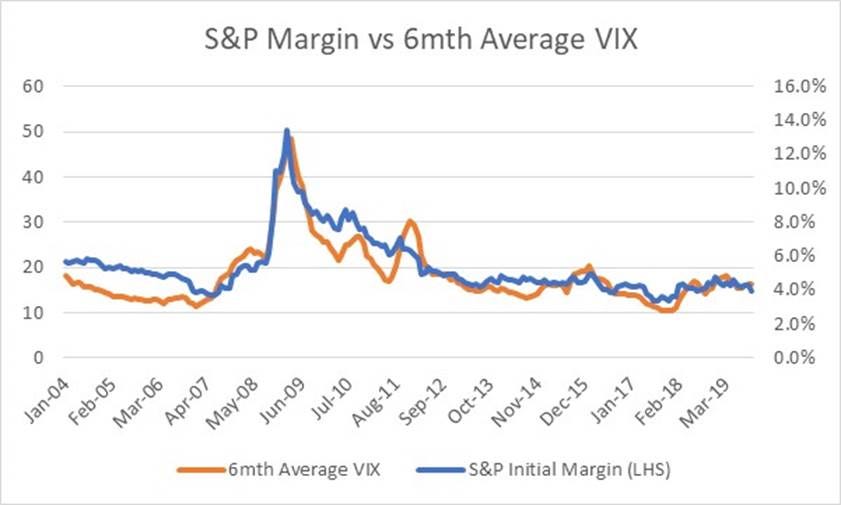
I have been able to update the above graph to most recent data points. Future margin does look a bit higher than expected - but VIX has probably been more volatile in a day to day basis under the current Trump administration.
There is no doubt that a default by a clearinghouse member is more likely when initial margins are low and may be caused by a sharp unexpected move in the underlying markets. In the event of a default by one member this could trigger a chain reaction. Firstly, initial margins will rise in an event of a default, which will restrict other traders ability to participate in the market possibly acerbating the move in the underlying markets. Secondly, if the defaulting member was particularly large player in one asset (likely, as this would be the cause of the default), the members with opposite positions may not receive variation margin and hence will become unhedged at the very moment they need hedging. Thirdly, the clearinghouse may well have to recapitalise itself from the surviving members.
Major clearinghouse members (including JP Morgan) appear to be seriously worried about a clearinghouse problem after the default by a member of Nasdaq Clearing AB prompted this response https://www.goldmansachs.com/media-relations/press-releases/current/multimedia/ccp-paper.pdf . It is asking for the clearinghouses to raise more capital, and to setup a resolution scheme in case of bankruptcy. They are also seeking to limits the ability of clearinghouses to draw on the resources of its members to recapitalise clearinghouses. The default by a member of the Nasdaq Clearing AB in Sweden left remaining members unhedged. This made resolution more difficult as the surviving members were asked to bid for the defaulting members position as well as recapitalise the clearing house
The big question is now that the financial crisis market volatility is over 10 years ago and mainly excluded from Initial margin calculations then do backward looking margin calculation models mean that there is too little initial margin within the system just when it may be needed ie prior to turning points or market shocks.
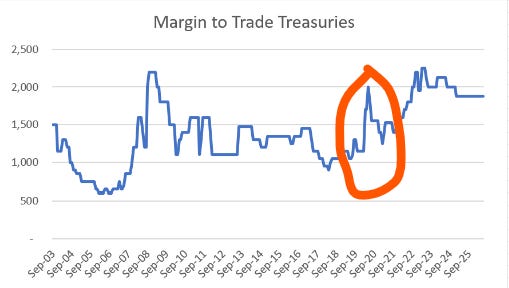
Given the centrality of clearinghouses, bankruptcy, although deserved, is unlikely. I am more interested in when the poor design of clearinghouses leads to market problems. For me, this I tend to think the treasury market is where the problems are. We know that treasury basis trade has grown substantially, and in 2020 and in 2025 we saw treasury liquidity dried up. Looking at listed margins to trade treasuries, we can see how the spike in margins drove illiquidity. What I find unusual about this is that here is no margin spike in 2025, during the Liberation Day Tariff sell off.
Looking at the MOVE Index, which tracks fixed income volatility, since 2020, you can see that a brief surge in 2020 lines up with treasury illiquidity. Likewise a brief sure in 2025 matches up with illiquidity during the “liberation day tariff” sell off.
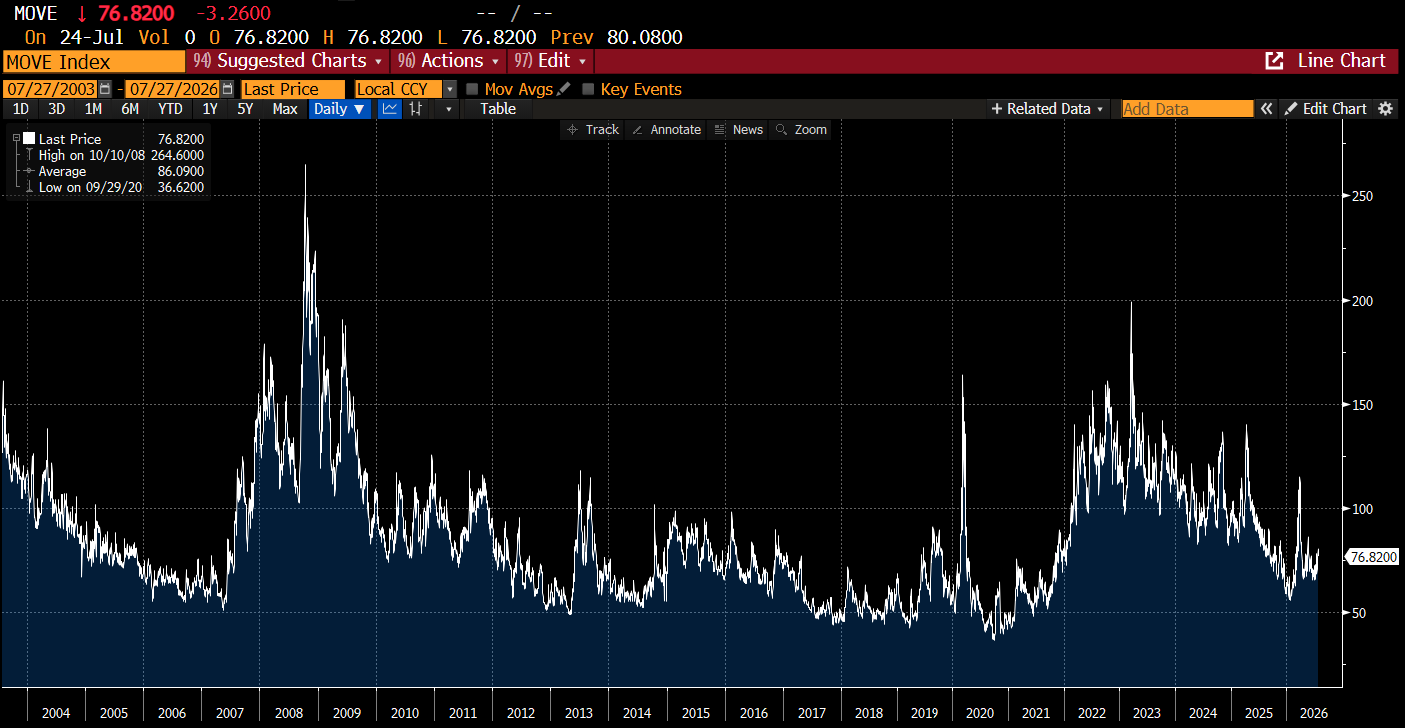
Looking at the past reactions of markets, and current levels of MOVE Index, a change of some some of market problem in treasuries is not non-zero. As a reminder, this trade has grown substantially.
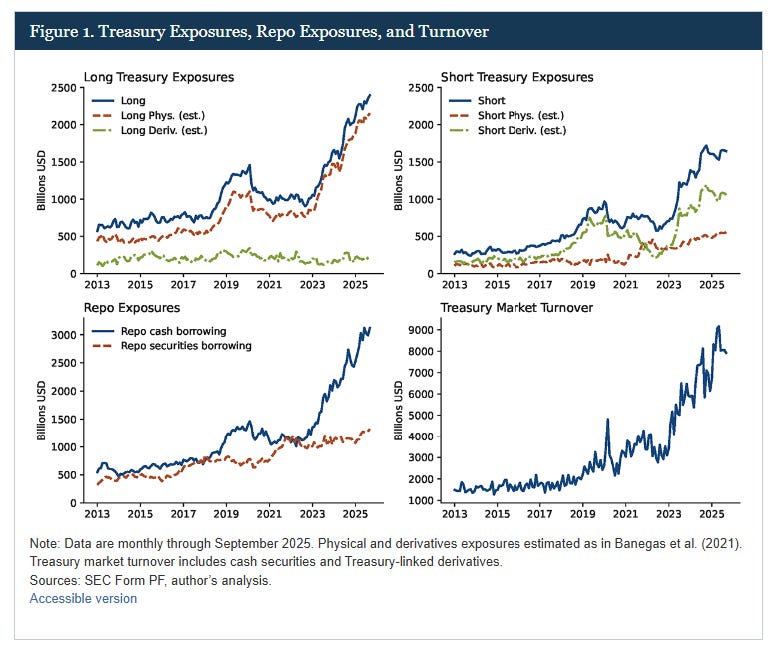
The size of this trade is due entirely to the presence of clearinghouses. If hedge funds tried to get leverage of this size from banks, they would be denied (as the note above points out - banks know what is going on). Now we live in a world of chicken. Hedge funds have huge leverage, but assume the banks and regulators will not call time as they have too much too lose. They are probably right, but I do wonder if Warsh and Bessent want to give them a scare.


