
A few months ago I wrote an article on whether declining population rates was following the pattern of the horse population in Europe a hundred years ago. The key graphic is below. The main metric I focused on was the decline in draft horses - which was caused by the rise in motorised transport.
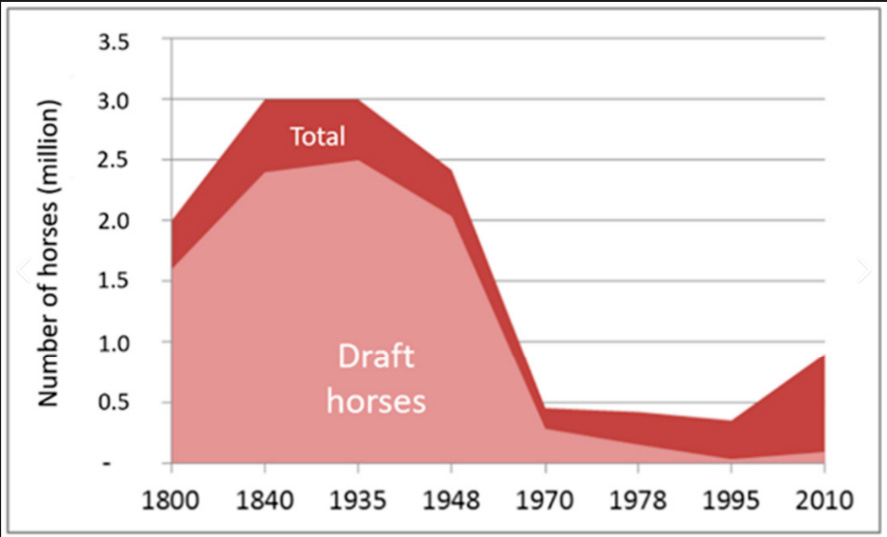
What I really disliked about this comparison was that it was at odds with my general view that humans are programmed to reproduce, while domesticated horse populations are controlled directly by humans. That is horses have no free will, while humans do, and should want to reproduce. But one thing that has been stirring in my mind about this graphic, is the growth in thoroughbreds at the expense of draft horses. When I say thoroughbreds, I mean horses used for sport and leisure. Lets us assume that the global human population is going through a similar shift, where the returns to physical labour is declining, so humans need to focus more on “sport and leisure”.
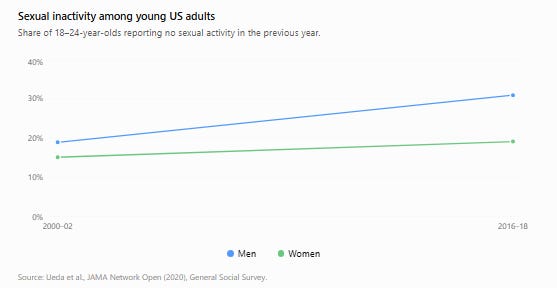
So I have been thinking about what a transition from a human as draft horse era, to a human as thoroughbred era might look like? A small caveat, I don’t like thinking in these terms, but as an intellectual exercise it does have some explanatory power, so here goes. In the draft horse era, I imagine breeding was rather haphazard, where stables would breed draft horses, and sell the ones they did not need. In the thoroughbred era, breeding is far more select, with only the top studs allowed to reproduce at all. You could argue that we have seen a similar behaviour in the West. The rise of young men who have not had sex (incels) has been striking.
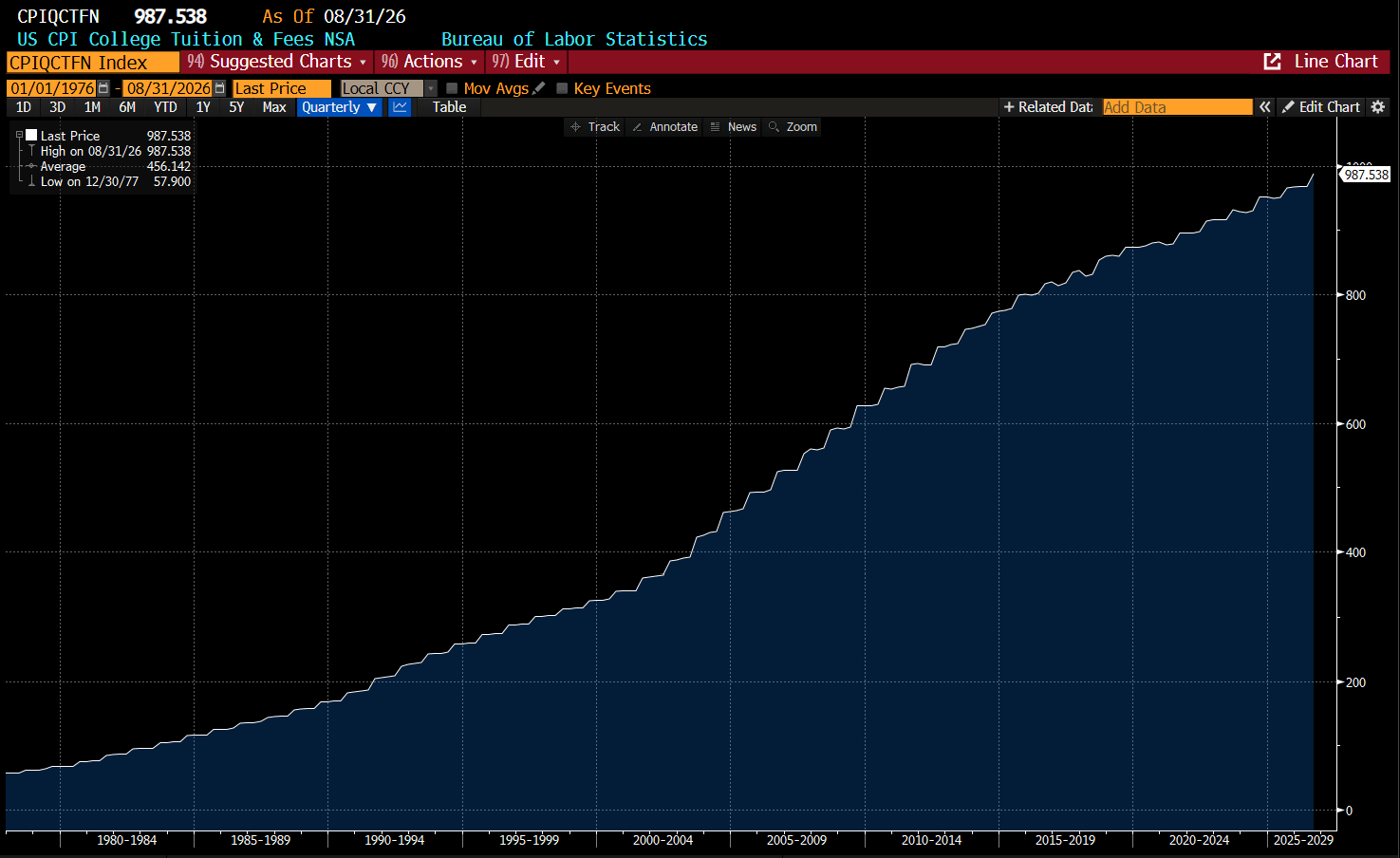
Of course no human wants to be a “draft horse” who gets no action, so a natural human reaction would be to spend, and particularly to spend on their progeny to move them from draft horse to thoroughbred status. Certainly college tuition CPI supports such a view.
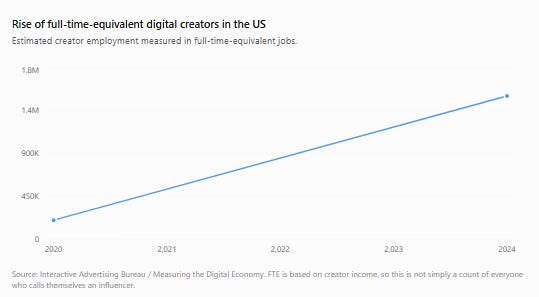
As a parent that has one son doing high level motorsport (www.jarrettclarkracing.com) and another at a football academy ( blak33959 on Tiktok) I can tell you the time and money commitment I see from parents to get their children to be an elite athlete is phenomenal. Of course, the number of professional athletes is capped, but what I see is that often people can take professional training and turn that into a social media career. The number of digital creators is rising rapidly, not a perfect measure - but an influencer is definitely more a thoroughbred than a draft horse.
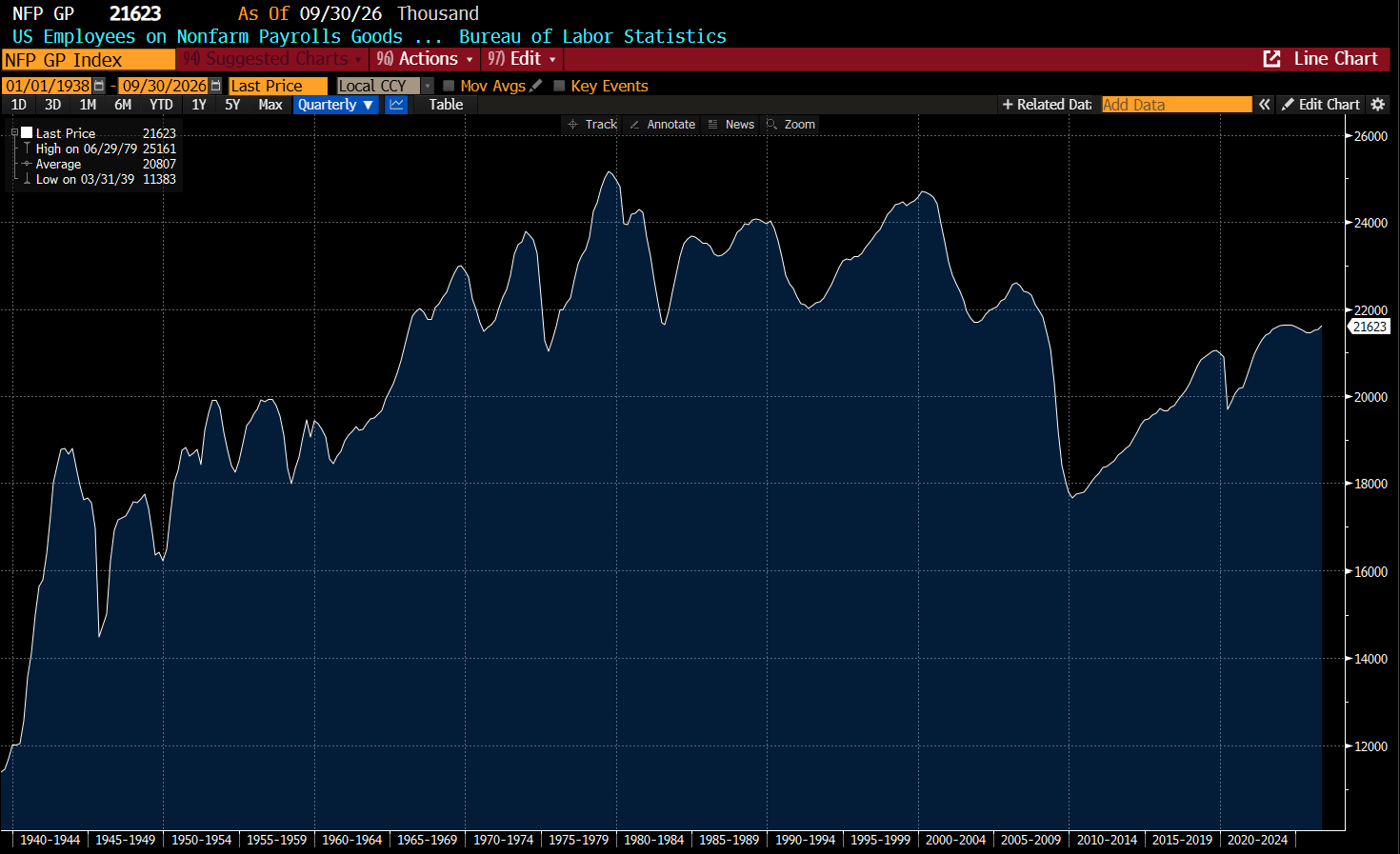
Or to put in another way, goods producing employment (draft horse equivalent) peaked in the 1970s.
One of the reasons I am (was?) hostile to this line of thought is that it implies that I and my cohort (I was born in 1974) were never meant to be “thoroughbreds” but “draft horses”. While I don’t like that thought process, when I reflect on my fellow students in primary school and high school, aspirations were not that high. In fact, for me it only occurred to me that a career in finance might be the way to go only happened in 1998. And to be fair, I did well at school with almost no effort (being naturally gifted at maths was more than enough back then). This is not the case anymore - not at the schools that I am familiar with in London in any case.
Anyway, what can we take from this and apply to fertility rates? Well the shift from draft horse to thoroughbred culture means that women will be far more picky in the choosing partners, something we see in the data already. But what we also see in the horse data at some point, the population of horses can rise again, once the draft horse population has shrunk. In the case of horses, mechanised transport took off in the 1920s, and horses live for about 25 years. This means it took about two generations to get the draft horse population down. With humans, around 1970 is when it looks like machinery started to replace humans in a meaningful way. Assuming a 70 year life span (maybe too conservative) we are still in the acute phase of population adjustment.
One other final thought is that modern financial markets have also undergone a draft horse to thoroughbred transformation. VC investing is often about supporting a talented individual - for example giving a start up USD 2m at USD50m valuation to motivate them to see what they can do. If you had invested purely on a belief that Elon Musk would succeed and ignored all traditional financial analysis you have done very well for yourself.
What does all this mean? It explains a big generational divide. Youngsters are thoroughbreds used to be pampered to achieve maximum performance, while older generations are accustomed to toil and inconvenience. But it is also a fundamentally bullish story. Replacing horses with mechanised transport was GDP creating. Replacing human draft horses with thoroughbreds should be similarly GDP creating. But just like every obsolescent model - its hard to believe the world has moved on without me.


