


For the first time in years, the market has presented me with another option to the rising cost of capital trade. As we all now, the War in Iran has seen oil prices rise precipitously.
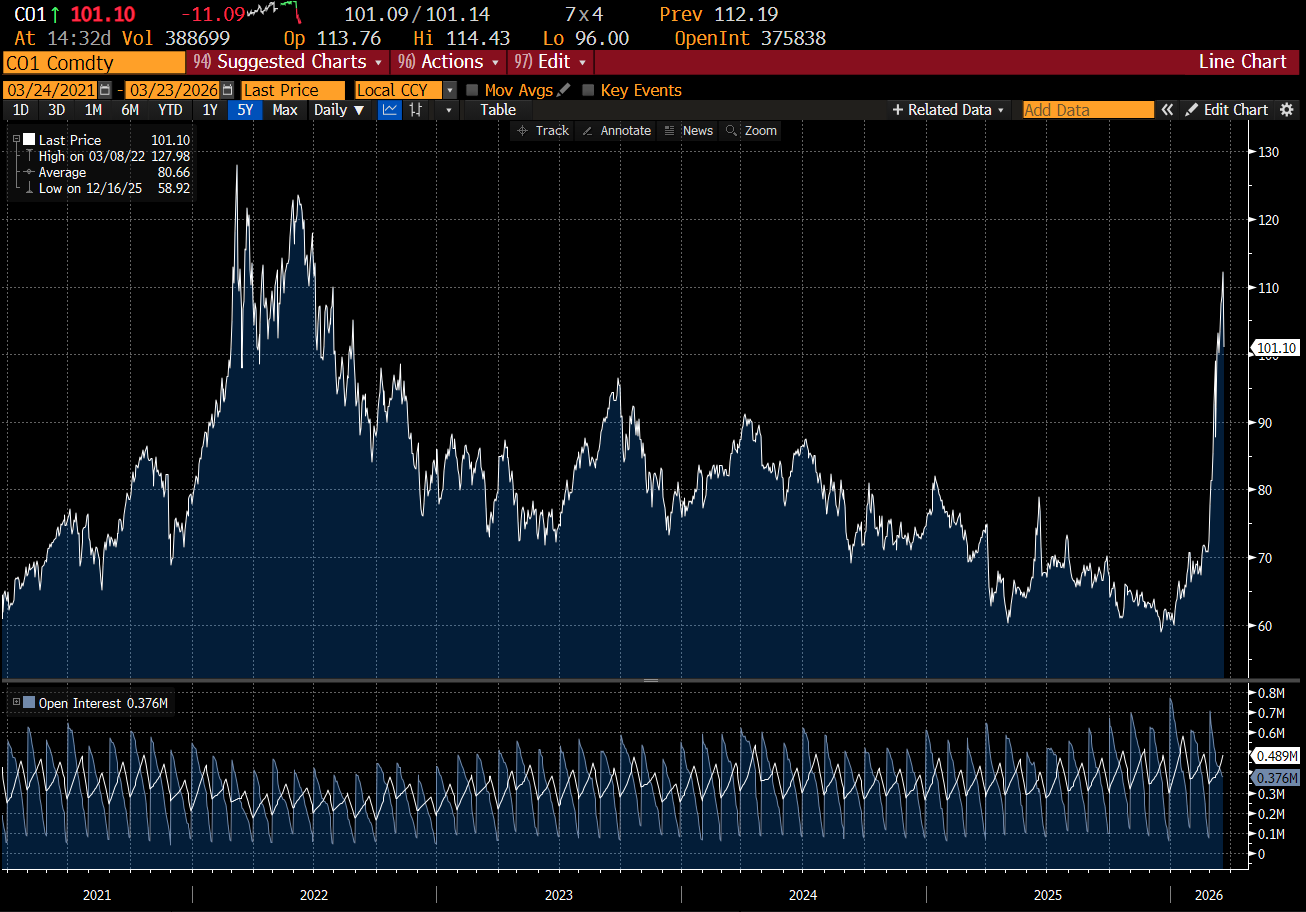
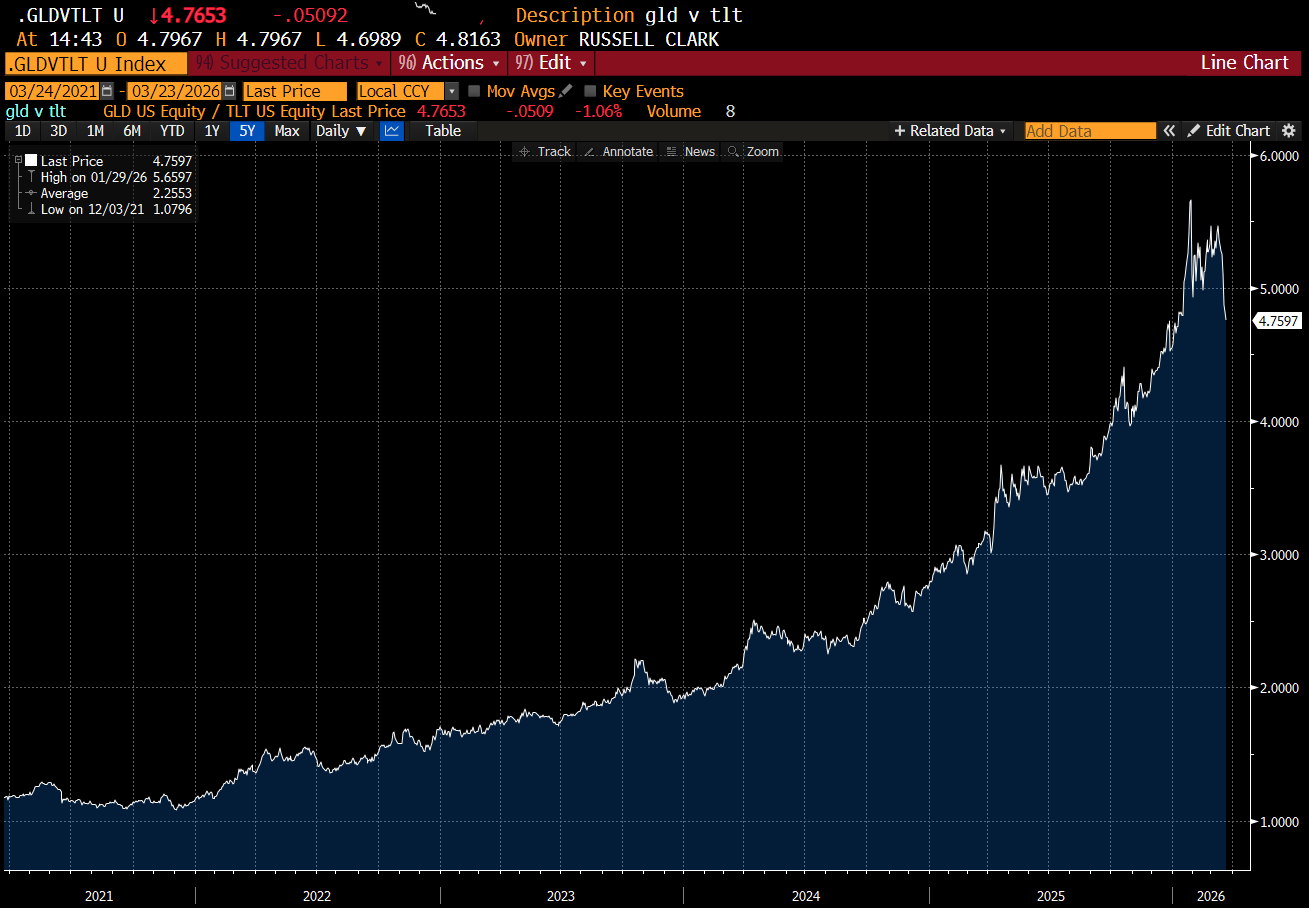
Given the lessons of the 1970s, you would think GLD/TLT would do well. This has not been the case. The long term trend of gold higher versus treasuries remains, just that the reaction to higher energy prices is odd.
The rising cost of capital trade was driven by rising wages, and the need for higher interest rates to keep inflation in check. It was also driven by the knowledge that the US could not be relied on militarily, so Europe and Japan needed to spend to rearm. I also saw the breakdown of Treasuries as a reserve asset, so saw gold doing well. I imagined US equities doing poorly as cost of capital rose. All of these trades worked well until this month, when spiking energy costs saw most of these trades reverse.
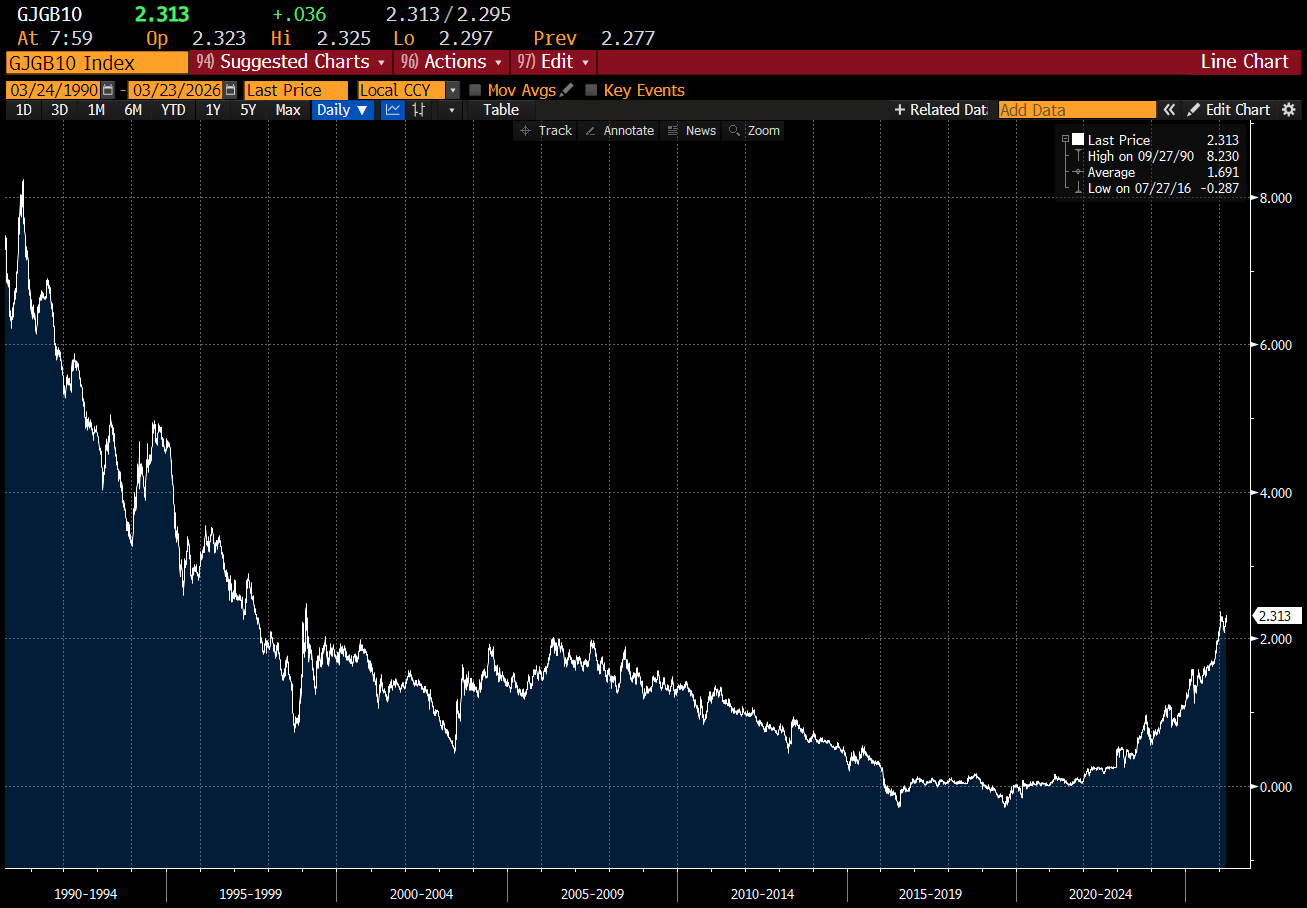
Lets assume, there is a “security” trade here, rather than a cost of capital trade. What evidence is the market providing for a “security” trade”? Perhaps bond yields are rising in the regions that are at most risk of getting dumped by the US government? Security here mean both militarily and energy supply in this discussion. Japan is obviously highly exposed, and has seen yields rise a lot.
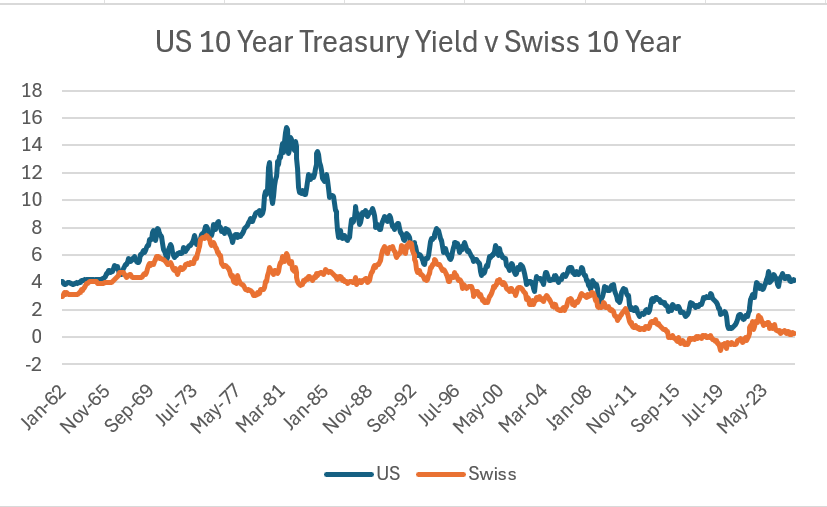
Switzerland, which has a policy of armed neutrality, has seen its bond yield diverge from the US, and are quite low. It also has a strong domestic hydro system for its energy supply.
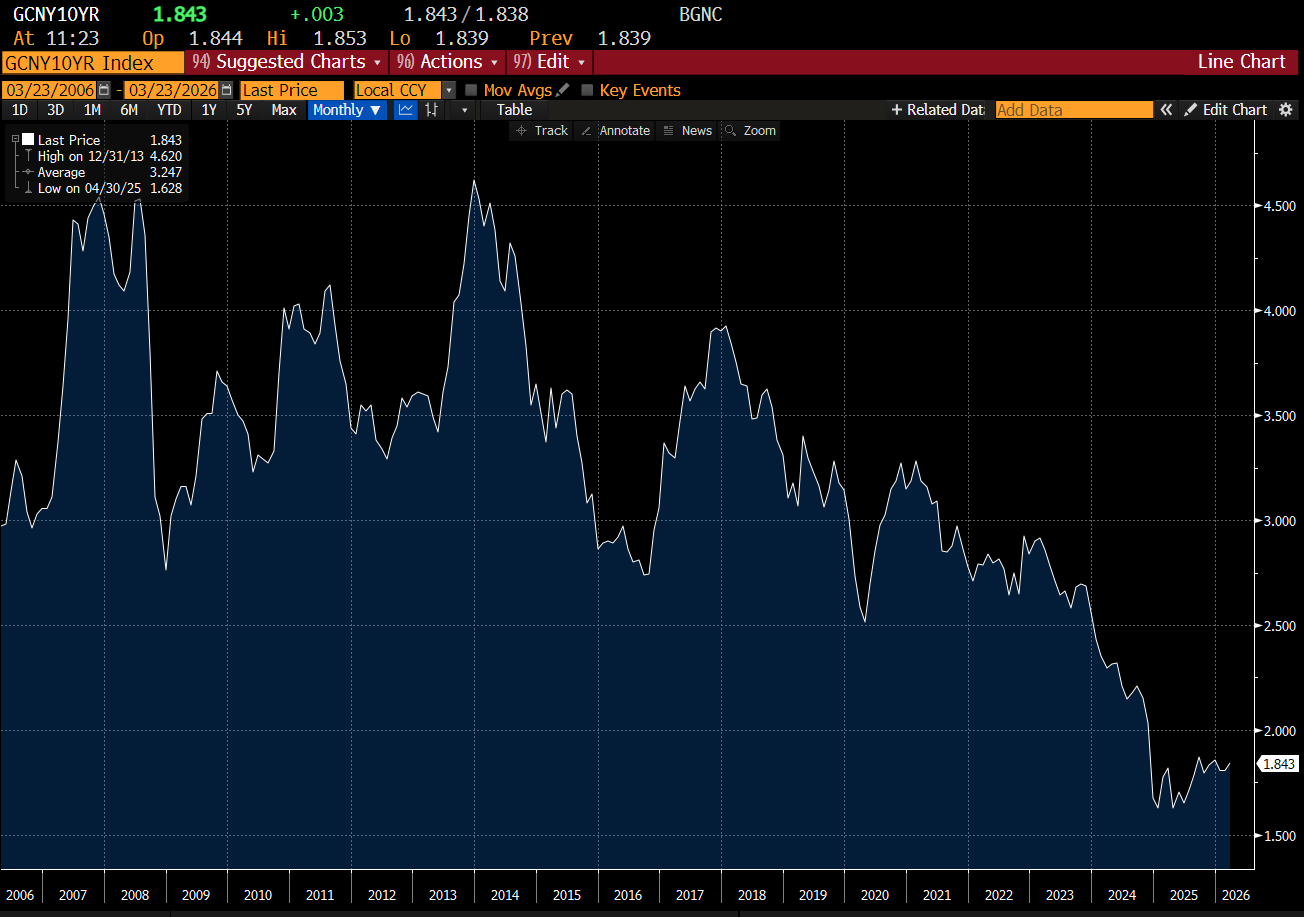
Likewise, China which has always sought to be independent of US influence, has seen domestic yields stay low.
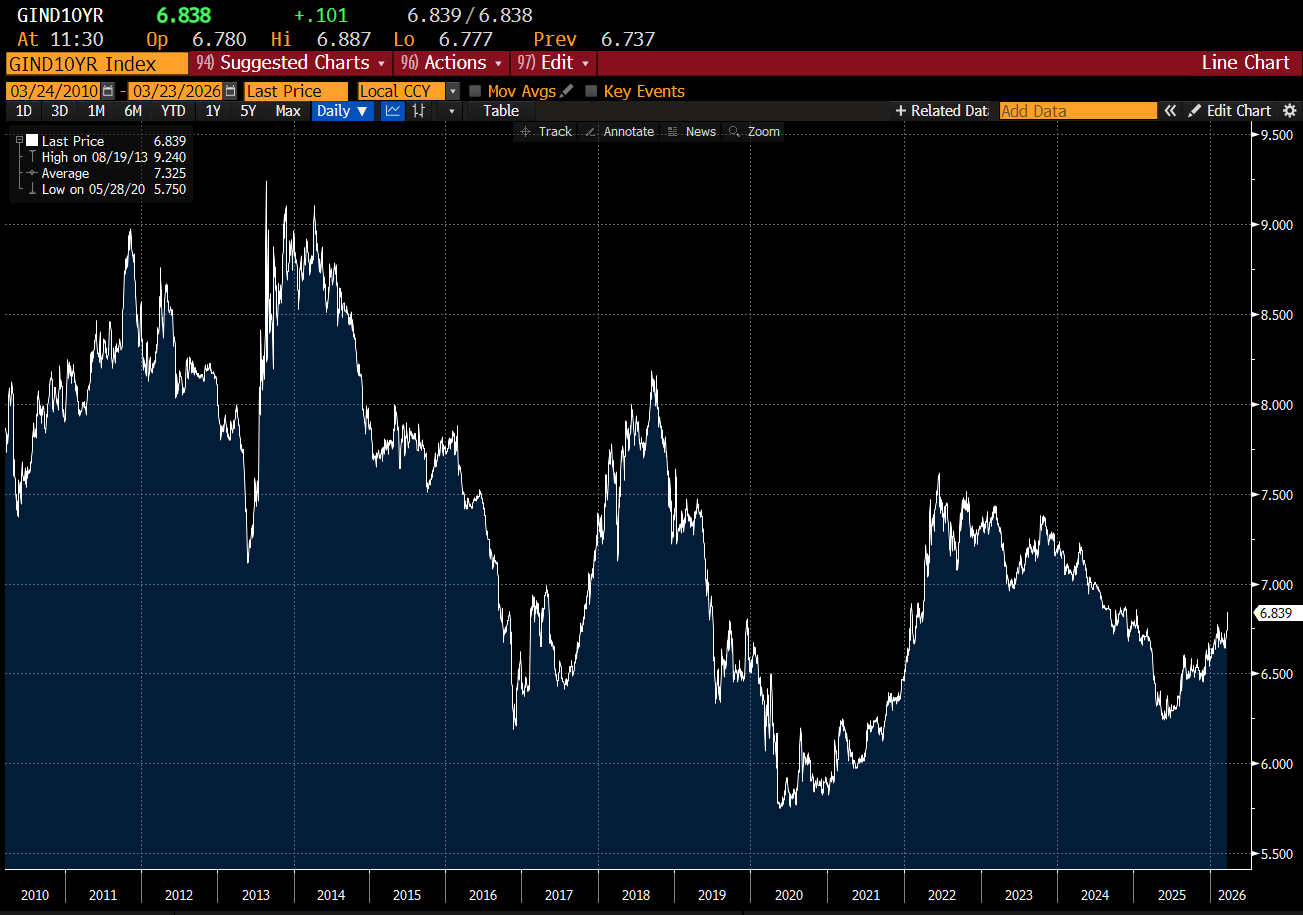
Perhaps even more unusually, India bond yields look relatively well behaved. India also has strived to maintain some independence.
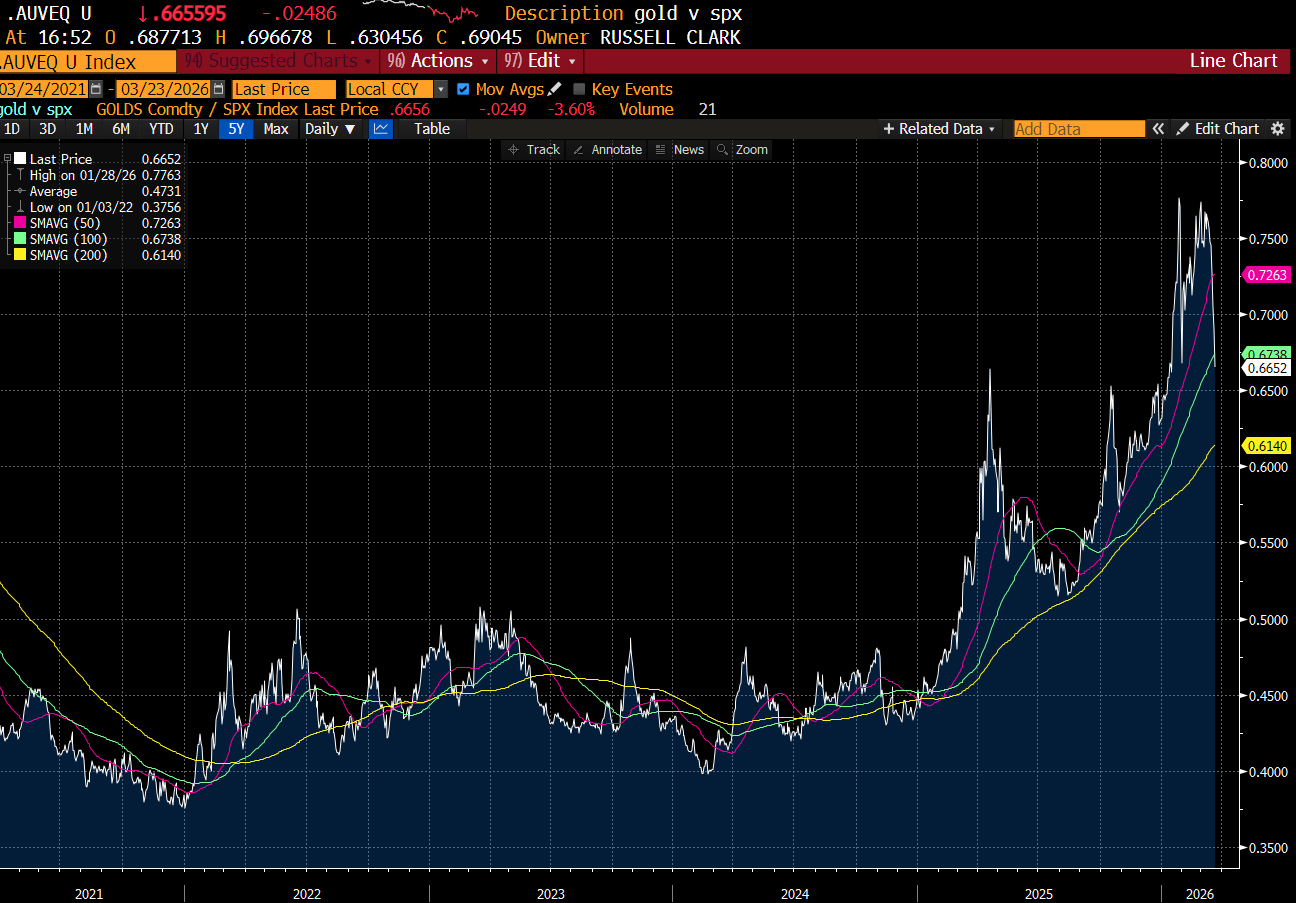
So the market is now providing evidence for two different macro regimes or trades. Both rising cost of capital and energy security trades are bad for JGBs, Bunds and Gilts. It should also be bad for Treasuries, because why would anyone own them when the US is not providing security in return. So short TLT makes sense from both perspectives. Energy security trade should be theoretically good for gold, but unlike the rising cost of capital trade, is not necessarily bad for US equities. A trend change in GLD/SPX would probably tend to support an energy security trade. It has reversed recent big moves this month.
So would a SPX/MSCI World trade - which had looked to have inflected lower - but is back through the 200MDA average again.
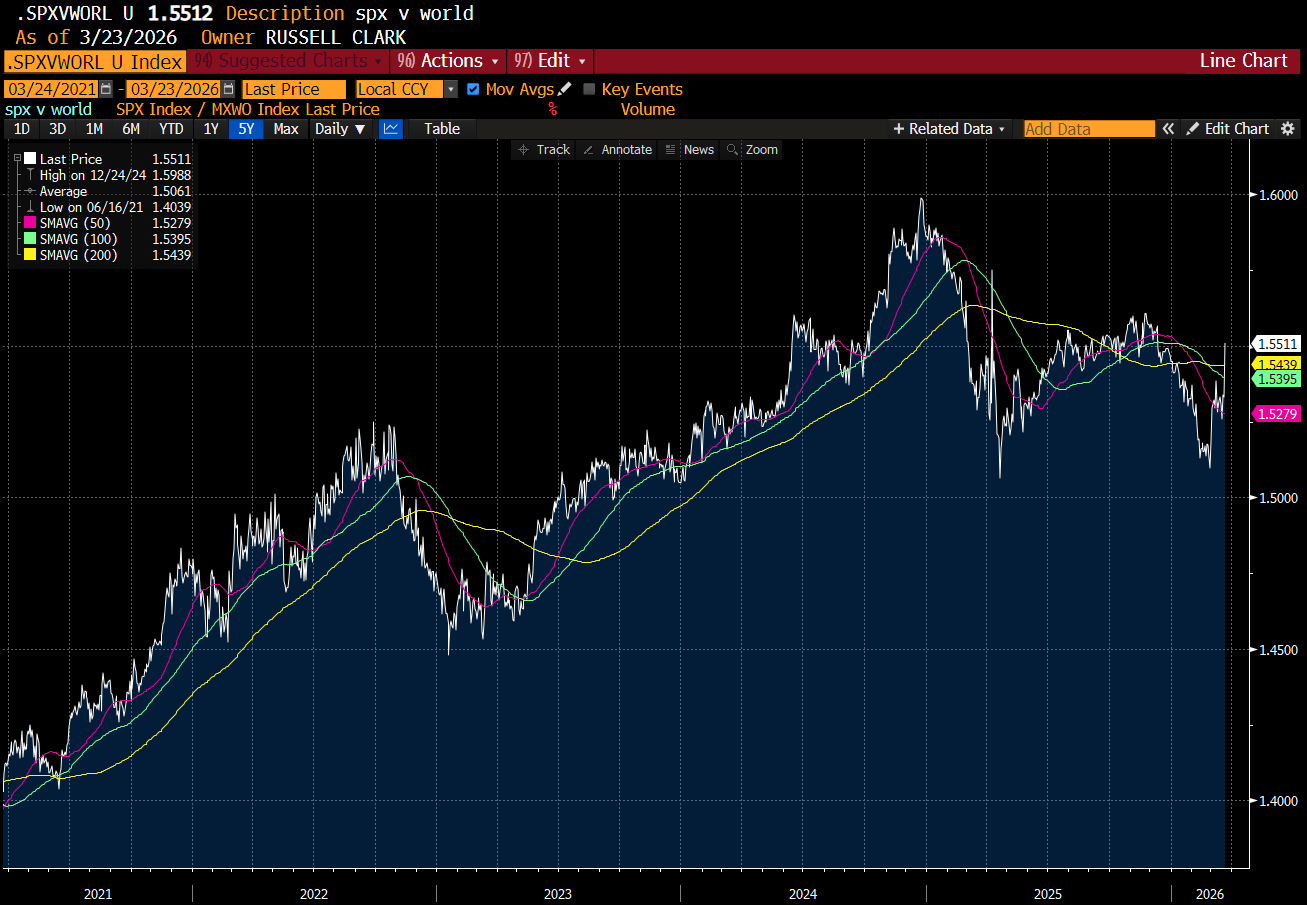
The thing is, when I think back to the 1970s, it was also an era of energy insecurity - its just happened that the US was the economy most exposed at that time. I think this really is the fault line between the cost of capital trade, and energy security trade. Cost of capital trade should see Europe and Japan outperform the US, energy security would see US outperform the rest of the world. I prefer the cost of capital trade - as it matches up with what I see globally. The energy security trade - really only benefits a narrow group of US industrialists. The problem is that energy security is now a play thing for Donald Trump - so who knows which way he will turn. From a historical perspective, forcing Japan and Germany to rearm, and then pointing out their lack of access to natural resources would seem to be quickest way possible to awaken the worst possible instincts in both these nations - a problem I am sure that will be left to future administrations.
In practical terms, I would much prefer the cost of capital trade to be correct, as it would much better suit my skill set - short selling, Japanese equities and if investors found the S&P 500 to be an unsafe asset, would drive business my way. But what I prefer and what is the truth are two different things. I suspect the market will tell us one way of the other in next couple of months.


