
Korea has always been a market of extremes. I am not sure why, but somewhere in the investing psyche of Korea, there is a tendency to push everything to a limit. One of the best examples came in the GFC, when the Korean Won just suddenly devalued 74%, after years of appreciation.
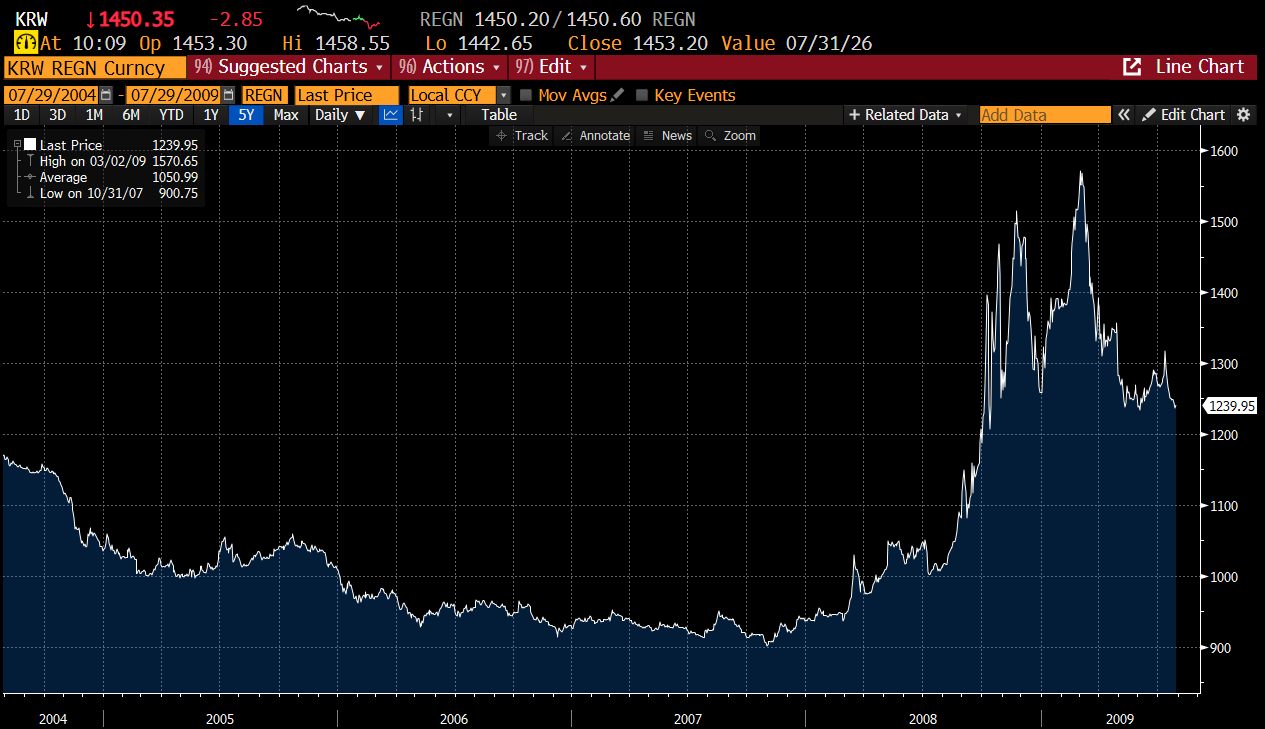
It turned out the Koreans thought the Won would keep appreciating forever, so many SMEs over hedged their dollar exposure to make more money. When recession hit in the US, the US dollar revenue was not there and all the SME were forced to buy back dollars hedges, causing the Won to collapse. That this happened only 10 years after the Asian Financial Crisis, I still find extraordinary. It is for this reason, I try and keep an eye on Korean “investing” trends.
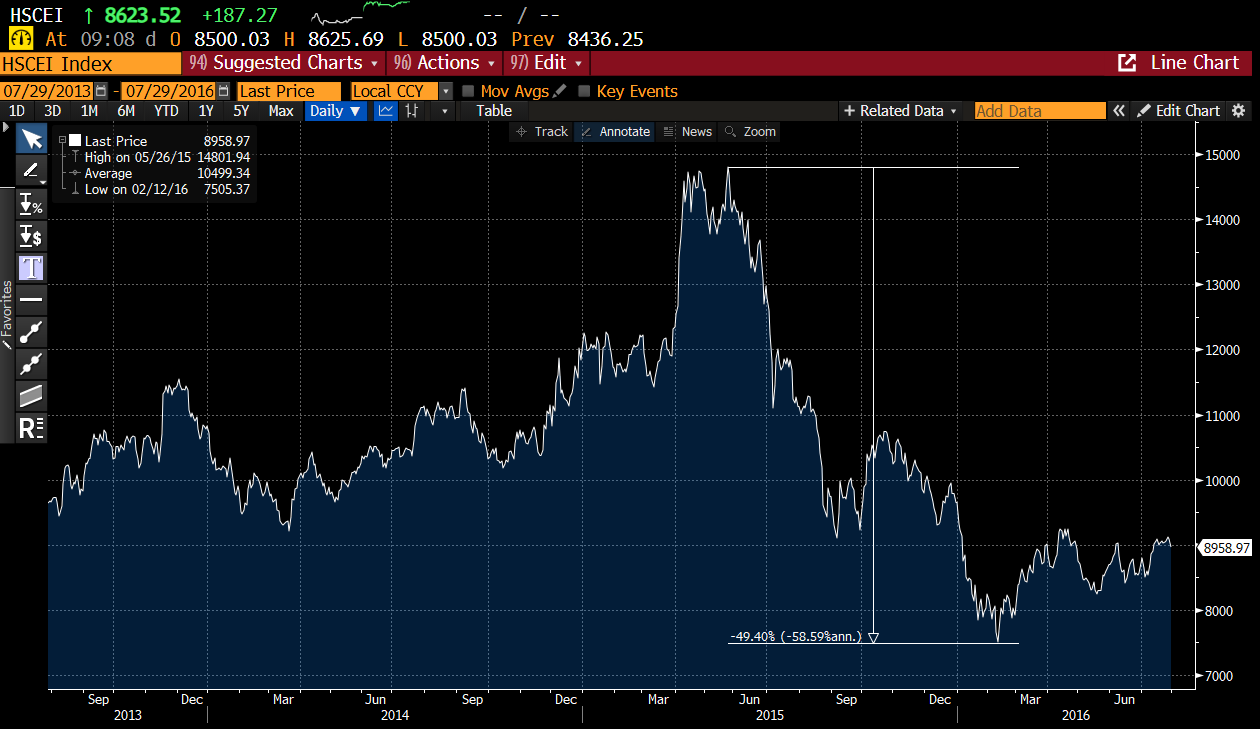
Korea has been the biggest market for autocallables (structured products) for well over 10 years. Back in 2015, Koreans were very keen on HSCEI related autocallables. In 2015, there was a rally followed by a 50% fall that caused many autocallables to become unhedged, and led to heavy selling of Chinese stocks.
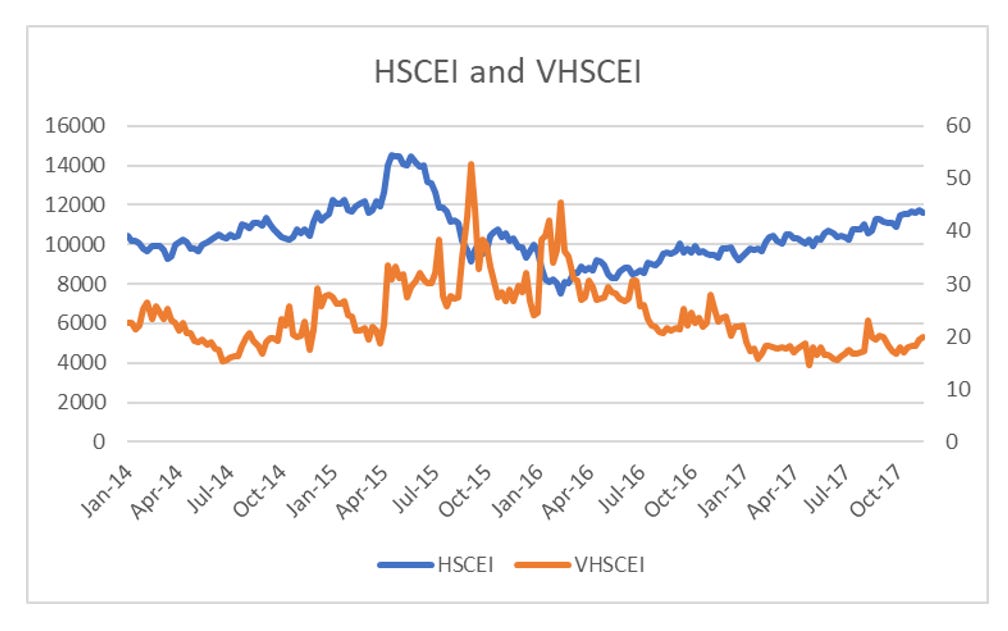
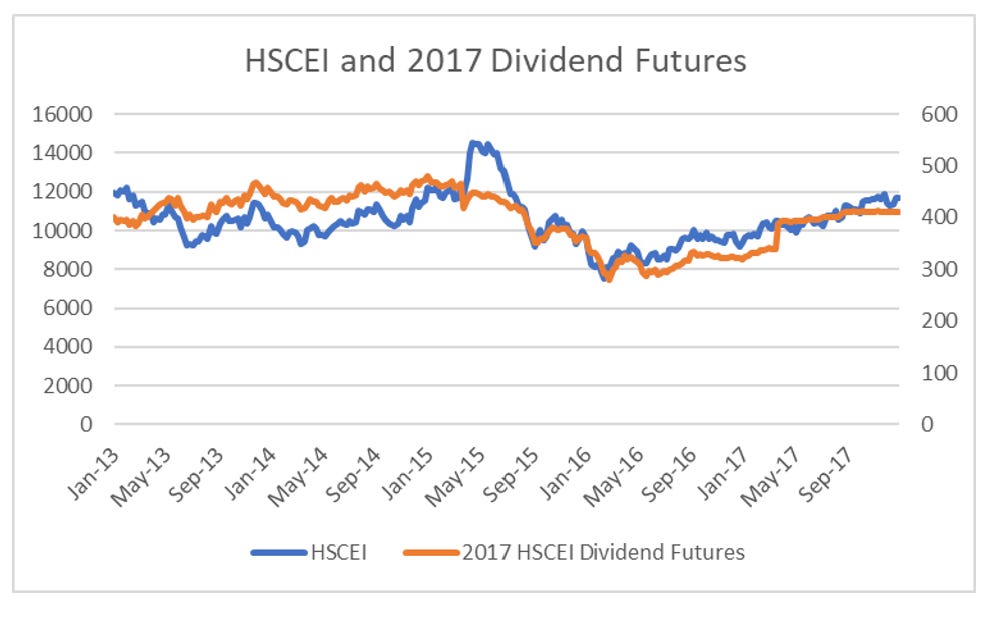
The signs of problems with autocallables come from two sources. First volatility surges even as the market rises. This happens as autocallable pierce upper barriers, and so need to get restruck at higher prices, and then surges again as low barriers are breached, and autocallables are also unwound. VHSCEI shows this.
But a better tell of autocallable trouble is with dividend futures. If they are not tracking the market higher, then you know trouble beckons. You can see this happened in 2015, when dividend futures fell as the HSCEI went up.
So are autocallables to blame for the current sell off in Korea (and Japan)? Well issuance of autocallables has been high.


