
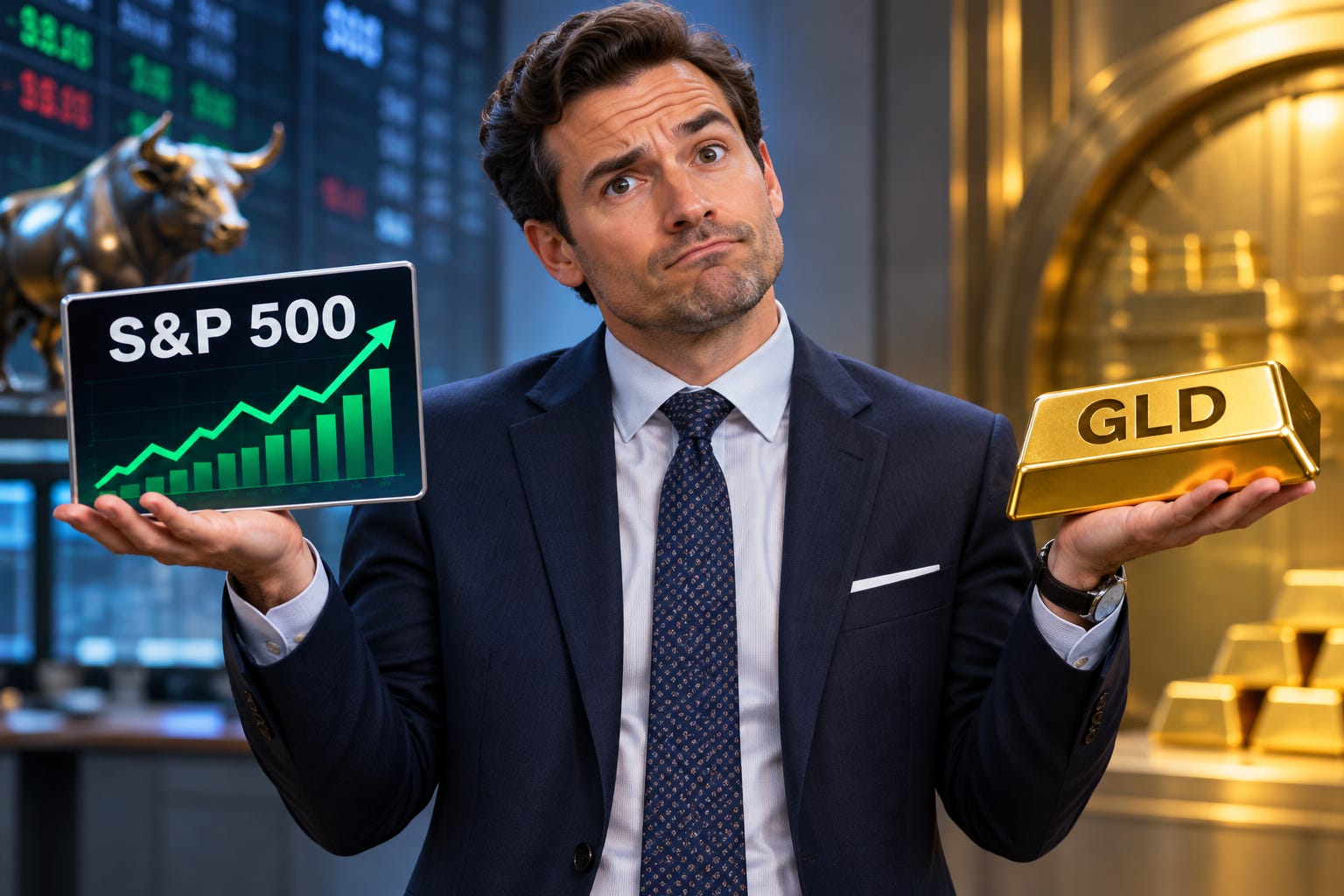
I spent my first 10 years in finance, say 1996 to 2006, looking at how other fund managers used to mess up. The big lesson was that currencies tended to be the big surprise factor for fund managers, and that bond yields tended to fall. And using those lessons, I then had a pretty successful time of it from 2006 to 2016. And then from from 2016, the rules seemed to change. I thought I had worked them out in 2024 and 2025, but having looked at how markets have played out over the last few months, I would say is not the case. Having mulled it over, I think this is what is happening.
What I saw, was a pro-labour trend, and that of rising inflation. When I looked back at the 1970s, this seemed like it was good, until it was bad. And it became bad as yields rose with commodity prices, and particularly gold. When I saw this starting to happen, I thought we were coming to an inflection point in markets. I also saw that the US freezing Russian foreign reserves would drive flows from treasuries to gold. So GLD/TLT looked and was a great trade.
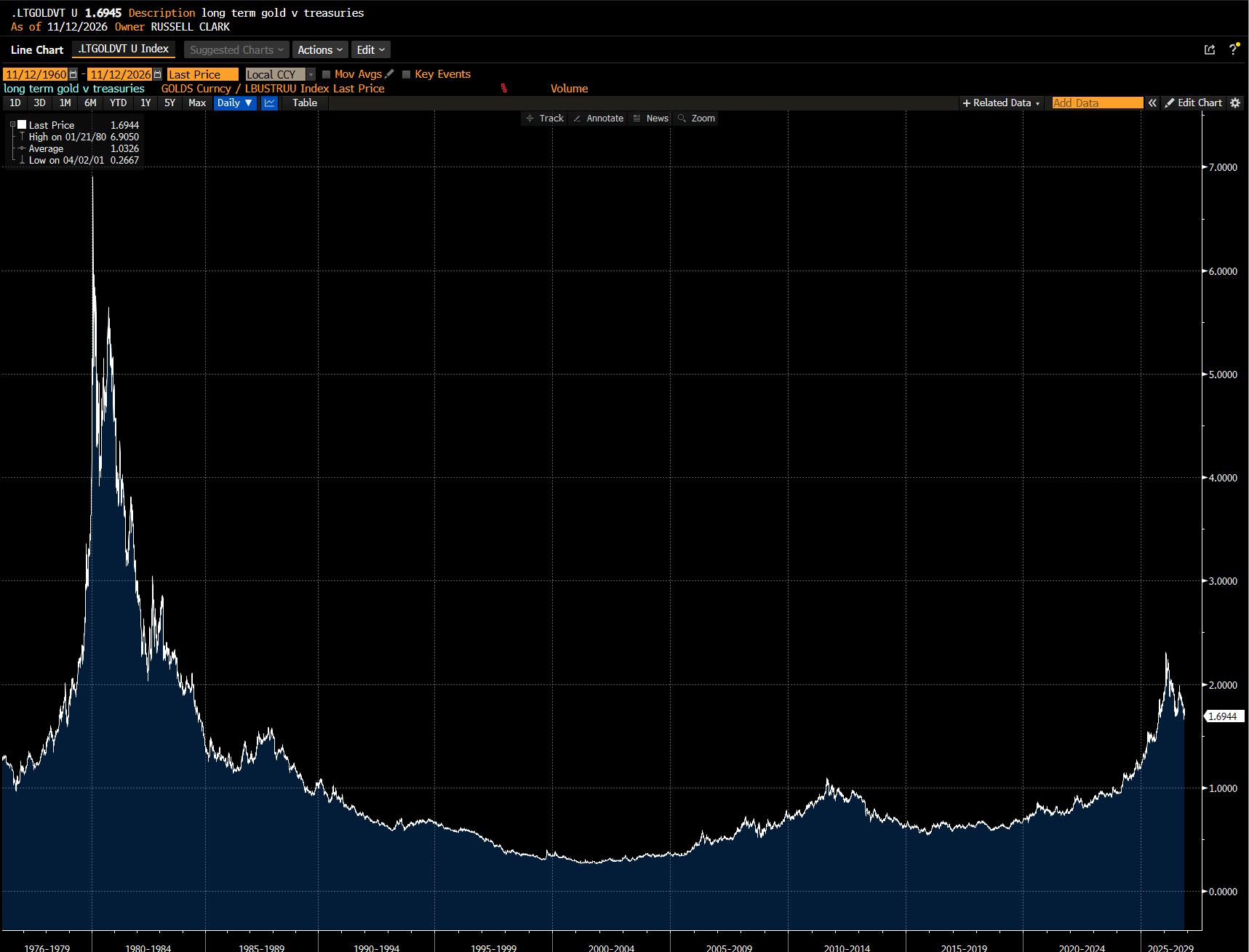
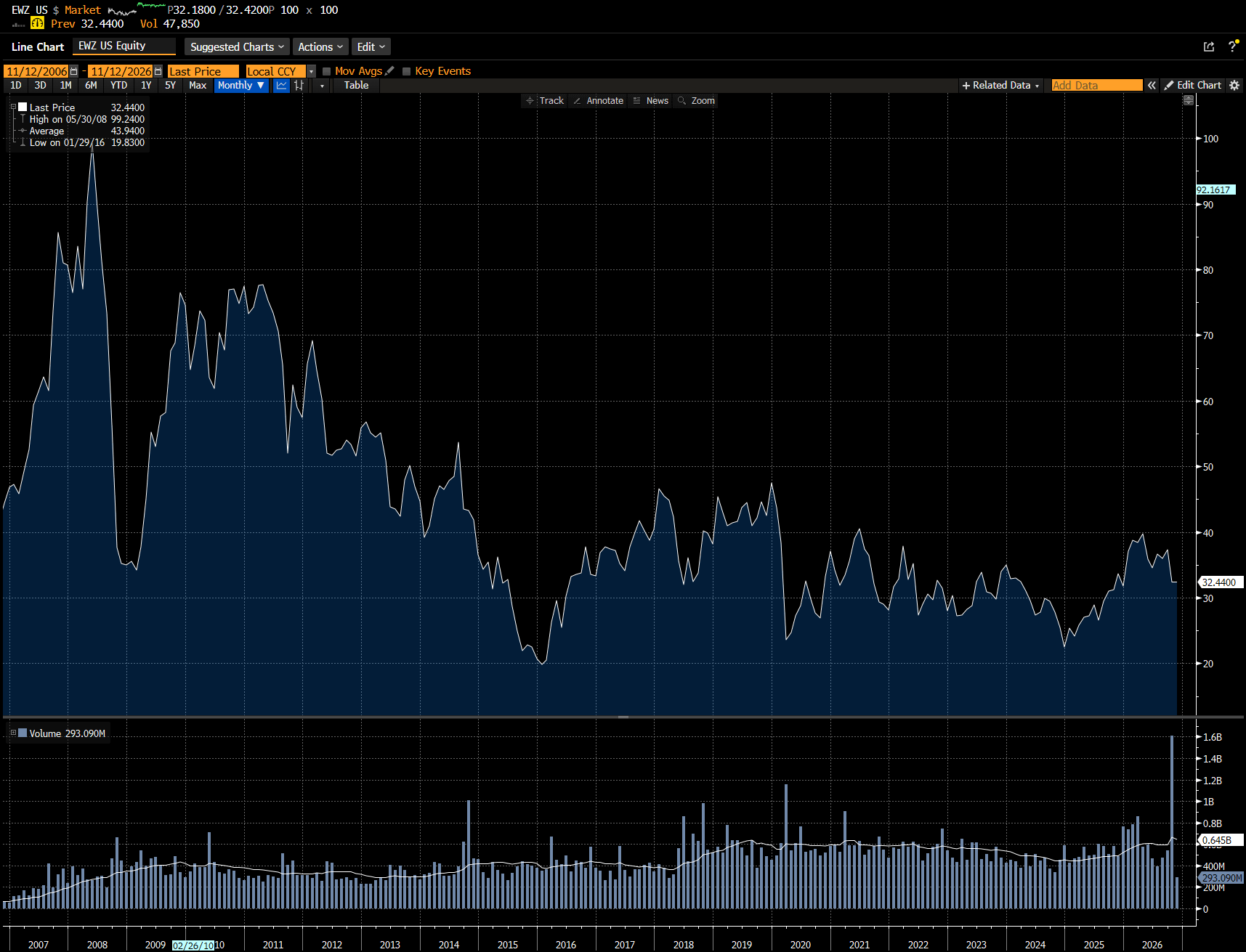
Now the 1970s, when GLD/TLT was working, was not a good era for the S&P 500. Basically, margins were squeezed and valuations depressed by high interest rates. I have seen this play out more recently in markets with high inflation like Brazil, where equities would derate, and currency would weaken. You can see this in EWZ, a USD Brazil ETF. A big fat nothing done for over 10 years. I had assumed the US would follow suit. So GLT/TLT good; SPX bad.
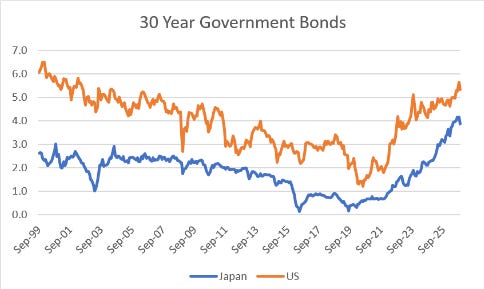
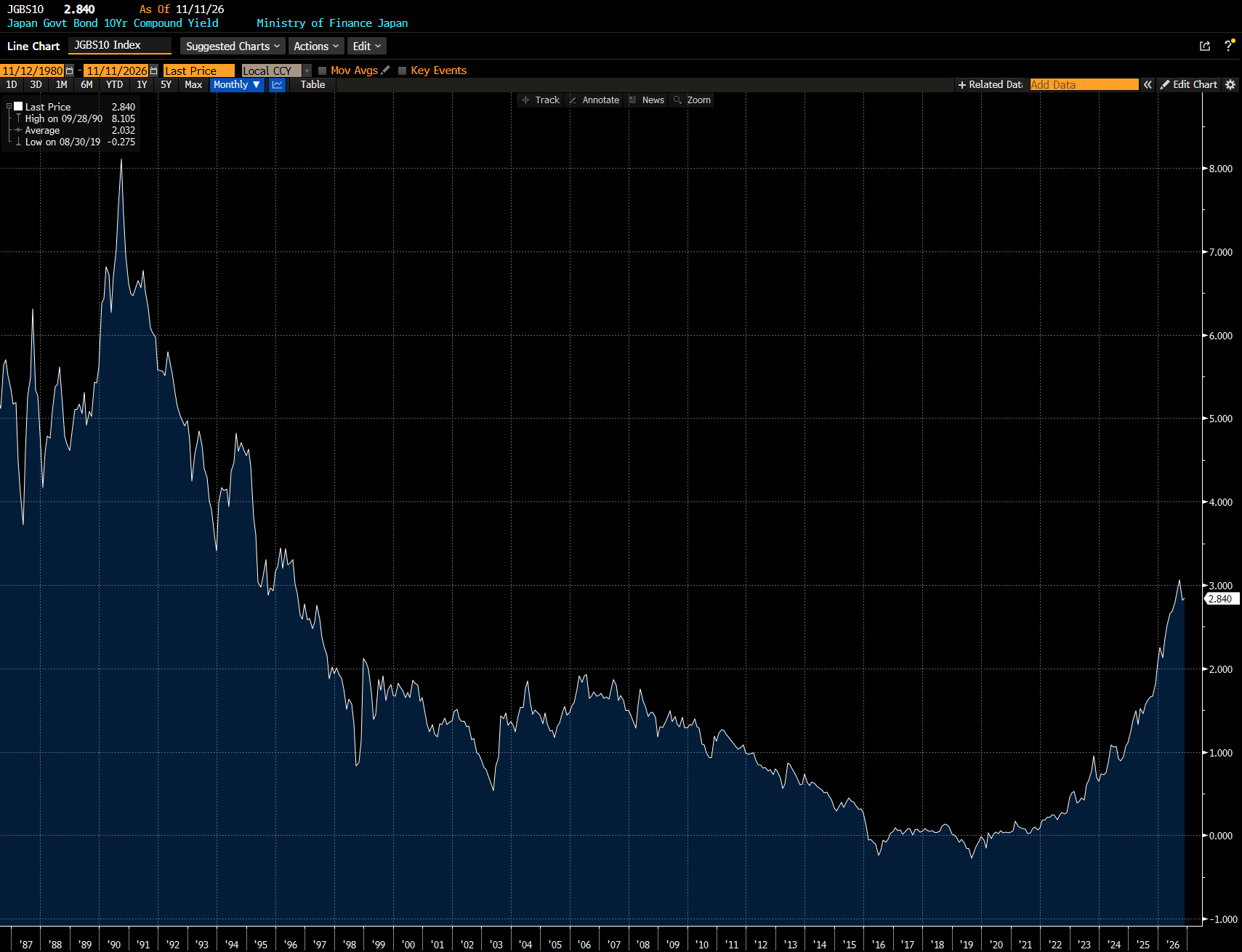
I was waiting for rising bond yields to weaken the SPX. All year I have seen JGB yields rise, so I was expecting a rise in treasury yields to shock the US market lower. I expected the US market to fall, treasuries to fall, and gold to rise. In September, that all happened, and then promptly reversed in October. Nothing much had changed in my view - but the market just suddenly moved.
I would have thought GLD/SPX would do very well in a year like 2026, but it has not. It is down 20% this year. Very odd.
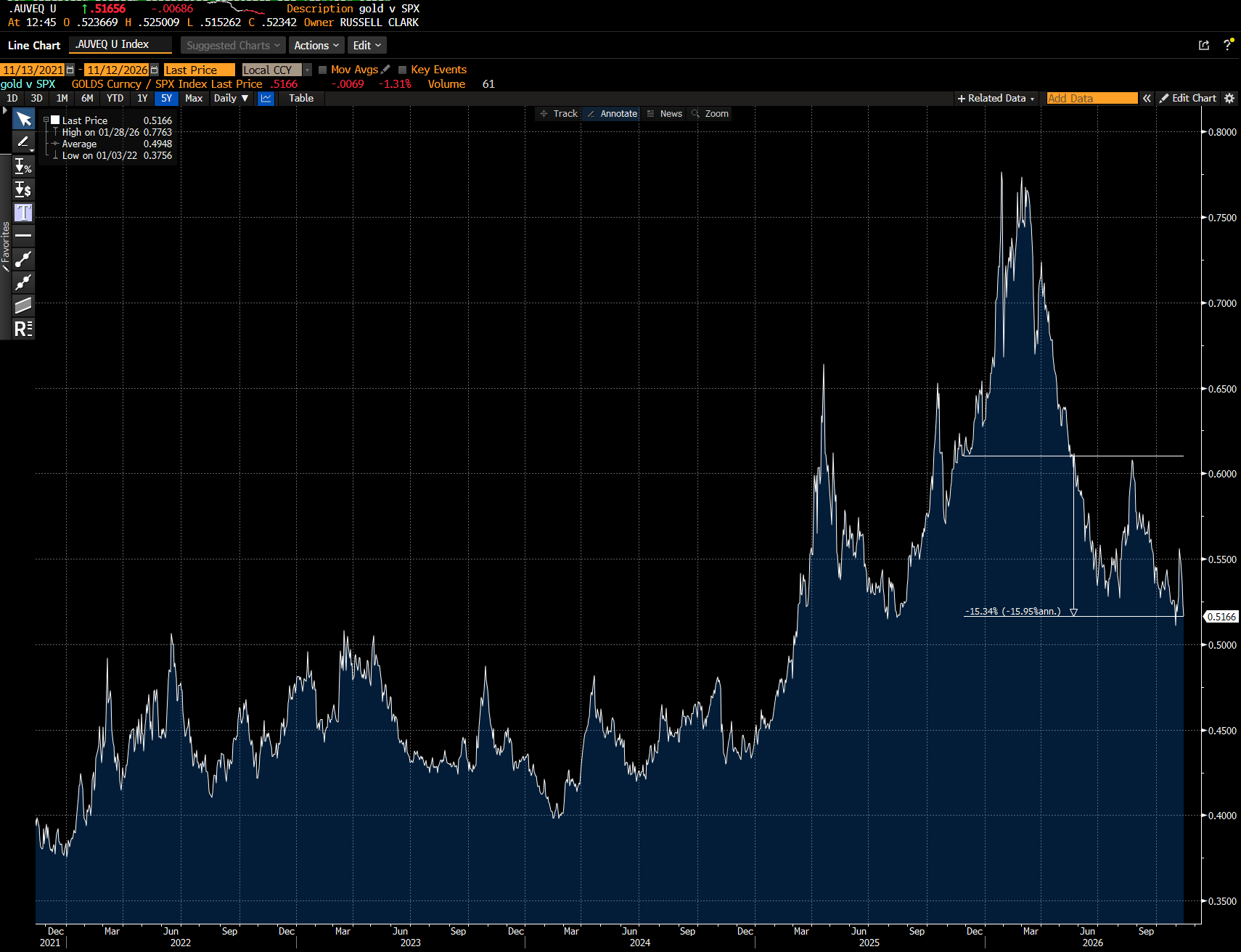
Typically, most countries derate as inflation goes higher. Partly because investors don’t pay for easy price increases, and normally higher interest rates act as a negative pull. We DO NOT see in the US, or with the S&P 500. Rising yields has seen a rising valuation.
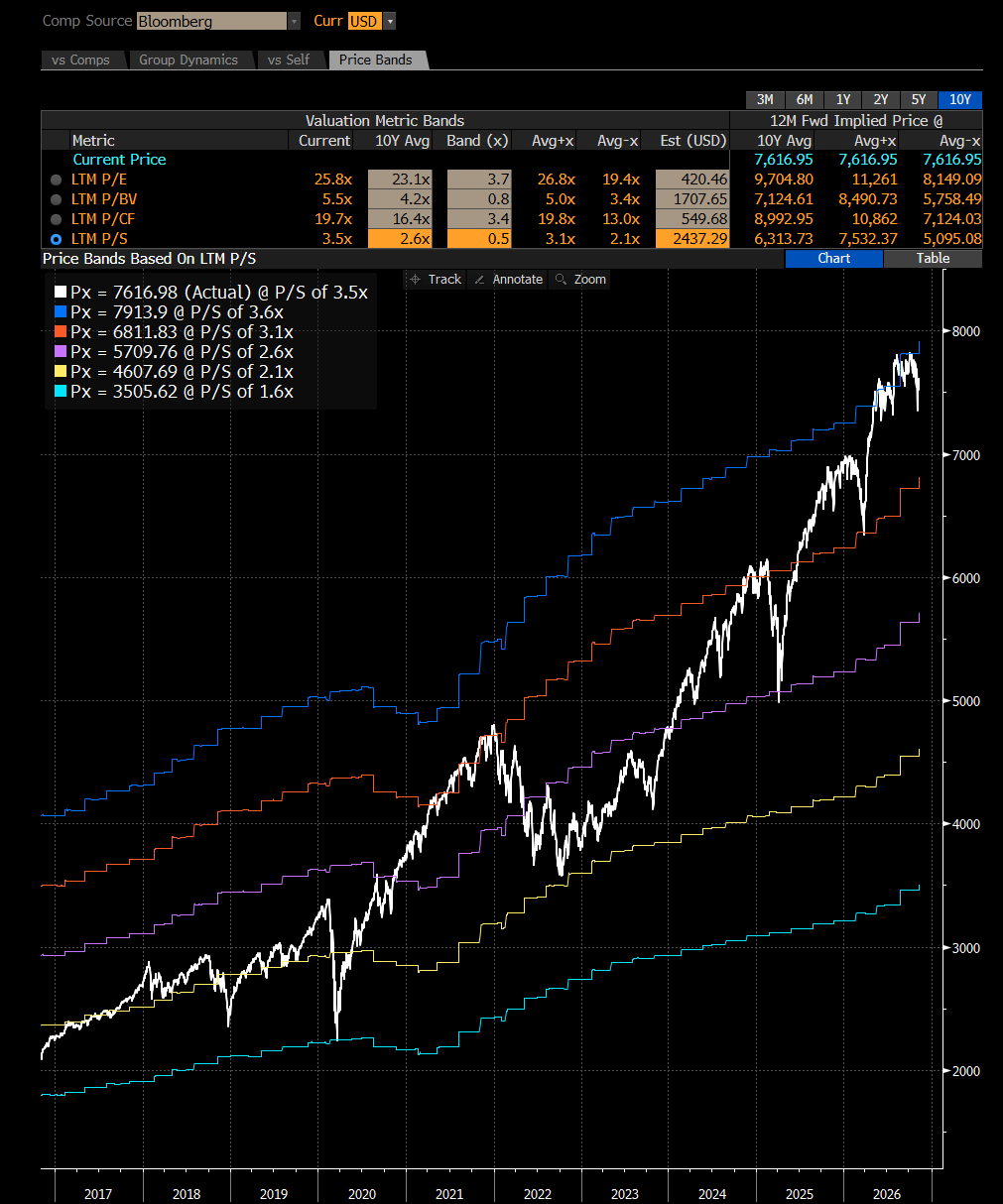
Recently hedge funds have underperformed as the AI trade has come under pressure. The intriguing thing about this, is one time most valuable company in the world, Nvidia has entered a bear market - down 30% from its highs. No one seems to have told the S&P 500, which is barely off highs. This seems odd as the drive higher from March was AI led.
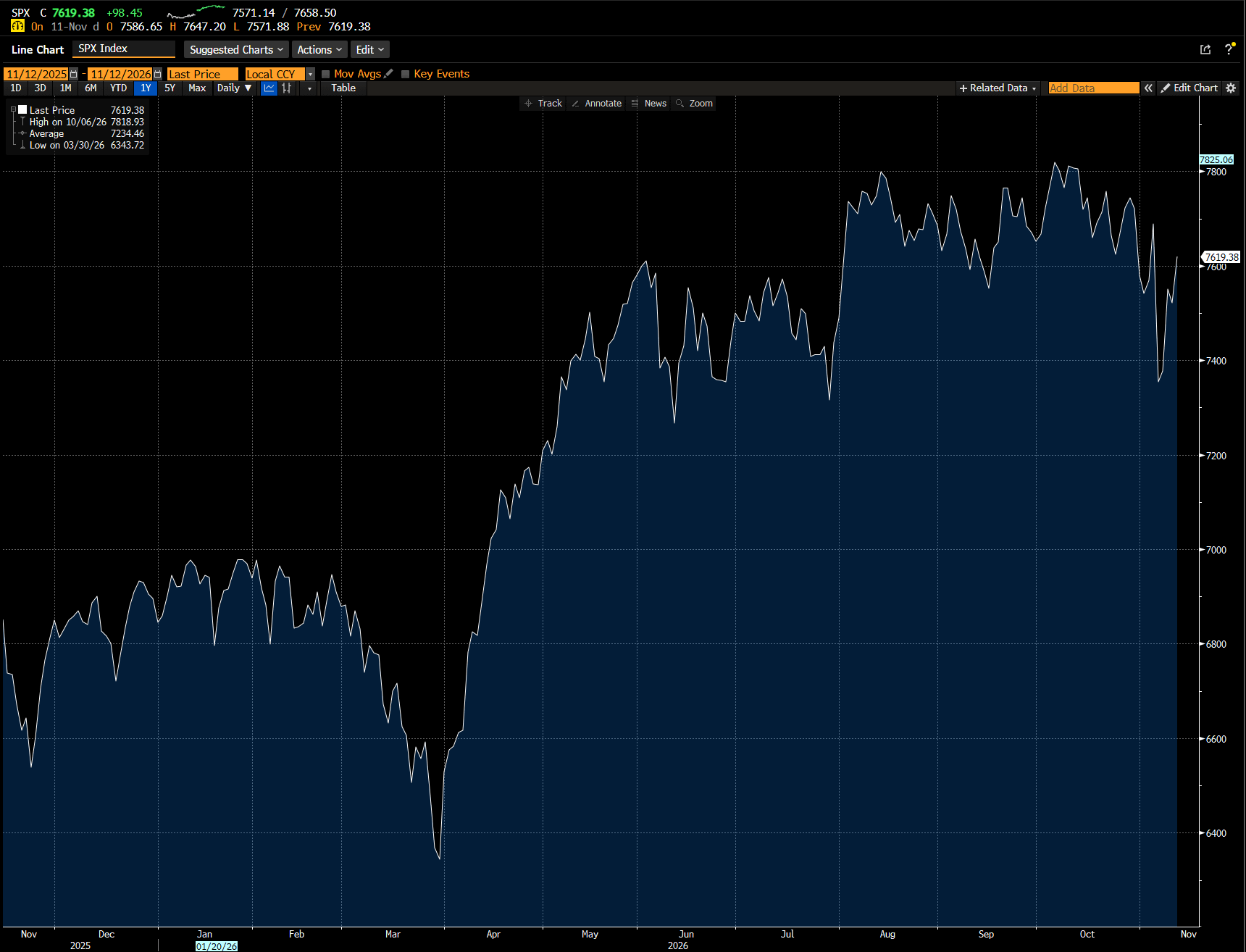
So what is happening? In many ways, the S&P 500 reminds me of the short JGB of the 1990s and 2000s (Widowmaker trade). Japan had the biggest sovereign bond market in the world for years, and hedge funds and traders avoided it or shorted it. And all yields ever used to do was fall. Government policy basically forced Japanese institutions to be buyers of these bonds.
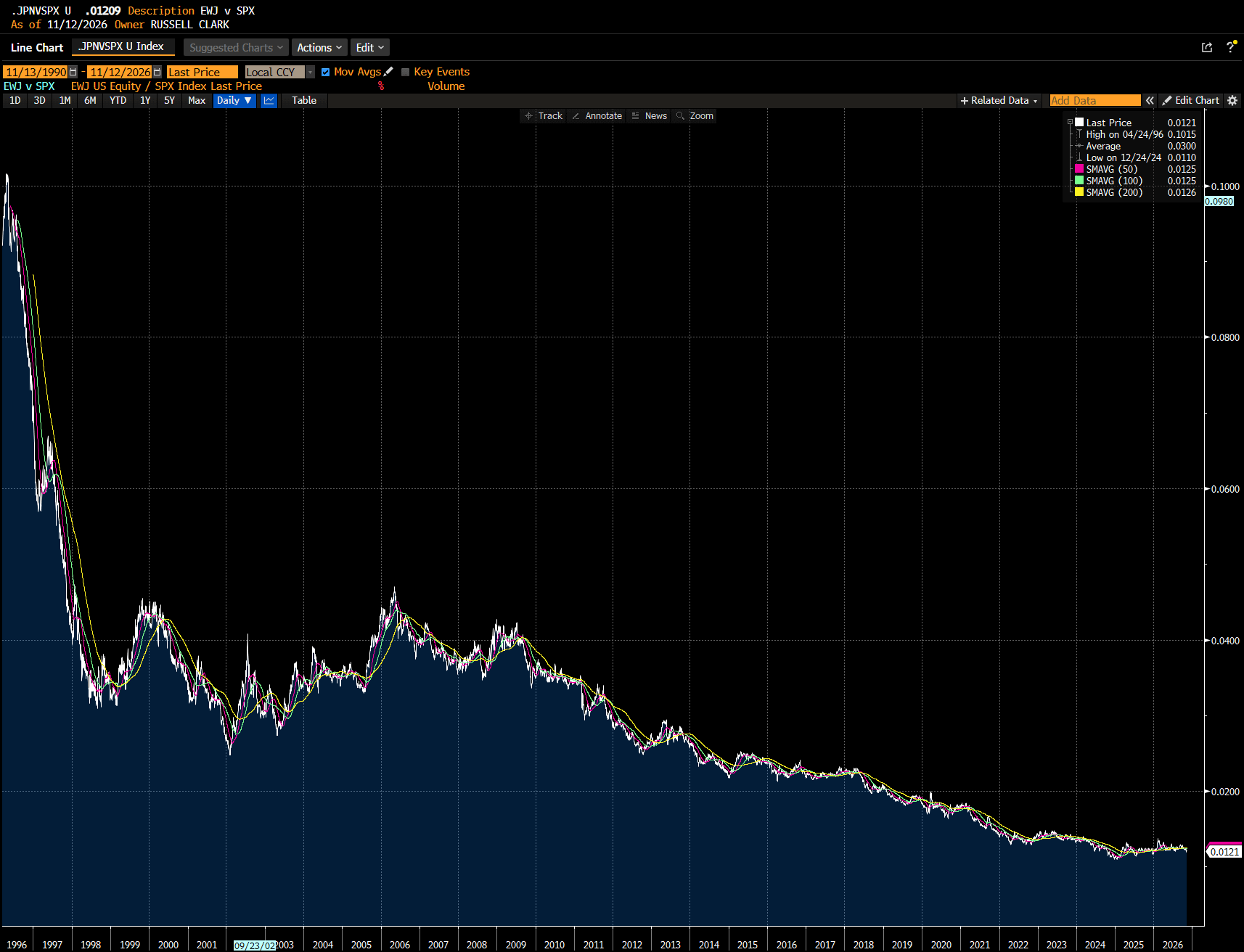
So just like then, traders and hedge funds try to look for non-S&P 500 bets, or tactical underweights. For example, I liked gold versus the S&P 500, and it worked until it did not. I also liked Japan versus the S&P 500, which worked until it did not. Below is USD Japan ETF vs S&P 500.
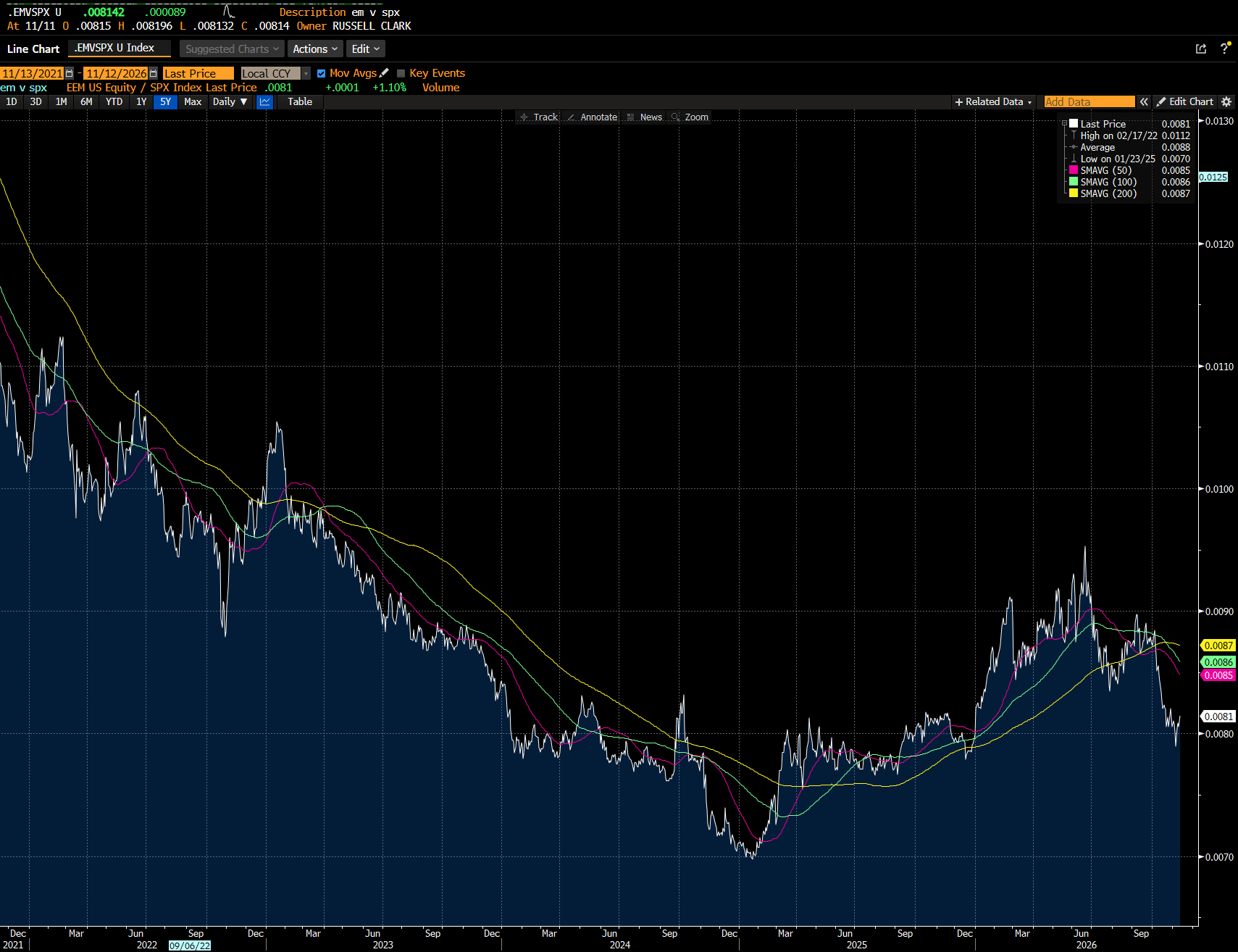
Many funds were bullish on emerging markets, which looked like it had turned, vs S&P 500, until it had not.
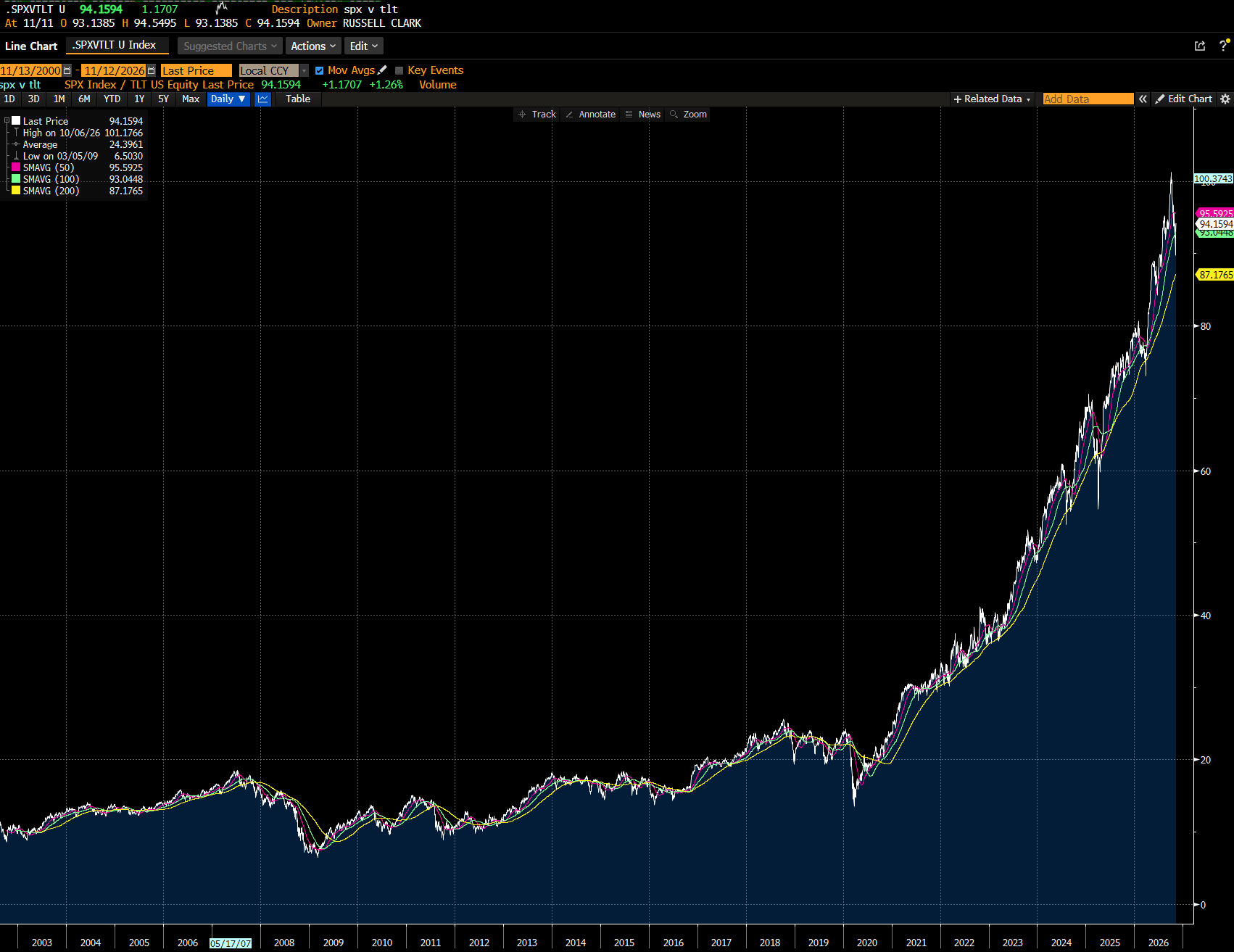
In essence, I am saying the S&P 500 has become the default risk free asset, in much the same way I used to think of JGBs as the default risk free asset. When you swap GLD in GLD/TLT to SPX, to get SPX/TLT you get a very beautiful chart indeed. Or in other words, SPX is a better inflation hedge than gold.
Why is the S&P 500 a risk free asset now? Well share buy backs are probably the biggest reason. It is child’s play (or probably better called Claude play these days) to generate an ever rising valuation for the S&P 500 via buybacks. A bit like central bank buying of bonds, the valuation can get ludicrous. But current tax policy is very favourable to buy backs, as capital gains are only taxed on selling, and most company owners can use collateral loans if they need cash.
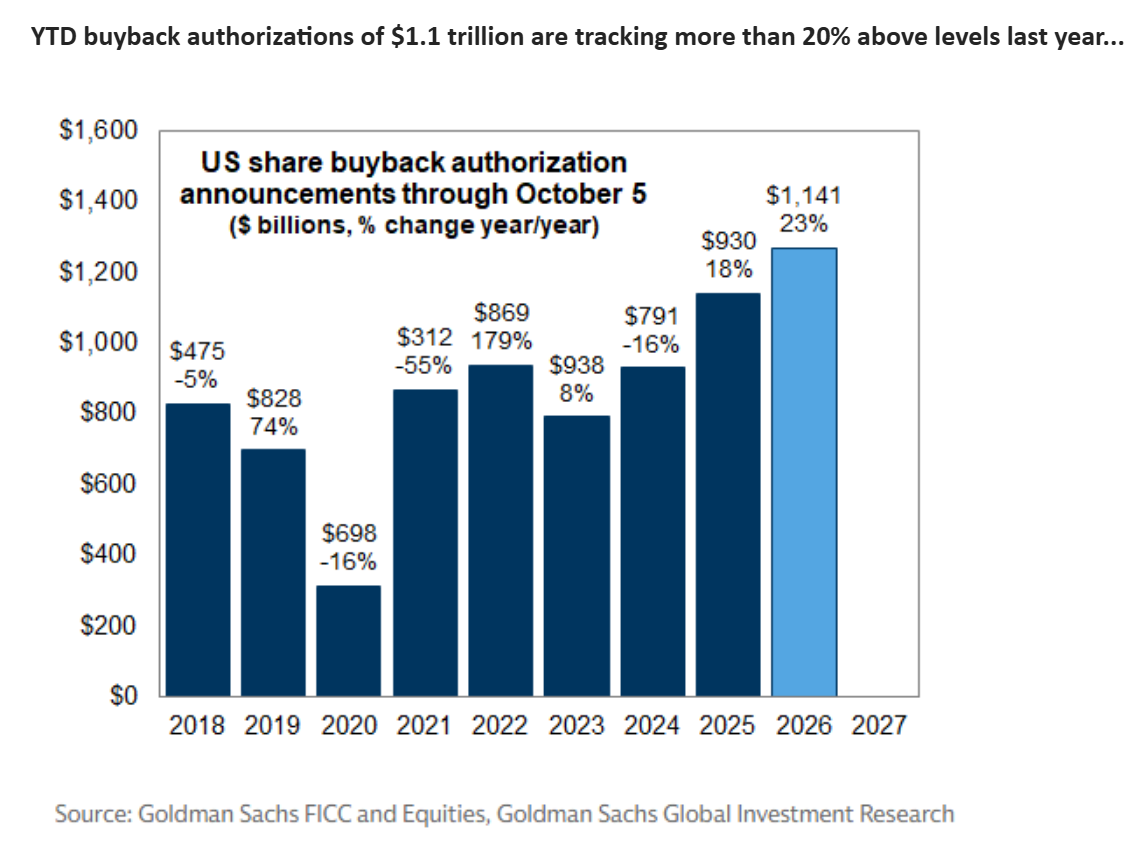
But why has this really taken off since 2016. One thing that has really changed the dynamic in the US, is the US becoming an oil exporter.
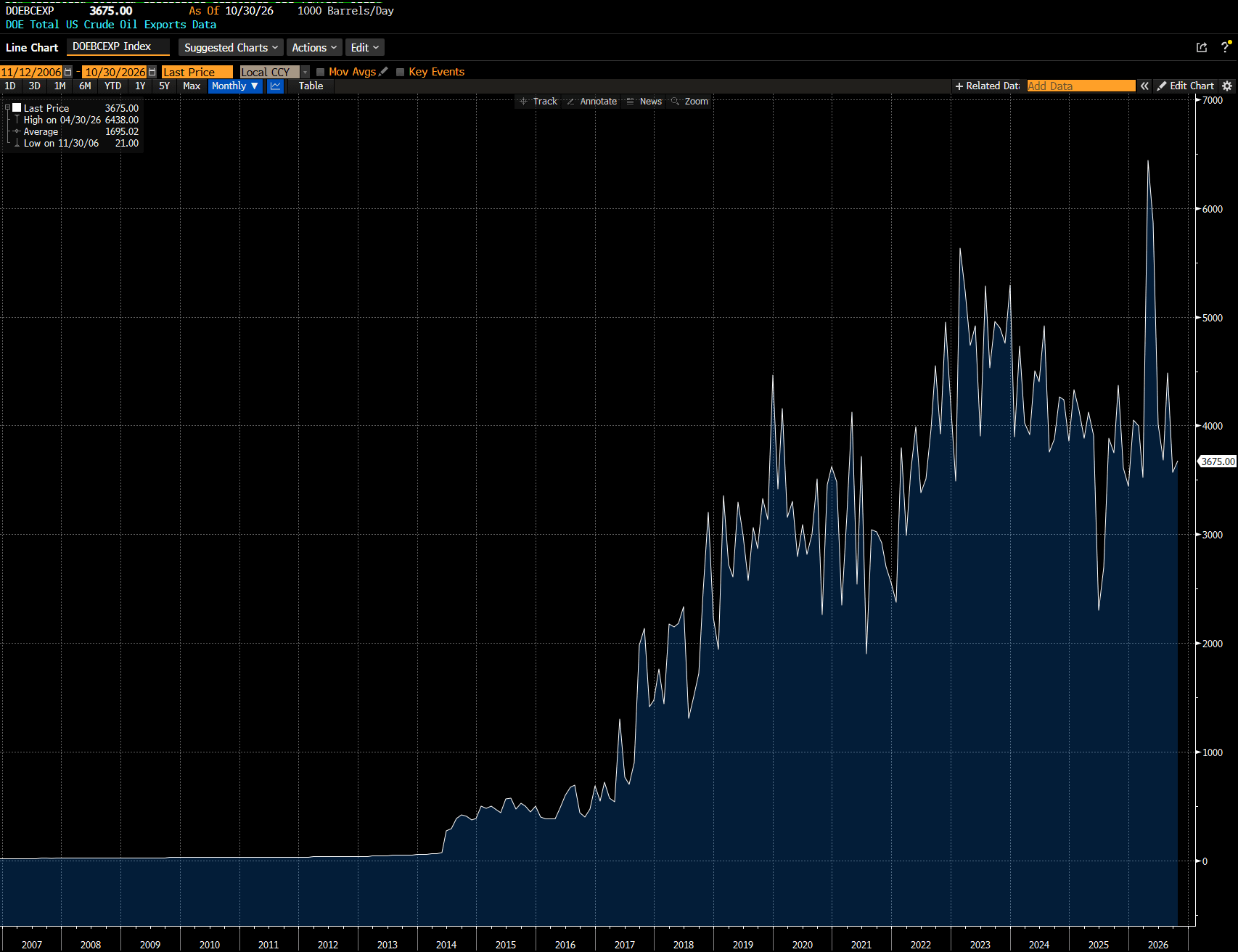
Basically the US government is no longer constrained by oil markets. It can issue excessive debt, and not see the US dollar collapse in value.
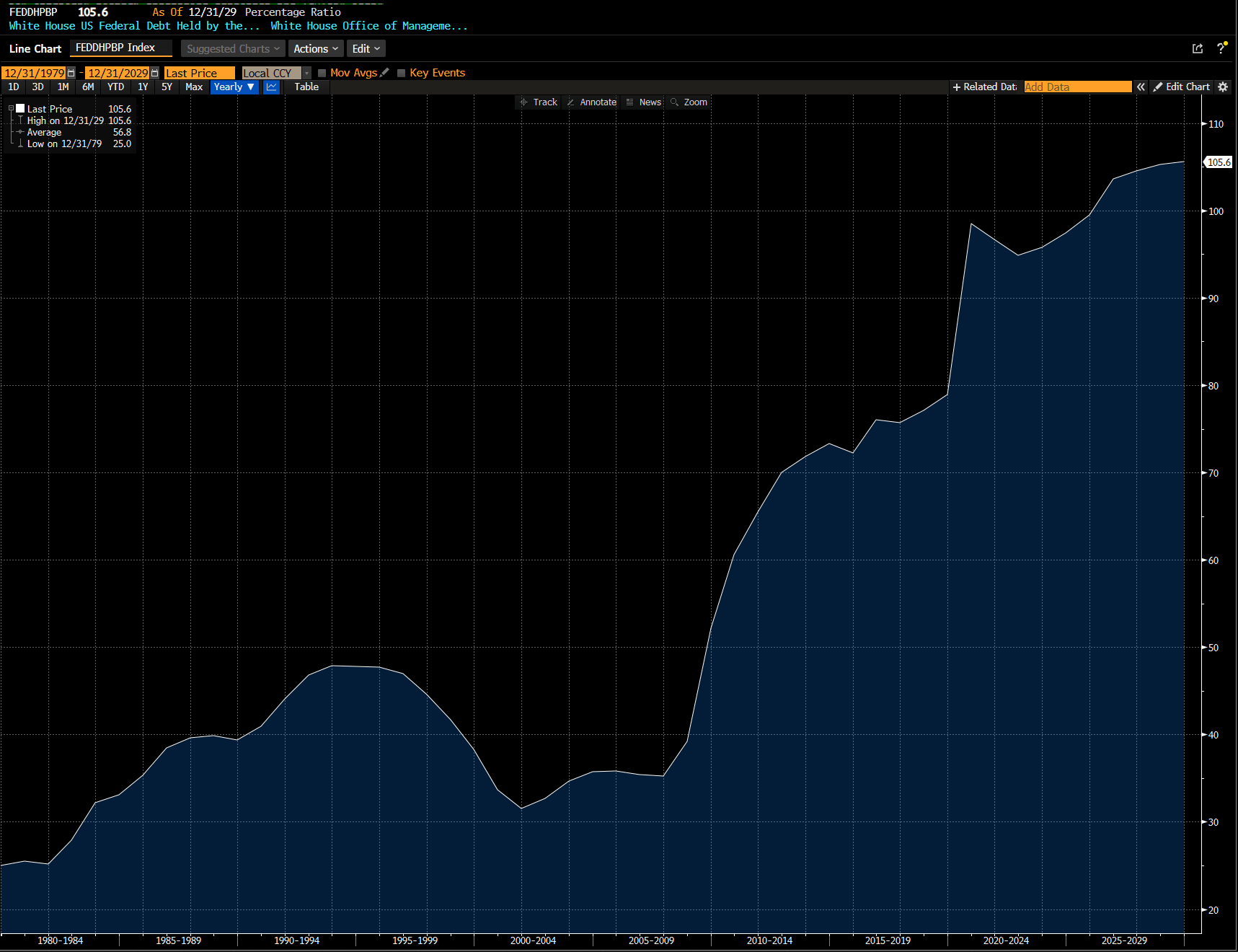
When the US used to be fiscally reckless, this money leached overseas via the oil market, but now it largely stays at home. In fact, the US still enjoys some of the lowest cost of energy in the world.
What does this mean in practical terms? Well just like shorting JGBs was a terrible trade (would have seemed logical at the time), any non-S&P 500 trade will also probably be a terrible idea. A long S&P 500 ETF and short TLT is probably still fine. You can add short ideas to this as they appear - particularly if the market is consensus long in them. One such trade would probably be gold miners. A heavily consensus trade that has just broken down v S&P 500. This is a trade that most hedge funds will die on in my experience. Gold miners is a classic loser trade.
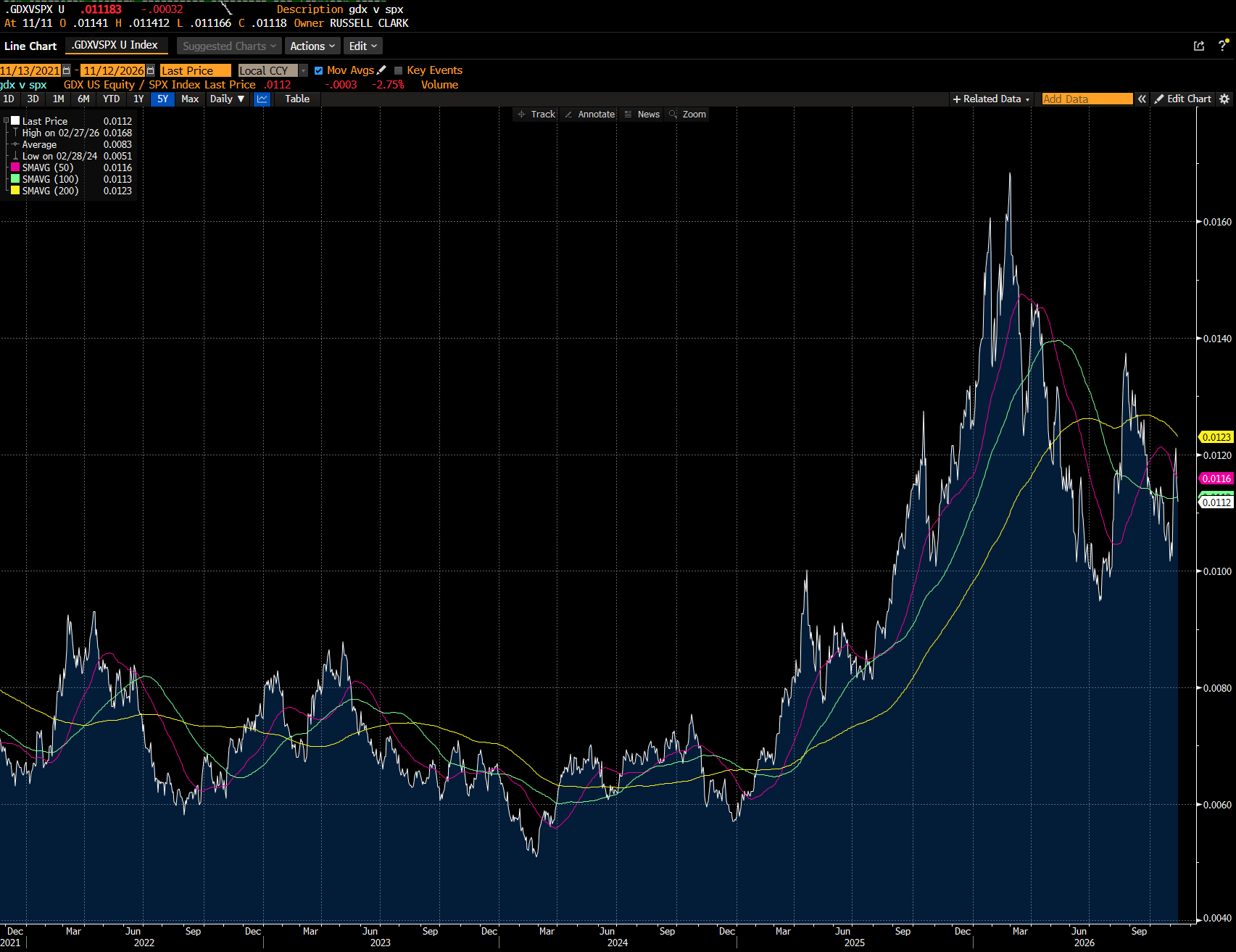
I know a few hedge funds that have already adopted a de facto long S&P 500 strategy have done well. Maintain a long quality (read companies that buy back shares), and then short dodgy cyclicals have done exceedingly well. Even in tech, owning Apple and avoiding the hyperscalers has been a winning trade.
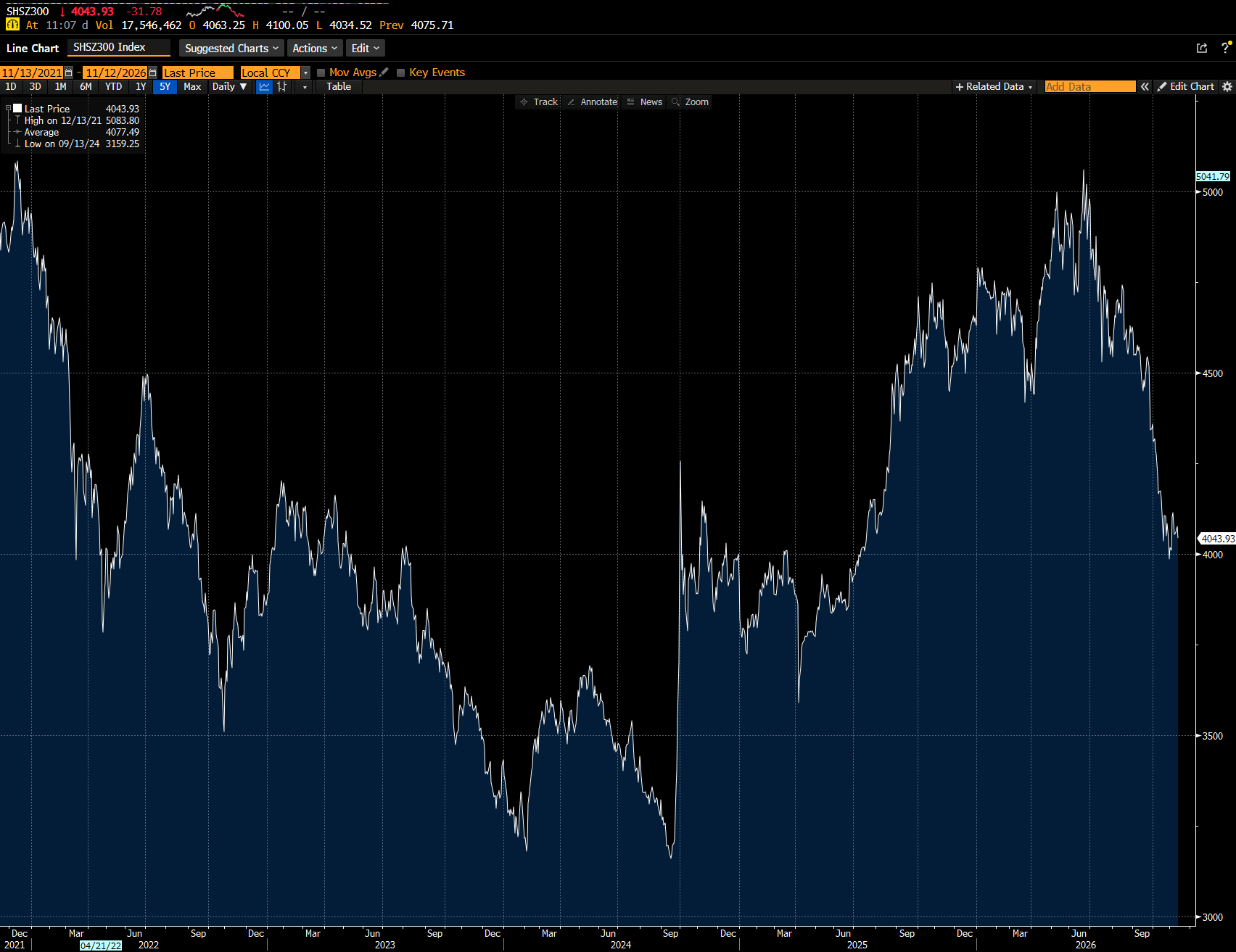
If there is a political angle to markets, I think the Chinese have been selling treasuries to buy gold, and probably hoped higher bond yields would impact the US negatively. I think Trump has been more than happy to disrupt oil markets, as China is the biggest importer. Chinese markets have traded much more like what I expected the US to do. That is very weakly.
I have done well out of GLD/TLT - but it looks done to me. The SPX/TLT trade is probably okay - but the Democrats are talking a buyback tax. If it made buybacks tax inefficient, then markets could get wild, but my guess is that it will either be watered down or not introduced.. A short gold miner trade probably makes sense here, and perhaps a short AI trade. But without a change in tax policy, or US energy production, the short S&P 500 will remain a widowmaker trade.


